
Ingredients
For the Cabbage and Carrot Filling
- 6 cups finely shredded green cabbage — about ½ medium head
- 2 medium carrots, grated
- 1 small yellow onion, finely diced
- 2 cloves garlic, minced
- 1 tbsp extra-virgin olive oil
- ½ tsp salt
- ¼ tsp black pepper
- ½ tsp dried oregano
- ½ tsp dried parsley
- ½ tsp paprika
- ¼ tsp onion powder
- 2 tbsp fresh chopped parsley, optional
For the Egg Mixture
- 4 large eggs
- ½ cup plain nonfat Greek yogurt
- ½ cup low-fat shredded mozzarella
- ¼ cup grated Parmesan cheese
- ½ tsp dried Italian seasoning
- ¼ tsp black pepper
- ¼ tsp salt
Optional Topping
- ¼ cup low-fat shredded mozzarella
- 1 tbsp chopped fresh parsley
- A pinch of paprika
Kitchen Equipment
You will need:
- 9-inch × 9-inch baking dish or similar 2-quart casserole dish
- Large skillet
- Large mixing bowl
- Grater
- Knife and cutting board
- Whisk
- Spatula
- Parchment paper or cooking spray
Detailed Instructions
1. Prepare the Oven
Preheat your oven to 375°F (190°C). Lightly coat a 9-inch × 9-inch baking dish with cooking spray or line the bottom with parchment paper.
Preheating the oven before assembling the casserole helps the egg mixture begin setting immediately and promotes even baking.
2. Prepare the Vegetables
Remove any damaged outer leaves from the cabbage. Cut the cabbage into quarters, remove the tough core, and shred it finely.
Peel and grate the carrots. Finely dice the onion and mince the garlic.
Try to keep the cabbage relatively thin so that it becomes tender during the short sautéing step and blends evenly into the casserole.
3. Sauté the Onion and Garlic
Heat 1 tablespoon olive oil in a large skillet over medium heat.
Add the diced onion and cook for approximately 3–4 minutes, stirring occasionally, until it begins to soften.
Add the minced garlic and cook for another 30–60 seconds. Avoid browning the garlic too much because burnt garlic can make the entire casserole taste bitter.
4. Add the Cabbage
Add the shredded cabbage to the skillet. At first, the pan may look very full, but cabbage will shrink considerably as it cooks.
Add the salt, black pepper, oregano, parsley, paprika, and onion powder.
Cook for approximately 6–8 minutes, stirring frequently, until the cabbage begins to soften.
5. Add the Carrots
Stir the grated carrots into the cabbage mixture.
Continue cooking for approximately 3–4 minutes. The vegetables should become tender but should not be completely mushy.
The goal is to remove some of the raw vegetable texture and excess moisture before the casserole goes into the oven.
6. Cool the Vegetables Slightly
Remove the skillet from the heat and allow the vegetable mixture to cool for approximately 5–10 minutes.
This is an important step. Adding very hot vegetables directly to the eggs can partially cook them before everything is combined.
7. Prepare the Egg Mixture
In a large mixing bowl, whisk together the 4 eggs, Greek yogurt, mozzarella, Parmesan, Italian seasoning, salt, and black pepper.
Whisk until the mixture is smooth and evenly combined.
Greek yogurt gives the casserole a softer, creamy texture while adding additional protein without requiring a large amount of heavy cream.
8. Combine Everything
Add the slightly cooled cabbage and carrot mixture to the egg mixture.
Use a spatula to gently fold everything together until the vegetables are evenly coated.
Make sure there are no large pockets of egg mixture at the bottom of the bowl.
9. Transfer to the Baking Dish
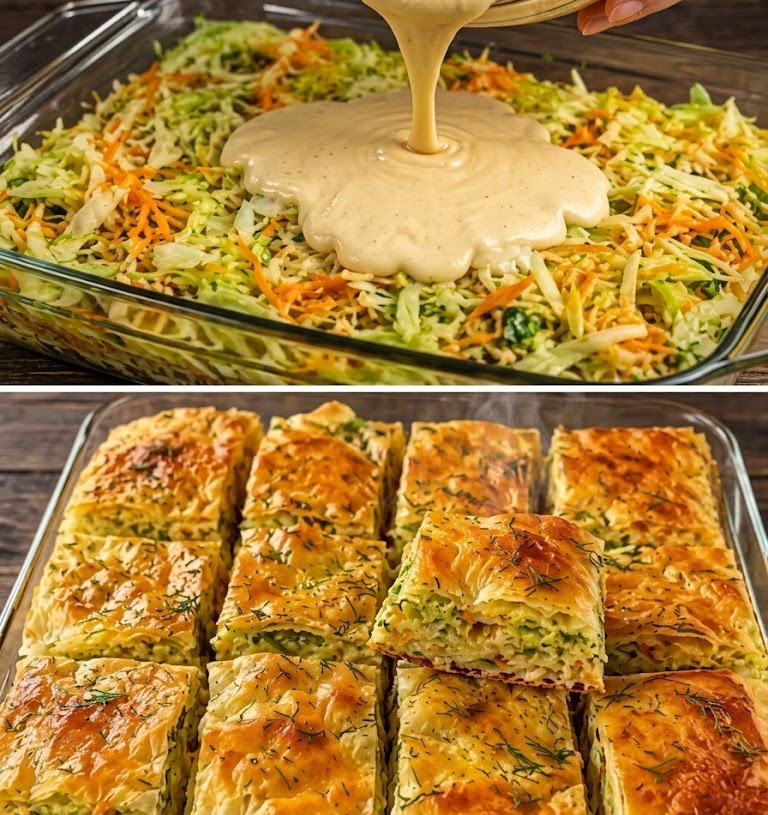
Pour the mixture into the prepared baking dish.
Spread it evenly with a spatula and gently press it into the corners.
If you are using the optional mozzarella topping, sprinkle it evenly over the surface.
10. Bake the Casserole
Place the baking dish in the preheated oven.
Bake for approximately 30–40 minutes, depending on the depth of your baking dish.
The casserole is ready when the center is set, the edges are lightly golden, and the top has developed a beautiful golden-brown appearance.
11. Check for Doneness
Insert a knife or toothpick into the center. It should come out mostly clean without a large amount of liquid egg mixture.
If the center is still wet, continue baking for another 5–10 minutes.
Avoid dramatically increasing the oven temperature because the outside may brown too quickly while the center remains undercooked.
12. Rest Before Cutting
Remove the casserole from the oven and allow it to rest for 10 minutes before slicing.
Resting gives the eggs time to finish setting and makes the casserole much easier to cut into neat portions.
13. Garnish
Sprinkle the finished casserole with fresh parsley.
For additional flavor, you can add a light dusting of paprika or a small amount of freshly cracked black pepper.
14. Serve Warm
Slice the casserole into 6 portions and serve warm.
It can be enjoyed on its own or paired with a simple green salad, roasted vegetables, or a lean protein.
15. Make It Extra Flavorful
For additional flavor without adding many calories, consider adding fresh dill, parsley, basil, chives, oregano, or a small amount of red pepper flakes.
A squeeze of fresh lemon juice just before serving can also brighten the flavor.
16. Add More Vegetables
This recipe is very forgiving. You can replace a portion of the cabbage with zucchini, spinach, mushrooms, bell peppers, or broccoli.
If adding vegetables with high water content, such as zucchini or mushrooms, sauté them first and allow excess moisture to evaporate.
This prevents the finished casserole from becoming watery.
17. Add Protein
For a higher-protein version, mix in 4–6 oz (115–170 g) cooked shredded chicken or lean ground turkey.
You can also increase the Greek yogurt slightly or use additional egg whites.
If adding cooked meat, make sure it is fully cooked before mixing it into the casserole.
18. Make It Ahead
This casserole is excellent for meal preparation.
Prepare and bake it according to the instructions, allow it to cool, then cover and refrigerate.
For best quality, use refrigerated leftovers within approximately 3–4 days.
19. Reheat Properly
Individual portions can be reheated in the microwave until hot throughout.
For a firmer texture and slightly crispier edges, reheat portions in a 350°F (175°C) oven until warmed through.
Avoid repeatedly reheating the entire casserole. Reheat only the portion you plan to eat.
20. Storage and Freezing
Allow the casserole to cool completely before storing.
Keep leftovers in an airtight container in the refrigerator.
The casserole can also be frozen in individual portions. Wrap portions well and place them in freezer-safe containers.
Thaw refrigerated portions overnight before reheating for the best texture.
Vegan Version
The traditional recipe contains eggs, Greek yogurt, and cheese, so it is not vegan as written.
For a vegan version, replace the eggs with approximately 1½ cups firm tofu, blended with ¼ cup unsweetened plant milk, 2 tbsp nutritional yeast, 1 tbsp cornstarch, ½ tsp turmeric, salt, and pepper.
Use dairy-free cheese or additional nutritional yeast instead of mozzarella and Parmesan.
The texture will be slightly different from the egg-based version, but the cabbage and carrot filling remains flavorful and satisfying.
Keto / Low-Carb Version
For a lower-carbohydrate version, reduce the carrots to ½–1 medium carrot and increase the cabbage to approximately 7 cups.
You can also add mushrooms, spinach, zucchini, or cauliflower to increase the vegetable volume without relying heavily on carrots.
Use full-fat cheese if desired, but keep the portion controlled because cheese can substantially increase calories and fat.
This version is low-carb rather than automatically strict keto, because the exact carbohydrate content depends on the vegetables and dairy products used.
WW-Friendly Version
For a lower WW-style point approach, use:
- Nonfat Greek yogurt
- Reduced-fat mozzarella
- Light Parmesan
- Cooking spray instead of additional oil
- Plenty of cabbage
- Controlled portions of carrots
The vegetables provide volume while keeping the overall recipe relatively light.
Important: WW Points can vary according to the specific WW program, ingredient brands, and account settings. The estimate below is therefore a general guide rather than an official WW calculation.
Diabetic-Friendly Version
This casserole can fit into a diabetes-conscious eating pattern when portions and the overall meal are considered.
Keep the carrots moderate, use unsweetened Greek yogurt, and avoid sweetened sauces or added sugar.
Pairing one serving with a lean protein and a non-starchy vegetable side can create a more balanced meal.
Individual carbohydrate needs vary, so anyone managing diabetes should consider their personal nutrition plan when determining portion size.
High-Protein Version
To increase the protein content, use 6 eggs plus ½ cup egg whites, or add 4–6 oz cooked chicken breast or lean turkey.
Nonfat Greek yogurt is another simple way to add protein while maintaining a creamy texture.
For a meat-free high-protein version, use a combination of eggs, Greek yogurt, cottage cheese, and a moderate amount of cheese.
Mediterranean Version
For a Mediterranean-inspired variation, use extra-virgin olive oil, fresh parsley, oregano, garlic, spinach, and a small amount of feta.
You can replace some of the mozzarella with crumbled feta and add chopped roasted red peppers or sun-dried tomatoes.
Serve with a tomato-cucumber salad dressed with lemon juice and olive oil for a complete Mediterranean-style meal.
Anti-Inflammatory Variation
For an anti-inflammatory-inspired version, emphasize vegetables, extra-virgin olive oil, garlic, herbs, and spices.
Add ½ teaspoon ground turmeric, a pinch of black pepper, fresh parsley, spinach, and additional colorful vegetables.
This recipe can complement an overall balanced eating pattern rich in vegetables, fruits, legumes, whole foods, and healthy fats. No single recipe, however, can independently provide an “anti-inflammatory” effect.
Recipe Variations
Cheesy Cabbage Bake
Add an additional ¼ cup mozzarella for a richer, cheesier casserole.
Mushroom Cabbage Bake
Sauté 1 cup sliced mushrooms with the onion before adding the cabbage.
Chicken Cabbage Bake
Add 1 cup cooked shredded chicken for a complete high-protein meal.
Spicy Cabbage Bake
Add ¼–½ teaspoon red pepper flakes or a small amount of diced jalapeño.
Herb Cabbage Bake
Add fresh dill, parsley, chives, and basil for a fresh garden-herb flavor.
Tips for the Best Cabbage Casserole
The most important tip is to remove excess moisture from the vegetables. Cabbage naturally releases water as it cooks, and carrots also contain moisture.
Do not skip the sautéing step unless you are intentionally using a different method. Lightly cooking the vegetables first improves the final texture and concentrates their flavor.
Avoid overbaking the casserole. Once the center is set, remove it from the oven. Excessive baking can make the eggs rubbery and dry.
Allowing the casserole to rest before slicing is equally important. A short resting period gives the structure time to stabilize.
For the prettiest presentation, reserve a little parsley and sprinkle it over the top immediately before serving.
What to Serve With Cabbage and Carrot Casserole
For a light meal, serve it with a fresh cucumber and tomato salad.
For additional protein, pair it with grilled chicken, baked fish, shrimp, or lean turkey.
For a vegetarian meal, serve it alongside a lentil salad, bean salad, or roasted chickpeas.
For breakfast or brunch, serve a slice with fresh tomatoes, avocado, or a simple green salad.
Approximate Nutrition
Based on 6 servings of the standard recipe:
- Calories: approximately 210
- Protein: approximately 14 g
- Total Carbohydrates: approximately 15 g
- Fiber: approximately 4 g
- Net Carbohydrates: approximately 11 g
- Fat: approximately 11 g
- Saturated Fat: approximately 4 g
- Sugar: approximately 6 g
- Sodium: approximately 430 mg
Nutrition will vary depending on the exact size of the vegetables, cheese brands, yogurt, and amount of salt used.
Estimated WW SmartPoints
For the standard recipe, an estimated WW Points value is approximately 4–6 points per serving, depending on the specific WW plan, ingredients, and brands.
For a lower-point preparation, use nonfat Greek yogurt, reduced-fat cheese, cooking spray instead of olive oil, and extra cabbage.
Because WW has changed its Points system over time and individual plans can differ, the estimate should be treated as a general nutritional guide rather than an official personalized WW calculation.
Frequently Asked Questions
Can I make this casserole without cheese?
Yes. You can omit the cheese and increase the herbs and seasonings. For a creamy texture, add a little extra Greek yogurt to the egg mixture.
Can I use red cabbage?
Absolutely. Red cabbage works well, although it will give the finished casserole a deeper purple color.
Can I prepare it the night before?
Yes. You can sauté the vegetables ahead of time, refrigerate them, and assemble the casserole the next day. This is particularly convenient for breakfast or brunch.
Why is my casserole watery?
Excess moisture from cabbage, carrots, zucchini, mushrooms, or other vegetables is usually the reason. Sauté watery vegetables first and cook until excess liquid has evaporated.
Can I make it without a crust?
Yes. This recipe is naturally crustless, which is one reason it works well as a lighter cabbage pie or frittata bake.
Can I make individual portions?
Yes. Divide the mixture among greased muffin cups or small ramekins and reduce the baking time. Begin checking for doneness early because smaller portions cook faster.
Final Recipe Summary
This Baked Cabbage and Carrot Casserole is an easy way to transform inexpensive vegetables into a comforting, nutritious dish. The combination of tender cabbage, sweet carrots, savory onion, garlic, herbs, eggs, Greek yogurt, and cheese creates a flavorful casserole with a soft center and lightly golden top.
It is naturally gluten-free, customizable for low-carb eating, adaptable for WW-style meal planning, and easy to modify for high-protein, Mediterranean, diabetic-conscious, vegan, or anti-inflammatory-inspired eating patterns.
Whether you serve it as a healthy breakfast, a light lunch, a vegetable side dish, or a simple family dinner, this cabbage casserole is an excellent recipe to keep in your regular rotation.