
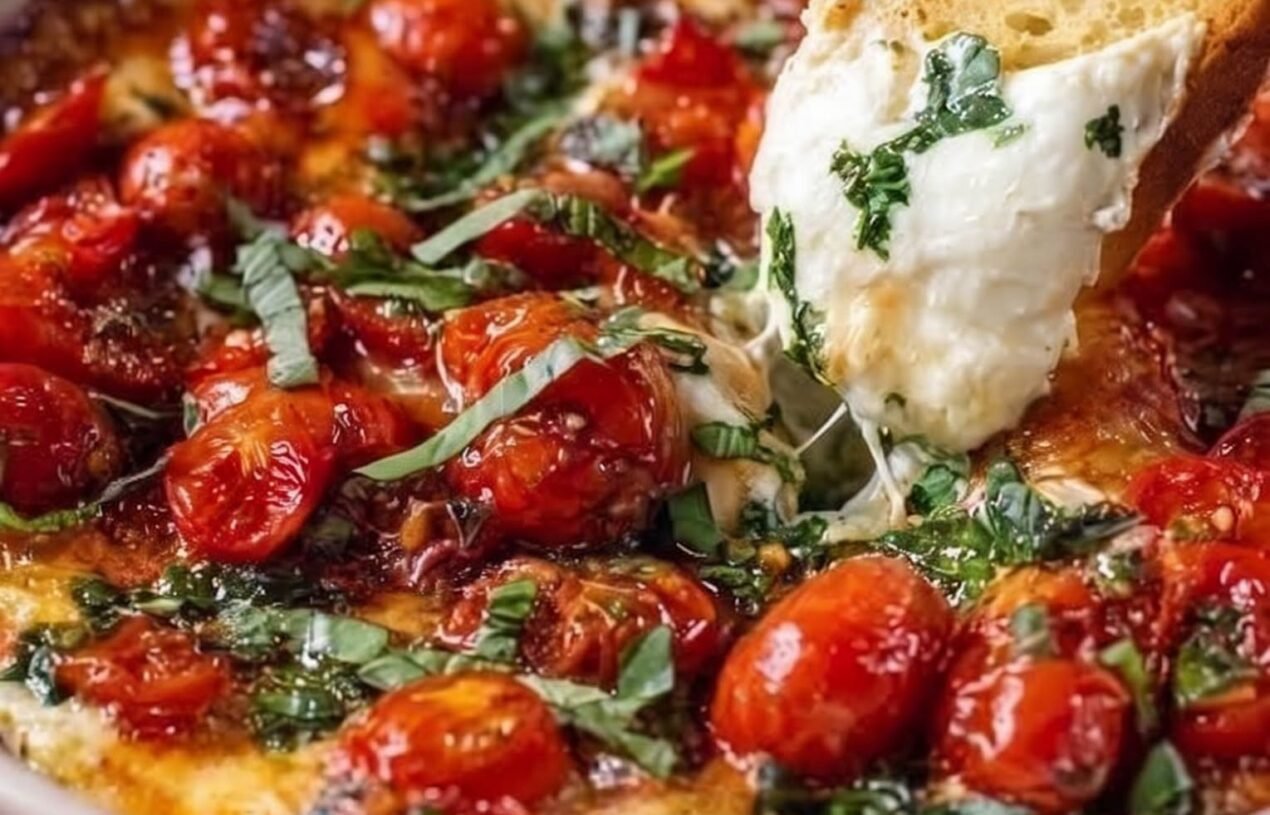
Baked Burrata with Roasted Cherry Tomatoes, Garlic & Fresh Basil
This Baked Burrata with Roasted Cherry Tomatoes is a delicious Italian-inspired appetizer featuring juicy tomatoes, creamy burrata cheese, fresh basil, garlic, and extra-virgin olive oil.
As the cherry tomatoes roast, they become soft, sweet, and slightly caramelized. Their juices combine with garlic, olive oil, and herbs to create a flavorful sauce. The burrata adds a rich, creamy center that pairs beautifully with toasted slices of crusty bread.
It is an inviting dish for family gatherings, dinner parties, weekend meals, or a special appetizer to share.
Recipe Overview
- Prep Time: 10 minutes
- Cook Time: 20–25 minutes
- Total Time: 35 minutes
- Servings: 4–6
- Course: Appetizer or side dish
- Cuisine: Italian-inspired
- Cooking Method: Oven-baked
- Difficulty: Easy
Ingredients
For the Roasted Cherry Tomatoes
- 2 cups (300 g) cherry tomatoes
- 2 tablespoons extra-virgin olive oil
- 3 cloves garlic, finely minced
- ½ teaspoon sea salt
- ¼ teaspoon freshly ground black pepper
- ½ teaspoon Italian seasoning
- ¼ teaspoon dried oregano
- ½ teaspoon red pepper flakes, optional
- 1 tablespoon balsamic vinegar
- 1 teaspoon honey, optional
For the Burrata
- 2 balls fresh burrata cheese (approximately 4 oz / 115 g each)
- 1 tablespoon olive oil
- 2 tablespoons freshly grated Parmesan cheese, optional
- ¼ teaspoon black pepper
For Garnishing
- ¼ cup fresh basil leaves, roughly chopped
- 1 tablespoon fresh parsley, chopped
- A drizzle of extra-virgin olive oil
- A little balsamic glaze, optional
- Flaky sea salt, to taste
For Serving
- 1 French baguette or rustic sourdough loaf
- 1 tablespoon olive oil
- 1 small garlic clove, cut in half
Instructions
1. Prepare the Oven
Preheat your oven to 400°F (200°C).
Choose a shallow oven-safe baking dish that is large enough to hold the tomatoes in a relatively even layer. A ceramic or glass baking dish works well.
Lightly coat the bottom of the dish with a little olive oil to prevent sticking and help the tomatoes roast evenly.
2. Wash the Cherry Tomatoes
Rinse the cherry tomatoes under cool running water and dry them thoroughly with a clean kitchen towel.
Leave the smaller tomatoes whole and cut larger ones in half. Cutting some tomatoes helps release their juices during roasting while keeping others whole creates a lovely presentation.
3. Arrange the Tomatoes
Transfer the tomatoes to the prepared baking dish.
Spread them evenly so they have enough room to roast. Avoid piling them too deeply because overcrowding can cause them to steam instead of roast.
4. Add the Garlic
Add the minced garlic over the tomatoes.
Distribute it evenly so the garlic flavor reaches the entire dish. Fresh garlic gives the roasted tomatoes a wonderful savory aroma.
5. Season the Tomatoes
Sprinkle the tomatoes with sea salt, black pepper, Italian seasoning, dried oregano, and optional red pepper flakes.
Toss gently with a spoon until the tomatoes are coated with the seasonings.
6. Add Olive Oil
Drizzle the extra-virgin olive oil over the tomato mixture.
The olive oil helps the tomatoes soften and develop lightly caramelized edges. It also combines with the tomato juices to create a delicious dipping sauce.
7. Add Balsamic Vinegar
Drizzle the balsamic vinegar over the tomatoes.
If you prefer a slightly sweeter flavor, add the optional teaspoon of honey. Stir gently to combine.
8. Begin Roasting
Place the baking dish in the preheated oven.
Roast for approximately 18–22 minutes, or until the tomatoes become soft, blistered, and juicy.
You should notice some tomatoes beginning to burst, releasing their natural juices into the olive oil and garlic mixture.
9. Check the Tomato Mixture
Remove the dish carefully from the oven and check the tomatoes.
If they are not yet soft and lightly caramelized, return them to the oven for another 3–5 minutes.
The mixture should be glossy and fragrant, with a small amount of flavorful liquid collecting at the bottom.
10. Prepare the Burrata
Remove the burrata from its packaging and drain any excess liquid.
Allow it to sit briefly while you finish the tomatoes. If the burrata is very cold, giving it a little time to lose its refrigerator chill helps it serve more pleasantly.
Keep the cheese refrigerated until shortly before use.
11. Add the Burrata
Make a little space in the center of the roasted tomato mixture.
Place the burrata balls gently in the dish, allowing the warm tomatoes to surround them.
For the best creamy texture, add the burrata after roasting the tomatoes rather than baking it for the entire cooking time.
12. Warm the Burrata
Return the dish to the oven for approximately 2–3 minutes, just to gently warm the cheese.
Alternatively, leave the oven off and allow the residual heat from the tomatoes to warm the burrata.
Burrata is already ready to eat, so it does not need to be cooked through.
13. Add Parmesan
If desired, sprinkle a little freshly grated Parmesan over the warm tomatoes.
The Parmesan adds a salty, savory flavor that complements the mild, milky burrata.
14. Add Fresh Basil
Scatter the chopped fresh basil over the dish.
Adding basil near the end helps preserve its fresh aroma and bright green color.
15. Finish with Olive Oil
Drizzle a little extra-virgin olive oil over the burrata and tomatoes.
Add freshly ground black pepper and a small pinch of flaky sea salt.
16. Add Balsamic Glaze
For an attractive finishing touch, drizzle a small amount of balsamic glaze over the tomatoes and cheese.
This is optional, but its sweet and tangy flavor complements the roasted tomatoes beautifully.
17. Prepare the Bread
While the tomatoes roast, slice the baguette or sourdough into pieces approximately ½ inch thick.
Arrange the slices on a baking sheet and brush lightly with olive oil.
18. Toast the Bread
Bake the bread at 400°F (200°C) for approximately 5–8 minutes, turning once if needed.
The slices should become golden around the edges while remaining slightly tender in the center.
19. Add Garlic Flavor
Remove the toasted bread from the oven.
While the slices are still warm, gently rub one cut side of the garlic clove over each slice.
This adds a delicate garlic aroma without overpowering the creamy cheese.
20. Serve Immediately
Place the warm burrata and roasted tomatoes in the center of the serving table.
Arrange the toasted bread around the dish or serve it separately.
Break open the burrata just before serving so its creamy center mixes with the warm tomato juices. Spoon the mixture onto the toasted bread and enjoy.
What Makes This Baked Burrata Recipe Special?
The magic of this dish comes from the combination of simple ingredients and contrasting textures.
Cherry tomatoes become naturally sweet as they roast. Garlic and olive oil create a savory base, while balsamic vinegar adds a gentle tang.
Burrata brings a soft, creamy texture that contrasts with the juicy tomatoes. Fresh basil adds a bright herbal flavor, making each bite taste fresh and balanced.
The toasted bread is particularly important because it gives you something crisp to scoop up the creamy cheese and tomato sauce.
Tips for Perfect Baked Burrata
Choose ripe cherry tomatoes: Look for tomatoes that are firm, brightly colored, and free from wrinkles or damaged areas.
Use good-quality olive oil: Since olive oil is an important part of the sauce, a flavorful extra-virgin variety works especially well.
Don’t burn the garlic: Garlic can become bitter if exposed to excessive heat. Mince it evenly and keep an eye on the tomatoes as they roast.
Add burrata near the end: Burrata has a delicate creamy center. Briefly warming it preserves its soft texture better than prolonged baking.
Use fresh basil: Fresh basil gives this recipe its characteristic Italian-inspired flavor.
Toast the bread properly: Slightly crisp bread holds the cheese and tomato mixture much better than soft bread.
Serve while warm: This dish is at its best when the tomatoes are warm and the burrata is soft and creamy.
Delicious Recipe Variations
1. Baked Burrata with Cherry Tomatoes and Spinach
Add 1 cup of fresh baby spinach to the tomato mixture during the final few minutes of roasting. Allow the spinach to wilt before adding the burrata.
2. Balsamic Roasted Tomato Burrata
Increase the balsamic vinegar slightly and finish with a light drizzle of balsamic glaze. This creates a more pronounced sweet-and-tangy flavor.
3. Spicy Garlic Burrata
Add extra red pepper flakes and a pinch of chili powder to the tomatoes before roasting.
4. Burrata with Roasted Red Peppers
Add ½ cup of sliced roasted red peppers to the cherry tomatoes before baking.
5. Mediterranean Burrata
Add sliced Kalamata olives, a little crumbled feta, and fresh oregano after roasting.
6. Burrata with Mushrooms
Add 1 cup of sliced mushrooms to the baking dish. They absorb the garlic and olive oil and add an earthy flavor.
7. Burrata with Fresh Pesto
Finish the dish with 1–2 tablespoons of basil pesto. Swirl it lightly through the roasted tomato juices before serving.
What to Serve with Baked Burrata
This dish pairs wonderfully with:
- Toasted sourdough bread
- Garlic baguette slices
- Crostini
- Fresh arugula salad
- Grilled zucchini
- Roasted asparagus
- Italian-style pasta
- Grilled chicken
- Mediterranean vegetable platters
It can be served as an appetizer for sharing or as part of a larger meal.
Make-Ahead Instructions
You can prepare some of the ingredients ahead of time to make serving easier.
- Wash and dry the cherry tomatoes.
- Mince the garlic.
- Measure the seasonings.
- Slice the bread.
- Prepare the tomato mixture shortly before roasting.
For the best texture, roast the tomatoes shortly before serving and add the burrata at the end. Avoid assembling the complete dish hours in advance because the cheese and toasted bread are best served fresh.
Storage Instructions
Baked burrata is best enjoyed immediately after preparation.
If you have leftovers:
- Transfer the tomato mixture and cheese to a clean, covered container.
- Refrigerate promptly.
- Keep the bread in a separate container so it does not become soggy.
- For best quality, enjoy within 1–2 days.
- Reheat the tomato mixture gently and add fresh burrata if available.
Do not leave this dairy-based dish at room temperature for more than two hours. Refrigerate perishable leftovers promptly.
CDC
+1
Frequently Asked Questions
1. What is burrata cheese?
Burrata is an Italian cheese with a delicate outer shell of mozzarella and a soft, creamy interior traditionally filled with cream and cheese strands called stracciatella.
2. Can I use mozzarella instead of burrata?
Yes. Fresh mozzarella is a suitable substitute, although it will not have the same creamy center.
3. Do I need to cut the cherry tomatoes?
No. Smaller cherry tomatoes can be roasted whole. Cutting some of them helps release their juices and creates a saucier mixture.
4. Can I make this recipe without balsamic vinegar?
Absolutely. You can leave it out or replace it with a small squeeze of fresh lemon juice after roasting.
5. Why should I add the burrata after roasting?
Burrata has a delicate creamy filling. Adding it near the end helps preserve its characteristic texture and prevents it from becoming excessively hot or separated.
6. Can I use dried basil?
Fresh basil is recommended for garnishing. Dried basil can be used in the tomato seasoning, but it does not provide the same fresh finishing flavor.
7. Can I prepare it in an air fryer?
Yes. Roast the seasoned tomatoes in an air-fryer-safe dish at approximately 375°F (190°C), checking after 8–10 minutes and continuing until softened and blistered. Add the burrata after cooking.
8. What bread works best?
Sourdough, French baguette, ciabatta, and rustic Italian bread are all excellent choices.
9. Is this recipe suitable as a party appetizer?
Yes. It is easy to share, looks attractive in a serving dish, and can be accompanied by toasted bread and fresh vegetables.
Nutrition Information
Approximate values per serving, assuming 6 servings and including a moderate amount of toasted bread.
| Nutrient | Approximate amount |
|---|---|
| Calories | 300–370 kcal |
| Protein | 12–16 g |
| Carbohydrates | 25–32 g |
| Fat | 17–22 g |
| Fiber | 2–3 g |
| Sugar | 4–6 g |
| Sodium | 400–600 mg |
Actual values depend on the burrata brand, bread, olive oil, and serving size.