
Yield: 1 loaf
Pan: 9 × 5-inch loaf pan
Prep time: 20 minutes
Bake time: 50–65 minutes
Total time: About 1½ hours
Ingredients
For the cake
- 1¾ cups (220 g) all-purpose flour
- 1½ teaspoons baking powder
- ¼ teaspoon salt
- 1 cup (200 g) granulated sugar
- ½ cup (113 g) unsalted butter, softened to room temperature
- 3 large eggs, room temperature
- ½ cup (120 g) sour cream or full-fat Greek yogurt
- 2 tablespoons fresh lemon juice
- 1 tablespoon finely grated lemon zest — preferably from 1–2 fresh lemons
- 1 teaspoon pure vanilla extract
- ¼ cup (60 ml) whole milk
For the lemon glaze
- 1 cup (120 g) powdered sugar
- 2–3 tablespoons fresh lemon juice
- 1 teaspoon lemon zest, optional
- 1 teaspoon melted butter, optional, for a richer glossy glaze
Optional
- A tiny pinch of extra salt
- Thin strips of lemon zest for decoration
👩🍳 Detailed Recipe
1. Prepare the pan
Preheat your oven to 350°F (175°C).
Grease a 9 × 5-inch loaf pan generously with butter or nonstick spray.
For easier removal, line the bottom and two long sides with parchment paper, leaving some parchment hanging over the sides.
Important: Don’t use a very small loaf pan. The batter should fill the pan only about ⅔ full.
2. Mix the dry ingredients
In a medium bowl, whisk together:
- 1¾ cups flour
- 1½ teaspoons baking powder
- ¼ teaspoon salt
Mix well so the baking powder and salt are evenly distributed.
Set aside.
3. Cream the butter and sugar
In a large mixing bowl, add:
- ½ cup softened butter
- 1 cup granulated sugar
Beat with an electric mixer for about 3–5 minutes.
The mixture should become:
- Pale yellow
- Light
- Fluffy
- Creamy
This step is important because incorporating air into the butter helps give the cake a lighter texture.
Don’t rush this step.
4. Add the eggs
Add the eggs one at a time.
After adding each egg, beat for about 20–30 seconds before adding the next.
Scrape down the sides of the bowl as necessary.
If the mixture looks slightly curdled, don’t worry. It will come together when the flour is added.
🍋 5. Add the lemon and vanilla
Add:
- 1 tablespoon fresh lemon zest
- 2 tablespoons fresh lemon juice
- 1 teaspoon vanilla extract
Mix briefly until combined.
Tip:
When zesting the lemon, grate only the yellow outer skin.
Avoid the white part underneath because it can make the cake bitter.
6. Add sour cream
Mix in ½ cup sour cream.
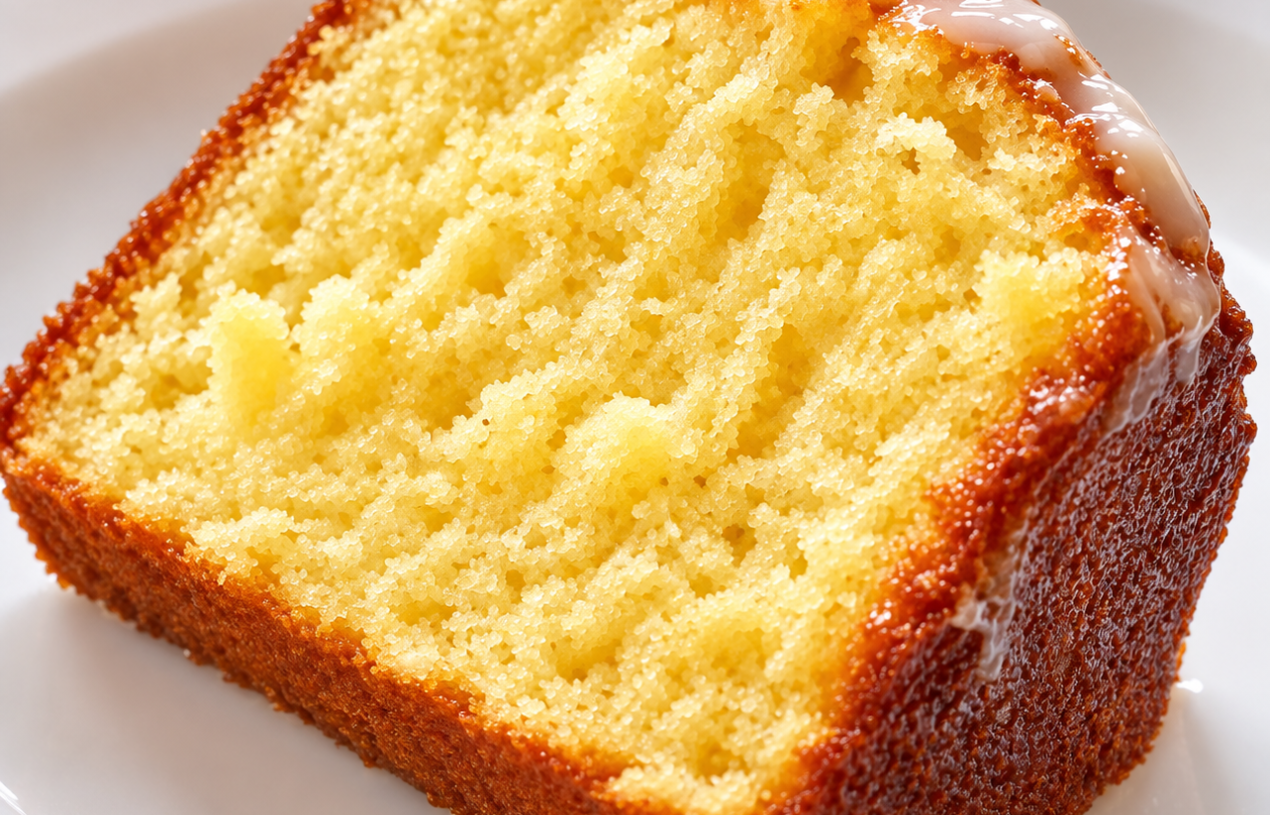
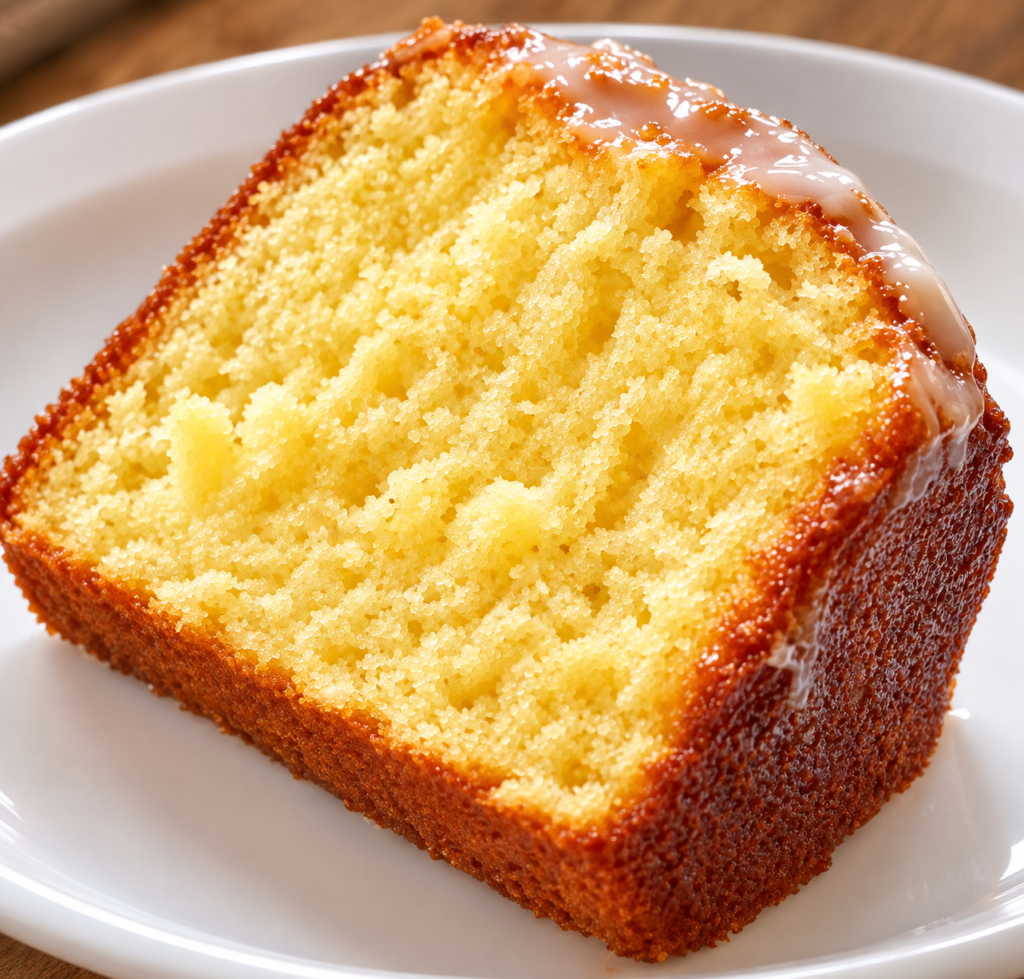
The sour cream is one of the secrets to getting the soft, moist texture shown in your picture.
You can substitute full-fat Greek yogurt if necessary.
7. Combine the wet and dry ingredients
Add approximately ⅓ of the flour mixture to the batter.
Mix on low speed just until mostly incorporated.
Add about half of the milk.
Mix briefly.
Continue alternating:
flour → milk → flour → milk → flour
Finish with the flour.
Very important:
Don’t overmix the batter.
Once you no longer see large streaks of dry flour, stop mixing.
Overmixing develops gluten and can make the loaf dense or chewy instead of soft.
8. Transfer to the loaf pan
Pour the batter into your prepared pan.
Smooth the top with a spatula.
Gently tap the pan against the counter once or twice to remove large air pockets.
For the beautiful crack down the center that many pound cakes have, you can run a lightly buttered knife down the center of the batter before baking.
🔥 9. Bake
Place the loaf in the center of your preheated oven.
Bake at:
350°F (175°C) for approximately 50–65 minutes.
Start checking around 50 minutes.
The cake is ready when:
- The top is golden brown.
- The center looks set.
- A toothpick inserted into the center comes out clean or with a few moist crumbs.
- The cake springs back lightly when touched.
If the top becomes dark before the center is finished, loosely cover the cake with aluminum foil for the remaining baking time.
10. Cool the cake
Remove the loaf from the oven.
Let it sit in the pan for approximately 10–15 minutes.
Then use the parchment paper to carefully lift the cake out.
Place it on a wire rack and allow it to cool completely.
Don’t glaze it while it’s very hot.
If the cake is hot, the glaze will melt and run completely off the surface.
🍋 11. Make the lemon glaze
In a small bowl, combine:
- 1 cup powdered sugar
- 2 tablespoons fresh lemon juice
Whisk until smooth.
Add another ½–1 tablespoon lemon juice if you want a thinner glaze.
For a thicker glaze, add more powdered sugar.
For a richer, shinier glaze, mix in 1 teaspoon melted butter.
12. Glaze the cake
Once the cake has cooled completely, place it on a serving plate.
Slowly drizzle the glaze over the top.
Let it naturally run down the sides, similar to the cake in your photo.
For extra lemon flavor, sprinkle a little finely grated lemon zest over the glaze.
Allow the glaze to sit for 15–20 minutes before slicing.
🔪 How to Get Those Beautiful Moist Slices
For the texture shown in your photo, there are a few important tricks:
1. Use room-temperature ingredients
The butter, eggs, milk, and sour cream should preferably be around room temperature.
This helps everything combine evenly.
2. Don’t overmix
Once the flour goes in, mix as little as possible.
3. Don’t overbake
This is probably the most important point.
A few extra minutes in the oven can turn a moist lemon loaf into a dry one.
Remove it when a toothpick comes out with a few moist crumbs, rather than waiting for the toothpick to be completely bone-dry.
4. Use fresh lemon
Fresh lemon juice and zest provide much better flavor than bottled lemon juice.
5. Don’t skip the sour cream
Sour cream adds moisture and gives the cake a tender crumb.
🍋 Extra-Lemony Version
If you want a stronger lemon flavor, use:
- 2 tablespoons lemon zest in the batter
- 3 tablespoons lemon juice in the batter
- 1 cup powdered sugar
- 3 tablespoons lemon juice in the glaze
You can also brush the warm cake with a simple lemon syrup.
Lemon syrup
Combine:
- ¼ cup lemon juice
- ¼ cup sugar
Heat until the sugar dissolves.
While the cake is still warm, poke small holes in the top with a skewer and slowly brush the syrup over it.
Then allow the cake to cool before adding the glaze.
This produces an extra-moist, intensely lemony cake.
🧈 For an Even Richer Pound-Cake Texture
If you want the cake to be more like a traditional dense-but-tender pound cake, replace the milk with another ¼ cup sour cream.
You’ll then have:
¾ cup sour cream total
The result will be slightly richer and more moist, with a tighter crumb.
📋 Ingredient Checklist
Cake:
- ✅ 220 g all-purpose flour
- ✅ 200 g sugar
- ✅ 113 g unsalted butter
- ✅ 3 eggs
- ✅ 120 g sour cream
- ✅ 60 ml whole milk
- ✅ 2 tbsp fresh lemon juice
- ✅ 1 tbsp lemon zest
- ✅ 1 tsp vanilla
- ✅ 1½ tsp baking powder
- ✅ ¼ tsp salt
Glaze:
- ✅ 120 g powdered sugar
- ✅ 2–3 tbsp fresh lemon juice
- ✅ Optional lemon zest
- ✅ Optional 1 tsp melted butter
The key ingredients you really shouldn’t omit are the butter, eggs, lemon zest, sour cream, baking powder, and fresh lemon juice. They work together to produce the soft, rich, golden crumb and lemon flavor seen in the photo.