
Ingredients
Main Ingredients
- 1 large head green cabbage, approximately 2½–3 pounds, preferably fresh and firm with tightly packed leaves
- 8–10 ounces thick-cut bacon, cut into small bite-sized pieces
- 1 large yellow onion, peeled and finely diced
- 5 cloves fresh garlic, finely minced
- 3 tablespoons unsalted butter
- 1 tablespoon olive oil, preferably extra-virgin olive oil
- ½ cup low-sodium chicken broth, plus a little extra if needed
- 1 tablespoon apple cider vinegar
- 1 tablespoon Worcestershire sauce
- 1 teaspoon granulated sugar
- 2 tablespoons fresh parsley, finely chopped, for finishing
Seasonings
- 1½ teaspoons kosher salt, divided and adjusted to taste
- 1 teaspoon freshly ground black pepper
- 1 teaspoon smoked paprika
- ½ teaspoon garlic powder
- ½ teaspoon onion powder
- ½ teaspoon dried thyme
- ¼ teaspoon red pepper flakes
- ¼ teaspoon cayenne pepper, optional for extra heat
Optional Ingredients
- ½ teaspoon Cajun seasoning for a spicier, more Southern-style flavor
- ½ teaspoon celery seed for additional savory flavor
- 1 small bell pepper, diced, for sweetness and color
- ½ teaspoon brown sugar instead of granulated sugar for a deeper caramelized flavor
- ¼–½ teaspoon hot sauce for additional heat
- ½ teaspoon liquid smoke, optional if you want an especially smoky flavor
- 2–3 green onions, thinly sliced, for garnish
- 1 tablespoon fresh parsley, additional, for serving
- 1 tablespoon grated Parmesan cheese, optional, if you want a slightly richer variation
Directions
1. Choose and prepare the cabbage
Start with a large, fresh head of green cabbage.
Look for a cabbage that feels heavy for its size and has firm, tightly packed leaves. Avoid cabbage with large areas of browning, excessive wilting, or soft spots.
Remove the loose outer leaves and discard them.
Place the cabbage on a sturdy cutting board.
Using a sharp chef’s knife, cut the cabbage in half from the top through the stem. Place each half cut-side down so it is stable.
Cut each half into two quarters.
You should now have four cabbage wedges.
Look at the bottom of each wedge. You will see the thick, tough white core. Carefully cut the core out at an angle.
Do not remove too much cabbage. The goal is simply to remove the hard central stem.
Once the cores are removed, slice the cabbage into approximately ¾-inch to 1-inch pieces.
Some pieces will naturally separate into strips while others will remain slightly larger. This is completely fine and actually gives the finished dish a pleasant variety of textures.
Place the chopped cabbage into a large bowl.
Rinse it thoroughly with cold water.
Separate the pieces slightly with your hands while rinsing because dirt can sometimes remain trapped between the cabbage leaves.
Drain the cabbage very well.
If the cabbage is extremely wet, allow it to sit in a colander for several minutes or gently pat it dry with clean kitchen towels.
You do not need the cabbage to be completely dry, but removing excess water will help it brown more effectively.
2. Prepare all of the remaining ingredients before cooking
This recipe becomes much easier if everything is prepared before the skillet gets hot.
Dice the yellow onion into small pieces.
Finely mince the garlic cloves.
Cut the bacon into approximately ½-inch pieces.
Measure the chicken broth.
Measure the Worcestershire sauce and apple cider vinegar.
Measure all of the dry seasonings into a small bowl.
This includes the salt, black pepper, smoked paprika, garlic powder, onion powder, thyme, red pepper flakes, and optional cayenne pepper.
Keep the butter nearby.
Keep the chopped parsley nearby for the end.
Having everything ready is especially helpful because once the bacon and vegetables begin cooking, the process moves fairly quickly.
3. Heat the skillet
Choose a large, heavy-bottomed skillet, Dutch oven, or large cast-iron skillet.
The pan should be large enough to eventually hold all of the cabbage.
Place the skillet over medium heat.
Do not immediately add oil.
The bacon will provide plenty of rendered fat.
Allow the pan to warm for approximately 1–2 minutes.
4. Cook the bacon slowly
Place the chopped bacon into the skillet.
It is best to start the bacon in the skillet before it becomes extremely hot.
Cook the bacon over medium heat for approximately 7–10 minutes.
Stir it every minute or two so the pieces cook evenly.
The bacon will initially look soft and pale.
As it cooks, the fat will slowly melt out into the skillet.
Continue cooking until the bacon is browned and crisp around the edges.
If you prefer very crispy bacon, cook it for another 1–2 minutes.
However, do not burn it because the burnt bits can make the entire dish taste bitter.
5. Reserve some crispy bacon
When the bacon is finished, use a slotted spoon to remove approximately half of the bacon.
Place the reserved bacon on a plate lined with paper towels.
Leave the remaining bacon in the skillet.
The reserved bacon will be added near the end so that it remains crispy.
The bacon left in the pan will flavor the cabbage throughout the cooking process.
Do not discard the bacon grease.
The rendered bacon fat is one of the most important flavor components in this recipe.
6. Cook the onions
Add the diced onion directly into the skillet with the remaining bacon and bacon grease.
Stir well.
Cook the onion over medium heat for approximately 4–6 minutes.
Stir occasionally.
The onion should gradually become soft and translucent.
After several minutes, the edges should begin to turn lightly golden.
This browning is desirable because it creates additional sweetness and depth.
If your bacon produced very little grease, add approximately 1 tablespoon of olive oil.
You want enough fat in the skillet to coat the cabbage without making the dish excessively greasy.
7. Add the garlic
Once the onions have softened, add the minced garlic.
Stir the garlic into the onions and bacon.
Cook for approximately 30–60 seconds.
The garlic should become fragrant.
Do not cook the garlic for too long at this stage.
Garlic can burn quickly, and burned garlic will introduce an unpleasant bitterness.
If the skillet is extremely hot, reduce the heat slightly before adding the garlic.
8. Add the cabbage gradually
Add approximately one-third of the chopped cabbage to the skillet.
Toss it with the bacon, onions, and garlic.
After approximately 1–2 minutes, add another third.
Continue until all of the cabbage has been added.
The skillet may look extremely full at first.
This is normal.
Do not be tempted to add excessive liquid immediately.
Cabbage naturally releases a significant amount of water as it cooks.
As the cabbage begins to soften, it will shrink considerably.
Use tongs or a large wooden spoon to gently turn the cabbage so that the bacon grease coats as many pieces as possible.
9. Season the cabbage
Sprinkle the cabbage with the seasoning mixture.
Add:
- Kosher salt
- Black pepper
- Smoked paprika
- Garlic powder
- Onion powder
- Dried thyme
- Red pepper flakes
- Cayenne pepper, if using
Add the Worcestershire sauce.
Add the granulated sugar.
Stir everything thoroughly.
The sugar should not make the dish taste like dessert.
Instead, it helps balance the natural bitterness of cabbage and encourages the cabbage to develop beautifully browned edges.
Because bacon and Worcestershire sauce already contain salt, avoid adding too much salt at this point.
You can always add more later.
10. Fry the cabbage uncovered
Increase the heat to medium-high.
Cook the cabbage uncovered for approximately 8–12 minutes.
Stir every 1–2 minutes.
The important part is to avoid stirring continuously.
Allow some of the cabbage to sit against the bottom of the skillet.
This gives it time to brown.
After a few minutes, you should begin seeing golden-brown areas around the edges of the cabbage.
Some pieces may become slightly darker than others.
That is desirable.
Those browned pieces contain concentrated caramelized flavor.
11. Scrape up the browned bits
As the cabbage cooks, use a wooden spoon or spatula to scrape the bottom of the skillet.
You may notice small brown pieces stuck to the pan.
These are called fond.
They contain concentrated flavor from the bacon, onions, and cabbage.
When liquid is added later, these browned bits will loosen and become part of the sauce that coats the cabbage.
Do not aggressively scrape the pan if using cast iron or another surface that could be damaged.
12. Add the chicken broth
Once the cabbage has started to soften and brown, pour in the chicken broth.
Stir thoroughly.
The broth should create a small amount of flavorful liquid at the bottom of the skillet.
Use your wooden spoon to scrape up any remaining browned bits.
Reduce the heat to medium.
Continue cooking uncovered for approximately 10–15 minutes.
The cabbage will gradually absorb some of the broth while releasing additional moisture.
13. Cook until the cabbage reaches your preferred texture
Check the cabbage after approximately 10 minutes.
For firmer cabbage, stop cooking once it is tender but still slightly crisp.
For softer cabbage, continue cooking for another 5–10 minutes.
If you prefer very tender Southern-style cabbage, you can cook it longer.
However, keep an eye on the liquid.
You do not want the cabbage sitting in a large amount of watery broth at the end.
If the pan becomes too dry before the cabbage is tender, add another small splash of chicken broth.
If there is too much liquid, increase the heat and cook uncovered until some of it evaporates.
14. Add the butter
Once the cabbage is nearly tender, add the butter.
Allow it to melt into the hot cabbage.
Stir thoroughly.
The butter adds richness and helps coat the cabbage with a smooth, glossy layer.
Continue cooking for approximately 2–3 minutes.
15. Caramelize the cabbage further
Increase the heat to medium-high again.
Continue cooking the cabbage uncovered.
Allow it to remain in contact with the hot skillet for short periods before stirring.
This is where the dish develops its deep fried flavor.
Some pieces should become golden brown.
Some edges may become darker and slightly crisp.
The onions may caramelize further.
The bacon pieces will continue adding smoky flavor.
Cook for approximately 5–8 minutes, depending on how browned you want the cabbage.
If you prefer a lighter-colored cabbage, stop earlier.
If you enjoy deeply caramelized cabbage, allow it to brown longer.
16. Add the apple cider vinegar
Turn the heat down slightly.
Add the apple cider vinegar.
Start with approximately 1 tablespoon.
Stir it throughout the cabbage.
The vinegar will immediately brighten the flavor.
This step is particularly important because bacon and butter are rich.
The acidity prevents the dish from tasting overly heavy.
Taste the cabbage.
If you want more brightness, add another small splash of vinegar.
Do not add a large amount all at once.
It is much easier to add more than to correct a dish that has become too acidic.
17. Add the crispy bacon
Take the bacon that you reserved earlier.
Add it back into the skillet.
Stir gently.
You do not need to cook it for a long time.
The purpose is simply to warm the bacon and distribute it throughout the cabbage.
Saving some bacon for the end gives the dish two different textures: tender bacon that has flavored the cabbage during cooking and crisp bacon that remains more noticeable when you bite into it.
18. Taste and adjust the seasoning
This is an important step.
Taste a small portion of the cabbage.
Consider each flavor separately.
If it tastes flat, add a small pinch of salt.
If it tastes too rich, add another small splash of apple cider vinegar.
If it needs more warmth, add black pepper.
If you want more smokiness, add a little smoked paprika.
If you want additional heat, add red pepper flakes or cayenne pepper.
If the cabbage tastes slightly bitter, a very small pinch of sugar can help balance it.
Make adjustments gradually.
Stir after each adjustment and taste again.
19. Finish with fresh parsley
Turn off the heat.
Sprinkle the chopped fresh parsley over the cabbage.
Gently toss everything together.
The parsley adds a fresh flavor and gives the finished dish a beautiful contrast against the golden cabbage and dark skillet.
For additional color, you can also sprinkle thinly sliced green onions over the top.
20. Let the cabbage rest briefly
Allow the finished cabbage to rest in the skillet for approximately 3–5 minutes before serving.
This gives the flavors a chance to settle.
It also allows the remaining butter, bacon fat, and seasonings to coat the cabbage more evenly.
Do not cover the skillet tightly during this time because trapped steam can make the cabbage wetter and softer than desired.
How to Get the Best Flavor
Use enough bacon
Bacon is not just a topping in this recipe.
It is part of the foundation of the flavor.
The rendered bacon fat coats the cabbage and gives it a smoky, savory taste.
Thick-cut bacon works particularly well because the pieces remain substantial after cooking.
Brown the cabbage
The biggest difference between ordinary cooked cabbage and excellent fried cabbage is browning.
Do not rush this part.
Give the cabbage time to contact the hot skillet.
The caramelized edges add sweetness and a roasted flavor that you cannot achieve by simply boiling the cabbage.
Don’t drown the cabbage in broth
Chicken broth is used to help tenderize the cabbage and loosen the flavorful browned bits from the skillet.
It should not turn the recipe into cabbage soup.
Start with a modest amount and add more only if necessary.
Add vinegar at the end
Adding apple cider vinegar near the end preserves its bright flavor.
If you add too much at the beginning, the acidity can become less balanced during the long cooking process.
Save some bacon for the end
Cooking all the bacon from the beginning will give you excellent flavor, but much of the bacon will become soft.
Reserving some crispy bacon creates a much better final texture.
Optional Smoked Sausage Version
For an even heartier meal, add smoked sausage.
Slice approximately 12 ounces of smoked sausage into rounds.
After cooking the bacon, remove some bacon from the skillet.
Add the sliced sausage to the bacon grease.
Cook the sausage for approximately 3–5 minutes on each side until browned.
Remove it temporarily and cook the onions, garlic, and cabbage as directed.
Return the sausage to the skillet during the final 5 minutes of cooking.
This creates a complete one-pan meal with cabbage, bacon, onions, and smoky sausage.
Optional Spicy Version
For spicy fried cabbage, add:
- ½ teaspoon cayenne pepper
- ½–1 teaspoon red pepper flakes
- 1 teaspoon hot sauce
- ½ teaspoon Cajun seasoning
Add the dry seasonings when you add the other spices.
Add the hot sauce near the end with the apple cider vinegar.
Taste before adding additional salt because Cajun seasoning and hot sauce may already contain sodium.
Optional Sweet and Smoky Version
For a slightly sweeter variation, replace the granulated sugar with brown sugar.
Use approximately 1 tablespoon packed brown sugar.
Combine it with smoked paprika and bacon.
Allow the cabbage to caramelize thoroughly.
The brown sugar will encourage deeper browning and create a slightly sweet, smoky flavor that pairs especially well with thick-cut bacon.
Make-Ahead Instructions
You can prepare the cabbage several hours ahead of time.
Cook the recipe completely, then allow it to cool.
Place it in an airtight container and refrigerate.
When ready to serve, transfer the cabbage to a large skillet.
Add a tablespoon or two of chicken broth if it appears dry.
Warm it over medium heat, stirring occasionally.
For the best texture, prepare a small amount of fresh crispy bacon separately and sprinkle it over the reheated cabbage.
This restores the contrast between tender cabbage and crunchy bacon.
Storage
Allow leftovers to cool to room temperature before refrigerating.
Transfer the cabbage to a sealed container.
Refrigerate for approximately 3–4 days.
When reheating, use a skillet over medium heat whenever possible.
You can also microwave it, but skillet reheating usually produces a better texture because some excess moisture can evaporate.
If the cabbage becomes dry, add a tablespoon of chicken broth before reheating.
Serving Ideas
Serve this fried cabbage alongside:
- Crispy fried chicken
- Roasted chicken
- Baked chicken
- Pork chops
- Pulled pork
- Meatloaf
- Smoked sausage
- Grilled sausage
- Roast beef
- Cornbread
- Mashed potatoes
- Roasted potatoes
- Baked potatoes
- White rice
- Brown rice
- Macaroni and cheese
- Black-eyed peas
- Green beans
- Collard greens
For a simple comfort-food dinner, serve a large portion of fried cabbage with warm cornbread and a protein such as smoked sausage or pork chops.
For a lighter meal, serve the cabbage with grilled chicken and a fresh green salad.
Final Texture
When finished correctly, the cabbage should be:
- Tender without being completely mushy
- Slightly caramelized around the edges
- Moist but not watery
- Rich from the bacon and butter
- Smoky and savory
- Slightly sweet from the caramelized onions
- Brightened by the apple cider vinegar
- Lightly spicy if red pepper flakes or cayenne are used
- Filled with crispy bacon pieces throughout
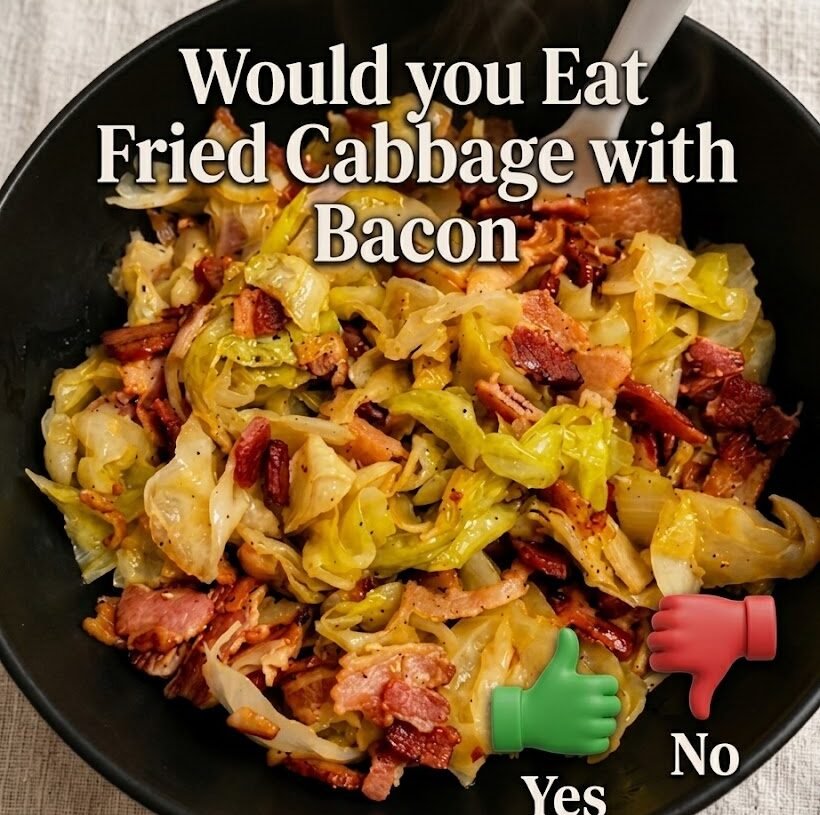
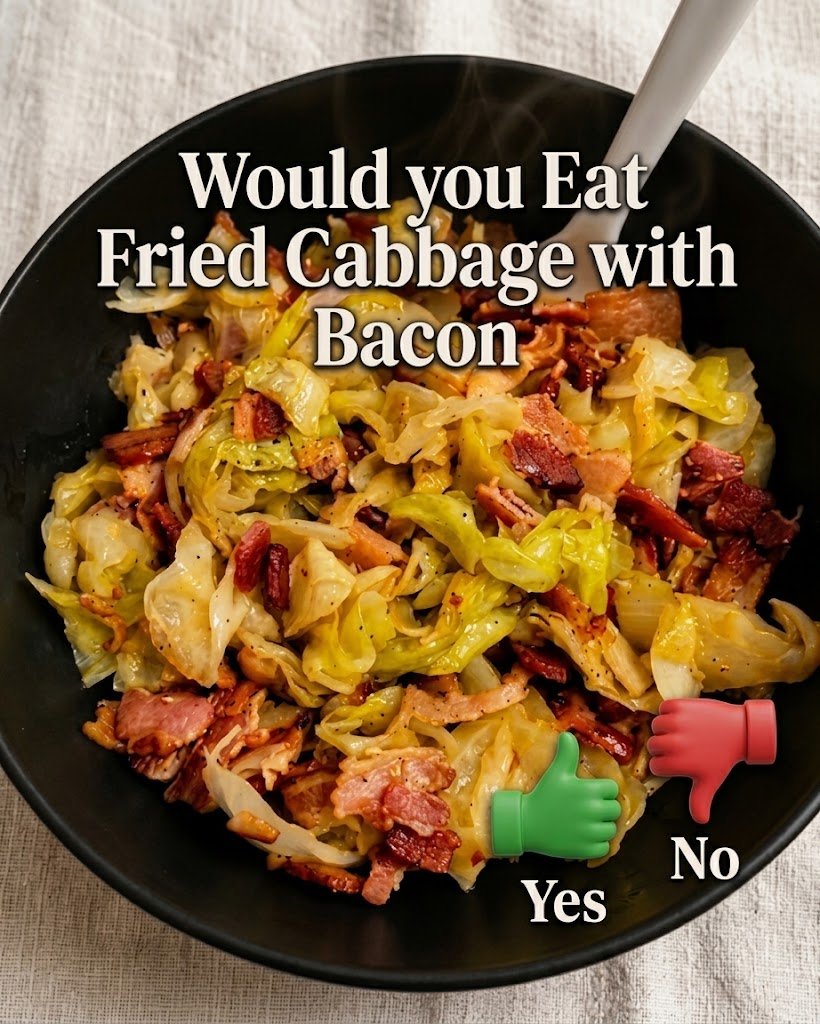
The finished dish should have a mixture of textures: soft, tender cabbage; caramelized browned edges; sweet onions; and small crispy pieces of bacon.