
Description
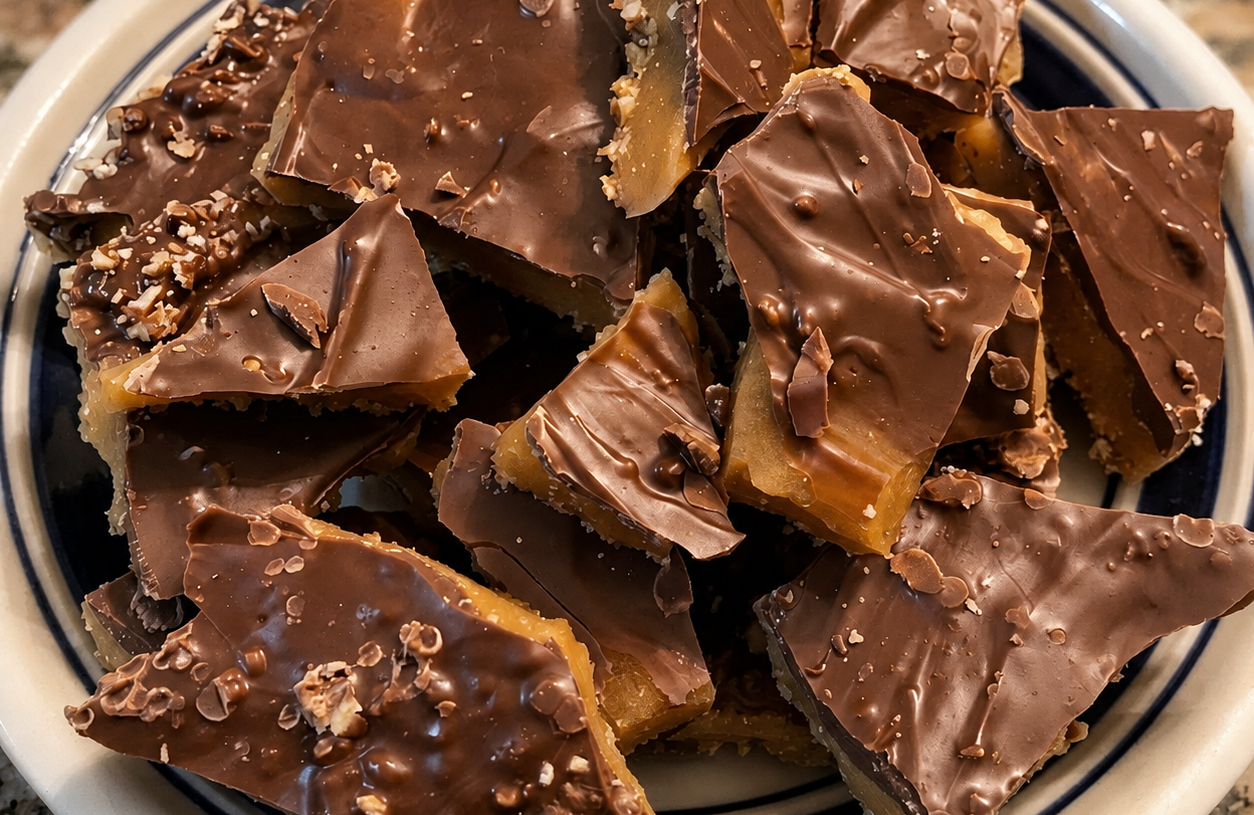
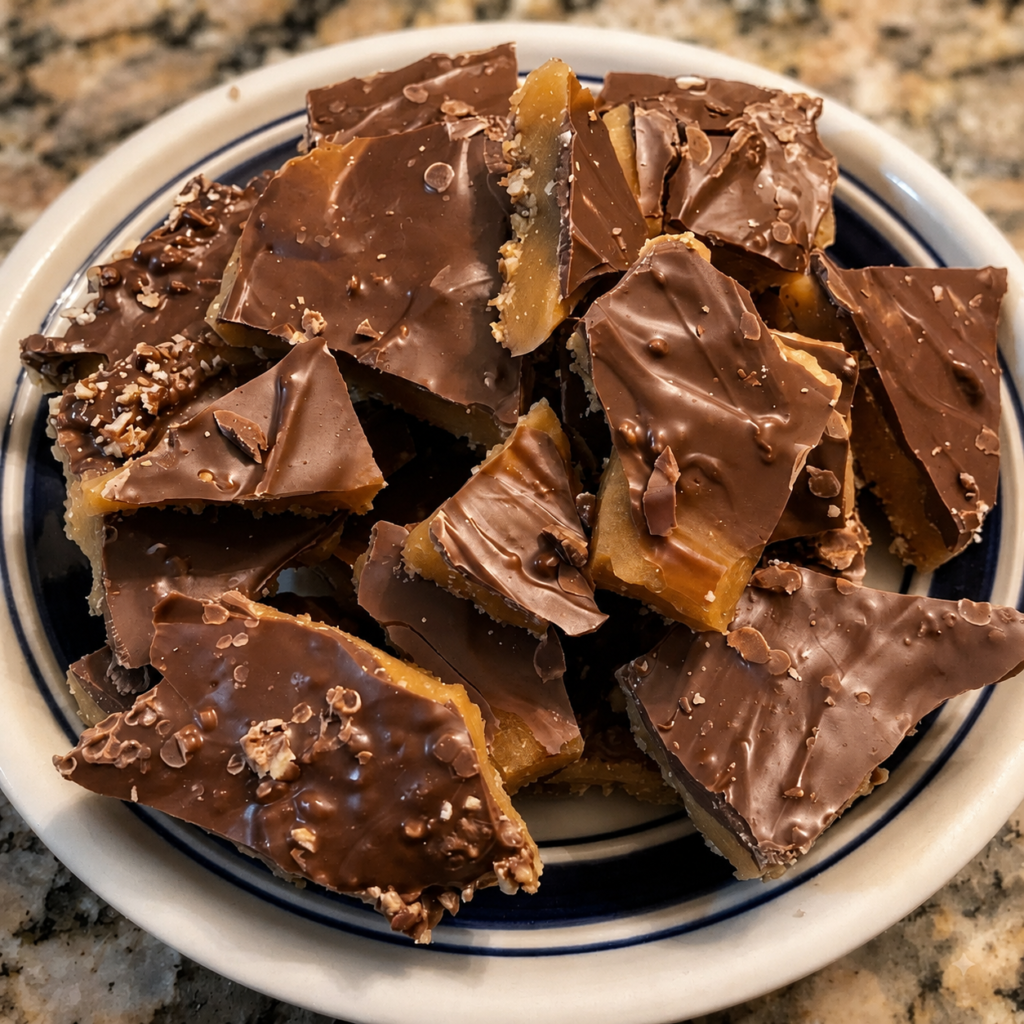
This diabetes-conscious English toffee delivers the irresistible combination of buttery caramel flavor, crunchy almonds, and a smooth layer of dark chocolate. Using allulose instead of traditional granulated sugar significantly reduces the carbohydrate load while keeping the classic crisp-toffee experience.
With almonds providing healthy fats and a small amount of protein, this is a satisfying low-carb dessert when enjoyed in a modest portion. It is not a high-protein food by itself, so pair it with a protein-rich snack if you’re building a higher-protein eating plan.
Short 3-Line Description
Buttery, crisp, chocolate-covered toffee with plenty of roasted almond crunch.
This lower-carb version uses allulose instead of traditional sugar.
Enjoy a small piece as a diabetes-conscious dessert or occasional sweet treat.
Can This English Toffee Support Weight Loss Goals?
It can fit into a weight-management plan when eaten in small portions. Almonds provide some protein, fat, and fiber, which can make the treat more satisfying than a sugar-only candy. However, toffee remains calorie-dense because of butter, chocolate, and nuts, so portion control is important.
Does English Toffee Fit a High-Protein Lifestyle?
This English toffee is not naturally high in protein, although almonds contribute a modest amount of protein.
The allulose-based recipe is designed to keep net carbs considerably lower than traditional toffee.
Dark chocolate and almonds add flavor, fat, fiber, and some protein without relying on regular sugar.
For a high-protein lifestyle, enjoy a small serving alongside Greek yogurt, cottage cheese, or another protein-rich food.
Why This Recipe Is Special
- Lower-carb alternative: Allulose replaces traditional sugar to substantially reduce digestible carbohydrates.
- Diabetes-conscious: No regular table sugar is used in the recipe.
- Rich and buttery: Butter gives the toffee its classic caramel-like flavor.
- Almond crunch: Roasted almonds add texture, fiber, and some protein.
- Chocolate-covered: Dark chocolate creates a delicious contrast with the crisp toffee.
My Personal Experience
- The almond crunch makes every bite satisfying.
Roasted almonds add a delicious contrast to the smooth chocolate coating.
They also make the toffee feel more substantial. - The chocolate layer balances the buttery toffee.
A thin coating provides rich cocoa flavor without overwhelming the caramel notes.
Dark chocolate works especially well with the roasted almonds. - Small pieces are surprisingly satisfying.
Because the toffee is rich and crunchy, a modest serving can work well as a treat.
Breaking the finished slab into small pieces makes portion control easier. - The homemade texture is the highlight.
Properly cooked toffee should snap cleanly rather than remain soft or sticky.
Letting it cool completely is essential for achieving that texture.
Perfect For
This English toffee is ideal for holiday dessert trays, homemade food gifts, afternoon treats, parties, and occasional low-carb desserts. It can also be prepared ahead of time and kept in the refrigerator or freezer. For a diabetes-conscious eating pattern, serve a small portion rather than treating it as an unlimited snack.
Why You’ll Love This Recipe
- Classic buttery flavor
The butter and vanilla create the familiar English-toffee taste.
Allulose keeps the recipe lower in digestible carbohydrates. - Crispy and crunchy
Proper cooking produces a satisfying snap.
Roasted almonds add even more texture. - Chocolate-covered goodness
A layer of dark chocolate gives the toffee a rich finish.
A little unsweetened or low-sugar chocolate goes a long way. - Easy to portion
The finished slab can be broken into small bite-size pieces.
This makes it easier to keep servings moderate.
Common Mistakes to Avoid
- Not reaching the correct temperature — Undercooked toffee can remain soft, greasy, or sticky.
- Burning the butter mixture — Use medium heat and stir frequently while monitoring the temperature.
- Using ordinary sugar accidentally — Regular sugar dramatically changes the carbohydrate content.
- Adding chocolate while the toffee is too hot — Excessive heat can cause the chocolate to become greasy or separate.
Required Equipment
- Heavy-bottom saucepan — Distributes heat evenly and reduces the risk of scorching.
- Candy thermometer — Makes it easier to monitor the toffee’s cooking temperature.
- Silicone spatula — Scrapes the saucepan clean and helps keep the mixture moving.
- Baking sheet — Provides a flat surface for spreading the finished toffee.
- Parchment paper — Prevents the cooled toffee from sticking.
- Heatproof bowl — Makes melting the chocolate simple and controlled.
Storage Instructions
Refrigerator: Store completely cooled toffee in an airtight container with parchment between layers for up to 2–3 weeks.
Freezer: Freeze pieces in an airtight freezer-safe container for up to 2–3 months. Separate layers with parchment paper.
Room temperature: In a cool, dry environment, properly sealed toffee can generally remain crisp for about 1 week.
Keep moisture away from the toffee because humidity can make the candy sticky and soften the chocolate.
Recipe Details
- Preparation Time: 10 minutes
- Cooking Time: 15–20 minutes
- Cooling Time: 45–60 minutes
- Total Time: About 1 hour 15 minutes
- Servings: 24 small pieces
- Best Season: All-season
- Total Calories: Approximately 125 calories per piece
- Difficulty: Intermediate
Nutrition values are approximate and depend heavily on the specific allulose, chocolate, butter, and almond brands used.
📝 Ingredients
Toffee
- 1 cup (227 g) unsalted butter
- 1 cup (200 g) granulated allulose
- 2 tablespoons (30 ml) water
- 1 teaspoon vanilla extract
- ¼ teaspoon fine sea salt
- 1 cup (140 g) roasted unsalted almonds, roughly chopped
Chocolate Topping
- 4 oz (113 g) sugar-free or very-low-sugar dark chocolate, chopped
- 1 teaspoon coconut oil, optional, for smoother melting
- 2 tablespoons finely chopped almonds, optional, for topping
Ingredient note: Use granulated allulose rather than regular sugar. Do not substitute an equal volume of regular sugar if you are trying to maintain the lower-carbohydrate profile.
Directions
1. Prepare the tray
Line a baking sheet with parchment paper and spread the chopped almonds over it.
Set aside.
2. Start the butter mixture
Place the butter, allulose, water, and salt in a heavy-bottom saucepan.
Cook over medium heat, stirring frequently, until the butter melts and the mixture begins bubbling.
3. Cook the toffee
Continue cooking over medium heat for approximately 10–15 minutes, stirring frequently.
Because allulose behaves differently from regular sugar, watch the mixture carefully rather than relying only on traditional sugar-toffee temperature targets.
The mixture should become thick, glossy, and caramel-colored.
4. Check the texture
Use a candy thermometer and cook according to the temperature guidance for your specific allulose product.
The mixture should look cohesive rather than watery, with a deep golden appearance.
High-protein tip: The almonds contribute protein and fiber, but the finished candy should still be considered a treat rather than a protein food.
5. Add vanilla
Remove the saucepan from the heat and carefully stir in the vanilla.
Be cautious because the mixture will be extremely hot and may bubble.
6. Add the almonds
Immediately pour the hot toffee over the prepared almonds.
Spread it into an even layer using a heatproof spatula.
Allow it to cool for approximately 20–30 minutes.
7. Add the chocolate
Melt the dark chocolate gently in a microwave in 15–20 second intervals, stirring between each interval.
Alternatively, melt it over a double boiler using low heat.
Stir in the coconut oil if desired.
8. Spread the chocolate
Spread the melted chocolate over the cooled or mostly cooled toffee.
Sprinkle the remaining chopped almonds over the top.
9. Chill
Place the tray in the refrigerator for 20–30 minutes, or until the chocolate is completely firm.
10. Break into pieces
Lift the hardened toffee from the parchment and break it into approximately 24 small pieces.
For easier portion control, keep the pieces relatively small.
Nutrition Facts — Per Small Piece, Approximate
| Nutrient | Approx. Amount |
|---|---|
| Calories | 125 kcal |
| Fat | 10 g |
| Cholesterol | 15 mg |
| Sodium | 45 mg |
| Potassium | 65 mg |
| Total Carbohydrates | 5 g |
| Fiber | 1.5 g |
| Net Carbs | ~3.5 g* |
| Sugars | ~1 g* |
| Protein | 2 g |
| Calcium | 25 mg |
*Values vary substantially depending on the chocolate and allulose product used. Allulose is a carbohydrate chemically but is generally treated differently from digestible sugars when calculating net carbohydrates.
Notes
- Storage: Keep in an airtight container away from humidity.
- Reheating: No reheating is necessary; allow chilled pieces to sit at room temperature for a few minutes before eating.
- Allergy: Contains milk, almonds, and potentially soy, depending on the chocolate used.
- Nut-free option: Use toasted pumpkin seeds instead of almonds, although the texture and nutrition will change.
- Flavor boost: Add a pinch of flaky sea salt over the chocolate layer.
- Chocolate choice: Choose unsweetened or sugar-free dark chocolate with a nutrition label that fits your carbohydrate goals.
- Diabetes-conscious serving: Keep portions small and check the carbohydrate content of your specific ingredients.
- Important: Allulose may cause digestive discomfort for some people when consumed in larger amounts.
Frequently Asked Questions
1. Is traditional English toffee diabetic-friendly?
No, traditional English toffee is made with substantial amounts of sugar and is high in carbohydrates.
2. Is this version completely sugar-free?
It contains no added table sugar, but check the chocolate label because some sugar-free chocolates may still contain small amounts of sugar.
3. Is English toffee keto-friendly?
This version can be much lower in net carbs than traditional toffee, but whether it fits a ketogenic plan depends on the specific ingredients and your daily carbohydrate target.
4. Is English toffee high in protein?
No, almonds provide some protein, but this remains primarily a fat-based dessert rather than a high-protein food.
5. Can I use regular sugar instead of allulose?
Yes for conventional English toffee, but doing so will substantially increase the carbohydrate content and change the recipe’s diabetes-conscious nutrition profile.
6. How much should I eat?
A small piece is the most practical portion because this is a calorie-dense dessert even in its lower-carb form.