
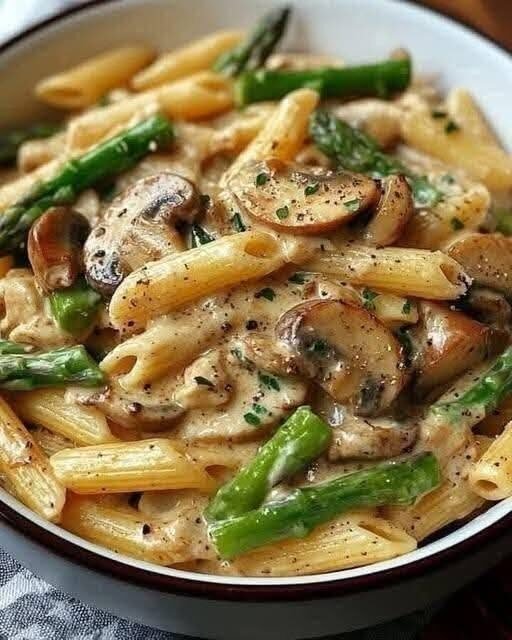
Creamy Mushroom & Asparagus Chicken Pasta
A Light, High-Protein Comfort Meal with Tender Chicken, Mushrooms, Asparagus & Creamy Garlic Sauce
Creamy pasta doesn’t have to be heavy to be satisfying. This Creamy Mushroom & Asparagus Chicken Pasta is a lighter, balanced version of a classic creamy pasta dinner, combining tender chicken breast, earthy mushrooms, crisp-tender asparagus, whole-wheat pasta, garlic, herbs, and a silky Parmesan-based sauce.
The inspiration for this recipe comes from the creamy mushroom, asparagus, and pasta combination shown in the photo. Instead of relying on a large amount of heavy cream, this version uses a controlled amount of light dairy ingredients, chicken broth, Parmesan, and reserved pasta water to create a creamy texture while keeping the recipe more portion-conscious.
This recipe is designed for people who want a comforting meal that can fit into a balanced eating pattern. It is not a crash-diet recipe, and no individual recipe can guarantee weight loss. Sustainable weight management generally works best when meals are satisfying, nutrient-dense, appropriately portioned, and combined with an overall healthy lifestyle.
The chicken provides substantial protein, while asparagus and mushrooms contribute vegetables, fiber, vitamins, minerals, and plenty of flavor. Whole-wheat pasta can add more fiber than conventional refined pasta, making the dish a practical choice for a filling lunch or dinner.
Why You’ll Love This Recipe
This creamy chicken pasta is especially appealing because it combines several textures in one bowl. The chicken is tender and savory, the mushrooms become golden and flavorful, the asparagus remains slightly crisp, and the pasta is coated in a smooth garlic-Parmesan sauce.
The recipe is also convenient enough for a weeknight dinner. Most of the preparation involves chopping the vegetables and chicken while the pasta water comes to a boil.
Unlike a traditional cream-heavy pasta sauce, the sauce in this recipe uses a modest quantity of light cream cheese and Parmesan along with chicken broth and pasta water. Pasta water contains starch released from the pasta during cooking, which helps emulsify the sauce and gives it a creamy consistency without requiring large quantities of cream.
Fresh garlic, black pepper, Italian seasoning, parsley, and a touch of lemon juice keep the flavor bright. The lemon is optional but highly recommended because its acidity helps balance the creamy sauce.
Recipe Information
Recipe Name: Creamy Mushroom & Asparagus Chicken Pasta
Cuisine: Italian-inspired
Category: Dinner / Main Course
Preparation Time: 15 minutes
Cooking Time: 25 minutes
Total Time: Approximately 40 minutes
Servings: 6
Difficulty: Easy to Moderate
Method: Stovetop
Best For: Weeknight dinners, meal prep, family meals, balanced lunches
Ingredients
For the Pasta
- 12 ounces (340 g) whole-wheat penne pasta
- 5 cups water for cooking pasta
- 1 teaspoon salt for the pasta water
For the Chicken
- 1½ pounds (680 g) boneless, skinless chicken breast
- 1 tablespoon olive oil
- ½ teaspoon salt
- ½ teaspoon black pepper
- 1 teaspoon Italian seasoning
- ½ teaspoon garlic powder
- ½ teaspoon paprika
For the Vegetables
- 8 ounces (225 g) mushrooms, sliced
- 8 ounces (225 g) fresh asparagus
- 1 medium yellow onion, finely diced
- 3 garlic cloves, minced
- 1 cup baby spinach, optional
For the Light Creamy Sauce
- 1 cup (240 ml) low-sodium chicken broth
- ½ cup (120 ml) low-fat milk
- 4 ounces (115 g) reduced-fat cream cheese
- ⅓ cup (30 g) finely grated Parmesan cheese
- ½ teaspoon Italian seasoning
- ¼ teaspoon black pepper
- ¼ teaspoon salt, or to taste
- ½ teaspoon lemon zest
- 1 tablespoon fresh lemon juice
- ¼ cup reserved pasta water, plus more if needed
For Garnishing
- 2 tablespoons chopped fresh parsley
- 1 tablespoon grated Parmesan, optional
- Freshly cracked black pepper
- A small amount of red pepper flakes, optional
Ingredient Notes
Chicken Breast
Boneless, skinless chicken breast is used because it provides plenty of protein without requiring a large amount of added fat. Cut the chicken into bite-sized pieces so it cooks quickly and distributes evenly throughout the pasta.
Chicken thighs can also be used, but they generally contain more fat and may slightly change the nutritional values.
Whole-Wheat Pasta
Whole-wheat penne provides a hearty texture and generally contains more fiber than traditional white pasta. You can substitute regular penne, chickpea pasta, lentil pasta, or another pasta of your choice.
If using a different pasta, check its package cooking instructions because cooking times vary.
Mushrooms
Cremini or white button mushrooms both work beautifully. For more intense mushroom flavor, use a mixture of cremini, portobello, or shiitake mushrooms.
Avoid washing mushrooms excessively because they can absorb water. If needed, quickly rinse them and dry them thoroughly, or simply wipe away visible dirt.
Asparagus
Fresh asparagus provides color, texture, and a slightly sweet vegetable flavor.
Choose firm asparagus stalks with bright green color and compact tips. Very thick stalks can be peeled lightly if desired.
Cream Cheese
Reduced-fat cream cheese provides body and creaminess without requiring a large quantity of heavy cream.
Allow it to soften slightly before adding it to the sauce so it incorporates more easily.
Parmesan
Parmesan contributes savory flavor and helps thicken the sauce. Because Parmesan is flavorful, a moderate quantity can provide plenty of taste.
Freshly grated Parmesan usually melts more smoothly than pre-shredded varieties.
Step-by-Step Instructions
1. Prepare the Ingredients
Before turning on the stove, prepare all the ingredients.
Cut the chicken into bite-sized pieces. Slice the mushrooms, dice the onion, mince the garlic, and cut the asparagus into approximately 1½-inch pieces.
Keeping everything ready makes the cooking process much easier because the sauce and vegetables cook relatively quickly.
2. Bring the Pasta Water to a Boil
Bring approximately 5 cups of water to a boil in a large pot.
Add 1 teaspoon of salt.
Once the water reaches a rolling boil, add the whole-wheat penne.
Cook according to the package instructions, but aim for al dente pasta.
The pasta should be tender but still have a slight firmness when bitten.
3. Reserve Pasta Water
Before draining the pasta, carefully reserve approximately ½ cup of the cooking water.
You may not need all of it, but keeping extra pasta water available gives you control over the sauce consistency.
The starchy water is one of the most useful ingredients in this recipe because it helps loosen and emulsify the creamy sauce.
Drain the pasta and set it aside.
Do not rinse the pasta because rinsing removes some of the starch that helps the sauce cling to the noodles.
4. Season the Chicken
Place the chicken pieces in a bowl.
Add salt, black pepper, Italian seasoning, garlic powder, and paprika.
Toss thoroughly until all pieces are evenly seasoned.
The seasoning is deliberately simple because the sauce, Parmesan, mushrooms, garlic, and herbs provide additional flavor.
5. Cook the Chicken
Heat 1 tablespoon of olive oil in a large nonstick or heavy-bottomed skillet over medium-high heat.
Add the seasoned chicken in a single layer.
Cook for approximately 5–7 minutes, stirring occasionally, until the chicken is golden on the outside and cooked through.
The thickest piece should reach 165°F (74°C) internally for food safety.
Transfer the cooked chicken to a clean plate.
6. Sauté the Mushrooms
Using the same skillet, add the sliced mushrooms.
Cook for approximately 4–6 minutes.
The mushrooms will initially release moisture.
Continue cooking until much of the moisture evaporates and the mushrooms develop lightly browned edges.
Allowing the mushrooms to brown rather than simply steam gives the finished pasta much deeper flavor.
7. Add the Onion
Add the diced onion to the skillet.
Cook for approximately 2–3 minutes, stirring frequently.
The onion should become soft and translucent.
If the skillet becomes completely dry, add a tablespoon or two of chicken broth rather than automatically adding more oil.
This keeps the recipe flavorful while helping control the amount of added fat.
8. Add the Garlic
Add the minced garlic.
Cook for approximately 30–45 seconds.
Stir constantly.
Garlic cooks quickly, and allowing it to become very dark can produce a bitter taste.
The moment the garlic becomes fragrant, move to the next step.
9. Add the Asparagus
Add the chopped asparagus to the skillet.
Cook for approximately 3–4 minutes.
You want the asparagus to become bright green and tender while retaining some bite.
Avoid overcooking it because slightly crisp asparagus provides a pleasant contrast to the creamy pasta.
10. Add the Chicken Broth
Pour 1 cup of low-sodium chicken broth into the skillet.
Scrape the bottom of the pan gently with a wooden spoon or silicone spatula.
The browned bits left behind from the chicken and mushrooms contain a great deal of flavor.
Allow the broth to simmer for approximately 2–3 minutes.
11. Add the Milk
Reduce the heat to medium-low.
Slowly add the low-fat milk while stirring.
Do not allow the sauce to boil aggressively.
A gentle simmer is sufficient.
12. Add the Cream Cheese
Add the reduced-fat cream cheese in small pieces.
Stir continuously until the cream cheese melts into the broth and milk.
The sauce should gradually become smooth and creamy.
If small lumps remain, continue stirring over low heat.
13. Add Parmesan
Add the grated Parmesan cheese.
Stir until completely incorporated.
The Parmesan will add saltiness, umami, and richness to the sauce.
Taste before adding additional salt because Parmesan can already provide significant seasoning.
14. Season the Sauce
Add Italian seasoning, black pepper, lemon zest, and lemon juice.
Stir well.
Taste the sauce.
Adjust the seasoning with additional black pepper or a small amount of salt if necessary.
For a spicy variation, add a pinch of red pepper flakes.
15. Adjust the Consistency
Add approximately ¼ cup of reserved pasta water.
Stir gently.
If the sauce is too thick, add another tablespoon or two of pasta water.
If the sauce is too thin, allow it to simmer gently for another minute or two.
The finished sauce should coat the back of a spoon and cling to the pasta without becoming excessively thick.
16. Return the Chicken
Return the cooked chicken to the skillet.
Stir gently so the chicken becomes coated with the creamy sauce.
Allow everything to warm together for approximately 1–2 minutes.
Do not cook for an extended period because the chicken can become dry.
17. Add the Pasta
Add the drained pasta to the skillet.
Use tongs or a large spoon to toss everything together.
Make sure the sauce coats the pasta evenly.
If necessary, add another splash of reserved pasta water.
18. Add Optional Spinach
If using baby spinach, add it during the final minute of cooking.
Stir until the spinach wilts.
This is an easy way to add another vegetable to the dish without significantly changing the overall flavor.
19. Finish with Fresh Herbs
Turn off the heat.
Add the chopped fresh parsley.
Stir gently.
The fresh herbs brighten the creamy sauce and provide a fresh finish.
20. Serve Immediately
Divide the pasta evenly among six bowls.
Top with freshly cracked black pepper.
Add a small sprinkle of Parmesan if desired.
Serve immediately while the sauce is warm and creamy.
How to Make This Recipe More Weight-Management Friendly
The most useful approach is portion awareness rather than eliminating pasta or other carbohydrates entirely.
This recipe contains pasta, but the serving is measured and combined with chicken and vegetables.
Using plenty of mushrooms and asparagus increases the volume of the meal without relying entirely on pasta.
The amount of olive oil and cheese is also measured rather than poured freely into the pan.
Protein from chicken and the volume provided by vegetables can make the meal more satisfying.
If you’re working toward a personal weight-management goal, consider your overall daily intake and activity level rather than judging the recipe by itself.
How to Reduce Calories Further
If you want a lighter version, use 10 ounces (285 g) of pasta instead of 12 ounces and increase the mushrooms and asparagus.
You can also use fat-free or low-fat milk, depending on your preference.
Another option is to reduce the Parmesan slightly and add extra herbs, garlic, lemon zest, black pepper, and red pepper flakes for flavor.
Avoid reducing the recipe so aggressively that the meal becomes unsatisfying. A meal you enjoy and can comfortably include in your routine is often more practical than an extremely restrictive version.
How to Increase Protein
For a higher-protein meal, increase the chicken to 1¾ pounds (790 g).
You can also use a higher-protein pasta such as chickpea or lentil pasta.
If using protein-enriched pasta, monitor the cooking time carefully because different products behave differently.
How to Add More Vegetables
This recipe is flexible enough to accommodate several vegetables.
Try adding:
- Broccoli florets
- Baby spinach
- Zucchini
- Bell peppers
- Peas
- Green beans
- Kale
If adding several vegetables, increase the skillet size so everything has enough room to cook properly.
Best Pasta Choices
Whole-wheat penne is recommended for the recipe because its ridged surface holds the creamy sauce well.
Rigatoni, fusilli, rotini, bow-tie pasta, or spaghetti can also be used.
For a higher-fiber variation, choose a whole-grain or legume-based pasta.
If using spaghetti, toss the pasta thoroughly with the sauce so it doesn’t clump together.
How to Make the Sauce Extra Creamy
The secret is not simply adding more cream.
Instead, combine cream cheese, Parmesan, milk, chicken broth, and starchy pasta water.
The pasta water helps bind the sauce and creates a smoother texture.
Keep the heat relatively low after adding the dairy ingredients.
High heat can cause dairy-based sauces to separate or become grainy.
How to Avoid a Watery Sauce
Cook the mushrooms sufficiently before adding the broth.
Mushrooms naturally release a significant amount of water.
If they are not cooked down first, the final sauce may become thinner than intended.
Also, don’t add all the pasta water at once.
Add it gradually until you reach the desired consistency.
Meal Prep Instructions
This pasta can be prepared ahead of time, although creamy pasta generally tastes best fresh.
For meal prep, divide the finished recipe into six airtight containers.
Allow the food to cool appropriately before refrigerating.
Store in the refrigerator and consume within a reasonable food-safety timeframe.
When reheating, add a tablespoon or two of milk or chicken broth to loosen the sauce.
Heat gently rather than using extremely high heat.
Reheating Instructions
Place one serving in a microwave-safe bowl.
Add 1–2 tablespoons of milk or chicken broth.
Cover loosely and heat in short intervals, stirring between intervals.
Alternatively, reheat gently in a skillet over medium-low heat.
The additional liquid helps restore the creamy consistency because pasta absorbs sauce during refrigeration.
Storage
Store leftovers in an airtight container in the refrigerator.
For best quality, enjoy within 3–4 days.
Keep the refrigerator at 40°F (4°C) or below.
If the pasta has been left at room temperature for an extended period, it should not be kept simply to avoid waste.
Can You Freeze This Pasta?
Creamy dairy-based pasta can be frozen, but the texture may change after thawing.
The sauce can become slightly grainy or separate.
For the best quality, make only the amount you expect to eat within a few days.
If freezing is necessary, cool the pasta properly, portion it into freezer-safe containers, and thaw in the refrigerator before reheating gently.
Serving Suggestions
This pasta is filling enough to serve as a complete main course.
For additional vegetables, serve it with a simple green salad dressed with lemon juice and a small amount of olive oil.
Steamed broccoli or roasted green beans also pair well with the creamy sauce.
If serving the pasta as part of a larger family meal, consider smaller portions alongside a large vegetable salad.
Flavor Variations
Lemon Garlic Chicken Pasta
Increase the lemon zest and lemon juice for a brighter, fresher flavor.
Spicy Mushroom Chicken Pasta
Add ½ teaspoon crushed red pepper flakes to the sauce.
Mediterranean Version
Add chopped sun-dried tomatoes, spinach, oregano, and a small amount of feta.
Spinach Mushroom Chicken Pasta
Add 2 cups of fresh baby spinach during the final few minutes.
Broccoli Chicken Pasta
Replace half the asparagus with small broccoli florets.
Herb Chicken Pasta
Add fresh basil, parsley, and thyme just before serving.
Common Mistakes to Avoid
Overcooking the chicken: Chicken breast can become dry if cooked too long.
Skipping the mushroom browning: Properly browned mushrooms provide much more flavor.
Boiling the cream sauce: Keep the dairy-based sauce at a gentle simmer.
Adding too much pasta water: Add it gradually.
Using too much cheese: Parmesan is flavorful, so a moderate quantity is usually enough.
Overcooking asparagus: It should remain bright and slightly crisp.
Crowding the skillet: Cook the chicken in batches if necessary.
Approximate Nutrition
The following nutrition estimate is based on 6 servings using the exact quantities listed above:
| Nutrient | Approx. Per Serving |
|---|---|
| Calories | 470–510 kcal |
| Protein | 42–46 g |
| Carbohydrates | 48–55 g |
| Fat | 14–18 g |
| Fiber | 7–9 g |
| Sugar | 6–8 g |
| Sodium | 600–800 mg |
| Calcium | 250–350 mg |
These are estimated values, not laboratory-tested nutrition information. Actual nutrition can vary depending on the specific chicken, pasta, cream cheese, milk, Parmesan, broth, and other brands used.
Frequently Asked Questions
Can I use regular pasta instead of whole-wheat pasta?
Yes. Regular penne works perfectly. Whole-wheat pasta is simply used here as a higher-fiber option.
Can I use chicken thighs?
Yes. Boneless, skinless chicken thighs can be substituted, although the nutritional information will change.
Can I make this without cream cheese?
Yes. You can use additional milk and Parmesan, although the sauce will be less thick and creamy.
Can I use Greek yogurt?
Greek yogurt can be used in some creamy pasta sauces, but add it over low heat and avoid boiling because high temperatures can cause it to separate.
Can I make this vegetarian?
Absolutely. Omit the chicken and use vegetable broth. Add extra mushrooms, asparagus, spinach, chickpeas, or another protein-rich vegetarian ingredient.
Can I use frozen asparagus?
Yes. Frozen asparagus can work, although it may be softer than fresh asparagus. Add it according to the package instructions and avoid overcooking.
What mushrooms are best?
Cremini mushrooms are an excellent everyday choice. White button mushrooms, portobello, shiitake, or mixed mushrooms can also be used.
Can I make this gluten-free?
Yes. Use certified gluten-free pasta and verify that your broth, cream cheese, seasonings, and other packaged ingredients are gluten-free.
How can I make it spicy?
Add ¼–½ teaspoon red pepper flakes to the sauce or finish each serving with freshly ground black pepper and chili flakes.
Can I make it dairy-free?
Yes, but you will need dairy-free alternatives for the milk, cream cheese, and Parmesan. The flavor and texture will vary depending on the products used.
Complete Recipe Card
Creamy Mushroom & Asparagus Chicken Pasta
Servings: 6
Prep Time: 15 minutes
Cook Time: 25 minutes
Total Time: 40 minutes
Ingredients
Pasta
- 12 oz (340 g) whole-wheat penne
- 5 cups water
- 1 tsp salt
Chicken
- 1½ lb (680 g) boneless, skinless chicken breast
- 1 tbsp olive oil
- ½ tsp salt
- ½ tsp black pepper
- 1 tsp Italian seasoning
- ½ tsp garlic powder
- ½ tsp paprika
Vegetables
- 8 oz (225 g) mushrooms
- 8 oz (225 g) asparagus
- 1 medium onion
- 3 garlic cloves
- 1 cup baby spinach, optional
Creamy Sauce
- 1 cup low-sodium chicken broth
- ½ cup low-fat milk
- 4 oz reduced-fat cream cheese
- ⅓ cup Parmesan
- ½ tsp Italian seasoning
- ¼ tsp black pepper
- ¼ tsp salt
- ½ tsp lemon zest
- 1 tbsp lemon juice
- ¼ cup reserved pasta water
Garnish
- 2 tbsp fresh parsley
- 1 tbsp Parmesan, optional
- Fresh black pepper
- Red pepper flakes, optional