
Ingredients
For the Cake
- 2 cups all-purpose flour
- 2 cups granulated sugar
- 2 teaspoons baking soda
- 1 teaspoon baking powder
- 1 teaspoon ground cinnamon
- ½ teaspoon salt
- 1 cup vegetable oil
- 4 large eggs
- 2 teaspoons vanilla extract
- 3 cups finely grated carrots
- 1 cup crushed pineapple, well drained
- 1 cup chopped walnuts or pecans
- ½ cup shredded coconut, optional
For the Cream Cheese Frosting
- 8 ounces cream cheese, softened
- ½ cup unsalted butter, softened
- 3 cups powdered sugar
- 1 teaspoon vanilla extract
Optional Decoration
For a beautiful finished cake, reserve a small amount of chopped walnuts or pecans for decorating the top. You can also add a light dusting of cinnamon or arrange a few thin carrot curls around the edge if desired.
Preparing the Cake Pans
Begin by preheating your oven to 350°F (175°C). Properly preparing the pans is important than butter also helps the cake remain soft even after refrigeration, which is especially useful because the finishedGradually add the wet ingredients to the bowl containing the dry ingredients. Stir gently until the ingredients are just combined and no large pockets develop too much gluten, resulting in a cake that is denser or chewier than desired. A few small lumps are perfectly acceptable before the carrots and the grated carrots and gently fold them into the batter using a spatula or large spoon. Avoid squeezing the carrots dry because thoroughly drained. Excess pineapple juice can add too much liquid to the batter and potentially affect the cake’s structure. You want the pineapple pieces to provide moisture and flavor without crunch, while pecans offer a slightly sweeter and more buttery flavor. shredded coconut adds another layer of texture and a subtle tropical noteOnce all the ingredients are incorporated, divide the batter evenly between the two prepared try to distribute the batter as evenly as possible. You can use a kitchen scale if you want both layers to be exactly the same size, although simply back of a spatula. Avoid compacting the batter; checking the cakes toward the end of the recommended baking time. Insert a toothpick or wooden skewer into the center of each cake. It should come out clean or with a few moist crumbs A cake baked in a particularly hot oven may finish earlier, while another oven may require several set in the center, with lightly golden edges. They should also. This short resting period allows the structure to the edges if necessary, then turn the cakes out onto wire racks. Remove the parchment paper and cake layers are completely cool before frosting. If the layers are still warm, the cream cheese frosting can soften excessively and slide from the the completely cooled layers and refrigerate them for a few hours beforeually add the powdered sugar, mixing after each addition. Adding the sugar gradually helps prevent a large cloud of powdered sugar from too soft, refrigerate it briefly before assembling the cake. If it seems excessively thick, allow it to sit at room temperature for a few minutes and mix again layer on a serving plate or cake stand. If the layer has developed a noticeable dome, you can carefully trim the top with a layer of cream cheese frosting over the top of the first cake layer. Use an offset spatula to spread remain and textured frosting give carrot, sprinkle the top with chopped walnuts or pecans. You can arrange them around the outer edge, scatter them across cinnamon can also enhance the appearance and aroma. If you want a more polished celebration cake, use a piping bag to add small cream cheese frosting ro pictured rustic style works particularly well for this recipe: generous cream cheese frosting, naturally textured sides, and chopped nuts arranged across the top create an the carrot cake can be served once assembled, chilling it briefly before slicing can make the cake easier to cut and help the frosting firm. This is especially useful if the kitchen is warm or if you want room temperature for a short time. This allows the frosting cake should be stored in the refrigerator. Keep the cake covered in a cake container or tightly covered with food-safe wrap to prevent it from flavor often becomes even more developed after resting overnight because the moisture from the carrots and the best texture, allow refrigerated slices to sit at room temperature briefly an excellent make-ahead dessert. You can bake the cake layers a day in advance, allow them to cool completely, wrap them securely, and refrigerate them until you refrigerated in an airtight container. Before using it, allow it to soften slightly and beat it briefly until smooth and convenient. Keep the completed cake refrigerated and plenty of moisture and provide better texture than many pre-shredded alternatives Once the flour is incorporated, mix only until the ingredients come cake can cause the cream cheese frosting to melt or become difficult to control heavy cake. For the most consistent more pronounced earthy flavor and provide a classic carrot-cake taste. Pecans are somewhat sweeter, softer, and more buttery, you can also leave the nuts out of the batter and use them only as decoration. This makes warmth, you can experiment with complementary spices such as a you enjoy the traditional combination of carrots, pineapple, and dried fruit. However, raisinsent dessert, decorate the finished cake with toasted pecans, walnuts, or coconut. Toasting the nuts first can intensify their aroma and create a more pronounced too much pineapple juice. Always drain the crushed pineapple thoroughly before adding it to the slightly warm cake can cause cream cheese frosting to become soft when making the frosting. Gradual incorporation produces a smoother mixturerot cake should be moist and tender. Start testing with a toothpick around the 30-minute mark and remove the cakes once wonderfully with coffee, tea, or a glass of cold milk. It is substantial enough for dessert but also works beautifully as as the centerpiece of the dessert table. The cream cheese frosting and nut topping provide enough decoration servings, use a sharp knife to cut clean wedges because carrot cake is moist and can sometimes stick if the pans are not adequately greased.
Grease two 9-inch round cake pans with butter or nonstick cooking spray. Line the bottoms with parchment paper, then lightly grease the parchment as well. This extra step makes removing the baked cake layers much easier and helps prevent damage to the delicate edges.
If you prefer, you can lightly dust the greased sides with flour after lining the pans. Tap out any excess flour before adding the batter.
Preparing the Dry Ingredients
In a large mixing bowl, combine the all-purpose flour, granulated sugar, baking soda, baking powder, ground cinnamon, and salt. Whisk the ingredients thoroughly so that the leavening agents and cinnamon are evenly distributed throughout the flour.
Even distribution is important because baking soda and baking powder are responsible for helping the cake rise. Mixing them thoroughly into the dry ingredients reduces the chance of concentrated pockets of leavening in the finished cake.
At this stage, avoid overmixing. The goal is simply to combine the ingredients evenly before the wet ingredients are introduced.
Preparing the Wet Ingredients
In a separate medium-sized bowl, whisk together the vegetable oil, eggs, and vanilla extract. The oil gives this carrot cake its exceptionally moist texture, while the eggs provide structure and richness.
Make sure the eggs are reasonably well incorporated into the oil before proceeding. The mixture does not need to become fluffy because this recipe relies on chemical leavening rather than whipped eggs for its rise.
Using oil rather than butter also helps the cake remain soft even after refrigeration, which is especially useful because the finished cake is covered with cream cheese frosting.
Combining the Batter
Gradually add the wet ingredients to the bowl containing the dry ingredients. Stir gently until the ingredients are just combined and no large pockets of dry flour remain.
Do not aggressively beat the batter at this stage. Overmixing can develop too much gluten, resulting in a cake that is denser or chewier than desired. A few small lumps are perfectly acceptable before the carrots and other additions are incorporated.
Once the basic batter has come together, prepare to add the signature ingredients that give carrot cake its distinctive texture.
Adding the Carrots
Finely grate the carrots before adding them to the batter. Fine shreds distribute more evenly throughout the cake and soften beautifully during baking.
Add the grated carrots and gently fold them into the batter using a spatula or large spoon. Avoid squeezing the carrots dry because their natural moisture contributes significantly to the cake’s tender texture.
Freshly grated carrots generally produce better results than pre-shredded packaged carrots, which can be comparatively dry and coarse.
Adding Pineapple, Nuts, and Coconut
Next, fold in the well-drained crushed pineapple, chopped walnuts or pecans, and shredded coconut if you are using it.
Make sure the pineapple is thoroughly drained. Excess pineapple juice can add too much liquid to the batter and potentially affect the cake’s structure. You want the pineapple pieces to provide moisture and flavor without making the batter watery.
Walnuts provide a traditional earthy crunch, while pecans offer a slightly sweeter and more buttery flavor. Either choice works wonderfully.
If you enjoy coconut, the optional shredded coconut adds another layer of texture and a subtle tropical note. If you prefer a more traditional carrot cake, simply leave it out.
Dividing the Batter
Once all the ingredients are incorporated, divide the batter evenly between the two prepared 9-inch cake pans.
For the most consistent layers, try to distribute the batter as evenly as possible. You can use a kitchen scale if you want both layers to be exactly the same size, although simply dividing the batter carefully with a spatula works well.
Gently smooth the tops with the back of a spatula. Avoid compacting the batter; you only need to create an even surface.
Baking the Carrot Cake
Place the cake pans in the center of the preheated oven and bake for approximately 30–35 minutes.
Because ovens vary, begin checking the cakes toward the end of the recommended baking time. Insert a toothpick or wooden skewer into the center of each cake. It should come out clean or with a few moist crumbs attached.
Do not rely exclusively on the clock. A cake baked in a particularly hot oven may finish earlier, while another oven may require several additional minutes.
The finished cakes should look set in the center, with lightly golden edges. They should also spring back gently when lightly touched.
Cooling the Cake Layers
Remove the cakes from the oven and allow them to cool in their pans for approximately 10 minutes. This short resting period allows the structure to firm up while the cakes are still warm.
After 10 minutes, carefully run a thin knife around the edges if necessary, then turn the cakes out onto wire racks. Remove the parchment paper and allow the layers to cool completely.
It is extremely important that the cake layers are completely cool before frosting. If the layers are still warm, the cream cheese frosting can soften excessively and slide from the cake.
For an even easier assembly, you can wrap the completely cooled layers and refrigerate them for a few hours before frosting.
Making the Cream Cheese Frosting
While the cake layers cool, prepare the cream cheese frosting.
Place the softened cream cheese and softened unsalted butter in a large mixing bowl. Beat them together until the mixture becomes smooth, creamy, and free of noticeable lumps.
Gradually add the powdered sugar, mixing after each addition. Adding the sugar gradually helps prevent a large cloud of powdered sugar from escaping the bowl and also allows the frosting to develop a smoother consistency.
Add the vanilla extract and continue beating until the frosting is creamy and spreadable.
If the frosting seems too soft, refrigerate it briefly before assembling the cake. If it seems excessively thick, allow it to sit at room temperature for a few minutes and mix again.
Assembling the Carrot Cake
Place the first completely cooled cake layer on a serving plate or cake stand. If the layer has developed a noticeable dome, you can carefully trim the top with a serrated knife to create a flatter surface.
Spread a generous layer of cream cheese frosting over the top of the first cake layer. Use an offset spatula to spread the frosting evenly from the center toward the edges.
Place the second cake layer carefully on top. Press very gently so that the layers remain level without squeezing out too much of the filling.
Spread frosting over the top and sides of the entire cake. The frosting does not need to be perfectly smooth. In fact, rustic swirls and textured frosting give carrot cake a particularly attractive homemade appearance.
Decorating the Cake
For a classic presentation, sprinkle the top with chopped walnuts or pecans. You can arrange them around the outer edge, scatter them across the entire surface, or create a decorative ring.
A small dusting of ground cinnamon can also enhance the appearance and aroma. If you want a more polished celebration cake, use a piping bag to add small cream cheese frosting rosettes around the border before sprinkling with nuts.
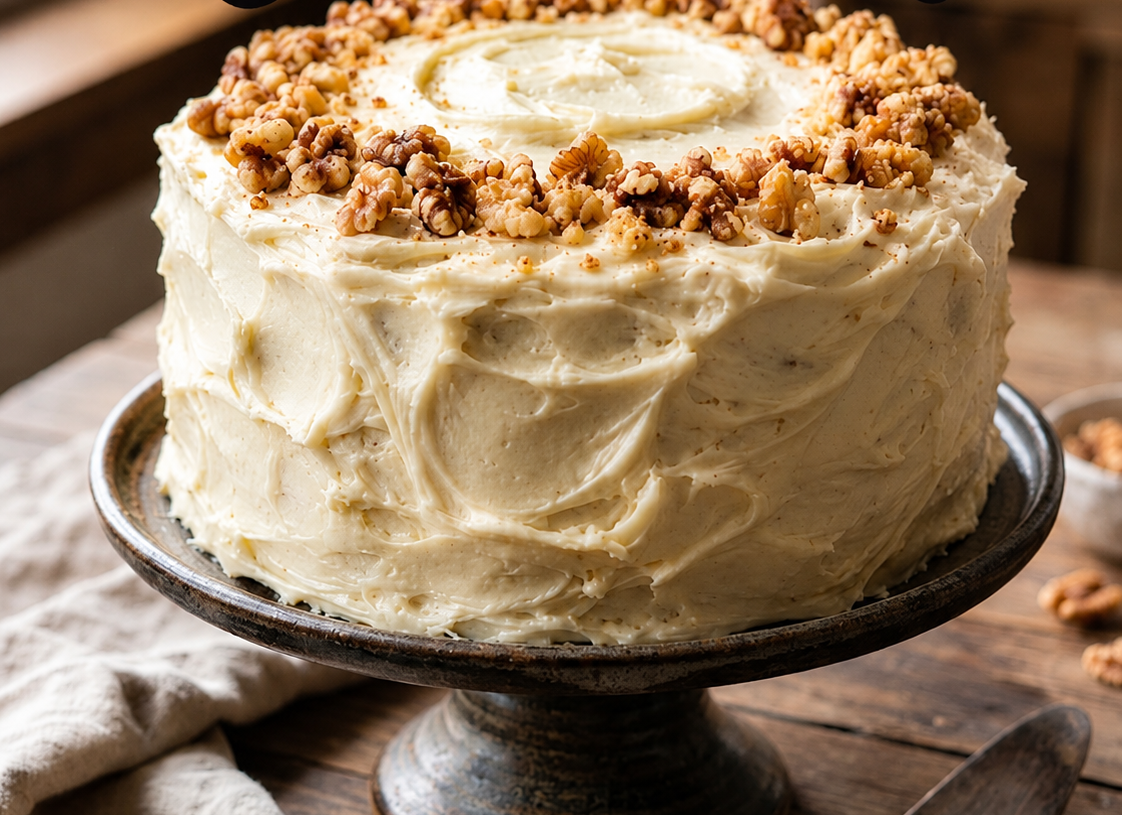
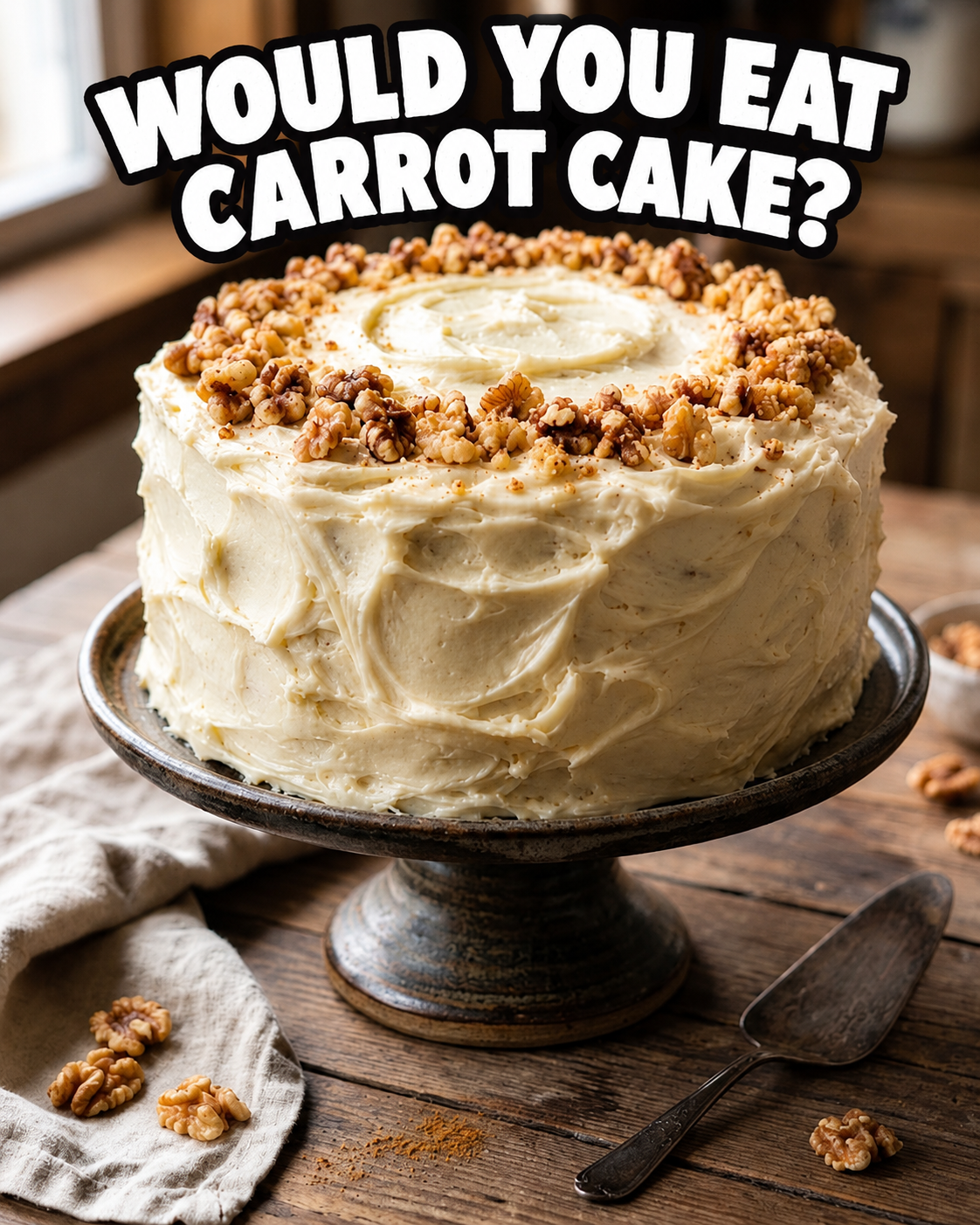
The pictured rustic style works particularly well for this recipe: generous cream cheese frosting, naturally textured sides, and chopped nuts arranged across the top create an inviting homemade finish.
Chilling Before Serving
Although the carrot cake can be served once assembled, chilling it briefly before slicing can make the cake easier to cut and help the frosting firm up.
Place the finished cake in the refrigerator for approximately 30–60 minutes before serving. This is especially useful if the kitchen is warm or if you want particularly clean slices.
Before serving, allow the cake to sit at room temperature for a short time. This allows the frosting and cake to soften slightly and brings out their flavor.
How to Store Carrot Cake
Because the frosting contains cream cheese, leftover cake should be stored in the refrigerator. Keep the cake covered in a cake container or tightly covered with food-safe wrap to prevent it from absorbing refrigerator odors.
Properly covered, the cake can generally be enjoyed for several days. The flavor often becomes even more developed after resting overnight because the moisture from the carrots and pineapple has time to distribute throughout the cake.
For the best texture, allow refrigerated slices to sit at room temperature briefly before serving.
Can You Make Carrot Cake Ahead?
Yes. Carrot cake is an excellent make-ahead dessert. You can bake the cake layers a day in advance, allow them to cool completely, wrap them securely, and refrigerate them until you are ready to assemble the cake.
The frosting can also be prepared ahead and refrigerated in an airtight container. Before using it, allow it to soften slightly and beat it briefly until smooth and spreadable.
For entertaining, assembling the cake the day before serving is particularly convenient. Keep the completed cake refrigerated and remove it shortly before serving.
Tips for the Best Carrot Cake
Use freshly grated carrots. Fresh carrots contain plenty of moisture and provide better texture than many pre-shredded alternatives.
Drain the pineapple well. Pineapple adds wonderful moisture, but excessive liquid can make the batter too wet.
Do not overmix. Once the flour is incorporated, mix only until the ingredients come together.
Use softened frosting ingredients. Room-temperature cream cheese and butter combine more smoothly and produce a creamier frosting.
Cool the cake completely. Frosting a warm cake can cause the cream cheese frosting to melt or become difficult to control.
Measure flour accurately. Too much flour can produce a dry or heavy cake. For the most consistent results, weighing flour with a kitchen scale is ideal.
Walnuts vs. Pecans
Both walnuts and pecans work beautifully in this recipe. Walnuts have a slightly more pronounced earthy flavor and provide a classic carrot-cake taste. Pecans are somewhat sweeter, softer, and more buttery.
If you are serving the cake to guests, you can also leave the nuts out of the batter and use them only as decoration. This makes it easier to accommodate people who prefer a smoother cake texture.
If avoiding nuts entirely, simply omit them. The cake will still be moist and flavorful.
Optional Recipe Variations
For additional warmth, you can experiment with complementary spices such as a small amount of ground nutmeg or ginger. These are not required for the classic version but can add complexity.
You can also add raisins if you enjoy the traditional combination of carrots, pineapple, and dried fruit. However, raisins are optional and should only be included if you prefer their texture and sweetness.
For a more indulgent dessert, decorate the finished cake with toasted pecans, walnuts, or coconut. Toasting the nuts first can intensify their aroma and create a more pronounced crunch.
Common Mistakes to Avoid
One of the most common mistakes is using too much pineapple juice. Always drain the crushed pineapple thoroughly before adding it to the batter.
Another common issue is frosting the cake while it is still warm. Even a slightly warm cake can cause cream cheese frosting to become soft and difficult to spread.
Avoid adding all the powdered sugar at once when making the frosting. Gradual incorporation produces a smoother mixture and gives you better control over the final consistency.
Finally, do not overbake the cake. Carrot cake should be moist and tender. Start testing with a toothpick around the 30-minute mark and remove the cakes once they are properly baked.
Serving Suggestions
Classic carrot cake pairs wonderfully with coffee, tea, or a glass of cold milk. It is substantial enough for dessert but also works beautifully as an afternoon treat.
For birthdays and celebrations, serve the cake as the centerpiece of the dessert table. The cream cheese frosting and nut topping provide enough decoration to make the cake feel special without requiring elaborate decorating skills.
For individual servings, use a sharp knife to cut clean wedges. Wipe the blade between slices if you want especially neat presentation.
Recipe at a Glance
Prep Time: Approximately 25–30 minutes
Bake Time: 30–35 minutes
Cooling Time: Approximately 1 hour
Frosting & Assembly: 20–30 minutes
Total Time: Approximately