
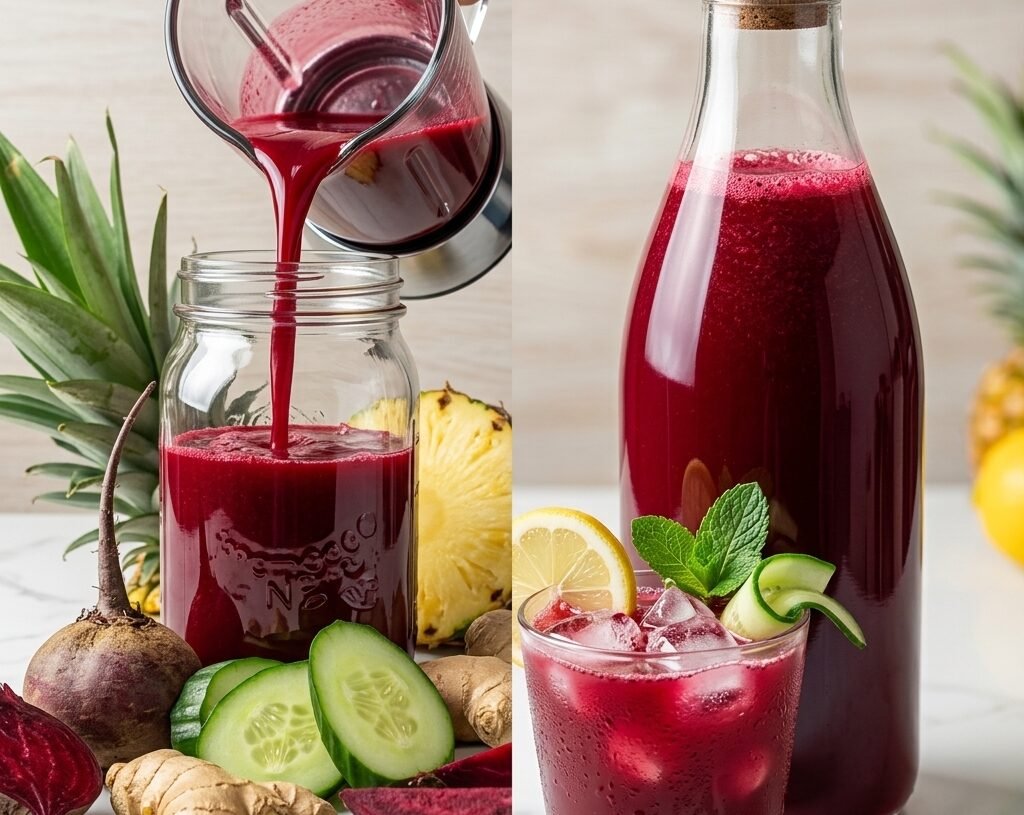
🥤 Beetroot Blood-Pressure & Anti-Inflammatory Juice
Makes: ~12–16 oz (350–475 mL)
Ingredients
- 1 medium raw beet, washed and trimmed
- 1 medium cucumber
- 1–2 celery stalks
- 1-inch piece fresh ginger
- ½ lemon, peeled
- 1 small handful spinach or parsley
- ½–1 cup water, as needed
- Optional: a small piece of turmeric root or ¼ tsp turmeric powder
Blend: Chop everything, blend until very smooth, and add water as needed. Strain if you prefer a thinner juice, although keeping some pulp gives you more fiber.
Best approach: Start with about 8 oz (240 mL) daily, preferably with breakfast or lunch. Clinical studies of beetroot juice have generally used roughly 70–250 mL/day, with some trials using higher nitrate doses. Meta-analyses suggest beetroot juice can lower systolic blood pressure, although the size of the effect varies and the evidence isn’t strong enough to consider it a replacement for blood-pressure treatment.
Why these ingredients?
- Beetroot: rich in dietary nitrate, which can increase nitric oxide and promote blood-vessel relaxation.
- Ginger + turmeric: provide plant compounds with antioxidant/anti-inflammatory properties.
- Lemon: adds vitamin C and improves the flavor.
- Cucumber/celery/greens: add potassium and other micronutrients without loading the drink with sugar.
There is some interesting human evidence around inflammation: a 2024 randomized crossover study specifically examined beetroot juice and oxidative stress/inflammation markers in people with hypertension, although this area is much less established than the blood-pressure evidence.
One important caution: if you’re taking blood-pressure medication, monitor your BP when starting this because beetroot juice may add to the BP-lowering effect. And don’t use it instead of prescribed medication. Also, beetroot can temporarily turn urine or stool pink/red, which is usually harmless.