
ChatGPT said:
Bacon and Egg Sandwich
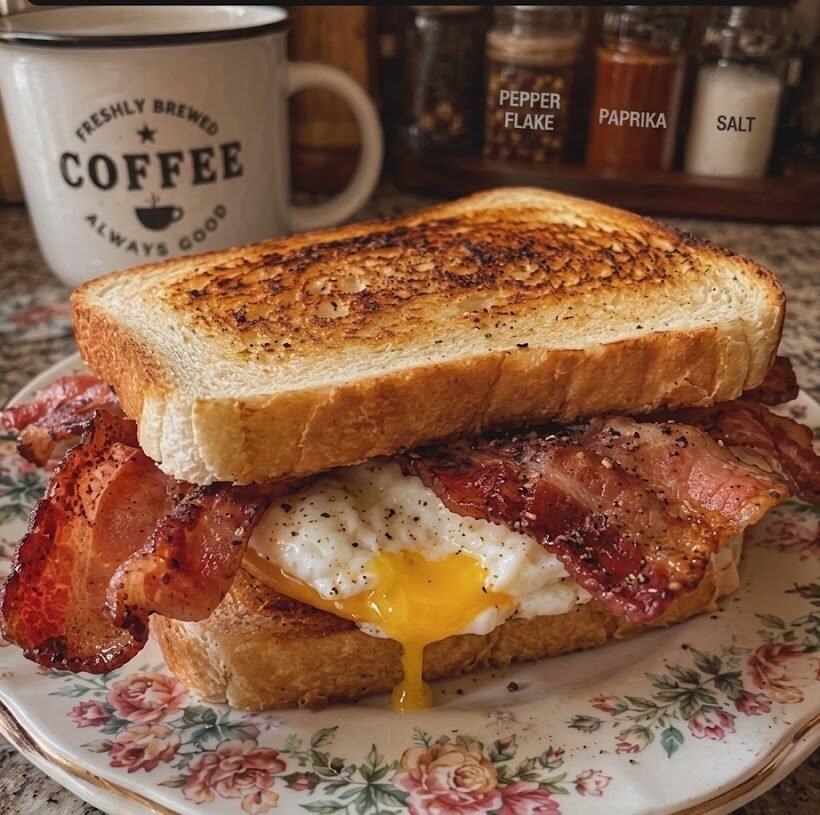
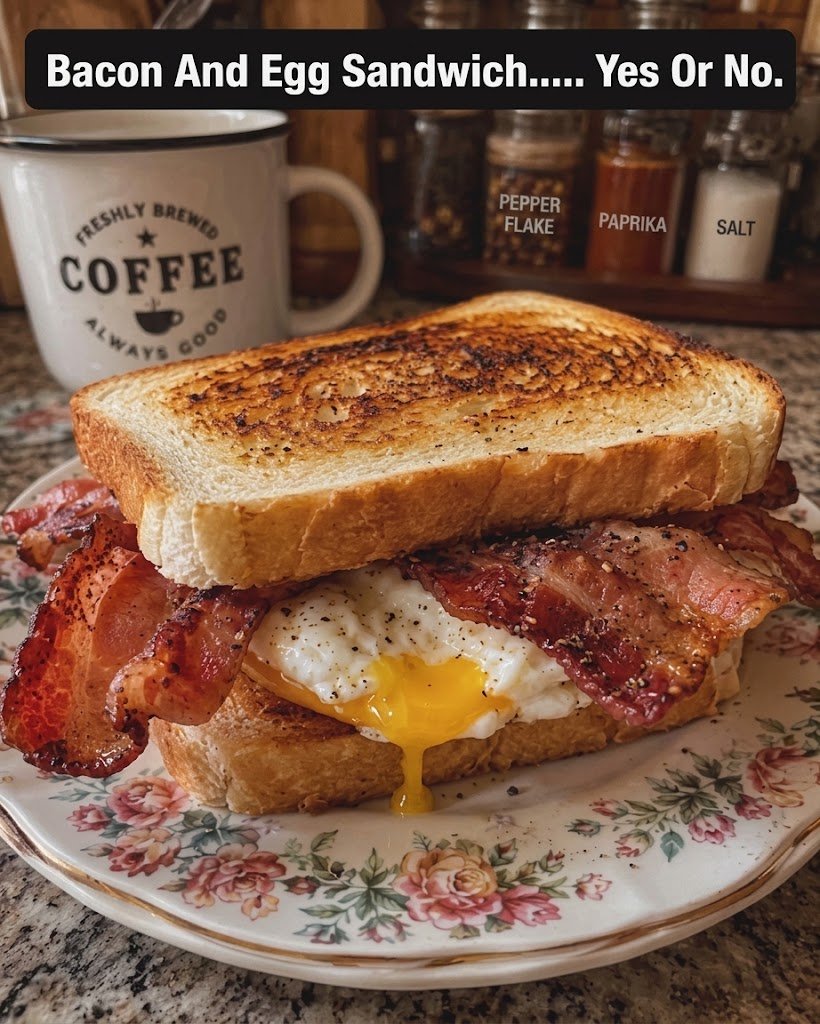
A hearty, diner-style Bacon and Egg Sandwich with thick golden toast, crispy smoky bacon, buttery fried eggs, melted cheddar cheese, and a rich, delicious egg yolk. This recipe makes 2 generous sandwiches.
Ingredients
For the Bacon
- 8 slices thick-cut bacon
- 1 teaspoon freshly ground black pepper
- ¼ teaspoon smoked paprika, optional
For the Eggs
- 4 large eggs
- 1 tablespoon bacon fat or butter
- ½ teaspoon salt
- ½ teaspoon freshly ground black pepper
- ¼ teaspoon smoked paprika, optional
- 1 tablespoon chopped fresh chives or green onions, optional
For the Toast
- 4 thick slices white bread, farmhouse bread, sourdough, or Texas toast
- 2 tablespoons softened butter
For the Cheese
- 4 slices cheddar cheese
- Or ½ cup freshly grated cheddar cheese
For the Sauce
- 2 tablespoons mayonnaise
- 1–2 teaspoons hot sauce, optional
- ¼ teaspoon garlic powder
- Pinch of black pepper
Optional Additions
- Sliced tomato
- Lettuce
- Caramelized onions
- Avocado
- Pickled jalapeños
- Sliced avocado
- Extra hot sauce
- A little Dijon mustard
Detailed Directions
Prepare Everything Before Cooking
Begin by gathering all of your ingredients and equipment. You will need a large skillet for the bacon, a skillet or griddle for the bread, a nonstick skillet for the eggs, a spatula, tongs, a small bowl, a butter knife, and a sharp knife for cutting the finished sandwiches.
Take the butter out of the refrigerator several minutes before cooking so it becomes soft enough to spread easily over the bread. Soft butter is important because it creates an even coating and helps the bread develop a beautiful golden crust.
If you are using cheddar cheese from a block, grate it before beginning the cooking process. Grated cheese melts faster and more evenly than thick slices, although slices work perfectly well for this sandwich.
Prepare the mayonnaise sauce by placing the mayonnaise in a small bowl. Stir in the hot sauce, garlic powder, and a pinch of black pepper. Mix until completely smooth and set it aside.
Cook the Bacon
Place the bacon strips into a large cold skillet. Arrange them in a single layer, making sure the strips do not overlap too much. Starting with a cold skillet allows the bacon fat to slowly render as the pan heats.
Turn the heat to medium. Let the bacon cook slowly rather than immediately turning the heat to high. Slow cooking gives the fat time to render and helps the bacon become crisp without burning.
After several minutes, you will notice the bacon beginning to sizzle and release its fat. Once the bottom side becomes browned, carefully turn each strip using tongs.
Continue cooking the bacon on the other side. Turn the strips occasionally so they cook evenly from end to end.
If the bacon begins browning too quickly, reduce the heat slightly. The goal is deeply golden and crisp bacon rather than bacon that is dark and bitter.
Continue cooking until the bacon reaches your preferred level of crispness. For this sandwich, crisp bacon is especially good because it provides texture against the soft egg and melted cheese.
Transfer the cooked bacon to a plate lined with paper towels. Allow it to drain for a minute or two.
Do not throw away all of the bacon fat. Carefully reserve approximately one tablespoon for cooking the eggs. The bacon fat gives the eggs a wonderful smoky and savory flavor.
Prepare the Bread
Lay the four slices of bread on a clean work surface. Spread softened butter generously over one side of each slice.
Make sure the butter reaches close to all four edges. This helps create an evenly browned crust and prevents dry patches.
Heat a clean skillet or griddle over medium-low heat. Do not use extremely high heat because thick bread can become burnt on the outside before the center has warmed.
Place two slices of bread into the skillet with the buttered side facing downward. Allow them to cook slowly until the bottom becomes golden brown.
Do not constantly move the bread while it is cooking. Leaving it in contact with the hot skillet allows the crust to develop properly.
After about two to four minutes, check the underside. It should be golden brown with darker toasted areas and a crisp surface.
Carefully flip the bread and toast the second side. The second side does not need to become as dark as the first side, but it should become lightly crisp.
Repeat with the remaining bread slices if your skillet cannot accommodate all four at once.
Melt the Cheese
Place the cheddar cheese on two of the toasted bread slices while they are still warm.
If using grated cheese, distribute it evenly across the bread, making sure you reach almost to the edges.
Return the cheese-covered bread to the skillet over very low heat. Cover the skillet with a lid for approximately 30–60 seconds.
The trapped heat will melt the cheese gently without over-browning the toast.
Once the cheese is soft and melted, remove the bread from the skillet. Keep the cheese-covered slices nearby while you cook the eggs.
Cook the Eggs
Place a nonstick skillet over medium-low heat. Add the reserved bacon fat or approximately one tablespoon of butter.
Allow the fat to warm gently. It should be hot enough to cook the eggs but should not be smoking.
Crack one egg into a small bowl. Inspect it for shell pieces, then gently slide it into the skillet.
Repeat with the remaining eggs, leaving enough space between them so you can easily slide a spatula underneath each one.
Allow the eggs to cook without disturbing them for approximately one minute. The whites will slowly spread and begin turning opaque.
Season the eggs with a small amount of salt and freshly ground black pepper. Add smoked paprika if you want a deeper smoky flavor.
Keep the heat at medium-low. Gentle cooking is important because high heat can make the bottom of the egg crispy and rubbery while the center remains undercooked.
For a classic runny-yolk sandwich, cook the eggs until the whites are completely set but the yolks still look soft and slightly jiggly.
If you prefer the yolks completely cooked, carefully slide a spatula underneath each egg and flip it. Cook for another 30–60 seconds, depending on how firm you want the yolk.
For a sunny-side-up egg, you can cover the skillet with a lid for about 30 seconds. The steam will gently cook the top of the egg white while leaving the yolk beautifully soft.
Once the eggs are cooked to your liking, turn off the heat.
Prepare the Bacon for Assembly
Take the cooked bacon from the plate and decide whether you want to keep the strips whole or break them into smaller pieces.
For a large, dramatic sandwich, keep the bacon strips whole. For easier eating, break each strip into two or three pieces.
Arrange the bacon so that it will cover most of the surface of the bread. This ensures you get crispy bacon in almost every bite.
If desired, sprinkle the bacon with a tiny amount of black pepper or smoked paprika before assembling the sandwich.
Assemble the Sandwich
Place one slice of melted-cheese toast on a plate with the cheese facing upward.
Spread approximately one tablespoon of the seasoned mayonnaise over the other slice of toast. Spread it evenly from edge to edge.
Place half of the cooked bacon on top of the melted cheese. Arrange the strips slightly overlapping rather than creating one extremely thick pile.
Carefully place two fried eggs over the bacon. Try to position the yolks toward the center of the bread.
Add the remaining bacon over the eggs. The bacon will help protect the delicate yolks and add another crispy layer.
Sprinkle a small amount of chopped fresh chives or green onions over the eggs and bacon if desired.
Place the mayonnaise-covered slice of toast on top, sauce-side down.
Press the sandwich together very gently. Do not flatten it aggressively because you want to keep the bread crisp and avoid squeezing all of the egg yolk out.
Cut and Serve
Allow the sandwich to sit for approximately 30 seconds. This gives the melted cheese a moment to settle while keeping everything hot.
Using a sharp serrated knife, cut the sandwich diagonally from one corner to the opposite corner.
The cut should reveal layers of golden toast, melted cheddar, crispy bacon, tender egg whites, and rich golden yolks.
If the yolks are runny, they should begin flowing into the bacon and melted cheese. This creates a naturally creamy sauce inside the sandwich.
Serve the sandwich immediately while the bacon remains crisp and the cheese is warm and melted.
For an extra hearty breakfast, serve it with crispy hash browns, roasted potatoes, fresh fruit, or sliced tomatoes.
A cup of hot coffee is also an excellent pairing, especially with the salty bacon and buttery toast.
Tips for the Best Bacon and Egg Sandwich
Use thick-cut bread whenever possible. Thin bread can become soggy or fall apart when combined with bacon fat, melted cheese, mayonnaise, and egg yolk.
Cook the bacon until genuinely crisp if you want a strong contrast between crunchy bacon and soft egg. If you prefer chewy bacon, remove it from the pan slightly earlier.
Keep the egg heat relatively low. Gentle cooking produces tender whites and a soft, creamy yolk instead of tough, rubbery eggs.
Do not oversalt the sandwich. Bacon and cheddar already contain plenty of salt, so lightly seasoning the eggs is usually enough.
For an even richer sandwich, cook the eggs in the leftover bacon fat. The smoky fat coats the egg whites and gives the entire sandwich a deeper breakfast flavor.
For a spicy version, mix hot sauce into the mayonnaise and add a few sliced pickled jalapeños before closing the sandwich.
For a fresh version, add tomato slices, lettuce, avocado, or fresh herbs. These ingredients add freshness and help balance the richness of the bacon, egg, cheese, and butter.