

Ingredients
For the Beef Patties
- 1 lb (450 g) ground beef, preferably 80/20
- 1 teaspoon salt
- ½ teaspoon freshly ground black pepper
- ½ teaspoon garlic powder
- ½ teaspoon onion powder
- ¼ teaspoon smoked paprika, optional
- 1 teaspoon Worcestershire sauce, optional
- 1 tablespoon neutral cooking oil, if needed for the skillet
For the Burger Sauce
- ½ cup mayonnaise
- 2 tablespoons ketchup
- 1 tablespoon yellow mustard
- 1 tablespoon finely chopped dill pickles or pickle relish
- 1 teaspoon pickle juice
- ½ teaspoon garlic powder
- ½ teaspoon onion powder
- ¼ teaspoon smoked paprika
- Pinch of black pepper
For Assembly
- 8–12 large lettuce leaves, preferably iceberg, butter lettuce or green leaf lettuce
- 4 slices cheddar cheese
- 1–2 ripe tomatoes, thinly sliced
- 2–3 green onions, thinly sliced
- Pickle slices, optional
- Thinly sliced red onion, optional
- Extra burger sauce, for serving
- Freshly ground black pepper, optional
Directions
1. Prepare the Burger Sauce
Begin by preparing the creamy burger sauce because allowing it to rest for a little while gives the flavors time to blend. Add the mayonnaise, ketchup, mustard and pickle relish to a small bowl.
Add the pickle juice, garlic powder, onion powder, smoked paprika and black pepper. Stir everything together until completely smooth and evenly combined.
Taste the sauce and adjust it according to your preference. Add more mustard for extra tanginess, additional pickle juice for acidity or a little more ketchup for sweetness.
Cover the bowl and refrigerate the sauce while you prepare the remaining ingredients. The sauce can also be made a day ahead and stored in the refrigerator.
2. Prepare the Lettuce
Carefully separate the lettuce leaves, trying to keep them as whole as possible. You will want several large leaves for each burger because using two or three leaves together creates a stronger wrap.
Rinse the lettuce thoroughly under cold running water and gently pat it dry with paper towels. You can also use a salad spinner to remove excess moisture.
Dry lettuce is particularly important. If the leaves are wet, the burger wrap can become slippery and difficult to hold.
For extra-crisp lettuce, place the cleaned leaves in the refrigerator for 15–30 minutes before assembling the burgers. Cold lettuce provides a wonderful contrast to the hot beef and melted cheese.
3. Prepare the Tomatoes and Green Onions
Wash and dry the tomatoes, then cut them into thin, even slices. Avoid extremely thick tomato slices because they can make the lettuce wrap difficult to close.
Thinly slice the green onions and set them aside. If you enjoy a stronger onion flavor, you can add a small amount of finely sliced red onion as well.
Arrange the prepared vegetables on a plate so everything is ready when the burgers come off the skillet. Since the cooked patties are best served immediately, having the toppings prepared in advance makes assembly much easier.
4. Form the Beef Patties
Place the ground beef in a large bowl. Add the salt, black pepper, garlic powder, onion powder and smoked paprika.
If using Worcestershire sauce, add it now. Gently mix the seasoning into the beef using your hands or a fork.
Do not knead the beef excessively. Overworking ground beef can produce a dense, firm burger rather than a tender one.
Divide the mixture into four equal portions. Shape each portion into a patty approximately ¾-inch thick. Make the patties slightly wider than you ultimately want because they will shrink somewhat during cooking.
Create a shallow indentation in the center of each patty using your thumb. This helps the burger maintain a relatively even shape as it cooks instead of puffing dramatically in the center.
5. Heat the Skillet
Place a heavy skillet, cast-iron pan or griddle over medium-high heat. Allow it to become properly hot before adding the burgers.
A hot cooking surface helps create the flavorful browned crust that makes a cheeseburger so delicious. If the pan is not hot enough, the beef may release moisture and begin steaming rather than searing.
Add a small amount of neutral cooking oil if your skillet requires it. If your ground beef is sufficiently fatty and your pan is well-seasoned, you may need very little additional oil.
6. Cook the Beef Patties
Place the patties carefully into the hot skillet, leaving enough space between them for proper browning. You should hear an immediate sizzling sound when the beef touches the pan.
Cook the patties for approximately 3–5 minutes on the first side, depending on their thickness and your preferred level of doneness.
Avoid repeatedly moving the patties around the skillet. Allowing them to remain in contact with the hot surface helps develop a beautiful browned crust.
Flip each burger once and continue cooking the second side until the desired doneness is reached. For food safety, ground beef should be cooked to a safe internal temperature; using an instant-read thermometer is the most reliable way to check.
7. Add the Cheese
When the beef patties are nearly finished cooking, place one slice of cheddar cheese over each patty.
Cover the skillet with a lid for approximately 30–60 seconds. The trapped heat will help the cheese melt evenly over the beef.
Remove the lid once the cheese is glossy and melted. If you prefer a more heavily melted cheese layer, allow it to remain over the hot burger for another few seconds.
The melted cheese should drape gently over the sides of the patty without becoming excessively runny.
8. Rest the Burgers Briefly
Transfer the cooked cheeseburgers to a clean plate and allow them to rest for approximately 2–3 minutes.
Resting gives the juices a brief opportunity to redistribute throughout the meat. It also makes assembly easier because the burger will be slightly less likely to release excessive liquid into the lettuce.
Do not leave the patties sitting for a long time, however. These burgers are best served while the beef and cheese are still warm.
9. Prepare the Lettuce Wrap
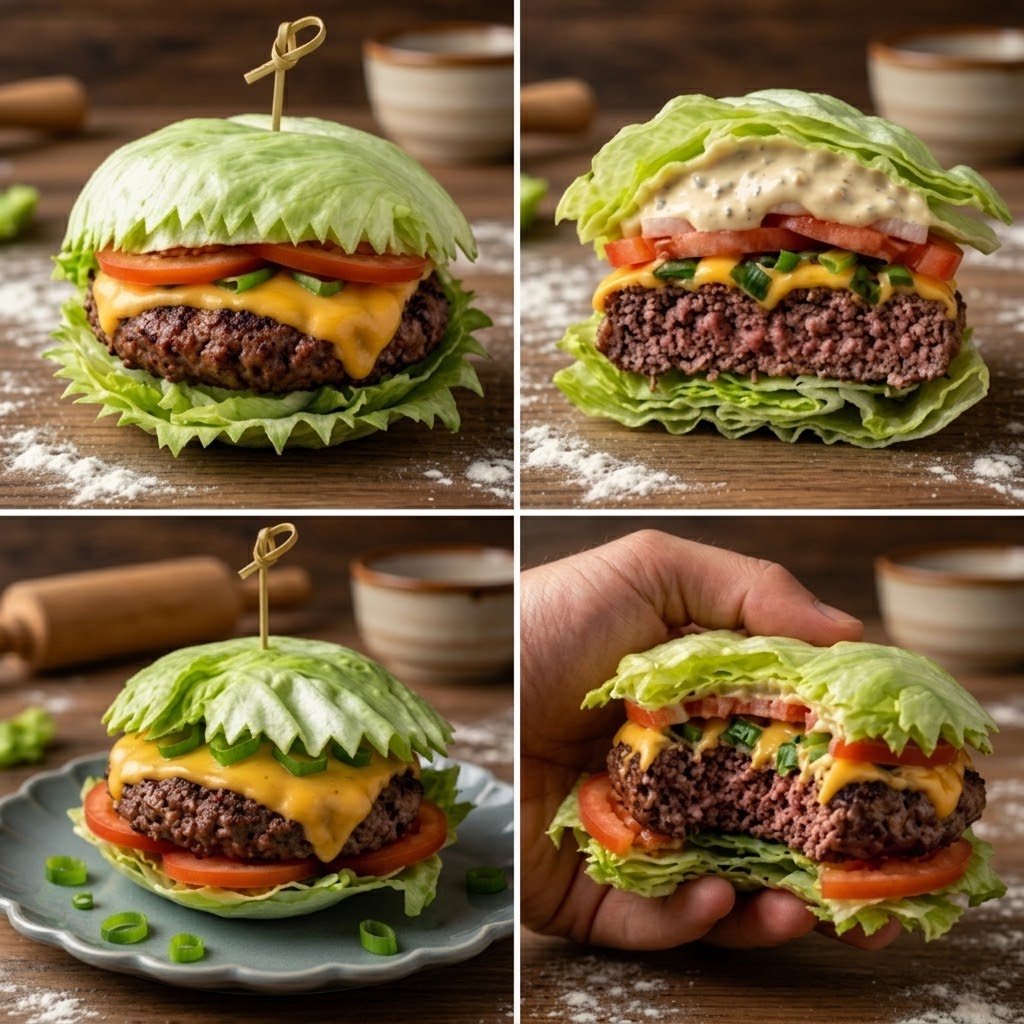
Place two large lettuce leaves slightly overlapping each other on a clean work surface or plate.
If your lettuce leaves are particularly large and sturdy, you may only need one or two leaves. For smaller or more delicate lettuce, use three leaves to create a stronger base.
Place the lettuce with the curved side facing downward so that it forms a natural cup around the ingredients.
10. Add the Burger Sauce
Spread a generous but controlled amount of the creamy burger sauce over the center of the lettuce leaves.
Avoid spreading the sauce all the way to the edges. Keeping the sauce toward the center helps prevent it from leaking out while you eat.
If you prefer a saucier burger, serve additional sauce on the side rather than adding too much inside the wrap.
11. Add the Tomato
Place two or three slices of fresh tomato over the sauce.
The tomato should be positioned toward the center of the lettuce rather than directly against the edges. This creates a more stable structure and prevents the tomato from sliding out when the lettuce is folded.
Sprinkle a small amount of freshly ground black pepper over the tomato if desired.
12. Add the Cheeseburger Patty
Place the hot cheeseburger patty directly over the tomato. The warmth of the beef will slightly soften the lettuce underneath while keeping the outer leaves crisp.
Add the sliced green onions over the melted cheese. You can also add pickles or thinly sliced red onion at this stage.
For extra flavor, drizzle a small amount of additional burger sauce over the top.
13. Wrap the Burger
Fold the bottom portion of the lettuce upward around the burger. Then fold the sides inward as tightly as you comfortably can.
Finally, fold the top lettuce leaves over the filling to create a compact handheld burger.
If the lettuce is difficult to manage, wrap the finished burger in a small piece of parchment paper. This can make it much easier to hold and prevents sauce from dripping onto your hands.
14. Serve Immediately
Serve the lettuce-wrapped cheeseburger immediately while the beef is hot, the cheese is melted and the lettuce is cold and crisp.
The combination of temperatures and textures is one of the best things about this recipe. You get a hot, juicy beef patty alongside cool crunchy lettuce, fresh tomato and creamy sauce.
Serve with extra pickles, a simple salad, roasted vegetables or your favorite side dish.
Helpful Tips for the Best Lettuce-Wrapped Cheeseburger
Choose the right lettuce. Iceberg lettuce provides excellent crunch and structural strength. Butter lettuce is softer and more delicate, while romaine offers a combination of crunch and sturdiness.
Keep the lettuce cold. Refrigerated lettuce gives the burger a much fresher texture and creates a delicious contrast with the hot patty.
Do not overwork the beef. Handle the ground beef as little as possible when forming the patties. Gentle handling produces a more tender burger.
Use a hot skillet. Proper heat is essential for creating a deeply browned crust on the beef. A good sear adds tremendous flavor without requiring complicated seasoning.
Do not press the burger unnecessarily. Pressing the patty repeatedly can force valuable juices out of the meat. Flip it once and allow it to cook undisturbed.
Season immediately before cooking. Adding salt too far in advance can alter the texture of ground beef. For the juiciest texture, season and shape the patties shortly before they go into the skillet.
Do not overload the wrap. It can be tempting to add lots of toppings, but too many ingredients make a lettuce burger difficult to hold. A few carefully chosen toppings create a much better eating experience.
Delicious Variations
For a spicy lettuce-wrapped cheeseburger, add sliced jalapeños, pepper Jack cheese and a little hot sauce to the burger sauce. A pinch of cayenne pepper can also be mixed into the beef seasoning.
For a bacon cheeseburger lettuce wrap, add two slices of crispy cooked bacon. The salty, smoky bacon pairs beautifully with the creamy sauce and fresh lettuce.
For a mushroom Swiss version, sauté sliced mushrooms in butter until golden and tender, then place them over the beef patty with melted Swiss cheese.
For a double cheeseburger lettuce wrap, make two thinner patties instead of one thick patty. Place a slice of cheese between the patties and finish with lettuce, tomato and burger sauce.
For a smoky barbecue burger, replace some of the ketchup in the sauce with barbecue sauce and use smoked cheddar or pepper Jack cheese.
For a lighter and fresher variation, add sliced cucumber, extra tomato and fresh herbs. A yogurt-based sauce can also be substituted for mayonnaise if desired.
What to Serve With a Lettuce-Wrapped Cheeseburger
Although this burger is satisfying on its own, it pairs wonderfully with a variety of side dishes. A crisp cucumber salad, roasted vegetables, coleslaw or a simple green salad makes an excellent accompaniment.
For a more traditional burger meal, serve it with oven-baked potato wedges or sweet potato fries. Pickles are another excellent choice because their acidity balances the richness of the beef and cheese.
You can also serve these burgers as part of a casual family dinner or backyard gathering. Prepare the patties, vegetables and sauce ahead of time, then cook the beef shortly before serving.
Storage and Food Safety
Cooked burgers should be refrigerated promptly in a covered container. Keep the cooked beef and fresh lettuce separate whenever possible because storing the lettuce against the warm patty can make it wilt.
For the best quality, consume refrigerated cooked burgers within 3–4 days and reheat the beef thoroughly before serving.
The lettuce, tomato and sauce are best prepared fresh. If you are meal-prepping, store the vegetables and sauce separately and assemble the lettuce wrap immediately before eating.
Because this recipe uses ground beef, an instant-read thermometer is useful for checking doneness. Ground beef should reach a safe internal temperature according to your local food-safety guidance.
Make-Ahead Instructions
The burger sauce can be prepared 1–2 days in advance and stored in the refrigerator in a sealed container.
The lettuce can be washed and dried several hours ahead of time. Keep it refrigerated in a container lined with paper towels to help absorb excess moisture.
The tomatoes and green onions can also be sliced shortly before serving. For the best burger texture, cook the beef close to mealtime rather than preparing it too far in advance.Recipe Information
Prep Time: 20 minutes
Cook Time: 10–15 minutes
Total Time: Approximately 30–35 minutes
Servings: 4 burgers
Cuisine: American-inspired
Course: Main Course, Lunch, Dinner
Difficulty: Easy to Moderate