

Ingredients
For the Sweet Potato Filling
- 2 cups cooked sweet potatoes, mashed until completely smooth
- 1 cup granulated sugar
- ½ cup unsalted butter, melted and slightly cooled
- 2 large eggs
- ½ cup whole milk
- 1 teaspoon pure vanilla extract
- 1 teaspoon ground cinnamon
- ½ teaspoon ground nutmeg
- ¼ teaspoon salt
- ¼ teaspoon ground ginger, optional
- ¼ teaspoon ground cloves, optional
For the Pie Crust
- 1 unbaked 9-inch pie crust
- Homemade or refrigerated pie dough can be used
- A frozen 9-inch pie shell also works well
Preparing the Sweet Potatoes
Choose the Sweet Potatoes
Select sweet potatoes that are firm, unblemished, and similar in size so they cook evenly.
For the richest flavor, use naturally sweet orange-fleshed sweet potatoes.
Wash the Sweet Potatoes
Rinse the sweet potatoes thoroughly under cool running water.
Scrub the skins to remove dirt and debris.
Pat them dry with a clean kitchen towel.
Cook the Sweet Potatoes
You can bake, boil, or steam the sweet potatoes.
For the best concentrated flavor, baking is recommended because it removes excess moisture and naturally intensifies the sweetness.
Bake the Sweet Potatoes
Preheat the oven to 400°F (200°C).
Place the whole sweet potatoes on a baking sheet.
Pierce each potato several times with a fork.
Bake for approximately 45–60 minutes, depending on their size.
They are ready when a knife or fork slides easily into the center.
Cool the Sweet Potatoes
Remove the sweet potatoes from the oven and allow them to cool until comfortable enough to handle.
They don’t need to be completely cold.
Remove the Skins
Cut each sweet potato open lengthwise.
Scoop the soft orange flesh away from the skin and place it in a large mixing bowl.
Discard the skins.
Measure the Sweet Potato
Measure out 2 cups of cooked sweet potato.
Accurate measurement is important because too much or too little sweet potato can change the consistency of the pie.
Preparing the Pie Filling
Mash the Sweet Potatoes
Use a potato masher, fork, food processor, or hand mixer to mash the sweet potatoes.
Continue until the mixture is very smooth.
For an exceptionally silky pie, press the mashed sweet potato through a fine-mesh sieve.
Add the Sugar
Add 1 cup granulated sugar to the mashed sweet potatoes.
Stir thoroughly until the sugar is evenly incorporated.
The sugar provides sweetness while also helping create the smooth custard-like texture associated with sweet potato pie.
Add the Melted Butter
Melt ½ cup unsalted butter and allow it to cool slightly.
Pour it into the sweet potato mixture.
Stir until completely combined.
Don’t add extremely hot butter directly to the eggs later in the process because excessive heat can partially cook them.
Add the Eggs
Crack two large eggs into a separate small bowl.
Lightly beat them together.
Add the beaten eggs to the sweet potato mixture.
Whisk until the eggs are fully incorporated.
The eggs are important because they help the filling set as the pie bakes.
Add the Milk
Pour in ½ cup whole milk.
Stir until the mixture becomes smooth and creamy.
Whole milk provides a rich texture, although evaporated milk can also be used for an even more traditional, rich filling.
Add the Vanilla
Add 1 teaspoon vanilla extract.
Stir thoroughly.
Vanilla enhances the natural sweetness of the sweet potatoes and complements the warm spices.
Adding the Spices
Add the Cinnamon
Add 1 teaspoon ground cinnamon.
Cinnamon provides the warm, familiar flavor associated with sweet potato pie.
Add the Nutmeg
Add ½ teaspoon ground nutmeg.
Freshly grated nutmeg can provide an even more pronounced aroma and flavor.
Add Salt
Add approximately ¼ teaspoon salt.
Even though this is a sweet pie, a small amount of salt is important because it balances the sugar and brings out the sweet potato flavor.
Add Optional Ginger
For additional warmth, add approximately ¼ teaspoon ground ginger.
Ginger isn’t essential, but it gives the pie a subtle spicy note.
Add Optional Cloves
For a more strongly spiced pie, add approximately ¼ teaspoon ground cloves.
Use cloves sparingly because their flavor is powerful.
Preparing the Pie Crust
Prepare the Crust
Place one unbaked 9-inch pie crust into a pie dish if you’re using homemade dough.
Gently press the dough into the bottom and sides of the dish.
Avoid stretching the dough because stretched dough can shrink during baking.
Shape the Edges
Fold any excess dough underneath itself around the rim.
Crimp the edges using your fingers or the tines of a fork.
Make sure the crust is evenly distributed around the entire pie.
Use a Ready-Made Crust
For convenience, a refrigerated or frozen 9-inch pie shell can be used.
If using a frozen crust, follow the package instructions regarding whether it should be thawed before filling.
Filling the Pie
Check the Filling
Before pouring the filling into the crust, give it one final whisk.
The mixture should be smooth and pourable.
If you see large pieces of sweet potato, continue mixing or strain the filling for a smoother result.
Pour Into the Crust
Slowly pour the sweet potato mixture into the unbaked pie crust.
Fill the crust almost to the top but leave a small amount of room.
The filling will expand slightly as it cooks.
Smooth the Surface
Use the back of a spoon or a spatula to gently smooth the surface.
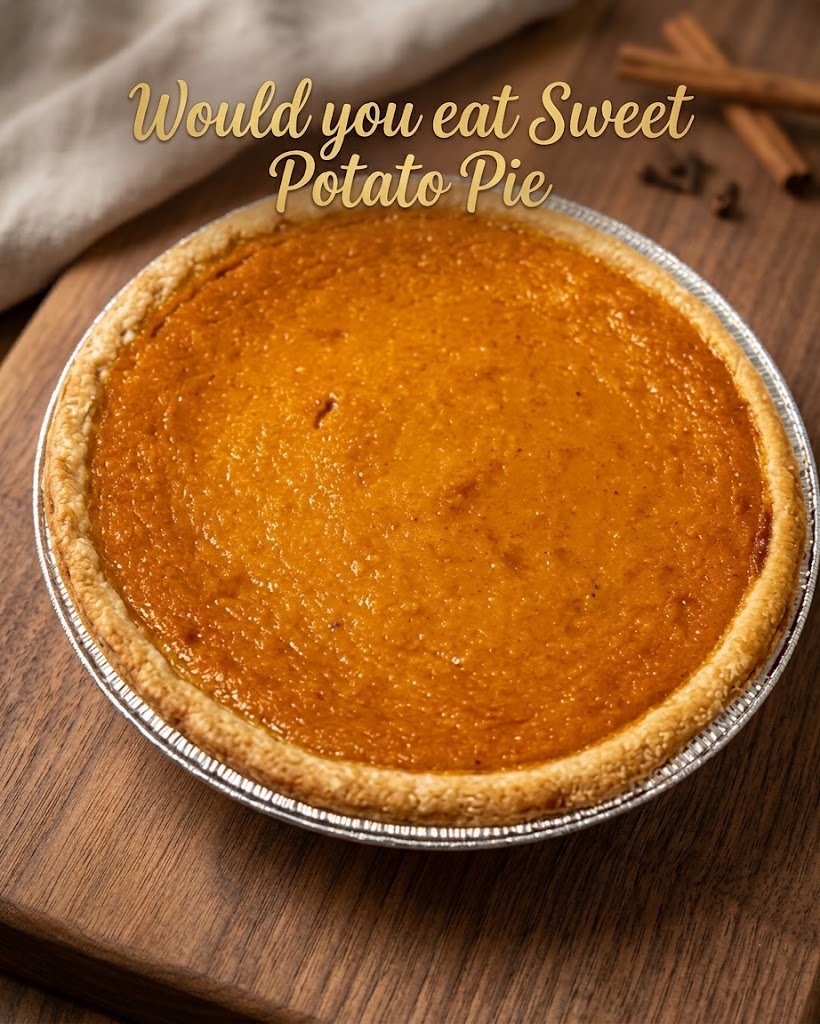
A smooth surface will give the finished pie the attractive even appearance shown in the picture.
Baking the Pie
Preheat the Oven
Preheat the oven to 350°F (175°C).
Allow the oven to reach the proper temperature before placing the pie inside.
Place the Pie in the Oven
Carefully place the filled pie on the center rack.
If you’re concerned about spills, place the pie on a baking sheet before putting it into the oven.
The baking sheet also makes it easier to remove the hot pie from the oven.
Bake the Pie
Bake at 350°F (175°C) for approximately 50–60 minutes.
The exact baking time may vary depending on the depth of your pie dish and the moisture content of the sweet potatoes.
Watch the Crust
The crust should become golden brown around the edges.
If the crust begins browning too quickly while the center still needs additional baking, loosely cover the edges with aluminum foil or use a pie shield.
Check the Center
The pie is done when the outer portion of the filling is set but the center still has a slight gentle jiggle when the pie is carefully moved.
The center should not look liquid.
Avoid waiting until the entire surface is completely firm because the filling will continue cooking from residual heat after the pie is removed from the oven.
Cooling the Pie
Remove From the Oven
Carefully remove the finished pie and place it on a cooling rack.
Allow it to cool undisturbed.
Let the Filling Set
Allow the pie to cool for at least 2 hours before slicing.
As it cools, the egg-based filling continues to firm up.
Cutting into it too early can result in a soft or runny center.
Refrigerate if Desired
Once the pie has cooled, it can be refrigerated if you prefer to serve it chilled.
Cover it loosely with plastic wrap or foil.
Slicing and Serving
Cut With a Sharp Knife
Use a sharp knife to cut the pie.
For cleaner slices, wipe the knife between cuts.
Serve at Room Temperature
Sweet potato pie tastes excellent at room temperature.
The filling is creamy and flavorful, while the crust remains pleasantly tender.
Serve Chilled
For a firmer, more custard-like texture, refrigerate the pie before serving.
Add Whipped Cream
Top each slice with a spoonful of lightly sweetened whipped cream.
The cool, creamy topping complements the warm spices beautifully.
Add Ice Cream
Vanilla ice cream is another excellent accompaniment.
A scoop slowly melting over a slightly warmed slice makes an especially indulgent dessert.
Tips for a Smooth Filling
Remove Sweet Potato Fibers
Some sweet potatoes contain stringy fibers.
If you want an exceptionally smooth filling, process the cooked sweet potato in a food processor or push it through a fine-mesh sieve.
Don’t Overmix After Adding Eggs
Once the eggs are added, whisk just until everything is combined.
Excessive whipping can incorporate unnecessary air into the filling, which may cause cracks or bubbles during baking.
Use Room-Temperature Eggs
Room-temperature eggs incorporate more easily into the butter and sweet potato mixture.
If your eggs are refrigerated, place them in warm—not hot—water for several minutes before using.
Tips for the Perfect Crust
Keep the Crust Cold
If using homemade pie dough, keep it chilled until you’re ready to fill it.
Cold dough is easier to handle and generally produces a better crust.
Don’t Stretch the Dough
Gently fit the crust into the pie dish.
Stretching it to make it reach the edges can cause the crust to shrink during baking.
Protect the Edges
If the crust becomes dark before the filling is finished, cover the outer edge with foil.
This allows the filling to continue baking without over-browning the crust.
Common Problems
Runny Pie
A runny center can result from underbaking, excessive liquid, or cutting the pie before it has cooled.
Allow the pie to bake until the center has only a slight jiggle and give it sufficient cooling time.
Cracked Filling
Cracks can occur when the pie is overbaked.
Remove it from the oven when the center is just set around the edges but still has a slight wobble in the middle.
Soggy Bottom Crust
Excess moisture in the sweet potatoes can contribute to a soft crust.
Baking the sweet potatoes rather than boiling them helps reduce excess moisture.
You can also place the pie on a preheated baking sheet to encourage the bottom crust to cook more thoroughly.
Grainy Filling
A grainy filling may result from fibrous sweet potatoes or insufficiently mashed potatoes.
Use a food processor or fine-mesh sieve for a smoother, silkier texture.
Make-Ahead Instructions
Prepare the Sweet Potatoes Early
The sweet potatoes can be cooked a day ahead.
Cool them completely, place the cooked flesh in an airtight container, and refrigerate.
Bring them out when you’re ready to make the filling.
Prepare the Pie a Day Ahead
Sweet potato pie is an excellent make-ahead dessert.
Bake the pie the day before serving and allow it to cool completely.
Cover and refrigerate.
The flavors often become even better after resting overnight.
Storage
Refrigerate Leftover Pie
Because the filling contains eggs and milk, leftover pie should be refrigerated.
Cover the pie and store it in the refrigerator.
Keep It Covered
Cover individual slices or the entire pie with plastic wrap or place it in an airtight pie container.
This prevents the filling from absorbing refrigerator odors and keeps the crust from drying out.
Serve Leftovers
Leftover sweet potato pie can be served cold, at room temperature, or gently warmed.
Add whipped cream just before serving.
Optional Flavor Enhancements
Add Brown Sugar
Replace part of the granulated sugar with brown sugar.
Brown sugar adds a deeper caramel-like flavor and slightly darker color.
Add Maple Syrup
A small amount of pure maple syrup can add another layer of sweetness.
Reduce the granulated sugar slightly if adding a significant amount of maple syrup.
Add Orange Zest
A small amount of finely grated orange zest adds brightness and complements the cinnamon and nutmeg.
Add Bourbon
For an adult variation, a small amount of bourbon can be added to the filling.
Use it sparingly so it enhances rather than overwhelms the sweet potato and spices.
Final Serving
Allow the baked pie to cool completely before slicing.
Cut it into neat wedges and serve each piece with whipped cream, vanilla ice cream, or simply a dusting of cinnamon.
The finished pie should have a golden-brown crust, smooth orange sweet-potato filling, warm cinnamon and nutmeg aroma, and a creamy custard-like texture.