
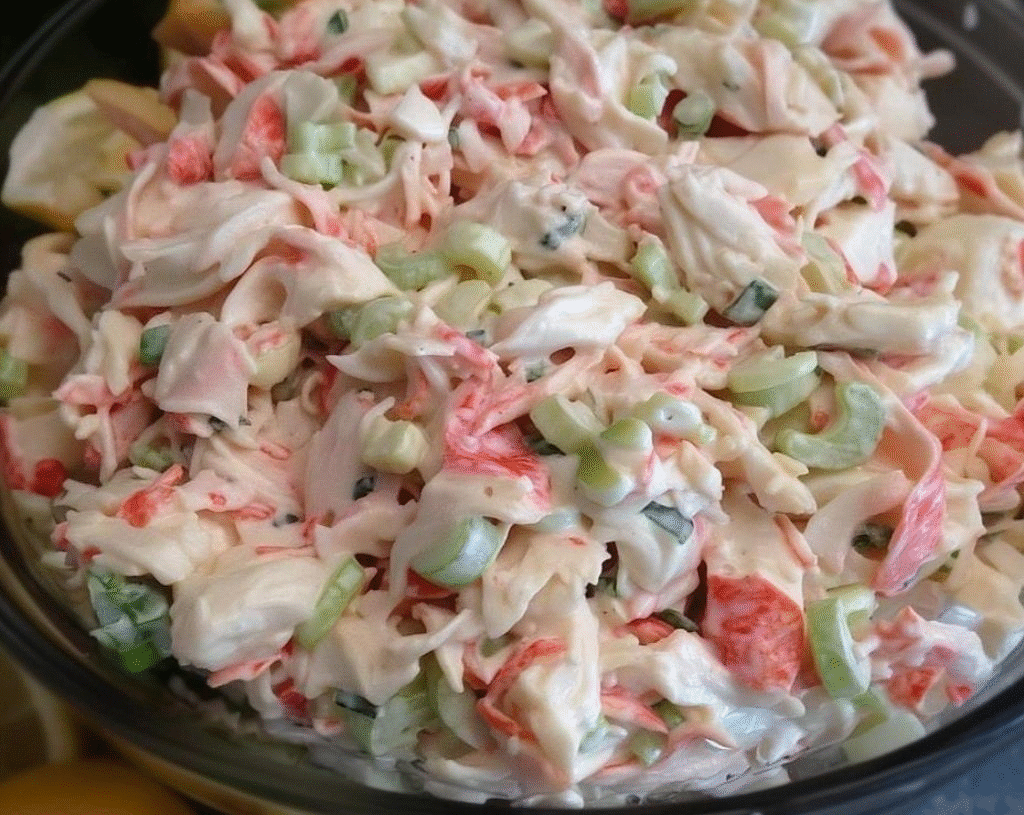
🧂 Ingredients
For the salad:
- 1 cup cooked shrimp, peeled and deveined
- 1 cup imitation crab meat (or real lump crab for purists)
- 1/2 cup celery, finely diced
- 1/4 cup red bell pepper, finely chopped
- 2 tablespoons red onion, finely chopped
- 1/4 cup cucumber, chopped (optional for extra freshness)
- 1 tablespoon fresh parsley, finely chopped
For the dressing:
- 1/3 cup mayonnaise (use avocado or olive-oil-based mayo for keto)
- 2 tablespoons sour cream (adds creaminess and tang)
- 1 teaspoon Dijon mustard
- 1 tablespoon fresh lemon juice
- 1/4 teaspoon garlic powder
- 1/4 teaspoon Old Bay seasoning (or paprika if preferred)
- Salt and black pepper, to taste
Optional garnish:
- Fresh dill sprigs
- Lemon wedges for serving
- A sprinkle of paprika on top
🕕 Preparation Time
- Prep Time: 10 minutes
- Cook Time: 5 minutes (if cooking shrimp fresh)
- Total Time: 15 minutes
- Servings: 2 generous portions
🥣 Instructions
Step 1: Prepare the seafood
If you’re starting with raw shrimp, bring a pot of salted water to a gentle boil. Add shrimp and cook for 2–3 minutes until pink and opaque. Drain immediately and transfer to an ice bath to stop the cooking process and maintain that juicy texture.
If using imitation or pre-cooked crab, simply chop it into bite-sized chunks. Pat both shrimp and crab dry with paper towels to remove excess moisture — this helps your salad stay creamy, not watery.
Step 2: Chop the vegetables
Finely dice your celery, red bell pepper, red onion, and cucumber. The smaller the pieces, the better the texture will blend into the salad. These ingredients add crispness, color, and freshness to balance the richness of the seafood and dressing.
Step 3: Make the keto dressing
In a medium bowl, combine mayonnaise, sour cream, Dijon mustard, lemon juice, garlic powder, and Old Bay seasoning. Whisk until smooth and creamy. Taste and adjust seasoning with salt and black pepper as needed.
This dressing is the star of the recipe — rich, tangy, and perfectly balanced to complement the sweetness of the seafood.
Step 4: Combine the salad
In a large mixing bowl, add your shrimp, crab, chopped vegetables, and parsley. Pour the prepared dressing over the top and gently toss everything together until all ingredients are evenly coated.
The creamy dressing should cling to every piece of seafood and vegetable, creating a luscious consistency that’s both light and satisfying.
Step 5: Chill before serving
For the best flavor, refrigerate the salad for at least 30 minutes before serving. This allows the flavors to meld together beautifully while the salad firms up slightly.
Serve chilled on its own, over a bed of crisp lettuce, or scooped into avocado halves for an elegant, low-carb presentation.
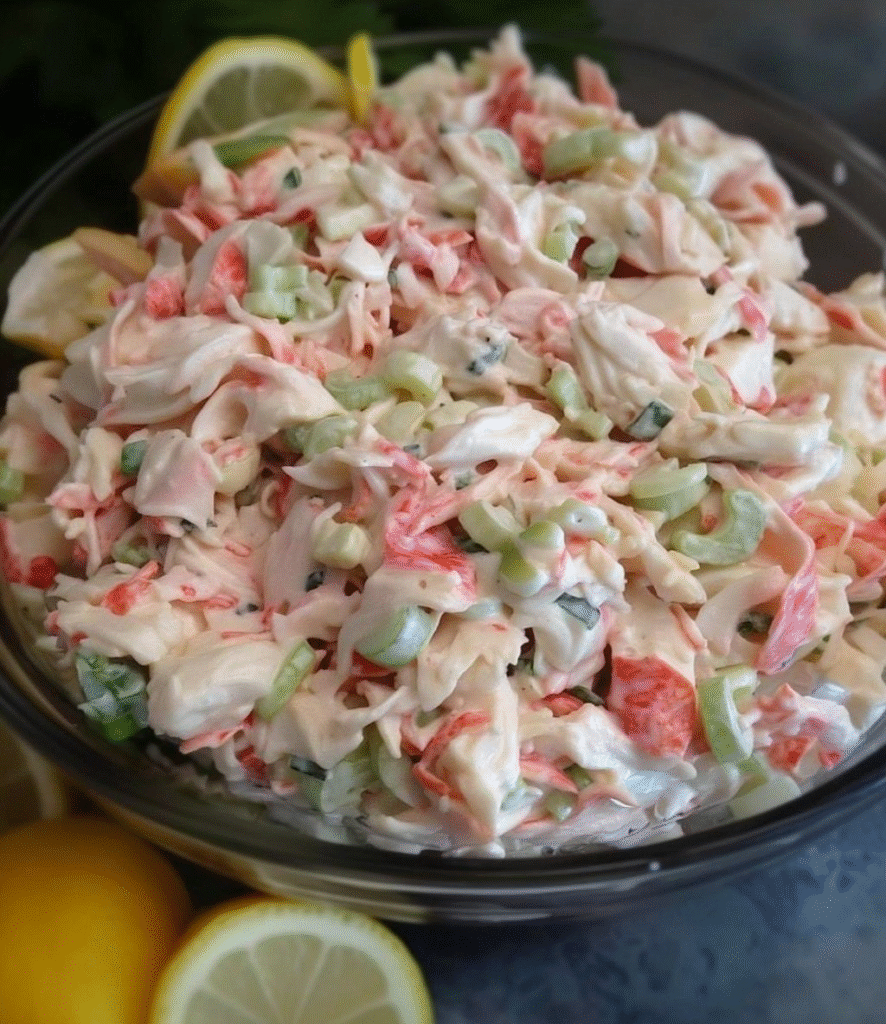
Instructions
Step 1: Prepare the Shrimp
If using frozen shrimp, thaw it completely and pat it very dry with paper towels. Removing excess moisture is important because wet shrimp can steam rather than sear, making it more difficult to achieve good flavor and texture.
Place the shrimp in a bowl and add the olive oil, lemon juice, garlic powder, smoked paprika, black pepper, salt, and dried dill. Toss gently until every piece is evenly coated.
Allow the shrimp to sit with the seasoning for approximately 5 minutes while you prepare the skillet.
Step 2: Cook the Seafood
Heat a large nonstick skillet over medium-high heat. Add the seasoned shrimp in a single layer.
Cook the shrimp for approximately 2–3 minutes on the first side, then turn and cook for another 1–3 minutes, depending on their size. Shrimp should become opaque and firm rather than translucent.
For food safety, seafood should be cooked properly; FDA guidance recommends cooking finfish to an internal temperature of 145°F (63°C), while shrimp should become opaque and appropriately colored.
Do not overcook the shrimp. Once they are cooked, immediately transfer them to a clean plate and allow them to cool for several minutes.
Step 3: Prepare the Vegetables
While the shrimp cools, wash and dry the vegetables thoroughly.
Chop the romaine into bite-size pieces. Dice the cucumber, bell pepper, celery, and avocado. Halve the cherry tomatoes and thinly slice the red onion.
Add the romaine, cucumber, tomatoes, celery, bell pepper, red onion, parsley, dill, and green onion to a large salad bowl.
Step 4: Make the Dressing
In a small bowl, whisk together the Greek yogurt, olive oil, lemon juice, Dijon mustard, garlic, dill, black pepper, and salt.
Add 1 tablespoon of water and whisk again. If you prefer a thinner dressing, add another tablespoon of water.
Taste the dressing and adjust the lemon juice, pepper, or herbs according to your preference.
The Greek yogurt gives the dressing a creamy texture while keeping it lighter than a traditional mayonnaise-based seafood dressing.
Step 5: Add the Avocado
Add the diced avocado to the salad just before serving.
Avocado adds creaminess and healthy unsaturated fats, but because it is more calorie-dense than most salad vegetables, the recipe deliberately uses a moderate amount.
For a stricter low-calorie or WW-focused version, you can reduce the avocado to 1/4 medium avocado or replace some of it with additional cucumber.
Step 6: Assemble the Salad
Add the cooled shrimp to the vegetable mixture.
Pour approximately three-quarters of the dressing over the salad and gently toss until everything is evenly coated.
Add more dressing only if necessary. Using the dressing gradually makes it easier to control calories and prevents the vegetables from becoming overly wet.
Serve immediately for the freshest texture.
Why This Seafood Salad Is High in Protein
The primary protein source in this recipe is shrimp. Shrimp provides a significant amount of protein without adding many carbohydrates, making it especially useful in low-carbohydrate meals.
The Greek yogurt in the dressing contributes additional protein while creating a creamy texture.
Together, the shrimp and yogurt make this salad considerably more filling than a vegetable-only salad.
For an even higher-protein meal, increase the shrimp to 1 1/4 pounds and divide the finished salad into four portions.
Why This Recipe Is Keto-Friendly
This salad contains no bread, pasta, rice, crackers, croutons, potatoes, or sugary dressing.
The main carbohydrate sources come from vegetables, avocado, and Greek yogurt. Because the recipe uses mostly non-starchy vegetables, the overall carbohydrate load remains relatively low.
For a stricter keto version, use fewer tomatoes and onions, keep the avocado portion moderate, and choose unsweetened full-fat or low-carb Greek yogurt with no added sugar.
Always check the nutrition label on packaged ingredients because carbohydrate content varies between brands.
Why This Recipe Can Fit a Diabetic-Friendly Eating Pattern
This recipe emphasizes protein, non-starchy vegetables, healthy fats, and a low-sugar dressing rather than refined carbohydrates.
There is no added sugar in the dressing.
There are also no sugary sauces, sweet chili sauce, honey, maple syrup, or sweetened mayonnaise.
However, “diabetic-friendly” does not mean that every person with diabetes will respond to the recipe in exactly the same way. Individual carbohydrate needs and blood-glucose responses vary, so portion size and the rest of the meal should be considered.
WW-Friendly Approach
This recipe is designed to be relatively WW-friendly because it avoids large amounts of mayonnaise, cheese, bread, pasta, and sugary sauces.
The exact WW SmartPoints value can vary depending on the specific ingredients and the WW plan or calculator being used. WW has changed its program and point systems over time, so the number below should be treated as an estimate rather than an official WW calculation.
Estimated WW SmartPoints
Approximately 5–7 SmartPoints per serving, depending primarily on the olive oil, avocado, and Greek yogurt brands used.
For a lower-point version, reduce the olive oil to 1/2 teaspoon in the shrimp and use 1/4 avocado for the entire recipe.
Estimated Nutrition Per Serving
Based on 4 servings and the ingredients listed:
Calories: approximately 300–330
Protein: approximately 32–36 g
Total Carbohydrates: approximately 12–15 g
Dietary Fiber: approximately 4–5 g
Net Carbohydrates: approximately 8–11 g
Total Fat: approximately 13–16 g
Saturated Fat: approximately 2–3 g
Sugar: approximately 5–7 g
Sodium: approximately 450–650 mg
Nutrition is an estimate and will vary according to seafood size, brands, yogurt, sodium content, avocado size, and exact ingredient measurements.
How to Make It Even Lower in Calories
For a lighter version, use only 1/2 teaspoon olive oil in the shrimp and omit the olive oil from the dressing.
Increase the romaine, cucumber, celery, and herbs to create a larger serving without substantially increasing calories.
You can also replace half of the avocado with additional cucumber.
Another easy option is to use nonfat Greek yogurt exclusively in the dressing.
How to Make It Lower in Sodium
Sodium can increase significantly when seafood is salted, brined, or purchased with added sodium.
Choose plain, unseasoned shrimp whenever possible.
Avoid imitation crab, heavily seasoned seafood mixes, bottled seafood sauces, and salty dressings if you are specifically trying to keep sodium low.
Use fresh lemon juice, garlic, dill, parsley, black pepper, and paprika to build flavor without relying heavily on salt.
You can reduce the added salt in the recipe to 1/8 teaspoon or leave it out entirely.
Can You Add Other Seafood?
Absolutely.
Shrimp can be combined with other cooked seafood such as crab meat, scallops, salmon, tuna, or white fish.
For a mixed seafood salad, replace 1/2 pound of shrimp with 1/2 pound of another fully cooked seafood.
Keep in mind that nutrition, calories, fat, sodium, and WW points will change depending on the seafood used.
If using canned seafood, choose varieties packed in water and drain them thoroughly to help control calories and sodium.
Can You Make This Salad Without Shrimp?
Yes.
Cooked salmon is an excellent alternative and provides a richer flavor.
Flaked white fish can also work beautifully.
For a very simple version, use canned tuna packed in water, drain it thoroughly, and gently fold it into the salad.
If using canned seafood, check the label for added salt and choose a lower-sodium option whenever available.
Vegan Seafood Salad Variation
Traditional seafood is not vegan, so a vegan version requires replacing the shrimp.
For a vegan alternative, use approximately 14 ounces of extra-firm tofu, pressed and cubed, or use a commercially prepared plant-based seafood substitute.
For the dressing, replace Greek yogurt with an unsweetened plant-based yogurt.
You can also create a more seafood-like flavor by adding a small amount of crumbled nori or another edible seaweed, along with lemon juice, dill, garlic, and black pepper.
This vegan variation will have a different nutritional profile, especially in protein, calories, and carbohydrates.
High-Protein Variation
If your primary goal is increasing protein, use 1 1/4 pounds shrimp instead of 1 pound.
You can also use a higher-protein Greek yogurt in the dressing.
Another option is to serve the salad with an additional 2–3 ounces of cooked seafood per person.
Avoid adding large quantities of cheese simply to increase protein because that can increase calories and saturated fat quickly.
Meal-Prep Instructions
This salad can be prepared ahead, but it is best to store the components separately.
Cook the shrimp and allow it to cool completely before refrigerating.
Store the shrimp in an airtight container in the refrigerator.
Keep the chopped vegetables in another container and store the dressing separately.
Wait until serving to add the avocado and dressing.
This prevents the lettuce from becoming soggy and helps preserve the fresh texture.
How Long Does Seafood Salad Last?
For the best quality, assemble the salad shortly before eating.
Cooked seafood should be refrigerated promptly rather than being left at room temperature for extended periods.
If you are meal prepping, keep the seafood cold and use clean containers and utensils.
FDA guidance also emphasizes preventing cross-contamination when handling raw seafood, including washing hands and using clean surfaces and utensils.
Best Vegetables for This Salad
Romaine provides a crisp base without adding many calories.
Cucumber contributes freshness and hydration.
Celery gives the salad crunch.
Bell pepper adds color and natural sweetness.
Red onion provides a sharper flavor that balances the creamy dressing.
Avocado contributes creaminess and healthy fats.
You can also add small amounts of radish, spinach, arugula, shredded cabbage, or zucchini.
How to Make the Salad More Filling
Protein is one of the main reasons this salad is satisfying, but the large quantity of crunchy vegetables also adds volume.
If you need a larger meal, increase the amount of romaine and cucumber rather than simply increasing the dressing.
For a non-keto version, you could add a small serving of beans, quinoa, or another whole-food carbohydrate, but these additions will increase the carbohydrate content.
For keto eating, keep the base focused on seafood, leafy greens, low-carb vegetables, and healthy fats.
Flavor Variations
For a Mediterranean-inspired version, add oregano, parsley, cucumber, lemon, and a small amount of olives.
For a spicy version, add crushed red pepper flakes or a small amount of hot sauce without added sugar.
For a garlic-herb version, increase the fresh garlic and add extra dill and parsley.
For a creamy avocado version, blend a small portion of avocado directly into the dressing.
For a citrus version, add a little lemon or lime zest.
For a smoky version, increase the smoked paprika slightly.
What Makes This Salad Different?
The biggest difference between this recipe and many creamy seafood salads is the balance between protein, vegetables, and dressing.
Instead of allowing mayonnaise to dominate the recipe, the dressing is intentionally light and tangy.
Instead of using processed carbohydrates such as crackers or pasta, the recipe relies on fresh vegetables for texture.
Instead of a sugary dressing, lemon juice, Dijon mustard, garlic, and herbs provide the flavor.
This creates a seafood salad that feels indulgent while remaining appropriate for many lower-carbohydrate meal plans.
Serving Suggestions
Serve this salad chilled for lunch or dinner.
It can also be served inside lettuce cups for a low-carb wrap-style meal.
For a party appetizer, spoon the seafood salad into small lettuce leaves or cucumber cups.
For meal prep, divide the greens, seafood, vegetables, and dressing into individual containers.
Keep the dressing separate until you are ready to eat.
Recipe Tips for Perfect Results
Do not overcook the shrimp. Shrimp cooks quickly, and excessive cooking can make it rubbery.
Dry the shrimp before seasoning. This helps improve browning and prevents excess water from accumulating in the skillet.
Cool the shrimp before adding it to lettuce. Hot seafood can wilt delicate greens.
Add avocado last. This helps reduce browning and keeps the pieces attractive.
Dress immediately before serving. This preserves the crispness of the vegetables.
Taste before adding salt. Seafood and Dijon mustard can already contribute sodium.
Use fresh lemon juice. It provides brighter flavor than bottled lemon juice.
Storage and Food-Safety Notes
Keep cooked seafood refrigerated and avoid leaving the finished salad sitting out for long periods.
When preparing raw shrimp, use clean utensils and surfaces and keep raw seafood separate from ready-to-eat vegetables.
Cooked seafood should be handled carefully and refrigerated promptly. FDA food-safety guidance emphasizes preventing cross-contamination and using safe cooking practices for seafood.
If the salad develops an unusual odor, slimy texture, or other signs of spoilage, discard it rather than tasting it to determine whether it is safe.
Frequently Asked Questions
Is seafood salad keto?
This particular version is low in carbohydrates and can fit a keto-style eating pattern. Keep the avocado moderate and use unsweetened Greek yogurt without added sugar.
Is seafood salad high in protein?
Yes. Shrimp is naturally protein-rich. Cooked shrimp provides approximately 24 grams of protein per 100 grams according to USDA-derived nutrition data.
Is seafood salad good for a low-carb diet?
Yes. The recipe contains no bread, pasta, rice, crackers, or sugary dressing and relies primarily on seafood and non-starchy vegetables.
Can I make it without mayonnaise?
Yes. The Greek-yogurt lemon dressing is specifically designed as a lighter alternative to mayonnaise-based seafood salad dressing.
Can I use frozen shrimp?
Yes. Frozen shrimp works very well. Thaw completely, drain, and pat dry before seasoning.
Can I use cooked shrimp?
Yes. If using pre-cooked shrimp, simply chill it and add it to the salad. Do not cook it again unless necessary, because repeated cooking can make it tough.
Is this recipe vegan?
The main recipe is not vegan because shrimp is an animal-derived seafood. Use the tofu or plant-based seafood variation above for a vegan version.
Is this recipe diabetic-friendly?
It can fit into many diabetes-conscious meal patterns because it is low in added sugar and emphasizes protein and non-starchy vegetables. However, individual carbohydrate needs differ, so portions and personal glucose response should always be considered.
How can I make this recipe more WW-friendly?
Use nonfat Greek yogurt, reduce the olive oil, keep avocado portions moderate, and increase the amount of leafy greens and cucumber.
Can I make this salad ahead?
Yes. Prepare the seafood, vegetables, and dressing separately. Add avocado and dressing shortly before serving for the best texture.
Final Recipe Summary
This High-Protein Seafood Salad is a fresh, colorful, low-carb meal built around tender shrimp, crunchy vegetables, creamy avocado, and a tangy homemade lemon-Greek-yogurt dressing. It is easy enough for a quick weekday lunch but attractive enough for entertaining.
With approximately 32–36 grams of protein per serving, no added sugar, moderate healthy fats, and relatively few carbohydrates, it is an excellent option for readers searching for healthy seafood recipes, low-carb lunches, keto salads, diabetic-friendly meals, high-protein salads, and WW-conscious recipes.
The recipe is also highly customizable. You can change the seafood, adjust the vegetables, reduce the avocado, modify the dressing, or create a completely vegan version using tofu or plant-based seafood.
For the best result, keep the seafood properly chilled, avoid overcooking the shrimp, prepare the dressing separately, and assemble the salad immediately before serving