
Servings: 2 large sandwiches
Prep time: 10–15 minutes
Cooking time: 15–20 minutes
Total time: about 30–35 minutes
Difficulty: Easy to intermediate
🛒 COMPLETE INGREDIENTS
For the scrambled eggs
- 4 large eggs
- 2 tablespoons whole milk
- 1 tablespoon unsalted butter
- ¼ teaspoon salt
- ⅛ teaspoon freshly ground black pepper
- ¼ teaspoon garlic powder
- 1 tablespoon finely chopped chives or green onions — optional
- 1 teaspoon hot sauce — optional
For the grilled cheese
- 4 thick slices of bread
Sourdough, brioche, Texas toast, or thick white sandwich bread all work well. - 3 tablespoons softened unsalted butter
- 1 tablespoon mayonnaise — optional, for an extra crisp crust
- 4 slices sharp cheddar cheese
- ½ cup shredded mozzarella cheese
- ½ cup shredded Monterey Jack cheese
- ¼ teaspoon freshly ground black pepper
- ¼ teaspoon paprika — optional
Optional additions
- 4 strips cooked crispy bacon
- ¼ cup diced cooked ham
- 2 tablespoons finely diced jalapeño
- ¼ cup finely diced bell pepper
- ¼ cup sautéed mushrooms
- ¼ cup sautéed onions
- ¼ cup baby spinach
- Extra hot sauce, for serving
- Ketchup or salsa, for serving
👨🍳 VERY DETAILED STEP-BY-STEP DIRECTIONS
1. Start by preparing your work area.
Before turning on the stove, gather all of your ingredients, a mixing bowl, whisk or fork, spatula, cutting board, skillet, and a sharp knife.
This sandwich comes together fairly quickly, especially once the eggs start cooking, so having everything ready prevents the eggs from sitting around while you prepare the bread.
2. Choose the right bread.
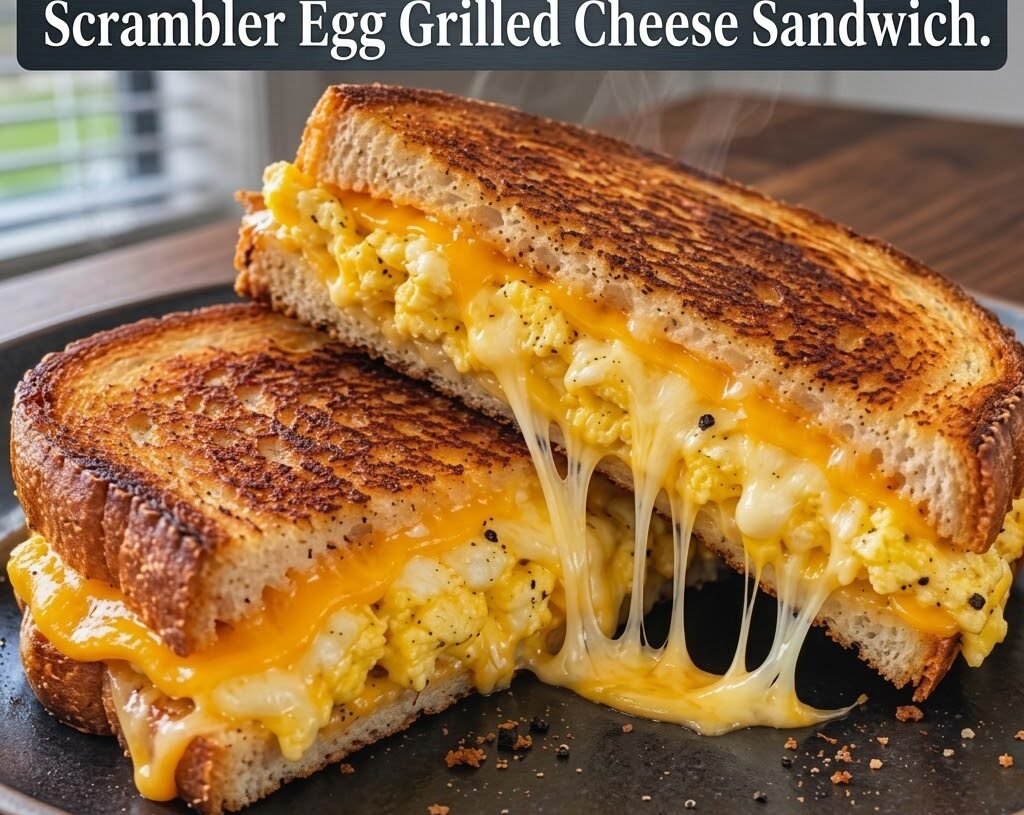
For the sandwich shown in your picture, I recommend using thick-cut sourdough or thick white sandwich bread.
You want slices that are sturdy enough to hold a generous amount of scrambled eggs and melted cheese.
Very thin bread can become soggy or tear when you add the filling.
3. Let the butter soften.
Take approximately 3 tablespoons of butter out of the refrigerator before you start.
The butter should be soft enough to spread easily but should not be completely melted.
Soft butter spreads evenly over the bread and helps create a beautiful golden crust.
4. Prepare the cheese.
For the best result, don’t use only one type of cheese.
Place 4 slices of cheddar on a plate.
Then measure approximately ½ cup shredded mozzarella and ½ cup shredded Monterey Jack.
The cheddar gives the sandwich its classic grilled-cheese flavor, while mozzarella provides stretchiness and Monterey Jack melts beautifully.
5. Prepare the egg mixture.
Crack 4 large eggs into a medium mixing bowl.
Check each egg for shell pieces before proceeding.
Add 2 tablespoons of whole milk.
The milk isn’t absolutely necessary, but it helps create softer and creamier scrambled eggs.
6. Season the eggs.
Add ¼ teaspoon salt, ⅛ teaspoon black pepper, and ¼ teaspoon garlic powder.
You can also add a small amount of paprika if you like a slightly smoky flavor.
If you’re planning to add bacon or ham, don’t add too much salt because those ingredients already contain plenty of salt.
7. Whisk the eggs properly.
Use a fork or whisk to beat the eggs for approximately 30–45 seconds.
You want the mixture to become completely uniform, with no obvious streaks of egg white remaining.
Don’t worry about whipping a huge amount of air into the eggs.
The goal is simply to combine the yolks, whites, milk, and seasoning evenly.
8. Add the green onions.
If you’re using green onions or chives, finely chop about 1 tablespoon.
Stir them into the egg mixture.
They add a mild onion flavor without overpowering the cheese.
9. Prepare optional vegetables.
If you’re adding peppers, onions, mushrooms, or spinach, cook them before adding them to the sandwich.
This is important because raw vegetables release water while cooking.
Excess moisture can make your grilled cheese soggy.
10. Cook optional bacon.
If you’re using bacon, cook 4 strips until crisp.
Place the cooked bacon on a paper towel to remove excess grease.
Let it cool slightly, then break each strip into smaller pieces.
You can add the bacon directly to the egg mixture or place it between the egg and cheese layers.
11. Cook the scrambled eggs.
Place a nonstick skillet over low to medium-low heat.
Add 1 tablespoon butter.
Allow the butter to melt slowly.
It should become glossy and slightly foamy, but it should not turn dark brown.
12. Add the eggs.
Pour the seasoned egg mixture into the skillet.
Allow it to sit for approximately 5–10 seconds.
Then use a silicone spatula to gently move the eggs.
13. Create soft egg curds.
Push the eggs slowly from the outside of the pan toward the center.
Pause for a few seconds, then repeat.
Don’t continuously stir the eggs like you’re making a sauce.
Slow movements create larger, soft, fluffy curds.
14. Keep the heat low.
This is one of the most important secrets to excellent scrambled eggs.
High heat causes the proteins in the eggs to tighten quickly.
That creates dry, rubbery eggs.
Low heat gives you soft, creamy curds that are perfect for this sandwich.
15. Stop cooking before the eggs look completely dry.
When the eggs are mostly set but still slightly glossy, turn off the heat.
The residual heat will finish cooking them.
They should look soft and moist, but not liquid.
16. Remove the eggs immediately.
Transfer the scrambled eggs to a plate.
Don’t leave them sitting in the hot skillet.
The hot pan will continue cooking them and can quickly turn them dry.
17. Prepare the bread.
Place the four slices of bread on a cutting board.
Spread softened butter generously over one side of each slice.
Make sure you cover the entire surface, including the edges.
The buttered side will be the outside of the sandwich.
18. Optional mayonnaise trick.
For an especially crisp crust, combine the softened butter with 1 tablespoon mayonnaise.
Spread a thin layer over the outside of each bread slice.
The mayonnaise is optional, but it can help produce an evenly browned, crunchy exterior.
19. Assemble the first layer.
Place two slices of bread on the cutting board with the unbuttered side facing upward.
The buttered sides should be facing down only if you’re assembling directly for the skillet.
Place one slice of cheddar cheese on each piece of bread.
20. Add the scrambled eggs.
Divide the scrambled eggs evenly between the two sandwiches.
For a large sandwich, use approximately half the scrambled eggs per sandwich.
Spread them gently across the bread.
Don’t press them down.
You want to preserve the fluffy texture.
21. Add the Monterey Jack.
Sprinkle approximately ¼ cup Monterey Jack cheese over the eggs on each sandwich.
Because the eggs are still warm, some of the cheese will begin melting immediately.
22. Add the mozzarella.
Sprinkle approximately ¼ cup mozzarella over each sandwich.
Try to distribute the cheese evenly rather than creating one giant pile in the center.
Even distribution ensures that every bite contains melted cheese.
23. Add more cheddar.
Place another half or full slice of cheddar over the filling if you want an especially cheesy sandwich.
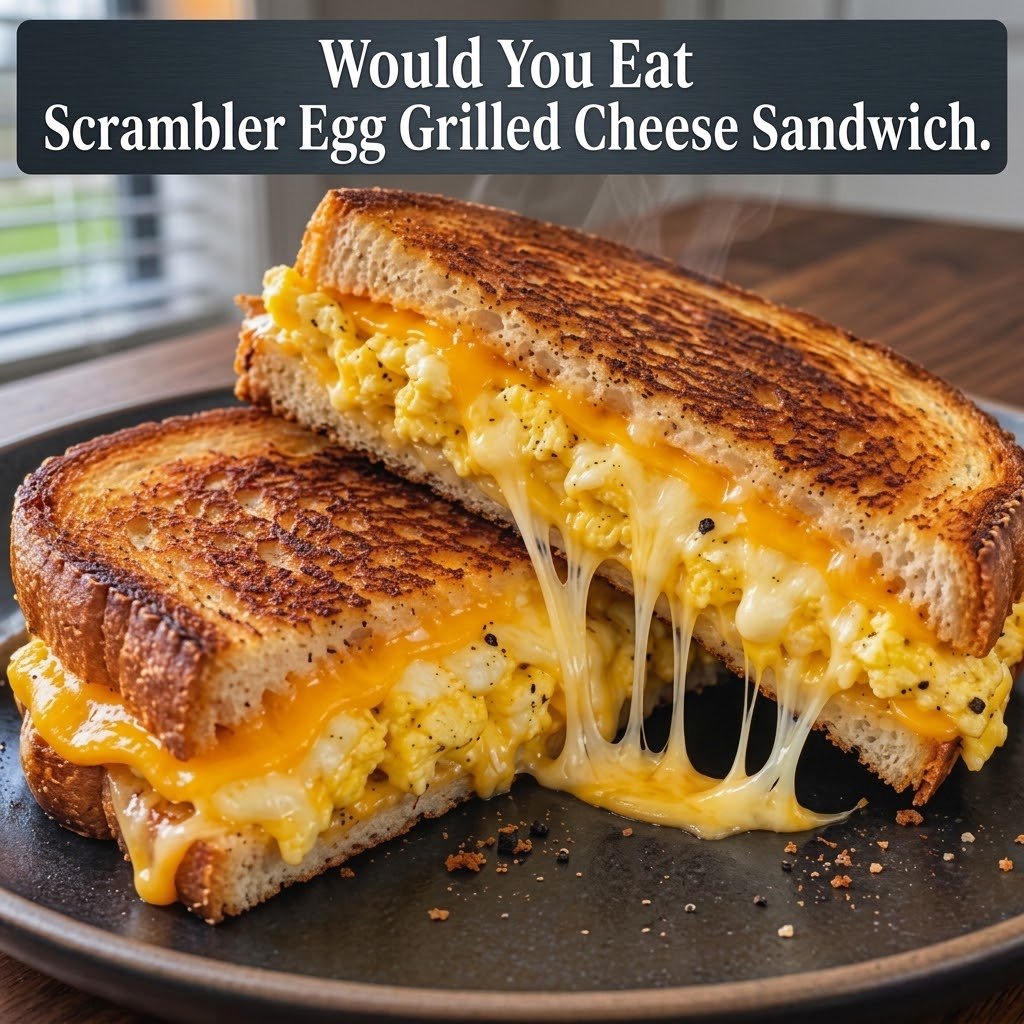
This is optional but recommended if you want the dramatic cheese pull shown in the picture.
24. Add bacon if desired.
If you’re making the bacon version, place pieces of crispy bacon over the cheese.
Don’t add too much.
The purpose is to complement the eggs and cheese rather than completely overpower them.
25. Add a little black pepper.
Sprinkle a small amount of freshly ground black pepper over the filling.
You can also add paprika or a few drops of hot sauce.
At this point, you should have layers of cheddar → scrambled egg → Monterey Jack → mozzarella → optional bacon → cheddar.
26. Close the sandwich.
Place the second slice of bread on top.
Make sure the buttered side faces upward.
The sandwich should now have butter on the outside of both bread slices.
27. Preheat your skillet.
Place a clean skillet over medium-low heat.
Allow it to warm for approximately 1–2 minutes.
You don’t want the pan extremely hot.
A moderate temperature gives the cheese time to melt while the bread gradually becomes golden.
28. Place the sandwiches into the skillet.
Carefully place both sandwiches into the skillet.
You should hear a gentle sizzling sound.
If you hear an aggressive loud sizzle, the pan is probably too hot.
Reduce the heat immediately.
29. Cook the first side slowly.
Cook for approximately 3–4 minutes.
Don’t move the sandwich constantly.
Let the bread remain in contact with the skillet so it develops an even golden-brown crust.
30. Check the bottom.
After about 3 minutes, gently lift one corner with your spatula.
The bread should be deep golden brown with darker toasted spots.
If it’s still pale, continue cooking for another 30–60 seconds.
If it’s already dark brown, reduce the heat.
31. Don’t press the sandwich too hard.
A common mistake is pressing grilled cheese sandwiches aggressively with a spatula.
Don’t do that here.
The eggs are delicate and the melted cheese is supposed to remain inside the sandwich.
A very light press is fine, but don’t flatten it.
32. Flip carefully.
Slide a wide spatula underneath the entire sandwich.
Lift it carefully and turn it over in one controlled motion.
If the filling starts moving, gently push it back inside with the spatula.
33. Cook the second side.
Cook the second side for another 3–4 minutes over medium-low heat.
Watch the bread carefully.
You want the second side to become just as golden and crispy as the first.
34. Melt the cheese completely.
If your bread is perfectly browned but the cheese isn’t completely melted, reduce the heat to its lowest setting.
Cover the skillet with a lid for approximately 30–60 seconds.
The trapped heat will help melt the cheese without burning the bread.
35. Check the edges.
Look around the edges of the sandwich.
You may see a little melted cheese bubbling out.
That’s actually a good sign.
Those crispy bits of cheese can become incredibly flavorful and crunchy.
36. Remove the sandwich.
Once both sides are golden brown and the cheese has melted completely, transfer the sandwiches to a cutting board.
Don’t immediately cut them.
Let them rest for approximately 1 minute.
37. Cut diagonally.
Use a sharp knife to cut each sandwich diagonally from corner to corner.
A diagonal cut gives you two large pieces and exposes the layers of egg and cheese.
It also makes the sandwich much easier to eat.
38. Create the cheese pull.
Hold one half of the sandwich and gently pull it away from the other half.
The melted mozzarella and Monterey Jack should stretch between the pieces.
If you want an especially dramatic cheese pull like the photograph, use freshly shredded mozzarella and serve the sandwich immediately while it’s still piping hot.
39. Serve immediately.
This sandwich is best eaten immediately.
The bread is at its crispiest when fresh from the skillet, while the cheese is at its most melted and stretchy.
Waiting too long can cause the cheese to firm up and the crust to soften.
40. Add your favorite finishing touches.
Serve the sandwich with hot sauce, ketchup, salsa, sliced avocado, fresh tomatoes, or a little extra black pepper.
For breakfast, pair it with fresh fruit and coffee.
For lunch or dinner, serve it with tomato soup, potato wedges, or a simple green salad.
🔥 IMPORTANT SECRETS FOR THE BEST RESULT
Use freshly shredded cheese.
Pre-shredded cheese is convenient, but freshly shredded cheese generally melts more smoothly.
For the best texture, grate the mozzarella and Monterey Jack yourself.
Keep the eggs slightly undercooked.
Remember that the eggs will continue cooking from residual heat.
If you cook them until completely firm in the pan, they can become dry inside the finished sandwich.
Use medium-low heat.
The biggest mistake with grilled cheese is using excessive heat.
You want the bread to become deep golden and crisp at roughly the same time the cheese becomes completely melted.
Low and steady heat gives you much more control.
Use plenty of butter.
Don’t be afraid of a generous but reasonable layer of butter.
The butter is what creates the rich flavor and crispy browned surface.
Don’t overload the sandwich.
It can be tempting to add an enormous amount of egg and cheese.
However, if the sandwich is too thick, the outside can burn before the center becomes hot.
A generous but controlled filling gives the best result.
Let the cheese touch the bread.
Having cheese directly against the bread helps it melt into the toasted surface and also helps hold the scrambled eggs inside.
🧀 My Recommended Cheese Combination
For the closest result to your picture, I’d use:
Cheddar + mozzarella + Monterey Jack.
Use one slice of cheddar on the bottom, scrambled eggs in the middle, then Monterey Jack and mozzarella on top.
The cheddar gives you that classic grilled-cheese taste, mozzarella creates long cheese strings, and Monterey Jack gives the interior a smooth, creamy melt.
🌶️ Spicy Version
For a spicy scrambled egg grilled cheese, add 1 finely diced jalapeño to the eggs while scrambling.
You can also replace Monterey Jack with Pepper Jack cheese.
Add a few drops of hot sauce before closing the sandwich.
The combination of spicy pepper, creamy eggs, sharp cheddar, and melted Pepper Jack is excellent.
🥓 Bacon Version
For an even more indulgent sandwich, add crispy bacon.
Cook four bacon strips until crunchy, drain them, and break them into pieces.
Put the bacon between the scrambled eggs and the melted cheese.
The smoky bacon adds a salty crunch that contrasts beautifully with the soft eggs.
🍳 Extra-Creamy Egg Version
If you want the eggs to be especially creamy, use 5 eggs instead of 4 and add 2 tablespoons of heavy cream instead of milk.
Cook them very gently over low heat.
Remove them from the skillet while they are still slightly glossy.
They will finish cooking when placed inside the hot sandwich.
🥪 Final Assembly
The ideal sandwich should have these layers:
Crispy buttery bread
↓
Melted cheddar
↓
Soft scrambled eggs
↓
Melted Monterey Jack
↓
Stretchy mozzarella
↓
Optional crispy bacon
↓
Crispy buttery bread
When you cut it open, the center should be soft, creamy, cheesy, and slightly messy, while the outside should be crisp, deeply golden, and buttery.