
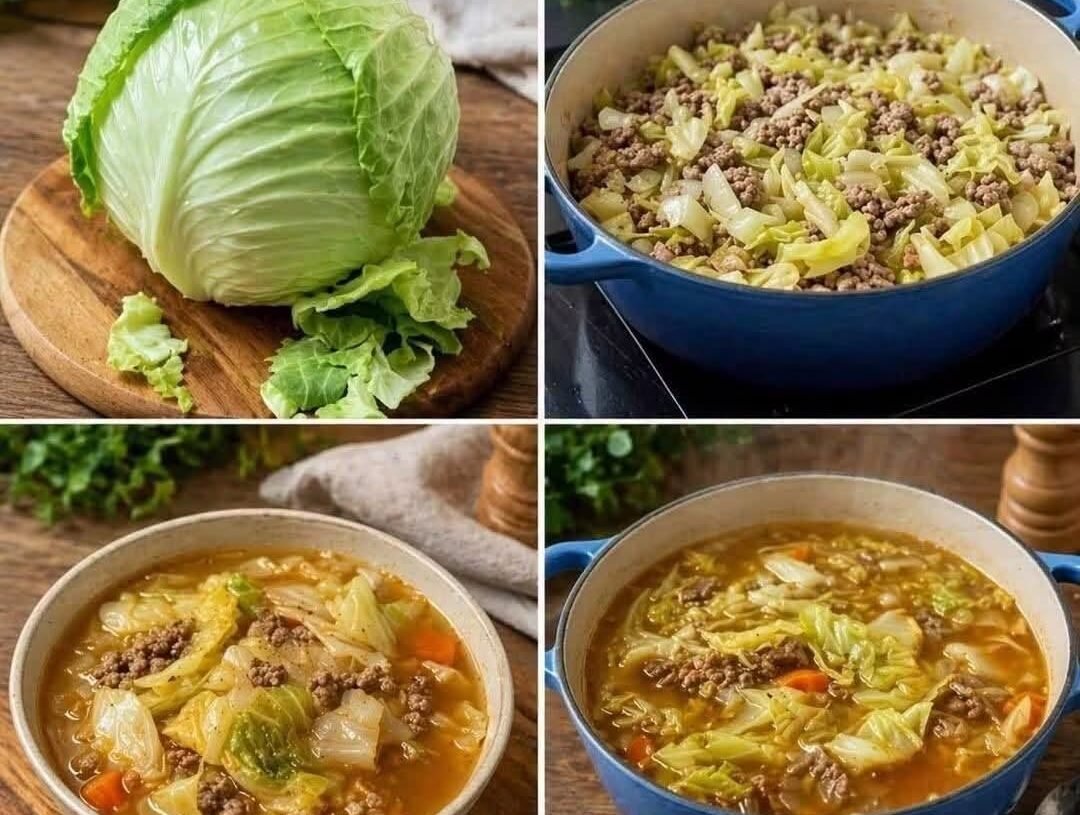
Hearty Cabbage & Ground Beef Soup
This recipe is inspired by the dish shown in your photo: tender cabbage, seasoned ground beef, onion, carrots, and a flavorful golden broth. It is a cozy one-pot meal with simple ingredients, plenty of vegetables, and a savory homemade flavor.
I’m keeping this as a balanced family recipe rather than a weight-loss or restrictive-diet recipe. It can easily be served as a complete meal, especially with whole-grain bread or another favorite side.
Recipe at a Glance
- Prep time: 20 minutes
- Cook time: 40–45 minutes
- Total time: About 1 hour
- Servings: 6
- Cuisine: American-inspired
- Method: One-pot stovetop soup
- Difficulty: Easy
Ingredients
For the Soup
- 1 lb (450 g) lean ground beef
- 1 tablespoon olive oil
- 1 medium yellow onion, diced
- 2 medium carrots, peeled and sliced
- 2 celery stalks, sliced
- 4 cloves garlic, minced
- 1 small green cabbage, about 1½–2 lb (680–900 g)
- 1 can (14.5 oz / 411 g) diced tomatoes
- 6 cups (1.4 L) low-sodium beef or vegetable broth
- 2 cups water
- 1 tablespoon tomato paste
- 1 teaspoon paprika
- 1 teaspoon dried Italian seasoning
- ½ teaspoon dried oregano
- ½ teaspoon onion powder
- ½ teaspoon black pepper
- ½ teaspoon salt, or to taste
- ½ teaspoon smoked paprika, optional
- 1 bay leaf
- 1 tablespoon Worcestershire sauce, optional
- 1 tablespoon fresh parsley, chopped
- 1 teaspoon fresh lemon juice, optional
Optional Additions
- 1 cup diced zucchini
- ½ cup chopped bell pepper
- ½ cup cooked rice
- ½ teaspoon red-pepper flakes
- Extra fresh parsley for serving
Step-by-Step Instructions
1. Prepare the cabbage
Remove any damaged outer leaves from the cabbage.
Cut the cabbage into quarters, remove the tough core, and slice it into bite-sized pieces.
Don’t worry if it looks like a huge amount. Cabbage shrinks considerably as it cooks.
2. Prepare the vegetables
Dice the onion, slice the carrots and celery, and mince the garlic.
Keeping the vegetables prepared before you begin makes this one-pot recipe much easier to manage.
3. Brown the beef
Place a large heavy-bottomed pot or Dutch oven over medium-high heat.
Add the olive oil and ground beef.
Break the beef into small crumbles with a wooden spoon.
Cook until the beef is browned throughout.
For ground beef, USDA recommends cooking to an internal temperature of 160°F (71°C), measured with a food thermometer. (USDA Ask FSIS)
4. Drain excess fat if necessary
If your ground beef produces a substantial amount of fat, carefully drain some of it from the pot.
If using leaner beef, you may not need to drain much at all.
5. Add the onion
Add the diced onion to the browned beef.
Cook for approximately 3–4 minutes, stirring occasionally, until the onion begins to soften.
6. Add carrots and celery
Add the sliced carrots and celery.
Cook for another 4–5 minutes.
This short sautéing step helps develop a deeper flavor before the broth is added.
7. Add garlic
Stir in the minced garlic.
Cook for about 30–60 seconds, just until fragrant.
Avoid letting the garlic burn.
8. Add the tomato paste
Stir in the tomato paste.
Cook for approximately 1 minute, stirring constantly.
Allowing the tomato paste to briefly cook against the bottom of the pot gives the soup a deeper savory flavor.
9. Season the beef and vegetables
Add the paprika, Italian seasoning, oregano, onion powder, black pepper, salt, and optional smoked paprika.
Stir thoroughly so the seasonings coat the beef and vegetables.
10. Add the tomatoes
Pour in the diced tomatoes along with their juices.
Stir well and scrape the bottom of the pot with your spoon to loosen any browned bits.
Those browned bits contain plenty of flavor.
11. Add the broth
Pour in the beef broth and water.
Add the bay leaf and Worcestershire sauce if using.
Stir everything together.
12. Add the cabbage
Add the chopped cabbage gradually.
At first, the cabbage may appear to overwhelm the pot, but it will quickly soften and reduce in volume.
Stir gently until it is incorporated into the broth.
13. Bring the soup to a simmer
Increase the heat until the liquid reaches a gentle simmer.
Once simmering, reduce the heat to low or medium-low.
Avoid maintaining a rapid boil because gentle simmering helps the vegetables retain a pleasant texture.
14. Cover and cook
Cover the pot and simmer for approximately 25–30 minutes.
Stir occasionally.
The cabbage should become tender while the carrots remain pleasantly soft rather than mushy.
15. Check the texture
Taste a piece of cabbage and carrot.
If you prefer very soft cabbage, continue cooking for another 5–10 minutes.
If you prefer cabbage with more texture, you can stop earlier.
16. Adjust the seasoning
Remove the bay leaf.
Taste the soup and adjust the salt and pepper.
If the flavor tastes a little flat, a small amount of lemon juice can brighten the broth.
17. Add fresh parsley
Stir in the chopped parsley near the end of cooking.
Fresh herbs add brightness to the rich beef and vegetable broth.
18. Rest the soup
Turn off the heat and allow the soup to rest for 5 minutes before serving.
This gives the flavors a chance to settle.
19. Serve
Ladle the soup into bowls.
Make sure each serving contains a good mixture of beef, cabbage, carrots, celery, and broth.
20. Garnish
Finish with fresh parsley and a little freshly ground black pepper.
A small squeeze of lemon is optional but particularly good if the soup tastes rich.
Why This Soup Is So Good
The combination of ground beef and cabbage creates a hearty base without requiring complicated ingredients.
Cabbage absorbs the flavors of the broth and seasonings while retaining enough texture to make every spoonful satisfying.
Carrots provide natural sweetness, celery adds freshness, and onions create the savory foundation.
Tomatoes contribute acidity and depth, while paprika and Italian seasoning give the broth a warm, aromatic character.
Tips for the Best Cabbage Soup
Don’t rush the browning
Allow the beef to brown rather than immediately adding liquid. Browning creates additional savory flavor.
Cut the cabbage evenly
Try to keep the cabbage pieces reasonably similar in size so they cook at approximately the same rate.
Don’t overcook the vegetables
The soup is best when the cabbage is tender but not completely disintegrated.
Use homemade broth if available
Homemade broth can give the soup an especially rich flavor, although a good-quality low-sodium store-bought broth works perfectly well.
Taste before adding more salt
Broth, canned tomatoes, Worcestershire sauce, and beef can all contain sodium, so it’s better to taste the finished soup before adding additional salt.
Optional Rice Version
If you’d like a more substantial soup, add ½–1 cup cooked rice during the final 5 minutes of cooking.
White rice, brown rice, or wild rice can all work.
Adding cooked rice rather than uncooked rice also makes it easier to control the final consistency.
Slow Cooker Variation
You can adapt this recipe for a slow cooker.
Brown the ground beef in a skillet first.
Transfer it to the slow cooker and add the onion, carrots, celery, garlic, cabbage, tomatoes, tomato paste, broth, water, and seasonings.
Cook on LOW for approximately 6–7 hours or HIGH for approximately 3–4 hours, until the vegetables are tender.
Add fresh parsley near the end.
Vegetarian Variation
For a meat-free version, replace the ground beef with:
- 1½ cups cooked beans
- Lentils
- Plant-based ground meat
- Extra mushrooms
Use vegetable broth instead of beef broth.
Serving Suggestions
This soup works beautifully with:
- Whole-grain bread
- Toasted sourdough
- Dinner rolls
- Crackers
- A simple green salad
- Roasted vegetables
- Baked potatoes
For a cozy family dinner, serve the soup alongside warm crusty bread and a simple salad.
Nutrition Information
Because nutrition varies substantially depending on the fat percentage of the ground beef, broth, serving size, and optional ingredients, exact numbers should be calculated using the specific ingredients and brands used.
This soup naturally provides:
- Protein: Ground beef
- Vegetables: Cabbage, carrots, celery, onion, and tomatoes
- Fiber: Particularly from cabbage, carrots, celery, and tomatoes
- Iron and other minerals: From beef and vegetables
- Carbohydrates: Primarily from vegetables and any optional rice or bread served alongside it
This is intended as general nutrition information rather than a restrictive eating plan.
Storage
Allow the soup to cool appropriately and transfer leftovers to airtight containers.
USDA guidance recommends using cooked beef leftovers within 3–4 days when refrigerated at 40°F (4°C) or below. (USDA Ask FSIS)
For best quality, refrigerate the soup promptly rather than leaving it sitting at room temperature for an extended period.
Freezing
This soup freezes well.
Allow it to cool, transfer it to freezer-safe containers, and leave a little space at the top for expansion.
Freeze for longer-term storage and thaw in the refrigerator before reheating.
If you add rice, the texture may become softer after freezing, so you may prefer adding freshly cooked rice when reheating.
Reheating
Reheat individual servings in the microwave or warm the entire batch gently in a saucepan.
Stir occasionally so the soup heats evenly.
When reheating a cooked ground-beef casserole or similar dish, USDA recommends reheating leftovers to 165°F (74°C). (USDA Ask FSIS)
Frequently Asked Questions
Can I use ground turkey?
Yes. Ground turkey works well, although the finished soup will have a lighter flavor.
Can I use red cabbage?
You can, although green cabbage gives the soup the classic appearance shown in your photo.
Can I add potatoes?
Absolutely. Add approximately 2 medium diced potatoes along with the carrots.
Can I make it spicy?
Yes. Add red-pepper flakes, cayenne, or diced jalapeño according to your preferred flavor.
Can I use leftover cooked beef?
Yes. Add cooked beef toward the later part of cooking rather than browning it from the beginning.
Why is my cabbage soup too thick?
Add additional broth or water until it reaches the consistency you prefer.
Why is my soup too thin?
Simmer uncovered for several additional minutes to allow some liquid to evaporate.