
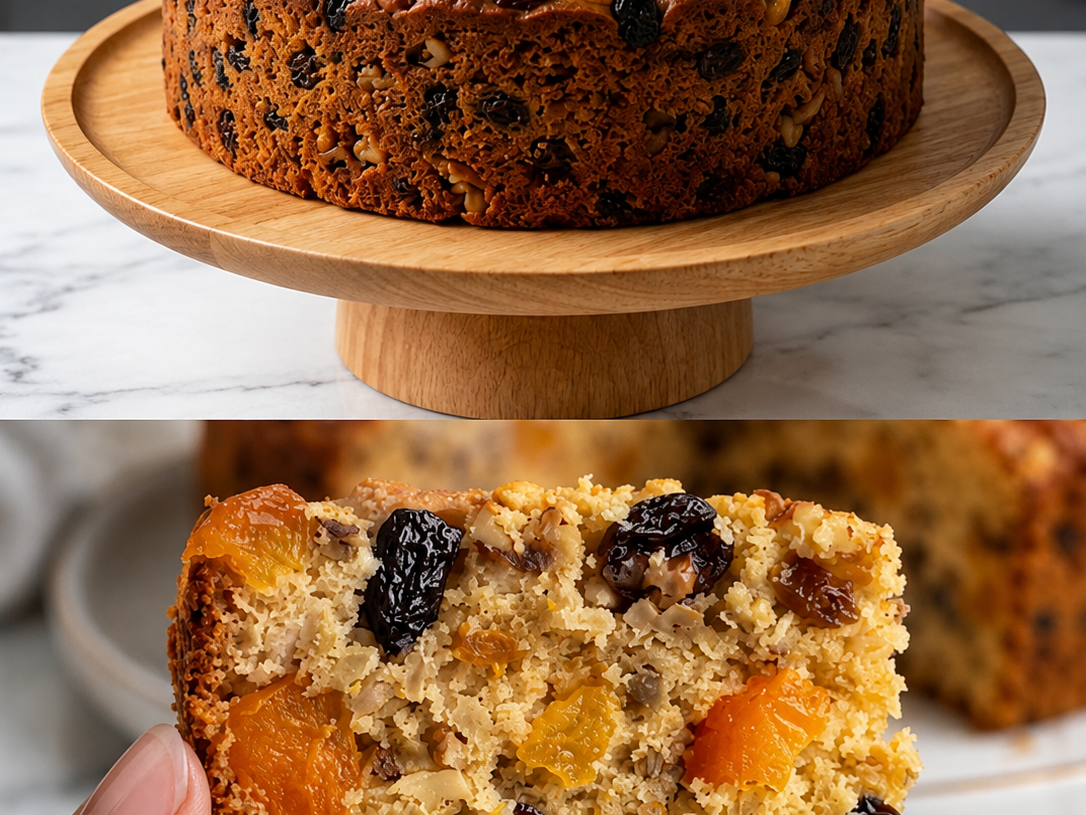
Yes — this Fruit & Nut Cake can be made diabetes-friendly, but I would not call it carb-free or automatically safe for everyone with diabetes.
The version I provided is more diabetes-conscious because it:
- Uses almond flour instead of regular wheat flour
- Uses Greek yogurt and protein powder for additional protein
- Uses allulose instead of regular sugar
- Contains fiber from almond flour, chia seeds, nuts, and fruit
- Keeps the dried fruit portion relatively small
However, dried apricots and raisins still contain carbohydrates, so the cake is not truly zero-carb. The estimated 8g net carbs per slice should also be verified using the exact brands you use.
For a more diabetes-friendly version
I recommend:
- Reduce raisins to 1 tablespoon
- Use unsweetened dried apricots in a smaller amount
- Use allulose or a suitable non-sugar sweetener
- Choose plain unsweetened Greek yogurt
- Use a low-carb protein powder
- Keep portions to one small slice
So, yes: it can fit a diabetes-friendly eating pattern when portioned appropriately, but individual blood-glucose responses vary, so nutrition values and personal dietary guidance should take priority.
mb without traditional wheat flour.
Instead of relying on large amounts of refined sugar, this recipe uses a low-carb sweetener and keeps the dried fruit portion controlled. The result is a high-protein, lower-carb dessert that feels comforting and festive while fitting more easily into a carbohydrate-conscious eating pattern.
Can This Fruit & Nut Cake Support Weight Loss Goals?
This cake can fit into a weight-conscious eating plan when enjoyed in sensible portions. Almond flour, Greek yogurt, eggs, protein powder, and nuts provide protein, fat, and fiber that can make a slice more satisfying than a conventional fruit cake made primarily with refined flour and sugar.
It is still an energy-dense dessert because nuts and almond flour contain substantial calories, so portion size matters. Pairing one slice with a protein-rich meal or snack can help keep the overall eating pattern balanced.
Does Fruit & Nut Cake Fit a High-Protein Lifestyle?
Yes, this version is designed to be a protein-conscious, lower-carb fruit cake. Greek yogurt, eggs, and whey protein contribute most of the protein, while almond flour, chia seeds, walnuts, and pecans add fiber and healthy fats. One serving provides approximately 13–15g protein and about 7g net carbs, depending on the exact ingredients used. The controlled amount of dried fruit keeps the carbohydrate load considerably lower than a traditional fruit cake.
Why This Recipe Is Special
- High-protein: Greek yogurt, eggs, and whey protein give this fruit cake a protein boost.
- Lower-carb: Almond flour replaces regular wheat flour, while a low-carb sweetener replaces conventional sugar.
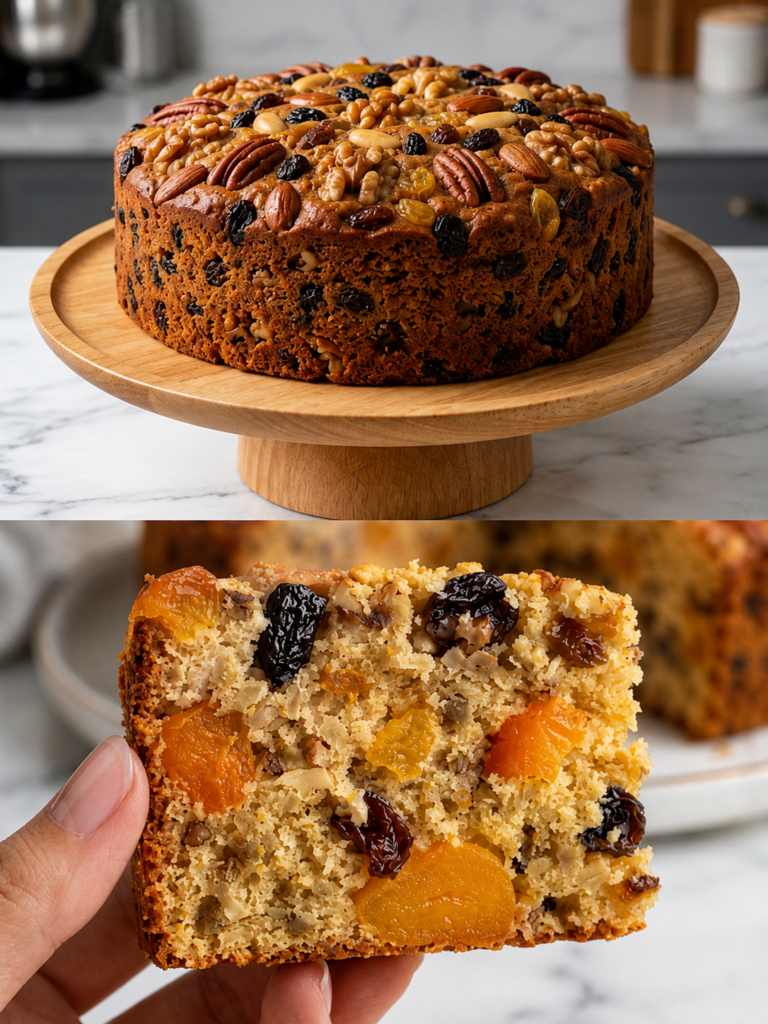
- Fruit-filled: Small amounts of apricot and raisins provide classic fruit-cake flavor without dominating the recipe.
- Nut-rich: Walnuts and pecans add crunch, richness, and satisfying texture.
- Moist and comforting: Greek yogurt helps create a tender crumb without requiring a large amount of added sugar.
My Personal Experience
- The combination of fruit and nuts makes every bite interesting:
I especially enjoy the contrast between chewy apricot, sweet raisins, and crunchy toasted nuts.
It gives the cake a traditional fruit-cake character without making it overly sweet. - Greek yogurt keeps the crumb wonderfully moist:
The yogurt prevents the almond-flour cake from becoming overly dry or crumbly.
It also works beautifully with the protein powder to create a more substantial texture. - The toasted nuts make the cake feel special:
Walnuts and pecans become fragrant and slightly crisp during baking.
I like adding a few extra nuts to the top for a beautiful bakery-style finish. - It works especially well as a make-ahead dessert:
The flavor develops after the cake has completely cooled and rested.
A refrigerated slice the next day can be even more satisfying and firm.
Perfect For
This Fruit & Nut Cake is ideal for breakfasts, afternoon tea, holiday gatherings, weekend baking, meal prep, snacks, dessert tables, and lower-carb eating plans. It is also a lovely option when you want a traditional fruit-and-nut cake experience without using a large amount of refined flour or sugar.
Cut the cake into individual portions and refrigerate them for convenient grab-and-go snacks throughout the week.
Why You’ll Love This Recipe
- Moist and tender:
Greek yogurt helps keep the almond-flour crumb soft and pleasantly moist.
It also balances the slightly nutty flavor of the flour. - Packed with nuts:
Walnuts and pecans provide plenty of crunch throughout the cake.
Their natural richness pairs especially well with apricots and raisins. - Protein-conscious:
Whey protein, Greek yogurt, and eggs make this more protein-focused than traditional fruit cake.
It is a practical way to turn a dessert into a more substantial snack. - Lower in added sugar:
A low-carb sweetener replaces traditional granulated sugar.
The fruit provides small bursts of natural sweetness throughout the cake. - Beautiful enough for entertaining:
Extra nuts and fruit on top create an attractive, rustic presentation.
Serve it sliced on a wooden board or cake stand for a festive look.
Common Mistakes to Avoid
- Adding too much dried fruit — Apricots and raisins contain concentrated carbohydrates, so increasing them can substantially change the nutrition.
- Overbaking the cake — Almond-flour cakes can dry out if baked too long; remove it when the center is set but still moist.
- Cutting it while hot — The crumb is delicate immediately after baking and needs time to firm.
- Using cold ingredients — Very cold yogurt and eggs can make the batter less uniform and affect the final texture.
Required Equipment
- 9-inch round cake pan — Provides an even cake thickness and attractive presentation.
- Parchment paper — Makes removing the finished cake much easier.
- Large mixing bowl — Provides enough space for the fruit, nuts, and batter.
- Whisk — Smoothly combines the wet ingredients.
- Rubber spatula — Gently folds in the nuts and dried fruit without overmixing.
- Cooling rack — Allows air to circulate around the cake so the base cools evenly.
- Kitchen scale — Helps keep ingredient quantities and portions consistent.
Storage Instructions
Refrigerator: Allow the cake to cool completely before storing. Place individual slices in an airtight container with parchment between layers. Refrigerate for up to 5 days.
Freezer: Wrap individual slices tightly in parchment or plastic wrap and place them in a freezer-safe container or bag. Freeze for up to 2 months.
Thawing: Transfer a frozen slice to the refrigerator overnight or allow it to sit at room temperature for approximately 30–45 minutes.
High-protein-friendly storage tip: Portioning the cake before refrigerating or freezing makes it easier to keep servings consistent while preserving its protein-rich ingredients.
Recipe Details
Preparation Time: 20 minutes
Cooking Time: 40–48 minutes
Cooling Time: 30 minutes
Total Time: Approximately 1 hour 30 minutes
Servings: 10 slices
Best Season: All-season
Total Calories: Approximately 270–290 calories per serving
Calories and nutrition are approximate estimates and vary according to the specific brands of protein powder, Greek yogurt, almond flour, nuts, sweetener, and dried fruit used.
Short 3-Line Description
A moist, nutty fruit cake made with Greek yogurt, almond flour, protein powder, and a controlled amount of dried fruit.
Walnuts, pecans, apricots, and raisins add beautiful texture and classic fruit-cake flavor.
It is a satisfying high-protein, lower-carb dessert with no traditional refined sugar.
📝 Ingredients
For the Cake
- 1½ cups (168 g) finely ground almond flour
- ½ cup (50–55 g) low-carb vanilla or unflavored whey protein powder
- 1 cup (225 g) plain unsweetened Greek yogurt
- 4 large eggs, room temperature
- ¼ cup (56 g) unsalted butter, melted and slightly cooled
- ½ cup (95 g) allulose, or powdered monk fruit-allulose blend
- 1 tsp vanilla extract
- 1 tsp ground cinnamon
- ½ tsp ground nutmeg
- ½ tsp baking powder
- ¼ tsp baking soda
- ¼ tsp fine salt
- ½ cup (60 g) chopped walnuts
- ¼ cup (30 g) chopped pecans
- ¼ cup (40 g) unsweetened dried apricots, finely chopped
- 2 tbsp (20 g) raisins
- 1 tbsp (12 g) chia seeds
- 1 tsp orange zest, optional
For the Topping
- 2 tbsp chopped walnuts
- 2 tbsp pecan halves
- 1 tbsp chopped dried apricot, optional
Ingredient Note: Dried fruit is naturally concentrated in carbohydrates. Keep the quantities close to those listed if maintaining a lower-carb profile is important. For an even lower-carb version, replace some or all of the raisins with chopped unsweetened dried cranberries that contain no added sugar, or finely chopped fresh berries.
Directions
1. Prepare the oven
Preheat your oven to 325°F (165°C).
Lightly grease a 9-inch round cake pan and line the bottom with parchment paper.
The slightly lower oven temperature helps the dense fruit-and-nut cake bake evenly without becoming overly dark on the outside.
2. Prepare the nuts and fruit
Roughly chop the walnuts, pecans, and dried apricots.
If desired, toast the walnuts and pecans in a dry skillet over medium-low heat for 3–4 minutes, stirring frequently.
They should smell fragrant but should not become dark or burnt.
High-protein tip: Toasting the nuts adds substantial flavor without requiring additional sugar or carbohydrate-heavy ingredients.
3. Mix the wet ingredients
In a large bowl, whisk together the Greek yogurt, eggs, melted butter, allulose, and vanilla extract.
Whisk for approximately 1 minute, until smooth and creamy.
4. Combine the dry ingredients
In a separate bowl, combine the almond flour, protein powder, cinnamon, nutmeg, baking powder, baking soda, salt, and chia seeds.
Whisk thoroughly to distribute the protein powder and leavening agents evenly.
5. Combine wet and dry mixtures
Gradually add the dry ingredients to the yogurt mixture.
Fold with a rubber spatula until just combined.
The batter should be thick, moist, and scoopable.
Avoid excessive mixing because overmixing can make the cake dense.
6. Add the fruit and nuts
Fold in the chopped walnuts, pecans, dried apricots, raisins, and optional orange zest.
Mix only until the ingredients are evenly distributed.
You should see pieces of fruit and nuts throughout the batter rather than having them settle at the bottom.
7. Transfer to the pan
Spoon the batter into the prepared cake pan.
Spread it evenly with a spatula.
Gently tap the pan once or twice against the counter to remove large air pockets.
8. Add the topping
Scatter the extra walnuts, pecans, and optional apricot pieces over the surface.
Press the larger nuts very gently into the batter so they remain in place during baking.
9. Bake
Place the pan in the center of the 325°F (165°C) oven.
Bake for approximately 40–48 minutes.
The cake is ready when the top is golden brown, the edges are firm, and a toothpick inserted near the center comes out with a few moist crumbs attached.
10. Check the center
Do not rely only on the surface color.
The center should feel set when lightly pressed but should still have a little softness.
If the top browns too quickly, loosely cover it with foil during the final 10–15 minutes.
11. Cool
Remove the cake from the oven and place the pan on a cooling rack.
Allow it to cool for 20–30 minutes before removing it from the pan.
Letting the cake cool completely allows the protein-rich crumb to firm and makes slicing much cleaner.
12. Slice and serve
Carefully lift the cake from the pan and remove the parchment.
Slice into 10 equal pieces.
For the best flavor and texture, allow refrigerated slices to sit at room temperature for about 10 minutes before serving.
Nutrition Facts
Per Serving — 1 of 10 Slices, Approximate
- Calories: 280 kcal
- Total Fat: 22 g
- Saturated Fat: 5 g
- Cholesterol: 90 mg
- Sodium: 190 mg
- Potassium: 240 mg
- Total Carbohydrates: 15 g
- Fiber: 7 g
- Net Carbs: 8 g
- Sugars: 5 g
- Protein: 14 g
- Calcium: 110 mg
These values are approximate. The carbohydrate content can change significantly depending on the Greek yogurt, protein powder, dried fruit, and sweetener selected.
Notes
Storage: Keep cooled cake refrigerated in an airtight container for up to 5 days.
Freezing: Freeze individual slices for up to 2 months. Wrap well to prevent freezer burn.
Reheating: For a warm slice, microwave for approximately 10–15 seconds. Do not overheat because the protein powder can make the cake chewy.
Allergy notes: Contains eggs, milk, almonds, walnuts, and pecans. Use a nut-free flour alternative only if you are intentionally reformulating the recipe.
Protein powder: A whey isolate generally works well because it provides substantial protein without adding excessive carbohydrates.
Sweetener: Allulose provides a softer sweetness and helps the cake remain moist. If using a concentrated monk fruit or stevia product, follow the manufacturer’s conversion instructions rather than substituting it cup-for-cup.
Flavor boost: Add orange zest, cinnamon, nutmeg, cardamom, or a small amount of almond extract for a more festive fruit-cake flavor.
Fruit tip: Pat dried apricots and raisins dry before adding them. Excess surface moisture can create pockets of wet batter.
Diabetes-friendly consideration: This recipe is lower in added sugar and carbohydrates than conventional fruit cake, but it is not carbohydrate-free. Dried fruit still contributes carbohydrates, so individual portions and personal dietary needs should be considered.
Frequently Asked Questions
1. Is Fruit & Nut Cake low-carb?
This version is substantially lower in carbohydrates than traditional fruit cake, with approximately 8g net carbs per serving, depending on the ingredients used.
2. Can I make this cake without protein powder?
Yes, but removing the protein powder will reduce the protein content and may require adjusting the almond flour and yogurt to maintain the correct batter consistency.
3. Can I use fresh fruit instead of dried fruit?
Yes, but fresh fruit adds additional moisture, so the baking time and texture may change.
4. Can I use only walnuts instead of walnuts and pecans?
Absolutely; you can use an equal total amount of walnuts if you prefer their flavor or already have them available.
5. Why does the cake need to cool before slicing?
Cooling allows the protein-rich crumb to finish setting, making the cake less fragile and producing cleaner slices.
6. Can I make this Fruit & Nut Cake more protein-rich?
Yes, you can use a higher-protein Greek yogurt and a protein powder with a higher protein percentage, but adding excessive protein powder can make the cake dry, so adjustments should be made gradually.