
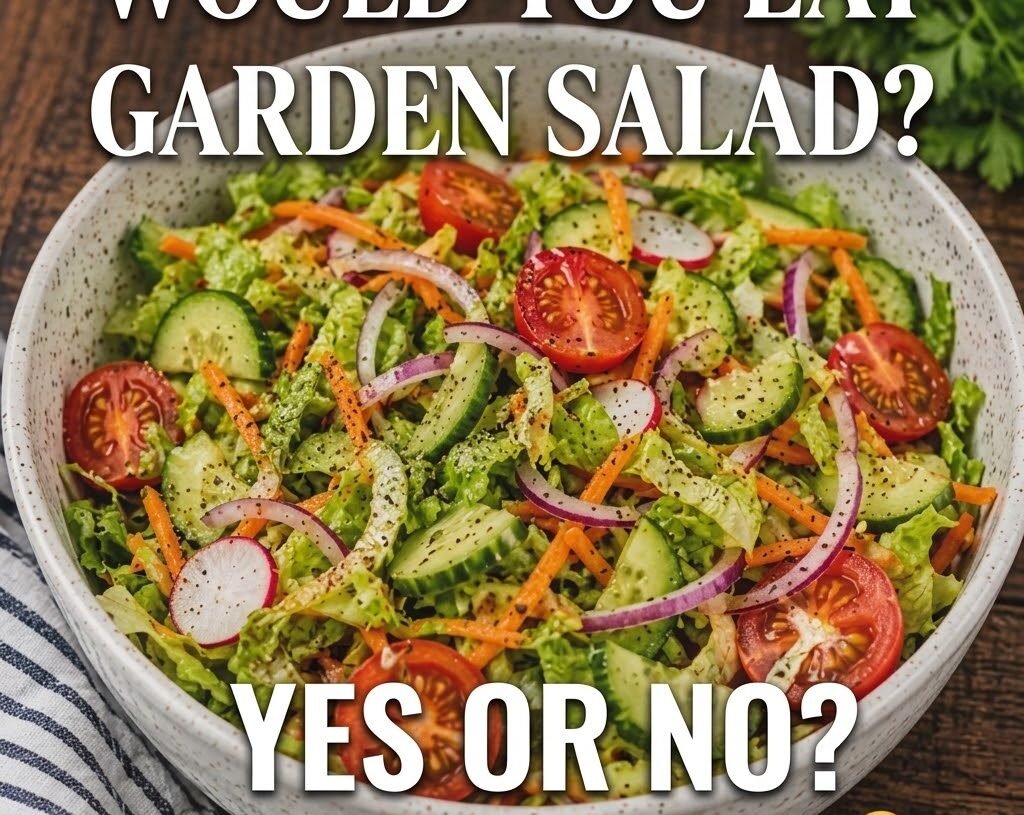
Servings: 4–6
Prep time: 20 minutes
Cooking time: None
Total time: About 20–25 minutes
🛒 Complete Ingredients
🥬 For the Salad
- 1 large head romaine lettuce, approximately 8–10 cups chopped
- 1 cup cherry tomatoes, halved
- 1 large cucumber, thinly sliced
- 1 medium carrot, peeled and shredded
- ¼ medium red onion, very thinly sliced
- 4–5 fresh radishes, thinly sliced
- ¼ cup shredded cheddar cheese, optional
- ¼ cup croutons, optional
Optional ingredients for an even bigger salad
- ½ cup sliced bell pepper
- ¼ cup sweet corn
- ½ avocado, diced
- ¼ cup sliced black olives
- ¼ cup chopped parsley
- 2 tablespoons chopped fresh cilantro
- ¼ cup sunflower seeds
- ¼ cup toasted pumpkin seeds
🥣 Homemade Salad Dressing
- 3 tablespoons extra-virgin olive oil
- 1 tablespoon fresh lemon juice
- 1 tablespoon apple cider vinegar
- 1 teaspoon honey
- ½ teaspoon garlic powder
- ½ teaspoon salt
- ¼ teaspoon freshly ground black pepper
Optional dressing additions
- ½ teaspoon Dijon mustard
- ½ teaspoon dried oregano
- 1 tablespoon finely chopped fresh parsley
- ¼ teaspoon red pepper flakes
- 1 teaspoon water, if you want a lighter dressing
👩🍳 Detailed Step-by-Step Directions
1. Begin by preparing your vegetables.
Place all of the vegetables on your kitchen counter.
Because this is a fresh salad, the quality of the vegetables makes a huge difference.
Choose lettuce that looks crisp and green, tomatoes that are firm and juicy, and a cucumber without soft spots.
2. Wash your hands.
Before preparing the vegetables, wash your hands thoroughly with soap and water.
Make sure your cutting board, knife, salad bowl, and other utensils are clean.
3. Wash the romaine lettuce.
Remove any damaged or wilted outer leaves from the romaine.
Separate the remaining leaves and rinse them thoroughly under cool running water.
Pay particular attention to the areas near the base because dirt can sometimes collect between the leaves.
4. Dry the lettuce very well.
This is one of the most important steps when making a good salad.
Use a salad spinner if you have one.
Alternatively, gently pat the leaves dry with clean kitchen towels or paper towels.
Wet lettuce can dilute the dressing and make the salad watery.
5. Chop the romaine.
Place the dried romaine on a cutting board.
Cut off the tough bottom portion.
Then chop the leaves into bite-sized pieces.
You want pieces large enough to provide a satisfying crunch but small enough to eat comfortably with the other vegetables.
6. Put the lettuce into a large bowl.
Transfer the chopped romaine into a large salad bowl.
Use a bowl considerably larger than you think you need.
A large bowl gives you plenty of room to toss the salad without vegetables flying over the sides.
7. Prepare the cherry tomatoes.
Wash 1 cup of cherry tomatoes thoroughly.
Pat them dry.
Place them on a cutting board and carefully cut each tomato in half.
If some tomatoes are particularly large, you can cut them into quarters.
8. Add the tomatoes.
Add the halved cherry tomatoes to the bowl containing the romaine.
The tomatoes provide sweetness, acidity, color, and juicy texture.
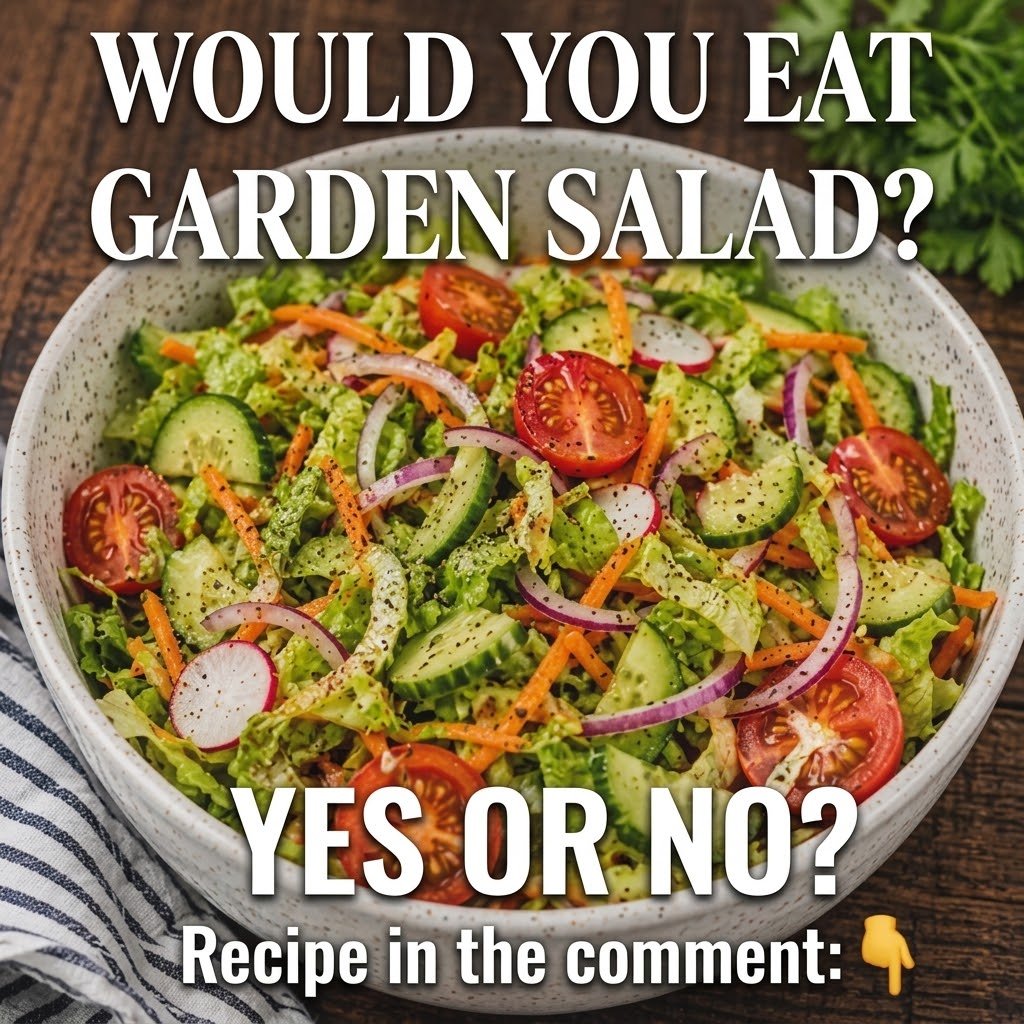
For an appearance similar to your picture, use a mixture of red and yellow cherry tomatoes if available.
9. Prepare the cucumber.
Wash one large cucumber.
You can peel it completely, leave the skin on, or partially peel it.
For the most colorful appearance, I recommend leaving the skin on.
10. Slice the cucumber.
Cut the cucumber into thin rounds.
Aim for slices approximately ⅛ to ¼ inch thick.
Very thick cucumber pieces can dominate the salad, while thin slices distribute nicely throughout the bowl.
11. Add the cucumber.
Place the cucumber slices into the salad bowl.
Gently spread them throughout the lettuce instead of leaving them all in one area.
12. Prepare the carrot.
Peel one medium carrot.
Use the large holes of a box grater to shred it.
You can also use a julienne peeler if you want long, thin carrot strips like the ones visible in the photograph.
13. Add the shredded carrot.
Sprinkle the carrot over the lettuce, tomatoes, and cucumber.
The bright orange carrot gives the salad a naturally colorful appearance and adds a subtle sweetness and crunch.
14. Prepare the red onion.
Take approximately ¼ of a medium red onion.
Remove the papery outer skin.
Slice the onion as thinly as possible.
Thin slices are preferable because raw red onion has a strong flavor.
15. Soak the onion if desired.
If you find raw onion too strong, place the slices in a bowl of cold water for approximately 5–10 minutes.
Drain and pat them dry.
This takes some of the sharpness away while keeping the onion crisp.
16. Add the red onion.
Scatter the thin onion slices over the salad.
Try to separate the rings with your fingers so that the onion is evenly distributed.
17. Prepare the radishes.
Wash 4–5 radishes and trim off the leaves and roots.
Slice them very thinly.
A sharp knife or mandoline can make this easier.
If using a mandoline, use appropriate hand protection.
18. Add the radishes.
Place the radish slices throughout the salad.
Radishes provide a crisp texture and a mild peppery flavor that balances the sweetness of the tomatoes and carrots.
19. Add optional vegetables.
At this point, you can add sliced bell pepper, corn, avocado, olives, or other vegetables.
If using avocado, wait until just before serving to add it so it doesn’t become bruised or mushy.
🥣 Making the Homemade Dressing
20. Choose your dressing container.
Use a small bowl, measuring cup, or clean jar with a lid.
A jar is particularly convenient because you can simply add everything, close the lid, and shake.
21. Add the olive oil.
Pour 3 tablespoons extra-virgin olive oil into the container.
The olive oil forms the main base of the dressing and gives it a smooth, rich texture.
22. Add fresh lemon juice.
Add 1 tablespoon freshly squeezed lemon juice.
Fresh lemon juice provides bright acidity and works especially well with crisp vegetables.
23. Add apple cider vinegar.
Pour in 1 tablespoon apple cider vinegar.
The vinegar provides additional acidity and gives the dressing a slightly fruity tang.
24. Add the honey.
Add 1 teaspoon honey.
Honey balances the acidity from the lemon juice and vinegar.
If you prefer a less sweet dressing, use only ½ teaspoon.
25. Add the garlic powder.
Add ½ teaspoon garlic powder.
Garlic gives the dressing a savory flavor that pairs well with the fresh vegetables.
You can substitute approximately one small finely minced fresh garlic clove if preferred.
26. Season the dressing.
Add ½ teaspoon salt and ¼ teaspoon freshly ground black pepper.
Taste the dressing after mixing.
You can always add more seasoning later.
27. Add optional Dijon mustard.
For a more flavorful dressing, add ½ teaspoon Dijon mustard.
Mustard also helps the oil and acidic ingredients stay blended for longer.
28. Whisk the dressing.
Whisk everything together vigorously for approximately 30–45 seconds.
The dressing should become slightly thicker and look more uniform.
29. Or shake the dressing.
If you’re using a jar, tightly close the lid and shake vigorously for approximately 20–30 seconds.
Continue shaking until the oil and vinegar appear evenly combined.
30. Taste the dressing.
Dip a clean spoon into the dressing and taste it.
If it tastes too acidic, add another small amount of honey.
If it tastes too sweet, add a few drops of lemon juice or vinegar.
If it tastes flat, add a tiny pinch of salt.
🥗 Finishing the Salad
31. Don’t dress the salad too early.
Keep the dressing separate until you’re ready to serve.
If you add the dressing too early, the lettuce can become soft and wilted.
For the crispest salad, dress it immediately before eating.
32. Add the dressing.
Start by drizzling approximately half of the dressing over the salad.
Don’t automatically pour all of it in.
You can always add more, but you can’t remove excess dressing easily.
33. Toss gently.
Use two large salad spoons or salad tongs.
Lift the ingredients from the bottom and gently bring them toward the top.
Continue tossing until the vegetables are lightly coated.
Avoid aggressively stirring because that can bruise the tomatoes and lettuce.
34. Taste the salad.
Take a small bite.
Check whether it needs more dressing, salt, pepper, or lemon juice.
Add more dressing little by little until it tastes the way you like.
35. Add the cheese.
If using cheddar, sprinkle ¼ cup shredded cheddar cheese over the top.
You can also substitute Parmesan, feta, goat cheese, mozzarella, or another cheese.
36. Add the croutons.
Sprinkle ¼ cup croutons over the salad just before serving.
Adding them at the end helps keep them crunchy.
If you add them too early, they can absorb dressing and become soft.
37. Add fresh herbs.
For an especially fresh flavor, sprinkle chopped parsley, chives, or cilantro over the top.
Fresh herbs also make the salad look more vibrant.
38. Serve immediately.
Transfer the salad to individual bowls or serve it directly from the large salad bowl.
The best texture is achieved when the lettuce is cold and crisp and the dressing has just been added.
39. Make it a complete meal.
For a more filling meal, add grilled chicken, sliced steak, roasted chickpeas, boiled eggs, tuna, grilled shrimp, or another protein.
You can also add avocado and toasted seeds for additional richness.
40. Enjoy your fresh garden salad!
You should end up with a salad that is crisp, colorful, juicy, slightly sweet, tangy, and refreshing, with plenty of different textures.
The combination of crunchy romaine, juicy tomatoes, cool cucumber, sweet shredded carrot, peppery radishes, sharp red onion, creamy cheese, and homemade lemon-vinegar dressing makes this a fantastic everyday salad. 🥗
⭐ Best Tips for the Salad in Your Picture
Keep everything cold: Refrigerate the vegetables for 30–60 minutes before assembling if you have time.
Dry everything thoroughly: Especially the romaine. Water left on the vegetables will dilute your dressing.
Slice the vegetables thinly: Thin cucumber, onion, and radish slices distribute their flavors throughout every bite.
Dress immediately before eating: This keeps the lettuce crisp.
Use freshly squeezed lemon juice: It gives the dressing a brighter flavor than bottled lemon juice.
Don’t drown the salad: Start with half the dressing and add more only if necessary.
Add croutons last: This keeps them crunchy.