

Ingredients
For the Cheesecake
- 250 g (8.8 oz) full-fat cream cheese, softened
- 50 g (3½ tbsp) unsalted butter
- 100 ml (scant ½ cup) whole milk
- 6 large eggs, separated and preferably at room temperature
- 100 g (½ cup) granulated sugar
- 60 g (½ cup) cake flour
- 20 g (2 tbsp) cornstarch
- 1 teaspoon vanilla extract
- 1 tablespoon fresh lemon juice
- ½ teaspoon finely grated lemon zest
- ¼ teaspoon salt
For Preparing the Pan
- Parchment paper
- Aluminum foil
- Hot water, for the water bath
Optional Garnish
- Powdered sugar, for dusting
- Fresh strawberries, raspberries or blueberries
- Lightly whipped cream
Directions
1. Prepare the Pan
Preheat your oven to 320°F (160°C). Grease an 8-inch (20 cm) round springform pan lightly and line the bottom with parchment paper. If desired, line the sides with parchment as well.
Wrap the outside of the springform pan tightly with two layers of aluminum foil, making sure there are no gaps or tears. The foil prevents water from the water bath from leaking into the pan during baking.
2. Prepare the Cream Cheese Mixture
Place the softened cream cheese, butter and milk in a heatproof bowl. Set the bowl over a saucepan containing gently simmering water, making sure the bottom of the bowl does not touch the water.
Stir gently until the cream cheese and butter have completely melted and the mixture becomes smooth, creamy and lump-free. Remove from the heat and let it cool slightly.
3. Add the Egg Yolks
Separate the eggs carefully, placing the egg whites in a completely clean, dry mixing bowl.
Add the egg yolks to the slightly cooled cream cheese mixture one at a time, whisking gently after each addition. Add the vanilla extract, lemon juice and lemon zest, then whisk until smooth.
4. Add the Dry Ingredients
Sift the cake flour, cornstarch and salt together. Add the sifted ingredients to the cream cheese mixture.
Whisk gently until the batter is smooth and there are no visible lumps or dry patches. Do not overmix, as excessive mixing can make the cheesecake less tender.
5. Whip the Egg Whites
Using a clean electric mixer, beat the egg whites on medium speed until they become foamy.
Gradually add the granulated sugar in three additions, continuing to beat between each addition. Whip until the egg whites reach soft to medium peaks.
The meringue should look glossy and hold its shape, but the tip should gently bend when the whisk is lifted. Avoid whipping the egg whites until they become extremely stiff or dry.
6. Fold the Meringue Into the Batter
Add about one-third of the whipped egg whites to the cream cheese batter. Gently fold with a silicone spatula to lighten the mixture.
Add another third and fold carefully. Finally, add the remaining meringue and continue folding until everything is evenly incorporated.
Use gentle lifting and folding motions rather than stirring. The goal is to preserve as much air as possible because those tiny air bubbles create the cheesecake’s signature fluffy texture.
7. Fill the Pan
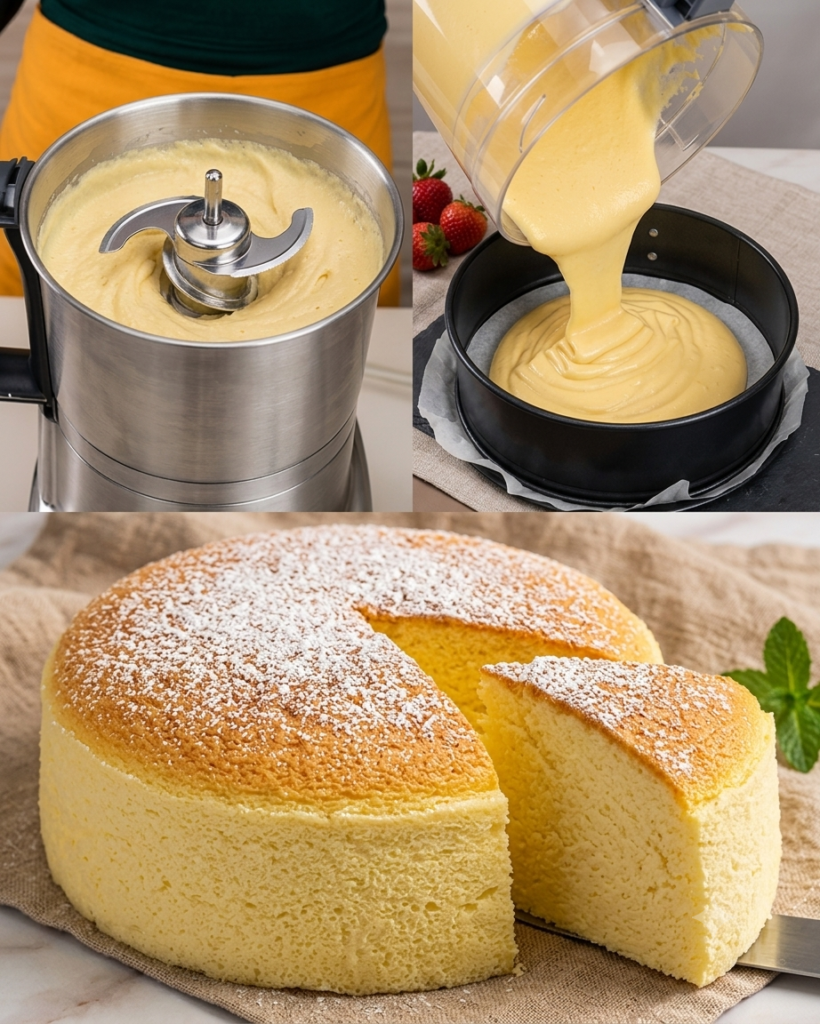
Pour the finished batter slowly into the prepared springform pan. Gently smooth the surface with a spatula.
Place the cheesecake pan inside a larger, deep roasting pan. Carefully pour hot water into the roasting pan until it reaches approximately 1 inch (2.5 cm) up the sides of the cheesecake pan.
8. Bake the Cheesecake
Place the water bath carefully in the preheated oven and bake at 320°F (160°C) for approximately 20 minutes.
After 20 minutes, reduce the oven temperature to 285°F (140°C) and continue baking for approximately 45–60 minutes, or until the cheesecake is golden on top and the center has a gentle wobble.
Keep in mind that baking times can vary depending on your oven and pan. Avoid opening the oven frequently while the cheesecake is baking.
9. Protect the Top if Necessary
Watch the cheesecake during the final part of baking. If the top becomes golden too quickly while the center still needs additional time, loosely cover the cheesecake with aluminum foil.
Do not press the foil onto the surface. A loose foil tent will protect the top from excessive browning while allowing the cheesecake to continue baking.
10. Cool Gradually
When the cheesecake is finished, turn off the oven and leave the oven door slightly open. Let the cheesecake remain inside for approximately 10–15 minutes.
This gradual cooling helps reduce the risk of sudden temperature changes, which can cause the delicate cheesecake to shrink or collapse.
11. Remove and Cool
Carefully remove the cheesecake from the water bath and take off the aluminum foil surrounding the pan.
Allow the cheesecake to cool in the pan before gently removing the springform ring. Some natural shrinking is normal as the cheesecake cools.
Let it cool completely before decorating or slicing.
12. Chill Before Serving
For the best texture, refrigerate the completely cooled cheesecake for at least 2–4 hours. Chilling allows the interior to become even softer, creamier and more flavorful.
For an especially convenient make-ahead dessert, refrigerate the cheesecake overnight.
13. Decorate and Serve
Just before serving, lightly dust the top with powdered sugar. Add fresh strawberries, raspberries or blueberries if desired.
For particularly clean slices, dip a sharp knife in hot water, dry it thoroughly and then slice the cheesecake. Clean and rewarm the knife between cuts.
Serve chilled or allow individual slices to sit at room temperature for a few minutes before serving for a slightly softer texture.
14. Storage
Store leftover Japanese Cotton Cheesecake covered in the refrigerator for up to 3–4 days. Keep it well covered so it does not absorb odors from other foods.
Individual slices can also be wrapped tightly and frozen for longer storage. Thaw frozen cheesecake slowly in the refrigerator before serving.
Best result: The key to an exceptionally fluffy cheesecake is a properly whipped meringue, gentle folding, a water bath and slow cooling. These four steps help create the signature light, airy, moist and melt-in-your-mouth texture.
Recipe Summary
Prep Time: 30 minutes
Bake Time: Approximately 65–80 minutes
Cooling Time: 1 hour or more
Chilling Time: 2–4 hours
Total Time: Approximately 4–6 hours including chilling
Yield: 8–10 slices
Pan: 8-inch (20 cm) round springform pan
Oven Temperature: Start at 320°F (160°C), then reduce to 285°F (140°C)
Final Thoughts
This Fluffy Japanese Cotton Cheesecake is the perfect recipe for anyone who loves desserts that are rich without feeling heavy. Its cloud-like texture, delicate golden top and creamy interior make it especially beautiful when served simply with powdered sugar and fresh berries.