
Description
This Creamy Caramel Custard Flan is a beautifully silky dessert with a delicate vanilla custard and a glossy caramel topping that melts into a luscious sauce when turned onto a plate. The custard is gently baked in a water bath so it stays tender, creamy, and smooth rather than rubbery.
For a more protein-friendly and lower-carb dessert, this version uses eggs and Greek yogurt for added protein while using allulose in place of traditional sugar. It is comforting enough for a special occasion but simple enough to prepare ahead for a weeknight treat.
The result is a rich, elegant low-carb-friendly flan with a soft texture, vanilla aroma, and plenty of caramel flavor without relying on a traditional sugar-heavy custard.
Can This Creamy Caramel Custard Flan Support Weight Loss Goals?
It can fit into a balanced eating pattern when enjoyed in an appropriate portion. This recipe emphasizes protein-rich ingredients such as eggs and Greek yogurt, which can make the dessert more satisfying than a conventional sugar-heavy custard. Using allulose instead of regular sugar also helps reduce the conventional carbohydrate and added-sugar load. However, portion size and your overall daily food intake still matter, since this remains a rich dessert containing dairy and eggs.
Does Creamy Caramel Custard Flan Fit a High-Protein Lifestyle?
This flan is protein-friendly rather than an extremely high-protein food, providing approximately 8–9 grams of protein per serving depending on the brands used. Eggs and Greek yogurt supply most of the protein, while heavy cream contributes richness and a smooth custard texture. Using allulose keeps the recipe considerably lower in carbohydrates than traditional flan made with large amounts of sugar. For a higher-protein meal plan, pair a small serving with a protein-rich meal rather than relying on the flan as your primary protein source.
Why This Recipe Is Special
- Silky and creamy: The gentle water-bath baking method creates an exceptionally tender custard.
- Lower-carb friendly: Allulose replaces traditional granulated sugar in both the caramel and custard.
- Protein-friendly: Eggs and Greek yogurt naturally contribute satisfying protein.
- Make-ahead dessert: Flan actually improves after several hours of chilling.
- Elegant but simple: A handful of ingredients creates a restaurant-style dessert at home.
My Personal Experience
- The texture is the real star.
The combination of eggs, Greek yogurt, and gentle baking produces a soft custard that practically melts on the tongue.
Chilling it thoroughly makes the texture even more luxurious. - I love the contrast between custard and caramel.
The creamy vanilla center balances beautifully with the deep caramel flavor on top.
Every spoonful gets a little of both, making the dessert feel much richer than it is. - The water bath makes a noticeable difference.
Baking the ramekins gently prevents the custard from becoming tough or overly eggy.
The finished flan stays smooth with a delicate, almost pudding-like consistency. - It is excellent as a make-ahead dessert.
Preparing it several hours before serving gives the custard plenty of time to set.
That makes it especially convenient when entertaining guests.
Perfect For
This Creamy Caramel Custard Flan is perfect for dinner parties, holiday desserts, family gatherings, date-night dinners, weekend baking, and make-ahead treats. It also works nicely as a portion-controlled dessert for people following a lower-carb or protein-conscious eating pattern. Serve chilled after dinner with fresh berries, unsweetened whipped cream, or simply let the caramel speak for itself.
Why You’ll Love This Recipe
- Ultra-creamy custard
Each bite has a smooth, delicate consistency that feels luxurious without being overly heavy.
The Greek yogurt adds body while the cream keeps the custard rich. - Beautiful caramel topping
Once unmolded, the caramel flows around the custard and creates a naturally elegant presentation.
No elaborate decoration is necessary. - Lower in added sugar
Allulose provides sweetness while helping keep the recipe lower in conventional carbohydrates.
This makes it a useful alternative to traditional sugar-based flan. - Protein-friendly ingredients
Eggs and Greek yogurt give this dessert more protein than a simple cream-and-sugar custard.
It can therefore fit more comfortably into a protein-conscious menu. - Great for entertaining
The individual ramekins can be prepared ahead and chilled until dessert time.
Simply unmold each serving just before serving.
Common Mistakes to Avoid
- Overcooking the custard: Remove the flan when the edges are set but the center still has a gentle jiggle.
- Using excessive heat: A hot oven can cause bubbles, cracks, or a rubbery texture.
- Skipping the water bath: Direct baking makes it much easier to overcook the delicate custard.
- Unmolding while warm: Allow the flan to chill completely so it releases cleanly and holds its shape.
Required Equipment
- 6–8 small ramekins: Provide convenient individual portions and even cooking.
- Large roasting pan: Holds the water bath and allows gentle, uniform heat around the custards.
- Mixing bowl: Provides enough room to combine the custard without excessive splashing.
- Fine-mesh sieve: Removes egg solids and creates an exceptionally smooth custard.
- Whisk: Combines the eggs and dairy without requiring an electric mixer.
- Small heavy saucepan: Helps the allulose caramelize evenly.
- Measuring cups and spoons: Keep the delicate ingredient ratios consistent.
Storage Instructions
Store completely chilled flan in the refrigerator in airtight containers or tightly covered ramekins for up to 4 days. Keep the custard refrigerated at all times because it contains eggs and dairy.
For freezing, wrap individual portions tightly and place them in freezer-safe containers for up to 1 month. Thaw overnight in the refrigerator, although the texture may become slightly less silky after freezing.
For the best texture and protein-friendly quality, refrigeration is preferred over freezing.
Recipe Details
Preparation Time: 20 minutes
Cooking Time: 40–50 minutes
Chilling Time: 4–6 hours
Total Time: About 5 hours 10 minutes
Servings: 8
Best Season: All-season
Total Calories: Approximately 190 calories per serving
Nutrition values are approximate and can vary according to the specific dairy products, eggs, and sweetener used.
Short 3-Line Description
Silky homemade flan combines creamy vanilla custard with a glossy caramel sauce.
Greek yogurt and eggs add protein while allulose keeps this version lower in conventional carbohydrates.
It is an elegant, make-ahead dessert that’s perfect chilled straight from the refrigerator.
📝 Ingredients
For the Caramel
- ¾ cup allulose, granulated
- 2 tablespoons water
- ¼ teaspoon vanilla extract — optional
Note: Allulose is recommended because it melts and browns more similarly to traditional sugar than many other low-carb sweeteners.
For the Custard
- 6 large eggs
- 1 cup plain Greek yogurt, preferably 2% or whole milk
- 1 cup whole milk
- 1 cup heavy cream
- ½ cup granulated allulose
- 2 teaspoons pure vanilla extract
- ¼ teaspoon fine sea salt
Directions
1. Prepare the ramekins
Preheat the oven to 325°F (165°C). Arrange eight small ramekins inside a large roasting pan and set aside.
2. Make the caramel
Add the ¾ cup allulose and 2 tablespoons water to a heavy saucepan over medium heat. Cook for about 4–7 minutes, swirling the pan occasionally rather than stirring constantly.
Watch carefully as the mixture changes from clear to golden amber. Allulose can darken quickly, so remove it from the heat as soon as it reaches a deep golden color.
3. Divide the caramel
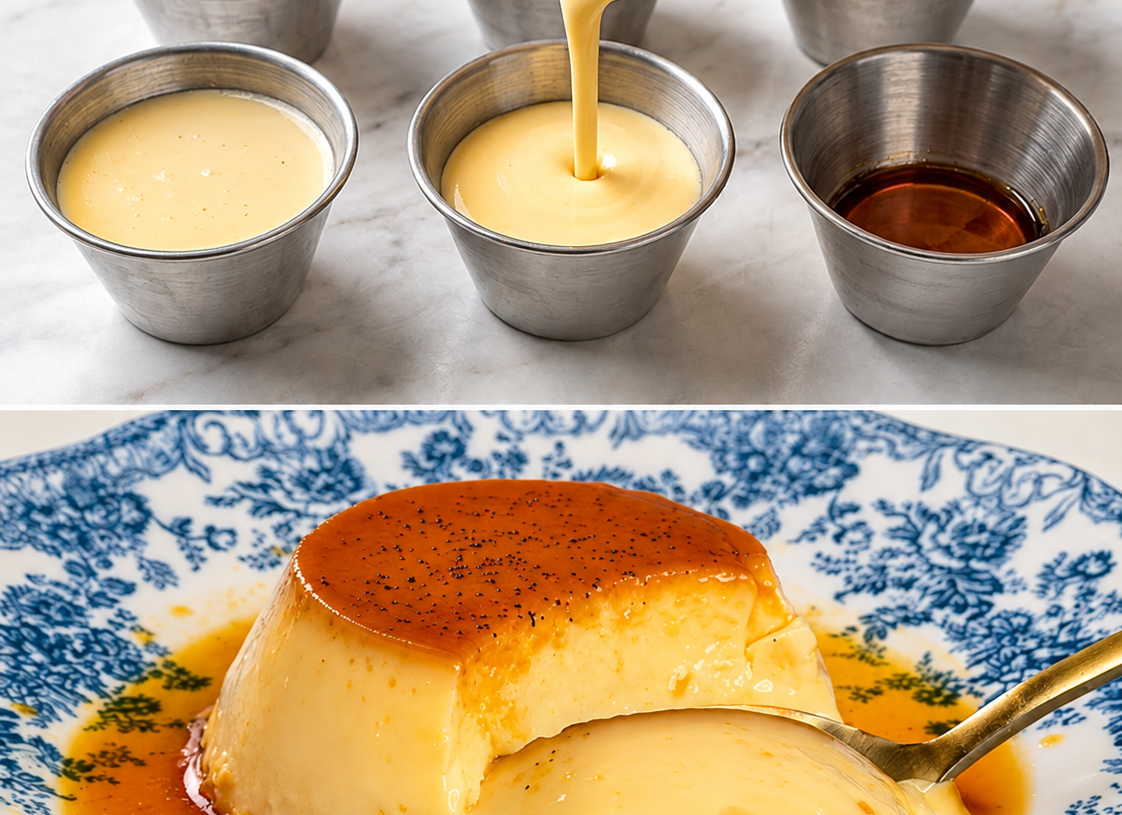
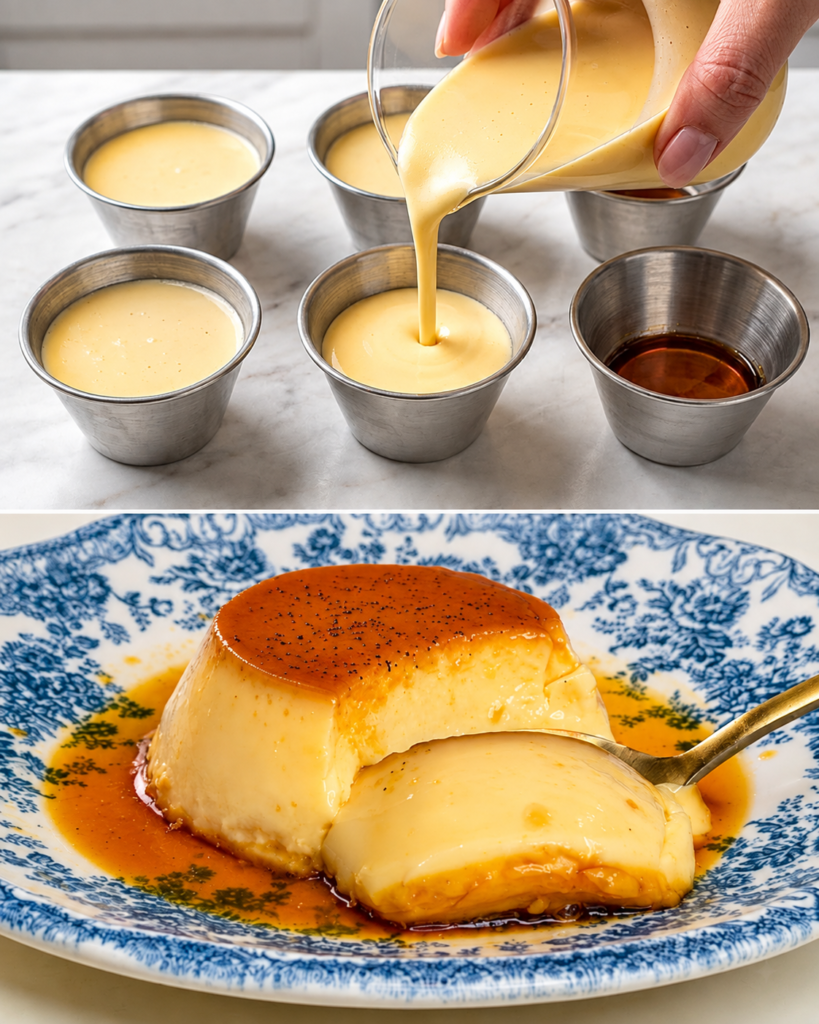
Immediately pour a thin layer of caramel into the bottom of each ramekin. Carefully tilt each ramekin to distribute it evenly.
High-protein cooking tip: Work quickly, because the caramel will begin setting as it cools.
4. Warm the dairy
In a saucepan, gently warm the milk and heavy cream over low to medium-low heat for about 3–4 minutes. Do not boil.
The mixture should feel warm but should not be bubbling.
5. Prepare the egg mixture
Whisk the eggs, Greek yogurt, ½ cup allulose, vanilla, and salt in a large bowl until smooth.
Avoid aggressively whipping the eggs because excessive air can create bubbles in the finished custard.
6. Temper the custard
Slowly pour the warm milk-and-cream mixture into the egg mixture while whisking continuously.
Adding the dairy gradually prevents the eggs from scrambling.
7. Strain for an extra-smooth texture
Pour the custard through a fine-mesh sieve into a clean bowl or large measuring jug.
This removes tiny egg particles and helps create the smooth restaurant-style texture shown in the finished flan.
8. Fill the ramekins
Carefully divide the custard among the caramel-lined ramekins, leaving a small amount of space at the top.
9. Create the water bath
Pour hot water into the roasting pan until it reaches approximately halfway up the sides of the ramekins.
Be careful not to splash water into the custard.
10. Bake gently
Transfer the roasting pan to the 325°F oven and bake for approximately 40–50 minutes.
The flans are ready when the edges look set but the centers still have a gentle wobble when lightly shaken.
11. Cool gradually
Carefully remove the ramekins from the water bath and allow them to cool at room temperature for approximately 30–45 minutes.
12. Chill completely
Cover the ramekins and refrigerate for at least 4 hours, preferably overnight.
The custard should feel completely set and cool before unmolding.
13. Unmold the flan
Run a thin knife around the edge of each ramekin. Place a serving plate upside down over the ramekin and quickly invert it.
Give the ramekin a gentle shake if necessary. The custard should slide onto the plate while the caramel sauce flows around it.
14. Serve
Serve chilled with the caramel sauce spooned around the custard. For an optional flavor boost, add a few fresh berries or a light dusting of cinnamon.
Nutrition Facts Per Serving – Approximate
Based on 8 servings:
- Calories: 190 kcal
- Total Fat: 13 g
- Saturated Fat: 7 g
- Cholesterol: 175 mg
- Sodium: 125 mg
- Potassium: 150 mg
- Total Carbohydrates: 9 g
- Fiber: 0 g
- Net Carbs: Approximately 5 g
- Sugars: Approximately 5 g
- Protein: 8–9 g
- Calcium: Approximately 105 mg
Nutrition is an estimate. Exact values will vary depending on the size of the eggs, type of Greek yogurt, milk, cream, and brand of allulose used. Net carbs are estimated with allulose excluded from the digestible carbohydrate calculation.
Notes
Storage: Keep covered and refrigerated for up to 4 days.
Reheating: Flan is best served cold, so reheating is generally unnecessary; warming it can soften the custard and cause the caramel to become overly liquid.
Allergy information: Contains eggs and dairy; use dairy-free substitutions only if you are prepared for changes in texture and nutrition.
Caramel note: Allulose can brown faster than regular sugar, so watch it carefully once it begins changing color.
Texture boost: Straining the custard before baking is one of the best ways to achieve a silky, professional finish.
Flavor boost: Add a small pinch of cinnamon, orange zest, espresso powder, or a few drops of almond extract for a different flavor profile.
Protein boost: For a slightly higher-protein dessert, serve a smaller portion alongside a spoonful of plain Greek yogurt rather than substantially increasing the eggs or protein powder in the custard, which can negatively affect its delicate texture.
Frequently Asked Questions
1. Can I make this flan without a water bath?
A water bath is strongly recommended because it provides gentle heat and helps prevent overcooking.
2. Why is my flan full of bubbles?
The custard was likely whisked too aggressively or baked at too high a temperature, which incorporates air and causes bubbles.
3. Can I use regular sugar instead of allulose?
Yes, but the recipe will no longer be lower-carb and the caramel and nutrition values will change.
4. How do I know when flan is fully cooked?
The edges should be firm while the center should still have a slight, controlled jiggle.
5. Can I make the flan ahead of time?
Yes, and chilling it overnight is actually ideal for developing the proper texture and making unmolding easier.
6. Can I freeze caramel flan?
Yes, although refrigeration is preferred because freezing and thawing can slightly change the custard’s silky texture.