
Description
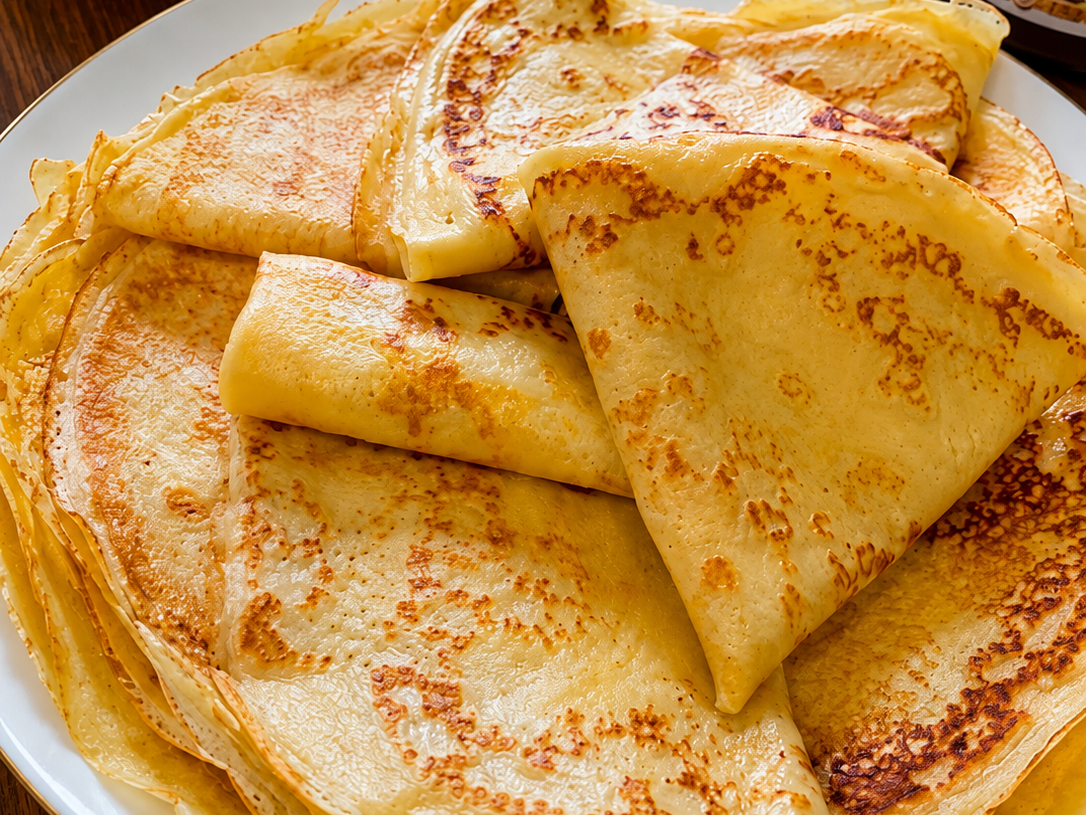
Classic French Crêpes are wonderfully thin, tender, and lightly golden, with delicate edges and a soft center. They are simple enough for a quick breakfast yet elegant enough for desserts or special occasions. This version uses a little more protein from milk and eggs while keeping portions controlled; for a lower-carb approach, choose a protein-rich filling and limit sugary toppings.
Can This Classic French Crêpes Recipe Support Weight Loss Goals?
Classic crêpes are not naturally a high-protein or low-carb food because traditional recipes contain wheat flour and milk. However, portion control and protein-rich fillings such as Greek yogurt, cottage cheese, eggs, or lean chicken can make a serving more satisfying. Keeping added sugar and calorie-dense toppings modest can also help the recipe fit into a balanced eating pattern.
Does Classic French Crêpes Fit a High-Protein Lifestyle?
Traditional French crêpes contain protein from eggs and milk, but their main carbohydrate source is flour, so they are not inherently low-carb or high-protein. A typical serving provides a moderate amount of protein, while the net carbs remain relatively high. To make them more suitable for a high-protein lifestyle, pair them with Greek yogurt, cottage cheese, or other protein-rich fillings. For a diabetic-friendly approach, keep portions moderate and choose unsweetened fillings and toppings.
Why This Recipe is Special
- Thin & delicate: Classic French technique creates soft, flexible crêpes with lightly crisp edges.
- Quick to prepare: The batter comes together in minutes with everyday ingredients.
- Versatile: Enjoy them with berries and yogurt, or use savory fillings for lunch or dinner.
- Protein-friendly: Eggs and milk contribute protein, while protein-rich fillings can increase it further.
- Portion-friendly: One carefully portioned crêpe can fit into a balanced meal plan.
My Personal Experience
- The batter is wonderfully simple:
I love how quickly flour, eggs, milk, and butter transform into a smooth, pourable batter.
A short rest makes the batter easier to spread and helps produce tender crêpes. - The first crêpe sets the rhythm:
The first one is useful for checking whether the pan temperature and batter consistency are right.
After that, each crêpe cooks quickly and develops beautifully delicate edges. - The texture is the highlight:
Properly cooked crêpes stay soft and flexible instead of becoming thick like pancakes.
A light golden surface gives them just enough toasted flavor without making them dry. - They work beautifully with protein-rich fillings:
Greek yogurt and berries create a fresh breakfast, while cottage cheese works especially well for a more filling option.
These additions make the traditional crêpes more suitable for a high-protein eating pattern.
Perfect For
- Weekend breakfasts and brunches
- Quick weeknight desserts
- Afternoon snacks
- Meal-prepped breakfasts
- Fruit-and-yogurt crêpe bowls
- Savory lunch or dinner fillings
- Special occasions and French-themed meals
- Portion-controlled meal plans
Why You’ll Love This Recipe
- Soft and tender: Each crêpe is thin, flexible, and delicate rather than heavy.
- Minimal ingredients: You only need a handful of basic kitchen staples.
- Fast cooking: Once the pan is hot, each crêpe takes only about 1–2 minutes.
- Sweet or savory: The neutral batter works with both dessert and savory fillings.
- Easy to customize: Add protein-rich fillings without changing the classic crêpe base.
Common Mistakes to Avoid
- Making the batter too thick: Thick batter creates pancakes rather than thin French crêpes.
- Using excessive heat: High heat can brown the outside before the center cooks properly.
- Adding too much batter: A thin layer is essential for classic crêpe texture.
- Flipping too early: Wait until the surface looks set and the edges begin loosening from the pan.
Required Equipment
- Non-stick skillet: Helps the delicate crêpes release easily with minimal sticking.
- Mixing bowl: Provides enough space for whisking a smooth batter.
- Whisk: Breaks up flour lumps and incorporates the eggs evenly.
- Ladle or measuring cup: Makes portioning the batter more consistent.
- Flexible spatula: Slides underneath the thin crêpes without tearing them.
Storage Instructions
Allow cooked crêpes to cool completely before storing. Stack them with small pieces of parchment paper between each crêpe and place them in an airtight container or resealable bag.
- Refrigerator: Keep for up to 3 days.
- Freezer: Freeze for up to 2 months, preferably with parchment between each crêpe.
- Reheating: Warm individually in a non-stick skillet over low-medium heat for about 20–30 seconds per side, or microwave briefly.
- For a high-protein-friendly meal, add the protein-rich filling after reheating rather than storing filled crêpes for several days.
Recipe Details
Preparation Time: 10 minutes
Resting Time: 20–30 minutes
Cooking Time: 20 minutes
Total Time: About 50–60 minutes
Servings: 8 crêpes
Best Season: All-season
Total Calories: Approximately 125 calories per crêpe, before fillings or toppings.
Short Description
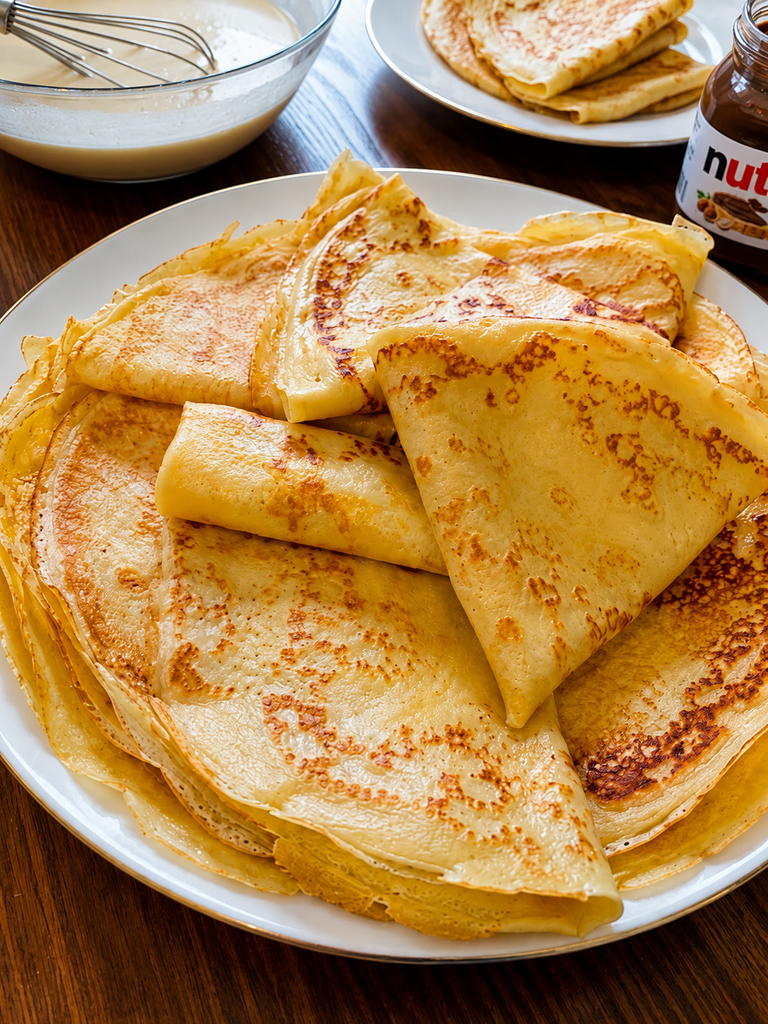
These classic French crêpes are thin, tender, buttery, and lightly golden.
They use simple ingredients and cook quickly in a non-stick pan.
Serve them with protein-rich fillings for a more satisfying, balanced option.
📝 Ingredients
- 1 cup (125 g) all-purpose flour
- 2 large eggs
- 1 cup (240 ml) low-fat milk
- ½ cup (120 ml) water
- 1 tablespoon (14 g) unsalted butter, melted
- ¼ teaspoon salt
- 1 teaspoon vanilla extract — optional for sweet crêpes
- 1 teaspoon granulated sugar — optional; omit for a lower-sugar version
For a more protein-focused serving: Use unsweetened Greek yogurt, cottage cheese, or another protein-rich filling instead of sugary cream or syrup.
Directions
- Make the batter:
Add the flour and salt to a mixing bowl. Whisk in the eggs, then gradually add the milk and water while whisking continuously. Add the melted butter and vanilla if using.
Texture cue: The batter should be smooth and quite thin, similar to light cream. - Rest the batter:
Cover and let the batter rest for 20–30 minutes at room temperature.
This helps the flour hydrate and produces more tender, flexible crêpes. - Heat the pan:
Place a non-stick skillet over medium heat for about 2 minutes. Lightly grease it with a small amount of butter.
The pan should be hot enough for the batter to begin setting immediately but not so hot that it browns instantly. - Add the batter:
Pour approximately ¼ cup of batter into the center of the skillet. Immediately tilt and rotate the pan to spread the batter into a very thin circle.
Cooking tip: Work quickly because thin crêpe batter sets within seconds. - Cook the first side:
Cook for approximately 45–60 seconds, until the surface looks set and the edges begin to lift and turn lightly golden. - Flip:
Carefully loosen the edges with a flexible spatula and flip the crêpe. Cook the second side for approximately 20–30 seconds.
Visual cue: Look for a few delicate golden spots rather than deep browning. - Repeat:
Transfer each finished crêpe to a plate and continue with the remaining batter. Adjust the heat between medium and medium-low if the crêpes brown too quickly. - Serve protein-forward:
Fill with plain Greek yogurt and berries, cottage cheese with cinnamon, or another protein-rich filling.
High-protein tip: Avoid relying on syrup, sweetened cream, or large amounts of powdered sugar if you’re trying to keep the meal more protein-focused and lower in added sugar.
Nutrition Facts — Per Serving (Approximate)
Estimated for 1 plain crêpe from this recipe; actual values vary by ingredients, pan size, and portioning.
- Calories: ~125 kcal
- Fat: ~4.5 g
- Cholesterol: ~55 mg
- Sodium: ~100 mg
- Potassium: ~70 mg
- Total Carbohydrates: ~16 g
- Fiber: ~0.5 g
- Net Carbs: ~15.5 g
- Sugars: ~1.5 g
- Protein: ~4 g
- Calcium: ~55 mg
Important: The nutrition values are approximate, and traditional French crêpes are relatively carbohydrate-rich. For a diabetic-friendly meal, portion size and the choice of filling/toppings matter.
Notes
- Storage: Refrigerate plain crêpes for up to 3 days or freeze for up to 2 months with parchment between them.
- Reheating: Warm in a skillet over low-medium heat or microwave briefly until flexible.
- Allergy notes: Contains wheat/gluten, eggs, and dairy. Use suitable alternatives if needed.
- Flavor boost: Add lemon zest and vanilla for sweet crêpes, or omit vanilla and sugar for savory versions.
- Protein boost: Serve with plain Greek yogurt, cottage cheese, eggs, or lean savory fillings.
- Lower-sugar option: Omit the optional sugar and choose unsweetened fillings.
Frequently Asked Questions
1. Are classic French crêpes diabetic-friendly?
They can fit into a portion-controlled eating pattern, but traditional crêpes are carbohydrate-rich, so toppings and serving size should be considered.
2. Are French crêpes low-carb?
No, traditional flour-based crêpes are not naturally low-carb because wheat flour provides most of their carbohydrates.
3. How can I make crêpes higher in protein?
Serve them with Greek yogurt, cottage cheese, eggs, or another protein-rich filling.
4. Why should crêpe batter rest?
Resting allows the flour to hydrate and generally produces smoother, more tender crêpes.
5. Can I make the batter ahead of time?
Yes, cover the batter and refrigerate it for up to about 24 hours, then whisk gently before cooking.
6. Why are my crêpes tearing?
The batter may be too thick, the crêpe may be flipped too early, or the pan may not be properly heated.