
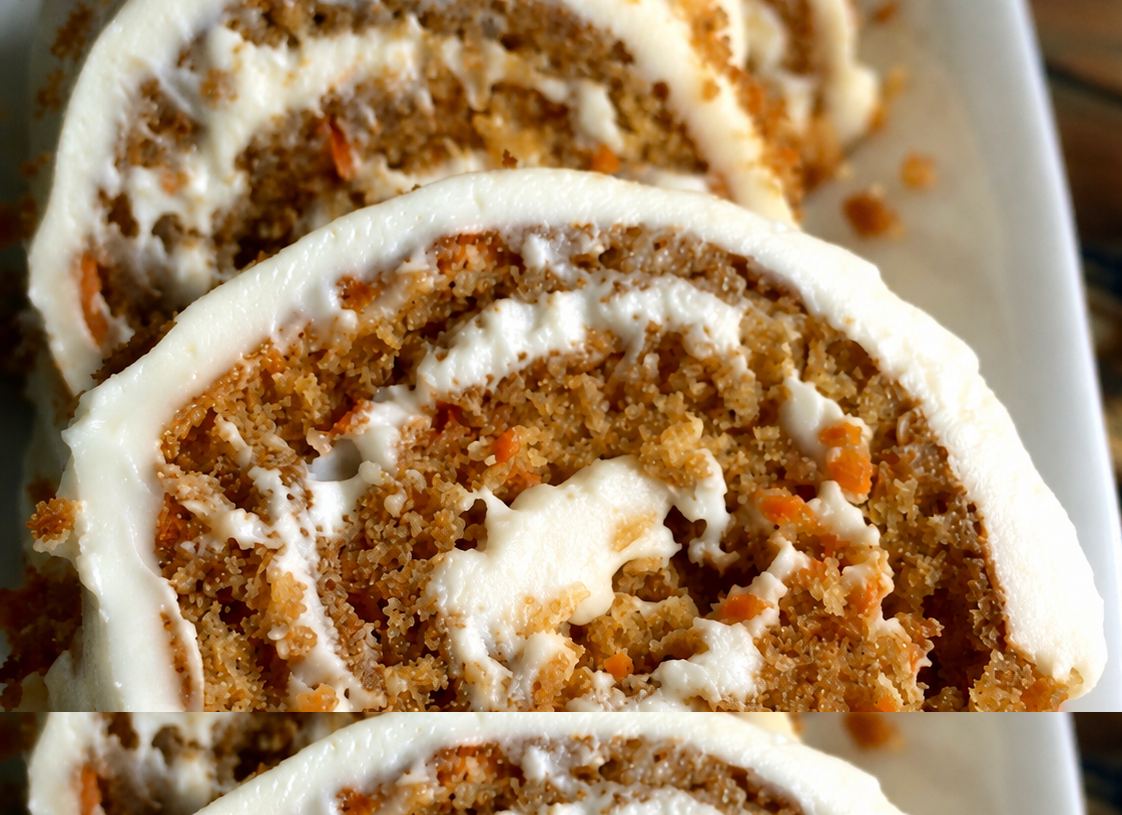
Carrot Cake Roll Recipe
Prep Time
25 minutes
Bake Time
10–15 minutes
Chilling Time
1–2 hours
Total Time
Approximately 2 hours
Servings
8–10 slices
Course
Dessert
Cuisine
American-inspired
Ingredients for the Carrot Cake
- 3 large eggs
- ½ cup granulated sugar
- 2 tablespoons vegetable oil
- 1 teaspoon vanilla extract
- ¾ cup all-purpose flour
- 1 teaspoon baking powder
- ½ teaspoon ground cinnamon
- ¼ teaspoon ground nutmeg
- ¼ teaspoon salt
- 1 cup finely grated carrots
- Powdered sugar, for dusting and rolling

For the best texture, use freshly grated carrots rather than pre-shredded packaged carrots. Freshly grated carrots are usually more tender and contain enough moisture to help keep the cake soft.
Ingredients for the Cream Cheese Filling
- 8 ounces cream cheese, softened
- 4 tablespoons unsalted butter, softened
- 1 cup powdered sugar
- 1 teaspoon vanilla extract
- 1–2 tablespoons heavy cream or milk, if needed
The cream cheese should be softened to room temperature before making the filling. This makes it much easier to beat until smooth and creamy and helps prevent lumps.
How to Make Carrot Cake Roll
1. Prepare the Baking Pan
Begin by preheating your oven to 350°F (175°C). Line a jelly roll pan or shallow rimmed baking sheet, approximately 10 x 15 inches, with parchment paper.
Lightly grease the parchment paper and, if desired, lightly grease the sides of the pan as well. Leave a little parchment overhanging the edges so you can easily lift the cake from the pan after baking.
Preparing the pan before mixing the batter is important because the cake batter should go into the oven soon after it is prepared. Having everything ready will make the process much easier.
2. Prepare the Carrots
Peel the carrots and finely grate them. Finely grated carrots are ideal for a cake roll because larger pieces can make the sponge harder to roll and may create weak spots in the cake.
If your carrots are particularly wet, gently blot them with a clean paper towel. Do not completely dry them because their natural moisture is an important part of the cake’s soft texture.
For the most attractive result, use bright orange, fresh carrots and grate them immediately before making the batter.
3. Beat the Eggs and Sugar
Place the eggs and granulated sugar in a large mixing bowl. Beat them with an electric mixer for several minutes until the mixture becomes pale, fluffy, and slightly thickened.
This step is especially important because whipped eggs help provide structure and lightness to the sponge cake. Since the cake is relatively thin, properly aerated eggs contribute significantly to its texture.
Do not rush this step. A few extra minutes of mixing can make a noticeable difference in how light the finished cake feels.
4. Add the Oil and Vanilla
Once the eggs and sugar are fluffy, slowly add the vegetable oil while mixing gently. Add the vanilla extract and mix just until incorporated.
Vegetable oil helps keep the cake soft even after refrigeration. This is particularly useful for a rolled cake because a dry sponge can become brittle and crack when folded.
Avoid overmixing after adding the oil. The goal is to combine the ingredients without unnecessarily deflating the air incorporated into the eggs.
5. Combine the Dry Ingredients
In a separate bowl, whisk together the all-purpose flour, baking powder, cinnamon, nutmeg, and salt.
The cinnamon provides the classic warm flavor associated with carrot cake, while a small amount of nutmeg adds additional depth. If you prefer a stronger spice profile, you can also add a small pinch of ground ginger.
Sifting the dry ingredients is optional but recommended. It helps remove lumps and makes it easier to incorporate the flour evenly into the egg mixture.
6. Fold the Dry Ingredients into the Batter
Gradually add the dry ingredients to the egg mixture. Use a spatula to gently fold everything together rather than vigorously stirring.
Overmixing can develop too much gluten in the flour and deflate the whipped eggs, resulting in a heavier cake. Stop folding as soon as you no longer see streaks of dry flour.
The batter should be smooth, light, and pourable.
7. Add the Grated Carrots
Gently fold the finely grated carrots into the batter. Make sure the carrots are evenly distributed throughout the mixture.
Take care not to overwork the batter at this stage. The carrots should be incorporated gently so the sponge remains light.
If you want to add chopped pecans or walnuts, you can fold a small amount into the batter. However, keep the pieces quite small because large nuts can interfere with rolling.
8. Spread the Batter into the Pan
Pour the batter onto the prepared parchment-lined pan and spread it evenly from corner to corner.
An offset spatula works particularly well for this job. Try to make the thickness as consistent as possible because uneven areas may bake at different rates.
Gently tap the pan on the countertop once or twice to remove any large air pockets, but do not aggressively bang the pan because you want to preserve the airiness of the batter.
9. Bake the Cake
Place the pan in the preheated oven and bake for approximately 10–15 minutes, depending on your oven and the exact size of your pan.
The cake should look lightly golden and feel springy when gently touched in the center. A toothpick inserted into the middle should come out clean or with only a few moist crumbs.
Be careful not to overbake the cake. Even a few extra minutes can make a thin sponge noticeably drier, and a dry cake is more likely to crack during rolling.
10. Prepare a Kitchen Towel
While the cake is baking, place a clean kitchen towel on your work surface. Generously dust the towel with powdered sugar.
The powdered sugar prevents the warm cake from sticking to the towel and adds a very light sweetness to the outside of the sponge.
Make sure the towel is clean and dry and does not have any strong detergent or fabric-softener fragrance.
11. Roll the Warm Cake
As soon as the cake comes out of the oven, carefully loosen the edges with a thin spatula or knife.
Place the powdered-sugar-coated towel over the cake and carefully invert the cake onto the towel. Remove the baking pan and gently peel away the parchment paper.
While the cake is still warm and flexible, carefully roll it up together with the towel, starting from one short end. Do not press too tightly. The goal is to create a gentle roll rather than compress the cake.
Allow the rolled cake to cool completely.
12. Prepare the Cream Cheese Filling
While the cake cools, prepare the frosting.
Beat the softened cream cheese and softened butter together until smooth and creamy. Add the powdered sugar gradually and continue beating until the mixture becomes fluffy.
Add the vanilla extract and mix again. If the filling seems too thick to spread easily, add a small amount of heavy cream or milk, one teaspoon at a time.
The finished filling should be thick enough to stay inside the cake but soft enough to spread without tearing the sponge.
13. Unroll the Cooled Cake
Once the cake has completely cooled, gently unroll it. Do not worry if it retains a slight curve; that is completely normal.
If you notice a tiny crack, there is no need to panic. The cream cheese filling will cover many small imperfections, and the finished cake can also be dusted with powdered sugar or decorated to make it look polished.
Work gently because the sponge is delicate.
14. Spread the Cream Cheese Filling
Spread the cream cheese mixture evenly over the entire surface of the cake, leaving a small border around the edges.
Do not make the filling layer excessively thick. Too much frosting can squeeze out when the cake is rolled and may make the finished spiral difficult to hold together.
An offset spatula makes it easy to create an even layer. Aim for consistent coverage from one end to the other.
15. Roll the Cake Again
Carefully roll the cake back up, this time without the towel inside.
Start from the same short end and roll slowly, using gentle but steady pressure. As you roll, the filling will naturally create the beautiful spiral pattern seen in the finished slices.
If a little filling comes out at the end, simply scrape away the excess with a spatula.
16. Chill the Carrot Cake Roll
Wrap the completed cake roll tightly in plastic wrap and place it in the refrigerator for at least 1–2 hours.
Chilling helps firm up the cream cheese filling and makes the cake much easier to cut cleanly.
For an especially neat presentation, you can refrigerate the roll for several hours or even overnight. This makes it an excellent make-ahead dessert for special occasions.
17. Slice the Cake
Before serving, unwrap the chilled cake and place it on a cutting board.
Use a sharp serrated knife or a very sharp chef’s knife to cut the cake into slices. For cleaner cuts, wipe the knife with a warm, slightly damp cloth between slices.
Aim for slices approximately ¾ to 1 inch thick, although you can make them thinner or thicker depending on how you want to serve the dessert.
18. Decorate and Serve
Dust the top of the finished carrot cake roll with powdered sugar before serving.
For a more festive presentation, you can drizzle a small amount of cream cheese icing over the top, sprinkle the cake with finely chopped pecans or walnuts, or add a few delicate carrot-shaped decorations.
Arrange the slices on a serving platter with the spiral facing upward. The contrast between the golden carrot cake and white cream cheese filling makes this dessert naturally attractive.
Tips for the Perfect Carrot Cake Roll
Use finely grated carrots. This is one of the most important details. Finely grated carrots blend into the sponge more easily and help create a smooth cake that rolls without difficulty.
Do not overbake. A carrot cake roll needs to remain flexible. Start checking the cake around the 10-minute mark because oven temperatures and pan sizes can vary.
Roll the cake while warm. Waiting until the cake has cooled before rolling it for the first time makes it much more likely to crack. The warm sponge is flexible and can learn the rolled shape as it cools.
Do not overfill the cake. A generous layer of cream cheese filling is delicious, but too much can make the cake difficult to roll and cause the filling to squeeze out.
Use room-temperature cream cheese and butter. Soft ingredients blend together much more smoothly, producing a creamy filling without lumps.
Chill before slicing. Refrigeration allows the filling to firm up and helps the cake hold its spiral shape.
How to Prevent Your Carrot Cake Roll from Cracking
Cracking is one of the most common concerns when making a cake roll, but it is usually preventable.
The first step is to avoid overbaking. The sponge should be fully cooked but still soft and flexible. If the edges become very dark or crisp, the cake may be too dry to roll easily.
Rolling the cake while warm is equally important. The warm sponge is naturally flexible, whereas a completely cooled sheet cake is much more likely to break when bent.
Another useful technique is to roll the cake gently rather than forcing it into a tight spiral. You want the cake to curve naturally around the filling.
Finally, don’t worry about tiny imperfections. Homemade cake rolls do not need to look perfectly manufactured. Once filled, chilled, dusted with powdered sugar, and sliced, even small cracks can be nearly invisible.
Optional Add-Ins and Variations
For a classic carrot cake flavor, add finely chopped pecans or walnuts to the batter or sprinkle them over the cream cheese filling before rolling.
You can also add a little ground ginger for extra warmth. A small amount of orange zest is another excellent addition and gives the cake a bright citrus note that pairs beautifully with cream cheese.
For a raisin version, add a modest amount of finely chopped raisins. Soaking the raisins briefly in warm water before using them can help keep them soft.
If you enjoy coconut, a small amount of finely shredded sweetened or unsweetened coconut can be incorporated into the filling.
For a more indulgent finish, drizzle the chilled cake with a thin cream cheese glaze and sprinkle the top with toasted nuts.
Make-Ahead Instructions
This carrot cake roll is an excellent make-ahead dessert. You can prepare the entire cake roll, wrap it tightly, and refrigerate it until you are ready to serve.
For the best texture, keep it well covered so that the sponge does not absorb refrigerator odors or dry out.
If preparing it the day before serving, assemble the cake completely and refrigerate it overnight. Add the final powdered sugar or decorative toppings shortly before serving for the freshest appearance.
How to Store Carrot Cake Roll
Because the filling contains cream cheese, the finished carrot cake roll should be stored in the refrigerator.
Keep it tightly wrapped or place it in an airtight container. Properly refrigerated, it is best enjoyed within several days for optimum freshness and texture.
Avoid leaving the finished cake at room temperature for extended periods, especially in a warm environment.
Can You Freeze Carrot Cake Roll?
Yes, carrot cake roll can be frozen successfully.
For best results, wrap the completely assembled cake tightly in plastic wrap and then place it inside a freezer-safe container or freezer bag. Protecting the cake from air helps prevent freezer burn.
When you are ready to serve it, transfer the cake to the refrigerator and allow it to thaw gradually. Do not slice it while completely frozen because the filling and sponge will not have the ideal texture.
After thawing, add any powdered sugar or decorative toppings just before serving.
Serving Suggestions
This carrot cake roll is delicious served chilled or slightly softened at room temperature.
For an elegant dessert plate, serve each slice with a small spoonful of whipped cream, a few toasted pecans, or a light dusting of powdered sugar.
You can also pair it with fresh berries or a simple fruit compote. The slight acidity of berries works especially well with the rich cream cheese filling.
For holiday gatherings, arrange the slices on a decorative platter and garnish the top with finely chopped nuts and a light drizzle of cream cheese icing.
Common Mistakes to Avoid
One of the biggest mistakes is using a pan that is too small. A thicker cake will be harder to roll and may not have enough flexibility.
Another common problem is overmixing the batter after adding the flour. This can make the sponge denser and less flexible.
Using cold cream cheese directly from the refrigerator can also result in a lumpy filling. Let the cream cheese and butter soften before mixing.
Finally, avoid cutting the cake immediately after rolling it. Chilling gives the filling time to firm up and helps the entire dessert hold its shape.
Frequently Asked Questions
Can I make this carrot cake roll without nuts?
Absolutely. Nuts are completely optional. The cake is delicious with just the soft carrot sponge and cream cheese filling.
Why did my cake crack?
The most common reasons are overbaking, allowing the cake to cool completely before the initial roll, or using too much pressure while rolling. Make sure the cake is still warm when you roll it for the first time.
Can I use pre-shredded carrots?
Freshly grated carrots are recommended because they are generally finer and more tender. Pre-shredded carrots can be too coarse for a delicate cake roll.
Can I make the filling ahead of time?
Yes. The cream cheese filling can be prepared ahead and refrigerated in an airtight container. Allow it to soften slightly before spreading it over the cake.
How do I get clean slices?
Chill the cake thoroughly and use a sharp knife. Wiping the knife clean between cuts will give you much neater slices and a more professional presentation.
Can I make the cake the day before?
Yes. In fact, making it the day before can be helpful because the cake has plenty of time to chill and set.
Recipe Notes
For the best results, use a 10 x 15-inch jelly roll pan and spread the batter evenly. Because ovens vary, use the visual and texture cues rather than relying exclusively on the baking time.
The cake should be lightly golden, spring back when touched gently, and be fully set in the center. Avoid waiting until the edges become very dark or crisp.
The cream cheese filling should be smooth and spreadable but not runny. If it becomes too soft, refrigerate it briefly before assembling the cake.
Remember that the initial warm roll is part of the technique, not the final shape. After cooling, the cake is unrolled, filled, and rolled again to create the finished spiral.