
Description
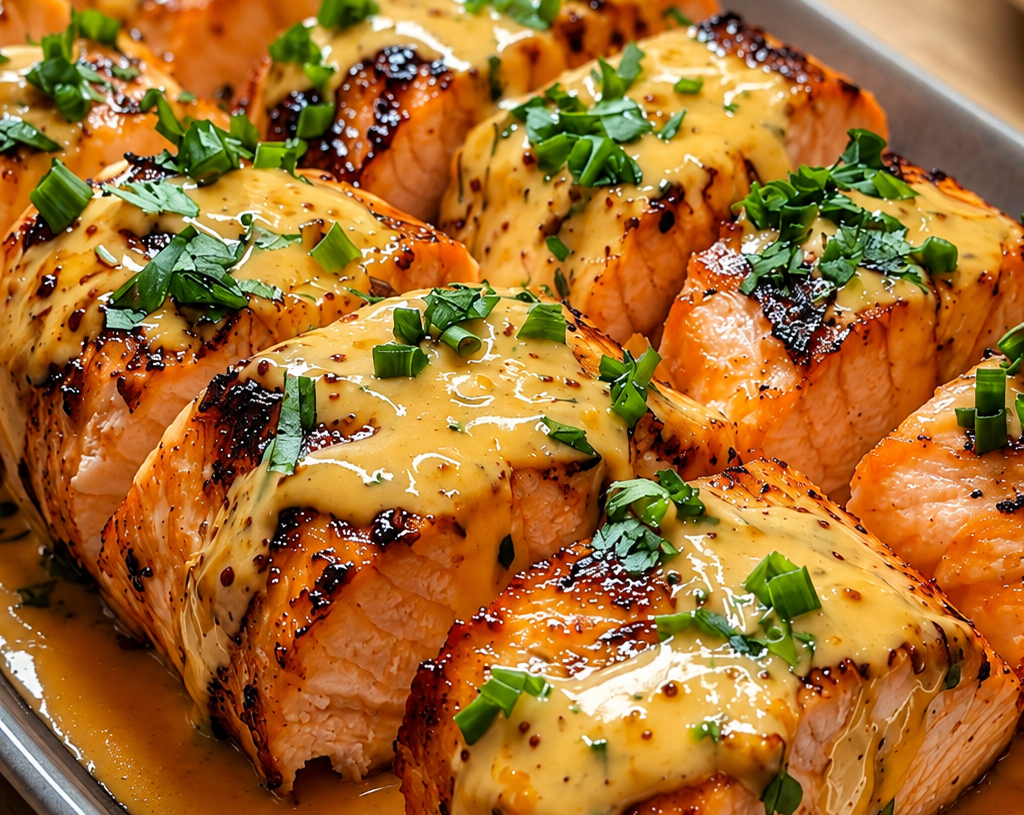
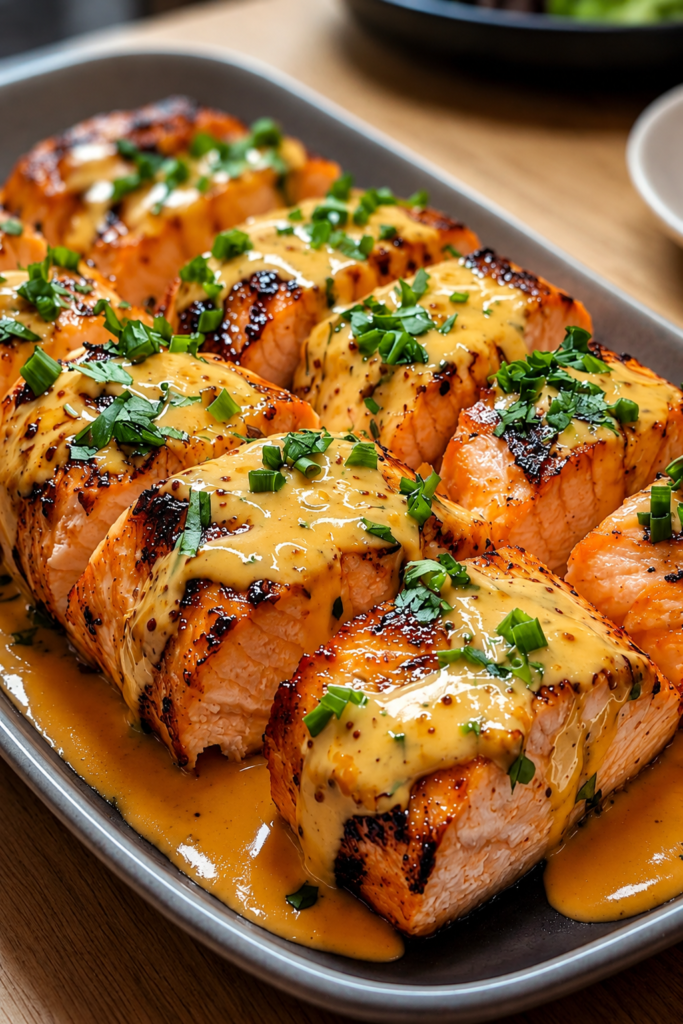
This Pan-Seared Salmon with Honey Mustard Sauce combines beautifully golden, lightly crisp salmon with a creamy, tangy-sweet mustard glaze. The salmon stays tender and flaky inside while the sauce adds bright Dijon flavor, a touch of sweetness, and a silky finish.
Naturally rich in protein and healthy fats, salmon makes an excellent centerpiece for a high-protein, low-carb dinner. A small amount of honey provides the classic honey-mustard flavor, while Greek yogurt and Dijon mustard help create a creamy sauce without needing a large amount of sugar.
Can This Pan-Seared Salmon with Honey Mustard Sauce Support Weight Loss Goals?
Yes, this recipe can fit into a weight-conscious eating pattern because salmon provides substantial protein and is highly satisfying. Protein can help make meals more filling, while pairing the salmon with non-starchy vegetables creates a balanced, nutrient-dense plate.
The sauce contains only a small amount of honey, keeping the added sugar relatively controlled. Since salmon is naturally calorie-dense because of its healthy fats, serving size still matters when managing overall calorie intake.
Does Pan-Seared Salmon with Honey Mustard Sauce Fit a High-Protein Lifestyle?
Absolutely. Salmon is the primary protein source, while Greek yogurt adds additional protein to the creamy mustard sauce. Each serving provides approximately 35–38g protein with about 5–6g net carbs, depending on the exact ingredients used. A small amount of honey delivers sweetness without turning the dish into a high-carbohydrate meal. Serve it with roasted broccoli, asparagus, cauliflower, or a leafy salad for an especially low-carb plate.
Why This Recipe Is Special
- High-protein: Salmon provides an impressive amount of protein in every serving.
- Low-carb: The recipe uses only a small amount of honey and no flour or breadcrumbs.
- Quick dinner: The salmon cooks in one skillet in roughly 10–12 minutes.
- Creamy without being heavy: Greek yogurt creates a smooth sauce while adding protein.
- Restaurant-style flavor: Golden seared salmon and glossy honey-mustard sauce make an impressive presentation.
My Personal Experience
- The salmon gets an incredible golden crust:
Starting with a properly heated skillet gives the salmon beautifully browned edges.
Keeping the salmon undisturbed while searing helps develop that flavorful crust. - The honey-mustard sauce balances everything perfectly:
Dijon provides sharpness while the small amount of honey adds just enough sweetness.
Greek yogurt rounds everything out into a creamy, tangy sauce. - It feels like a special dinner without complicated preparation:
The entire dish comes together quickly in one skillet and requires simple ingredients.
It is especially convenient on busy weeknights. - The sauce works beautifully with vegetables:
Extra sauce drizzled over asparagus, broccoli, or cauliflower makes the entire plate more flavorful.
It is an easy way to make a simple low-carb vegetable side more exciting.
Perfect For
This salmon is perfect for busy weeknight dinners, meal prep, family dinners, date-night meals, low-carb menus, keto-style eating plans, high-protein meal plans, and elegant weekend dinners.
Serve it with roasted asparagus, steamed broccoli, cauliflower mash, zucchini noodles, or a fresh green salad for a complete low-carb meal.
Why You’ll Love This Recipe
- Tender and flaky salmon:
A quick pan sear keeps the center moist while creating a deliciously browned exterior.
The salmon is finished when it flakes easily but remains juicy. - Creamy honey mustard sauce:
Dijon mustard provides bold flavor while Greek yogurt creates a smooth, creamy consistency.
The small amount of honey gives the sauce its signature sweet-tangy character. - High in protein:
Salmon and Greek yogurt make this an excellent protein-focused dinner.
It is especially useful when you want a satisfying meal without adding grains or pasta. - Low-carb friendly:
There is no flour, breadcrumbs, rice, or pasta in the recipe.
The sauce uses a controlled amount of honey to keep carbohydrates relatively low. - One-pan convenience:
The salmon and sauce can be prepared using the same skillet.
Less cookware means easier cleanup after dinner.
Common Mistakes to Avoid
- Starting with a cold skillet — The salmon can stick and fail to develop a good crust.
- Moving the salmon too soon — Let it sear undisturbed for several minutes so the surface can brown properly.
- Overcooking the salmon — Salmon becomes dry when cooked too long; remove it as soon as it reaches your preferred doneness.
- Boiling the yogurt sauce — High heat can cause Greek yogurt to separate, so prepare the sauce over low heat.
Required Equipment
- Large non-stick or stainless-steel skillet — Provides enough space for evenly searing the salmon.
- Fish spatula — Makes turning the salmon gently much easier.
- Small mixing bowl — Allows the sauce ingredients to be blended smoothly.
- Instant-read thermometer — Helps prevent accidental overcooking.
- Whisk — Creates a smooth, lump-free honey mustard sauce.
Storage Instructions
Refrigerator: Allow leftover salmon to cool, then place it in an airtight container with the sauce. Refrigerate for up to 3 days.
Freezer: For best quality, freeze the cooked salmon separately from the sauce. Wrap individual salmon portions tightly and place them in a freezer-safe container for up to 2 months. The yogurt-based sauce is best made fresh because freezing can affect its texture.
Reheating: Warm the salmon gently in a covered skillet over low heat with 1–2 teaspoons of water. Heat just until warmed through to prevent the fish from drying out.
Meal-prep tip: Store salmon, sauce, and vegetables in separate sections of a meal-prep container when possible.
Recipe Details
Preparation Time: 10 minutes
Cooking Time: 12–15 minutes
Total Time: Approximately 25 minutes
Servings: 4
Best Season: All-season
Total Calories: Approximately 430 calories per serving
Calories and nutrition information are approximate estimates and vary according to the size of the salmon fillets and specific brands used.
Short 3-Line Description
Golden pan-seared salmon is topped with a creamy, tangy honey mustard sauce.
Greek yogurt adds creaminess and extra protein while a small amount of honey provides balanced sweetness.
A delicious high-protein, low-carb dinner ready in about 25 minutes.
📝 Ingredients
For the Salmon
- 4 salmon fillets, approximately 6 oz (170 g) each
- 1 tbsp olive oil
- ½ tsp smoked paprika
- ½ tsp garlic powder
- ½ tsp onion powder
- ½ tsp dried thyme
- ½ tsp salt
- ¼ tsp black pepper
- 1 tsp fresh lemon juice
For the Honey Mustard Sauce
- ½ cup (120 g) plain Greek yogurt
- 2 tbsp Dijon mustard
- 1 tbsp honey
- 1 tbsp fresh lemon juice
- 1 tsp apple cider vinegar
- 1 tsp olive oil
- ½ tsp garlic powder
- ¼ tsp smoked paprika
- ¼ tsp black pepper
- 1–2 tbsp water, as needed for consistency
- 1 tbsp chopped fresh parsley or chives
Ingredient Note
For a lower-carbohydrate version, replace the honey with an allulose-based honey-style syrup or another suitable sugar-free honey substitute. Regular honey is used here in a small amount for the classic flavor, so this recipe is lower-carb rather than carb-free.
Directions
1. Prepare the salmon
Pat the salmon fillets thoroughly dry with paper towels.
Dry salmon sears much better and develops a more attractive golden crust.
Season both sides with smoked paprika, garlic powder, onion powder, thyme, salt, and black pepper.
Let the seasoned salmon sit for approximately 5 minutes while you prepare the sauce.
2. Make the honey mustard sauce
In a small bowl, whisk together the Greek yogurt, Dijon mustard, honey, lemon juice, apple cider vinegar, olive oil, garlic powder, smoked paprika, and black pepper.
Add 1 tablespoon water and whisk.
Add another tablespoon if needed until the sauce becomes smooth and spoonable.
Set aside.
High-protein tip: Use plain Greek yogurt with a high protein content and no added sugar.
3. Heat the skillet
Place a large skillet over medium-high heat.
Allow it to heat for approximately 2 minutes, then add the olive oil.
The oil should shimmer but should not be smoking.
4. Sear the salmon
Place the salmon into the hot skillet skin-side down, if your fillets have skin.
Cook for approximately 4–5 minutes without moving them.
The underside should become golden brown and the salmon should begin turning opaque around the edges.
5. Flip the salmon
Carefully turn the fillets using a fish spatula.
Cook for another 3–5 minutes over medium heat.
The salmon should be golden on both sides and should flake easily when gently pressed.
For food safety, use an instant-read thermometer according to your preferred salmon doneness and applicable food-safety guidance.
6. Add lemon
Turn the heat to low and drizzle the fresh lemon juice over the salmon.
Allow it to cook for approximately 30 seconds.
The lemon brightens the rich flavor of the salmon.
7. Warm the sauce gently
Remove the salmon temporarily to a plate.
Lower the skillet to low heat.
Add the honey mustard sauce to the skillet and warm for approximately 30–60 seconds, stirring constantly.
Important: Do not bring the Greek-yogurt sauce to a boil because high heat can cause it to separate.
8. Finish the salmon
Return the salmon to the skillet.
Spoon some of the warm sauce over each fillet.
Allow everything to warm together for approximately 30 seconds.
The sauce should be glossy, creamy, and thick enough to coat the back of a spoon.
9. Garnish
Transfer the salmon to a serving platter.
Drizzle with additional sauce and sprinkle with chopped parsley or green onions.
Add a few fresh lemon wedges on the side.
10. Serve
Serve immediately with your favorite low-carb vegetables.
Best pairings: roasted broccoli, asparagus, cauliflower mash, sautéed spinach, zucchini, or a crisp green salad.
Nutrition Facts
Per Serving — 1 Salmon Fillet With Sauce, Approximate
- Calories: 430 kcal
- Total Fat: 26 g
- Saturated Fat: 5 g
- Cholesterol: 105 mg
- Sodium: 650 mg
- Potassium: 900 mg
- Total Carbohydrates: 7 g
- Fiber: 1 g
- Net Carbs: 6 g
- Sugars: 5 g
- Protein: 38 g
- Calcium: 75 mg
Nutrition values are approximate and depend on salmon size, Greek yogurt, mustard, honey, and other ingredient brands.
Notes
Lower-carb option: Replace the tablespoon of honey with a sugar-free honey-style syrup to reduce the carbohydrate and sugar content further.
Diabetes-friendly consideration: This recipe is relatively low in carbohydrates and high in protein, but regular honey still contributes sugar and carbohydrates. It should therefore be considered diabetes-friendly-style rather than sugar-free or carbohydrate-free.
Storage: Refrigerate leftovers in an airtight container for up to 3 days.
Reheating: Warm gently over low heat to preserve the salmon’s moisture.
Allergy note: Contains fish and milk. Dijon mustard may also contain additional ingredients depending on the brand.
Flavor boost: Add ½ teaspoon fresh lemon zest to the sauce for a brighter citrus flavor.
Spicy version: Add ¼ teaspoon cayenne pepper or ½ teaspoon crushed red pepper flakes to the sauce.
Herb variation: Fresh dill, parsley, chives, or tarragon all pair exceptionally well with salmon and mustard.
Extra creamy sauce: Add 1 tablespoon additional Greek yogurt, thinning with a teaspoon of water if necessary.
High-protein serving idea: Pair the salmon with Greek-yogurt-based coleslaw or a large serving of roasted vegetables for a filling protein-focused meal.
Frequently Asked Questions
1. Is Pan-Seared Salmon with Honey Mustard Sauce diabetes-friendly?
This version can fit many carbohydrate-conscious eating patterns because it is high in protein and relatively low in carbohydrates, although the honey contributes some sugar and carbohydrates.
2. Can I make this recipe without honey?
Yes, replace the honey with a suitable sugar-free honey-style syrup or a small amount of allulose-based sweetener.
3. How do I keep salmon from drying out?
Avoid overcooking it and remove it from the heat as soon as it reaches your desired doneness.
4. Can I use frozen salmon?
Yes, but thaw it completely in the refrigerator and pat it very dry before seasoning and searing.
5. Can I make the sauce without Greek yogurt?
Yes, you can use mayonnaise or a combination of mayonnaise and sour cream, but the protein content and nutrition values will change.
6. What should I serve with honey mustard salmon?
Roasted broccoli, asparagus, cauliflower mash, zucchini, sautéed spinach, or a fresh green salad are excellent low-carb choices.