
Description
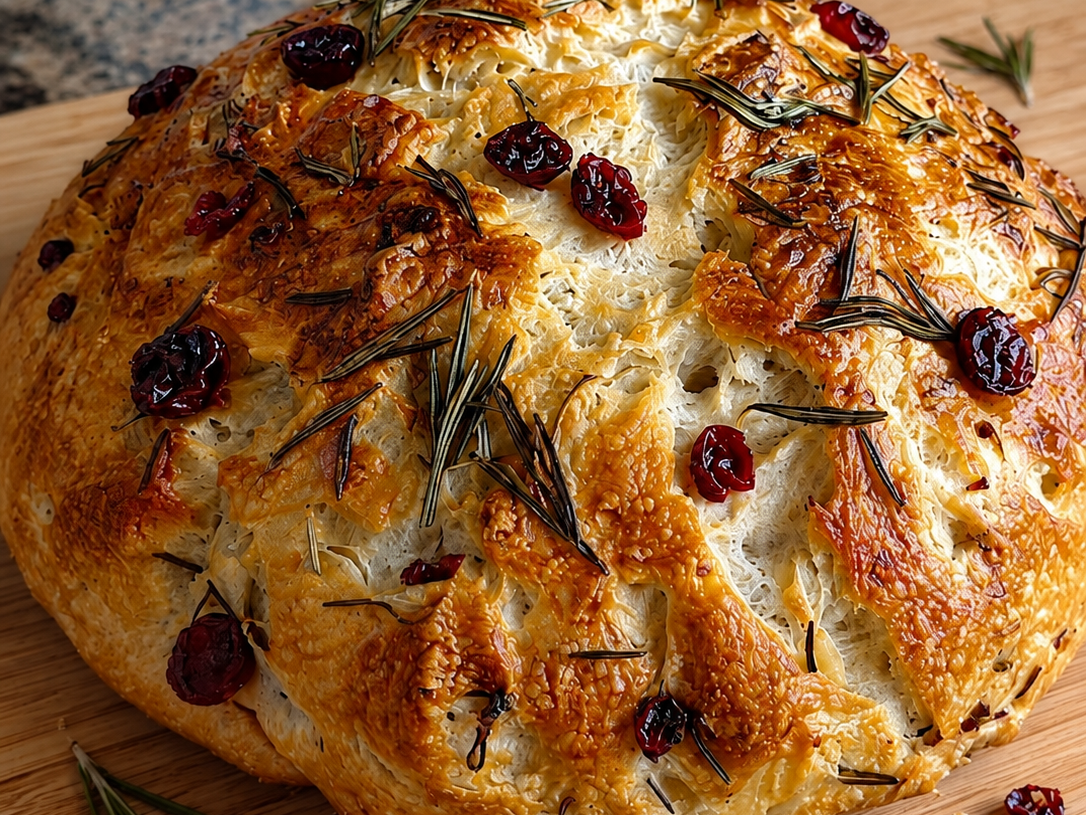
This No-Knead Rosemary Cranberry Bread combines the savory aroma of fresh rosemary with little bursts of tart cranberry in a golden, rustic loaf. This version uses almond flour, protein powder, Greek yogurt, eggs, and psyllium husk to create a satisfying high-protein, lower-carb bread without traditional wheat flour or added sugar.
The crust becomes beautifully golden while the inside stays tender and slightly chewy. It is an excellent choice when you want an artisan-style loaf while keeping carbohydrates more moderate and adding extra protein to your meal.
3-Line Description:
A rustic, fragrant bread packed with rosemary and tart cranberry flavor.
Made with almond flour, Greek yogurt, eggs, and protein powder for extra protein.
A lower-carb, no-added-sugar alternative to traditional cranberry bread.
Can This No-Knead Rosemary Cranberry Bread Support Weight Loss Goals?
It can fit into a weight-conscious eating pattern when enjoyed in appropriate portions. The combination of protein from eggs, Greek yogurt, and protein powder with fiber-rich almond flour and psyllium husk can make each serving more satisfying than a conventional refined-flour bread.
Because the recipe still contains calorie-dense ingredients such as almond flour, eggs, and olive oil, portion size matters. Weight-loss results depend on the overall balance of calories, protein, activity, and food choices throughout the day rather than on one recipe alone.
Does This Recipe Fit a High-Protein Lifestyle?
Yes, this version is designed to provide substantially more protein than traditional artisan bread. Greek yogurt, eggs, and whey protein contribute high-quality protein, while almond flour adds additional protein and healthy fats.
With approximately 11–12g protein per serving and around 3g net carbs, it can work well as part of a higher-protein, lower-carb meal plan.
For a more substantial meal, pair one slice with eggs, cottage cheese, turkey, chicken, or another protein-rich topping.
Why This Recipe Is Special
- No-knead preparation: Simply mix the ingredients and shape the dough without lengthy kneading.
- High-protein: Greek yogurt, eggs, and whey protein give the bread a protein boost.
- Lower-carb: Almond flour and psyllium replace traditional wheat flour for significantly fewer net carbs.
- Savory-sweet flavor: Rosemary provides a fragrant savory note while cranberries add pleasant tartness.
- Rustic texture: The loaf develops a golden exterior with a soft, tender center.
My Personal Experience
- The rosemary makes the kitchen smell incredible.
As the bread bakes, the fresh rosemary releases a warm, earthy aroma that makes this loaf feel especially comforting. - I love the cranberry contrast.
The slightly tart cranberry pieces provide little bursts of flavor against the rich, savory rosemary and nutty bread. - The no-knead method keeps preparation simple.
There is no need for complicated dough handling or prolonged kneading, making this recipe approachable for busy days. - The texture is surprisingly satisfying.
Almond flour, psyllium, eggs, and protein powder create a substantial crumb that feels more filling than many traditional breads.
Perfect For
This bread works beautifully for breakfasts, weekend brunches, light lunches, meal prep, holiday gatherings, soups, salads, and afternoon snacks. Serve it alongside scrambled eggs or Greek yogurt for a protein-rich breakfast, or toast a slice and pair it with turkey, chicken, cottage cheese, or another favorite protein.
It is also a useful option for people following a lower-carb or high-protein eating pattern. For those managing blood sugar, portion size and individual carbohydrate tolerance should still be considered.
Why You’ll Love This Recipe
- No complicated kneading required.
Mix, rest, shape, and bake for a simple homemade loaf with minimal hands-on work. - Packed with complementary flavors.
Rosemary brings savory depth while cranberry adds a bright, slightly tart sweetness. - Higher in protein than conventional bread.
Whey protein, eggs, Greek yogurt, and almond flour contribute protein to every serving. - Great toasted.
A quick trip under the toaster makes the edges crisp while warming the soft center. - Excellent with savory toppings.
Pair it with eggs, turkey, chicken, cottage cheese, or cream cheese for an easy meal.
Common Mistakes to Avoid
- Using sweetened dried cranberries: Sweetened cranberries can add a substantial amount of sugar and carbohydrates. Use unsweetened dried cranberries when available.
- Adding too much psyllium husk: Psyllium absorbs a great deal of liquid, and too much can make the bread dense or gummy.
- Overmixing the dough: Mix only until the ingredients are evenly incorporated; excessive mixing can make the mixture unnecessarily dense.
- Slicing immediately after baking: Allow the loaf to cool for at least 30–45 minutes so the interior can finish setting.
Required Equipment
- Large mixing bowl — Provides enough room to combine the dough without spilling.
- Wooden spoon or sturdy spatula — Makes mixing the thick dough easy.
- Parchment paper — Prevents sticking and makes transferring the loaf simple.
- Dutch oven or heavy oven-safe pot — Helps create a beautifully browned rustic crust.
- Cooling rack — Allows air to circulate around the loaf and prevents a soggy bottom.
- Sharp knife or bread lame — Creates decorative scoring and allows controlled expansion during baking.
Storage Instructions
Once completely cooled, store the bread in an airtight container or tightly wrapped in parchment and a reusable food-storage bag.
At room temperature, it is best enjoyed within 1–2 days. For longer storage, refrigerate it for approximately 5–7 days. Refrigeration can make the crumb firmer, so lightly toast slices before serving.
For freezing, slice the completely cooled loaf and place parchment between slices before transferring them to a freezer-safe bag or airtight container. Freeze for up to 2–3 months for best quality. Individual slices can be toasted directly from frozen.
Keeping the bread properly portioned makes it easier to incorporate into a high-protein, lower-carb meal plan.
Recipe Details

Preparation Time: 15 minutes
Resting Time: 10 minutes
Cooking Time: 45–50 minutes
Total Time: About 1 hour 10 minutes
Servings: 10 slices
Best Season: All-season
Total Calories: Approximately 205 calories per serving
Nutrition note: These values are approximate and can vary considerably depending on the brands of almond flour, whey protein, Greek yogurt, cranberries, and other ingredients used.
📝 Ingredients
- 2 cups (224g) superfine almond flour
- ½ cup (about 50g) unflavored whey protein isolate
- 2 tablespoons (about 10g) psyllium husk powder
- 2 teaspoons baking powder
- ½ teaspoon baking soda
- ½ teaspoon fine sea salt
- 1 tablespoon fresh rosemary, finely chopped
- ⅓ cup (about 40g) unsweetened dried cranberries, chopped if large
- 2 large eggs, room temperature
- ½ cup (120g) plain nonfat Greek yogurt
- 1 tablespoon extra-virgin olive oil
- ¾ cup (180ml) warm water, added gradually
- 1 teaspoon apple cider vinegar
Ingredient Notes: Use unsweetened cranberries to keep added sugar low. If using dried cranberries sweetened with sugar, the carbohydrate and sugar values will be significantly higher. Unflavored whey protein works best for the savory rosemary flavor.
Directions
- Preheat the oven.
Heat the oven to 375°F (190°C). Place a Dutch oven or heavy oven-safe pot inside while the oven preheats if you want a more rustic crust. - Prepare the dry ingredients.
In a large bowl, whisk together almond flour, whey protein isolate, psyllium husk powder, baking powder, baking soda, and salt until evenly distributed. - Add the rosemary and cranberry.
Stir in the chopped rosemary and unsweetened cranberries. Distributing them through the dry ingredients first helps prevent them from clumping together. - Mix the wet ingredients.
In a separate bowl, whisk the eggs, Greek yogurt, olive oil, and apple cider vinegar until smooth. - Combine everything.
Pour the wet mixture into the dry ingredients and stir with a sturdy spatula. Gradually add the warm water while mixing. - Check the dough texture.
The mixture should become thick, moist, and scoopable, rather than runny. Psyllium will continue absorbing moisture as the dough rests. - Let the dough rest.
Leave the mixture undisturbed for approximately 10 minutes. This allows the psyllium husk to hydrate and gives the dough enough structure to hold its shape. - Shape the loaf.
Place the dough onto parchment paper and gently shape it into a round boule. Avoid aggressively kneading or compressing it because the goal is a simple no-knead preparation. - Score the top.
Use a sharp knife to make a shallow cross or several decorative cuts across the top. Sprinkle a little additional rosemary over the surface if desired. - Bake with steam.
Carefully transfer the dough into the preheated Dutch oven. Cover with the lid and bake at 375°F (190°C) for 25 minutes. - Finish uncovered.
Remove the lid and continue baking for another 20–25 minutes, until the exterior is deeply golden and the loaf feels firm when gently tapped. - Check for doneness.
The bread should have a firm golden crust and a set center. If using an instant-read thermometer, the internal temperature should be around 195–200°F (90–93°C). - Cool completely.
Transfer the loaf to a cooling rack and let it cool for 30–45 minutes before slicing. This step is particularly important because the protein and psyllium-rich crumb needs time to finish setting. - Slice and serve.
Use a serrated bread knife to cut the loaf into approximately 10 slices. Serve warm, toasted, or alongside your favorite protein-rich foods.
High-Protein Cooking Tips
- Choose whey protein isolate with minimal added sugar and carbohydrates.
- Use plain Greek yogurt rather than sweetened yogurt.
- Pair each slice with another protein source such as eggs, cottage cheese, turkey, chicken, or Greek yogurt.
- Keep the cranberry quantity controlled because dried fruit is naturally concentrated in carbohydrates.
- Do not add extra protein powder beyond the stated amount, as excessive protein powder can make the bread dry and crumbly.
Nutrition Facts — Per Serving (Approximate)
Based on 10 servings:
- Calories: 205 kcal
- Fat: 15 g
- Cholesterol: 55 mg
- Sodium: 260 mg
- Potassium: 110 mg
- Total Carbohydrates: 8 g
- Fiber: 5 g
- Net Carbs: 3 g
- Sugars: 2 g
- Protein: 11–12 g
- Calcium: 90 mg
Important: Nutrition is an approximate estimate. Actual values depend on the specific brands and ingredients used, particularly the almond flour, protein powder, Greek yogurt, and cranberry product.
Notes
Storage: Cool completely before storing. Refrigerate in an airtight container for up to 5–7 days or freeze sliced portions for up to 2–3 months.
Reheating: Toast refrigerated slices for 2–4 minutes or warm them in a 300°F (150°C) oven for several minutes.
Allergy Notes: This recipe contains almonds, eggs, and dairy from whey protein and Greek yogurt. Check your protein powder label for additional allergens.
Cranberry Tip: Unsweetened dried cranberries are preferred for a lower-sugar version, but they still contain naturally occurring carbohydrates.
Flavor Boost: Add a small amount of orange zest for a bright cranberry-orange combination, or add a pinch of cracked black pepper for a more savory rosemary flavor.
Texture Tip: Do not cut the bread while it is piping hot. Cooling allows the protein- and psyllium-based crumb to stabilize.
Diabetes-Friendly Note: This recipe is designed as a lower-carb, no-added-sugar alternative to traditional cranberry bread, but “diabetes-friendly” does not mean carbohydrate-free or appropriate for everyone with diabetes. Individual portions and blood-glucose responses can vary.
Frequently Asked Questions
1. Can I use fresh cranberries instead of dried cranberries?
Yes, but chop them finely and expect additional moisture and a more pronounced tart flavor.
2. Can I make this bread without whey protein?
You can, but the protein content and texture will change, so the recipe may require additional adjustment.
3. Is this bread keto-friendly?
With approximately 3g net carbs per serving, it can fit some low-carb plans, although strict keto diets may require careful consideration of the cranberry portion.
4. Why does my bread feel slightly moist after baking?
Psyllium and protein-rich ingredients retain moisture, so the loaf needs to cool completely before its final texture develops.
5. Can I toast this bread?
Absolutely; toasting creates crisp edges and enhances the rosemary and cranberry flavors.
6. What is the best way to serve it?
Serve toasted with eggs, cottage cheese, Greek yogurt, turkey, or another protein-rich topping for a more balanced meal.