
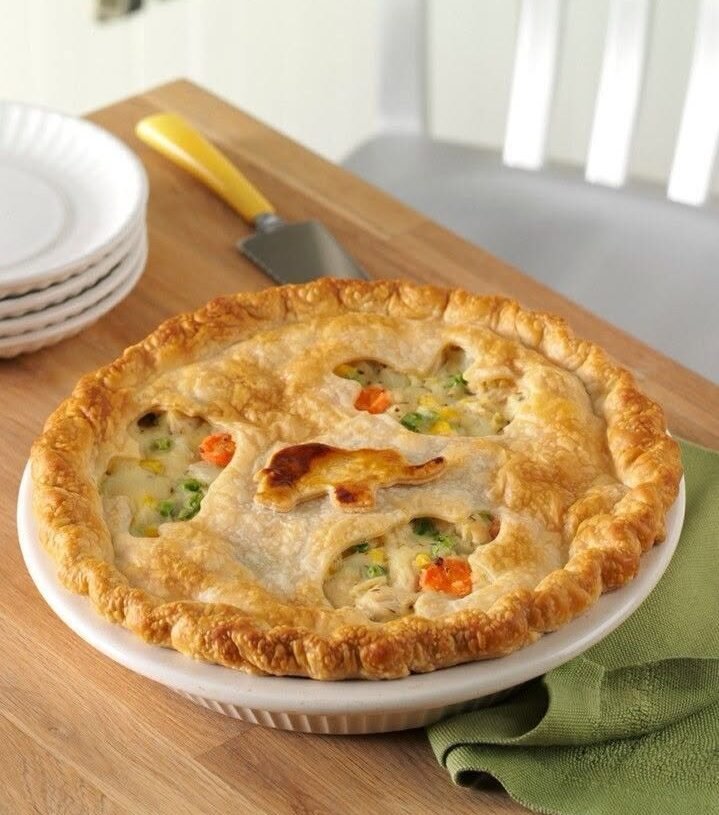
Lightened-Up Chicken Pot Pie
A Cozy, Vegetable-Packed Chicken Pot Pie with a Golden Pastry Crust
This Lightened-Up Chicken Pot Pie keeps everything people love about classic pot pie—tender chicken, creamy vegetables, peas, corn, potatoes, and a golden pastry crust—while making a few practical changes to create a more balanced everyday dinner.
Instead of relying on a very rich cream sauce and an oversized amount of pastry, this version uses lean chicken breast, plenty of vegetables, a lighter milk-based filling, and a controlled pastry portion. The result is still comforting and satisfying, but the filling remains the star of the meal.
This is a great recipe for a family dinner, Sunday meal, make-ahead lunch, or cozy cold-weather meal. It also gives you an easy way to include several vegetables in one dish.
Healthy-eating note: No single recipe guarantees weight loss. This version is simply designed to be more balanced and portion-conscious while keeping the comforting character of traditional chicken pot pie.
Why You’ll Love This Recipe
Classic chicken pot pie is one of those meals that feels like home. The combination of chicken and vegetables surrounded by a savory sauce and baked beneath golden pastry is difficult to resist.
The challenge is that traditional versions can become quite rich because of large quantities of butter, cream, pastry, and sometimes very large portions.
This lighter recipe takes a different approach. The filling contains plenty of vegetables and lean chicken, while a moderate amount of pastry provides the flaky topping everyone expects from a pot pie.
The creamy sauce is made with low-fat milk and chicken broth rather than relying entirely on heavy cream.
A small amount of flour thickens the filling, while garlic, onion, thyme, parsley, and black pepper build flavor.
Recipe Details
Recipe Name: Lightened-Up Chicken Pot Pie
Category: Dinner / Main Course / Comfort Food
Cuisine: American-inspired
Prep Time: 25 minutes
Cook Time: 35–40 minutes
Total Time: Approximately 1 hour
Servings: 8
Difficulty: Moderate
Cooking Method: Stovetop + Oven
Best For: Family dinner, meal prep, cold-weather meals
Ingredients
Chicken and Vegetable Filling
- 1½ lb (680 g) boneless, skinless chicken breasts
- 2 teaspoons extra-virgin olive oil
- 1 medium yellow onion, finely diced
- 2 medium carrots, peeled and diced
- 2 celery stalks, diced
- 2 cloves garlic, minced
- 1½ cups (225 g) potatoes, peeled and cut into small cubes
- 1 cup (150 g) frozen peas
- 1 cup (150 g) frozen corn
- ½ teaspoon salt, or to taste
- ½ teaspoon black pepper
- 1 teaspoon dried thyme
- ½ teaspoon dried parsley
- ¼ teaspoon paprika
Light Creamy Sauce
- 2 tablespoons (16 g) all-purpose flour
- 1½ cups (360 ml) low-sodium chicken broth
- 1 cup (240 ml) 1% or 2% milk
- 1 teaspoon Dijon mustard, optional
- 1 teaspoon fresh lemon juice
- ¼ teaspoon garlic powder
- Additional salt and pepper, if needed
Pastry Topping
- 1 refrigerated 9-inch pie crust, approximately 7–8 oz (200–225 g)
- 1 large egg
- 1 tablespoon water
Optional Garnish
- Fresh parsley
- Fresh thyme
- Freshly cracked black pepper
Ingredient Notes
Chicken
Boneless, skinless chicken breast keeps the filling protein-rich while avoiding the extra fat found in chicken skin and darker cuts.
You can also use leftover cooked chicken if you already have some in the refrigerator.
Potatoes
Potatoes provide texture and carbohydrates and make the filling satisfying. Cutting them into small cubes helps them cook evenly.
You don’t need to eliminate potatoes to make the recipe more balanced.
Peas and Corn
Frozen vegetables are completely suitable here. They are convenient, inexpensive, and easy to keep on hand.
They also add sweetness and color to the filling.
Milk
Using 1% or 2% milk creates a creamy sauce without requiring heavy cream.
If you use skim milk, the sauce will be slightly lighter but may taste less rich.
Pastry
The pastry is intentionally used as a single top crust rather than a double crust.
This maintains the classic pot-pie experience while keeping more of the dish focused on chicken and vegetables.
How to Make Lightened-Up Chicken Pot Pie
1. Prepare the Oven
Preheat your oven to 400°F (200°C).
Place an oven rack in the center of the oven.
Lightly coat a deep 9-inch pie dish or similar 2-quart baking dish with cooking spray.
Set it aside while preparing the filling.
2. Cook the Chicken
Place the chicken breasts in a saucepan and cover with water or low-sodium chicken broth.
Bring the liquid to a gentle simmer.
Cook until the chicken reaches an internal temperature of 165°F (74°C).
Depending on the thickness of the chicken breasts, this generally takes approximately 12–18 minutes.
3. Shred the Chicken
Transfer the cooked chicken to a plate.
Allow it to rest for a few minutes.
Use two forks to shred or chop the chicken into bite-sized pieces.
You can also cut it into small cubes if you prefer a chunkier pot pie.
Set the chicken aside.
4. Cook the Potatoes
Place the diced potatoes in a saucepan of water.
Bring to a gentle boil and cook for approximately 5–7 minutes.
The potatoes should become slightly tender but should not be completely soft.
Drain and set aside.
They will continue cooking inside the pot pie.
5. Sauté the Aromatics
Heat a large skillet or Dutch oven over medium heat.
Add the 2 teaspoons olive oil.
Add the diced onion, carrots, and celery.
Cook for approximately 5 minutes, stirring regularly.
The vegetables should begin to soften.
6. Add the Garlic
Add the minced garlic.
Cook for approximately 30–60 seconds.
Be careful not to burn the garlic because burnt garlic can make the entire filling taste bitter.
7. Season the Vegetables
Add:
- Thyme
- Parsley
- Paprika
- Black pepper
- Salt
Stir thoroughly.
Cooking the herbs briefly with the vegetables helps release their aroma.
8. Add the Flour
Sprinkle the flour over the vegetables.
Stir continuously for approximately 1 minute.
The flour will lightly coat the vegetables.
This step helps prevent lumps when the broth and milk are added.
9. Add the Chicken Broth
Slowly pour in the chicken broth while stirring constantly.
Continue stirring until the mixture begins to thicken.
This should take approximately 2–3 minutes.
10. Add the Milk
Slowly add the milk.
Continue stirring until the sauce becomes smooth.
Keep the heat at medium-low rather than allowing the sauce to boil aggressively.
11. Add Dijon Mustard
If using Dijon mustard, stir in 1 teaspoon.
You won’t necessarily taste the mustard strongly.
Instead, it adds subtle savory depth to the sauce.
12. Add Lemon Juice
Add 1 teaspoon fresh lemon juice.
The small amount of acidity helps balance the creamy sauce.
It also keeps the filling from tasting overly heavy.
13. Add the Potatoes
Stir the partially cooked potatoes into the sauce.
Allow them to simmer for approximately 3–4 minutes.
They should be tender but should still hold their shape.
14. Add the Peas and Corn
Stir in the frozen peas and corn.
Cook for approximately 2–3 minutes.
There is no need to thaw them first.
The heat from the filling will warm them through.
15. Add the Chicken
Add the cooked chicken to the skillet.
Gently stir until the chicken is evenly distributed throughout the vegetables and sauce.
Avoid stirring aggressively because you want to keep the chicken pieces intact.
16. Check the Consistency
The filling should be creamy and thick enough to coat the back of a spoon.
If it seems too thick, add a small splash of broth.
If it seems too thin, simmer for another minute or two.
Remember that the filling will continue to thicken slightly as it cools and bakes.
17. Taste the Filling
Taste the filling before adding it to the pie dish.
Adjust the seasoning with additional black pepper, thyme, or a small amount of salt if necessary.
This is the best opportunity to correct the flavor.
18. Transfer to the Pie Dish
Pour the hot chicken and vegetable filling into the prepared baking dish.
Spread it evenly.
Do not overfill the dish.
Leave a little space at the top so the filling doesn’t bubble over during baking.
19. Prepare the Pastry
Place the refrigerated pie crust on top of the filling.
Gently press the edges against the rim of the dish.
Trim away excess pastry if necessary.
You can crimp the edges with a fork or your fingers for a traditional pot-pie appearance.
20. Cut Vent Holes
Use a sharp knife to cut several small slits in the center of the pastry.
These vents allow steam to escape during baking.
Without vents, steam can become trapped beneath the crust and make it difficult for the pastry to bake evenly.
21. Prepare the Egg Wash
Whisk together:
- 1 large egg
- 1 tablespoon water
Brush a thin layer over the pastry.
The egg wash helps create a beautiful golden-brown surface.
You don’t need to soak the crust in egg wash.
22. Bake the Pot Pie
Place the pot pie in the preheated oven.
Bake for approximately 30–35 minutes.
The crust should become golden brown and crisp.
The filling should be visibly bubbling around the edges.
23. Protect the Edges if Necessary
If the outer edge of the crust begins browning too quickly, loosely cover the edge with aluminum foil.
Continue baking until the center of the crust is fully cooked and golden.
24. Let It Rest
Remove the pot pie from the oven.
Allow it to rest for approximately 10–15 minutes before serving.
This is an important step.
The filling will be extremely hot when it first comes out of the oven, and resting allows the sauce to thicken slightly.
How to Make This Recipe More Balanced
The easiest way to make traditional pot pie more suitable for everyday eating isn’t necessarily to remove every ingredient you enjoy.
Instead, focus on proportion.
This recipe increases the amount of chicken and vegetables relative to the pastry while using a lighter sauce.
The single pastry topping gives you the flaky crust experience without requiring a second crust underneath the filling.
Serving the pot pie with a simple vegetable salad can also make the meal more filling without requiring a larger slice.
Portion Guide
This recipe makes approximately 8 servings.
For a balanced dinner, serve one portion of pot pie with:
- A green salad
- Steamed broccoli
- Green beans
- Roasted vegetables
- A cucumber and tomato salad
The exact amount you need will depend on your individual hunger, nutritional needs, and overall meal plan.
What Makes This Different From Traditional Chicken Pot Pie?
Traditional pot pie recipes often use substantial amounts of butter, cream, and pastry.
This recipe reduces the richness of the filling by using:
- Lean chicken breast
- Low-fat milk
- Low-sodium broth
- A small amount of olive oil
- Plenty of vegetables
- One pastry crust
The result is still creamy and comforting, but the filling has a higher proportion of chicken and vegetables.
Can I Use Rotisserie Chicken?
Yes.
Rotisserie chicken is an excellent shortcut.
Remove the skin and use approximately 4 cups shredded cooked chicken.
If your rotisserie chicken is heavily seasoned or salty, reduce the added salt in the filling.
Can I Use Leftover Turkey?
Absolutely.
This recipe is an excellent way to use leftover cooked turkey after a holiday meal.
Simply substitute an equal amount of cooked turkey for the chicken.
Turkey pot pie can be especially delicious with the addition of fresh thyme and rosemary.
Vegetable Substitutions
You can customize the vegetables according to what you have available.
Try:
- Green beans
- Mushrooms
- Broccoli
- Cauliflower
- Zucchini
- Spinach
- Diced sweet potato
If using watery vegetables such as zucchini or mushrooms, sauté them first to remove excess moisture.
How to Increase the Vegetable Content
For an even more vegetable-forward version, add another 1–2 cups of vegetables.
A combination of mushrooms, broccoli, and green beans works especially well.
You can also add finely chopped spinach toward the end of cooking.
This creates a colorful filling while maintaining the creamy texture.
How to Make It Without Potatoes
If you don’t want potatoes, replace them with additional vegetables.
Good options include:
- Cauliflower
- Turnips
- Mushrooms
- Extra carrots
- Green beans
Keep the total amount of vegetables approximately the same so the filling maintains its texture.
Can I Make Individual Pot Pies?
Yes.
Divide the filling among 6–8 oven-safe ramekins.
Cover each with a small pastry round.
Bake until the pastry is golden and the filling is bubbling.
Individual pot pies can make portioning convenient and create an attractive presentation for guests.
Make-Ahead Instructions
The filling can be prepared 1–2 days in advance.
Store it covered in the refrigerator.
When you’re ready to bake, transfer the chilled filling into the baking dish and add the pastry immediately before baking.
Because the filling starts cold, you may need additional baking time.
Always make sure the center is thoroughly heated before serving.
Storage Instructions
Allow leftovers to cool appropriately before transferring them to an airtight container.
Refrigerate for approximately 3–4 days.
The pastry will naturally soften somewhat after refrigeration.
For the best crust texture, reheat leftovers in the oven rather than relying entirely on the microwave.
Reheating Instructions
Preheat the oven to 350°F (175°C).
Place a serving in an oven-safe dish.
Cover loosely with foil and heat until the center is hot.
Remove the foil during the final few minutes to help the pastry regain some crispness.
Freezing Instructions
Chicken pot pie can be frozen, although the texture of the vegetables and pastry may change slightly after thawing.
For best results, freeze the filling separately from the pastry if you are preparing it specifically for future meals.
Alternatively, freeze a fully assembled unbaked pie.
Wrap it securely and label it with the date.
Bake from frozen according to a suitable pot-pie baking method, allowing additional cooking time and checking that the center is thoroughly hot.
Tips for a Perfect Golden Crust
Keep the pastry refrigerated until you’re ready to use it.
Cold pastry generally produces a better flaky texture.
Don’t stretch the crust over the dish because stretched pastry can shrink during baking.
Brush it lightly with egg wash.
Always cut ventilation holes.
And most importantly, allow the pot pie to bake until the center of the pastry is completely cooked—not merely browned around the edges.
Common Mistakes to Avoid
Using Too Much Liquid
An overly thin filling can make the crust soggy.
Skipping the Flour
The flour helps thicken the creamy sauce.
Overcooking the Chicken
Cook chicken only until it reaches the safe internal temperature.
Using Large Vegetable Pieces
Large potatoes and carrots may remain undercooked.
Covering the Pie Completely
Steam vents are important for proper baking.
Cutting Immediately
Give the pot pie 10–15 minutes to rest before serving.
Adding Too Much Salt
Broth, Parmesan-style ingredients, and pastry can already contain sodium.
Approximate Nutrition
The following estimate is based on 8 servings using the ingredients listed above.
| Nutrient | Approx. Per Serving |
|---|---|
| Calories | 360–400 kcal |
| Protein | 28–31 g |
| Carbohydrates | 32–38 g |
| Fat | 14–17 g |
| Fiber | 4–5 g |
| Sugar | 5–7 g |
| Sodium | 550–700 mg |
| Calcium | 90–130 mg |
| Iron | 2–3 mg |
Nutrition disclaimer: These are approximate values, not laboratory-tested results. Nutrition can change substantially depending on the pie crust, milk, broth, chicken, and other brands used.
For your website, calculate the final nutrition panel using the exact products and quantities included in your final recipe.
Frequently Asked Questions
Is chicken pot pie healthy?
Chicken pot pie can absolutely be part of a balanced diet. This version emphasizes lean chicken and vegetables while using a lighter creamy sauce and a single pastry crust.
Is this a weight-loss recipe?
It is better described as a lighter, portion-conscious chicken pot pie. Weight change depends on your overall dietary pattern rather than one recipe.
Can I use regular milk?
Yes. Whole milk will produce a richer sauce and increase the calorie and fat content slightly.
Can I use skim milk?
Yes. The sauce will be lighter but slightly less creamy.
Can I replace chicken breast?
Yes. Cooked turkey, lean chicken thigh, or leftover roast chicken can be used.
Can I make this gluten-free?
Use a certified gluten-free flour and gluten-free pie crust.
Can I make it dairy-free?
Use an appropriate dairy-free milk and dairy-free pastry. The final nutrition will depend on the products selected.
Can I leave out the corn?
Yes. Replace it with another vegetable such as green beans, mushrooms, or broccoli.
Can I make it without pastry?
Yes. You can bake the filling in a casserole dish and top it with mashed potatoes or a light biscuit-style topping.
Why is my filling watery?
This can happen if the vegetables release excess water or if the sauce hasn’t simmered long enough. Simmer the filling until it is thick enough to coat a spoon before adding the pastry.
Complete Recipe Card
Lightened-Up Chicken Pot Pie
Yield: 8 servings
Prep Time: 25 minutes
Cook Time: 35–40 minutes
Total Time: About 1 hour
Ingredients
Filling
- 1½ lb (680 g) boneless, skinless chicken breasts
- 2 tsp olive oil
- 1 medium onion, diced
- 2 carrots, diced
- 2 celery stalks, diced
- 2 garlic cloves, minced
- 1½ cups (225 g) potatoes, cubed
- 1 cup frozen peas
- 1 cup frozen corn
- ½ tsp salt
- ½ tsp black pepper
- 1 tsp dried thyme
- ½ tsp dried parsley
- ¼ tsp paprika
Sauce
- 2 tbsp (16 g) all-purpose flour
- 1½ cups (360 ml) low-sodium chicken broth
- 1 cup (240 ml) 1% or 2% milk
- 1 tsp Dijon mustard
- 1 tsp lemon juice
- ¼ tsp garlic powder
Crust
- 1 refrigerated 9-inch pie crust, approximately 7–8 oz
- 1 large egg
- 1 tbsp water
Instructions
- Preheat oven to 400°F (200°C).
- Cook chicken until it reaches 165°F (74°C).
- Shred or cube the cooked chicken.
- Par-cook potatoes for 5–7 minutes and drain.
- Heat olive oil in a large skillet.
- Sauté onion, carrots, and celery for about 5 minutes.
- Add garlic and cook for 30–60 seconds.
- Add thyme, parsley, paprika, pepper, and salt.
- Sprinkle flour over the vegetables.
- Cook for 1 minute while stirring.
- Slowly add chicken broth.
- Stir in milk.
- Add Dijon mustard and lemon juice.
- Simmer until the sauce thickens.
- Add potatoes.
- Stir in peas and corn.
- Add cooked chicken.
- Taste and adjust seasoning.
- Transfer the filling to a 9-inch pie dish.
- Place the pastry over the filling.
- Crimp the edges.
- Cut several vents in the top.
- Brush with egg wash.
- Bake for 30–35 minutes.
- Broil briefly if additional browning is desired.
- Rest for 10–15 minutes.
- Garnish with fresh parsley and serve.