
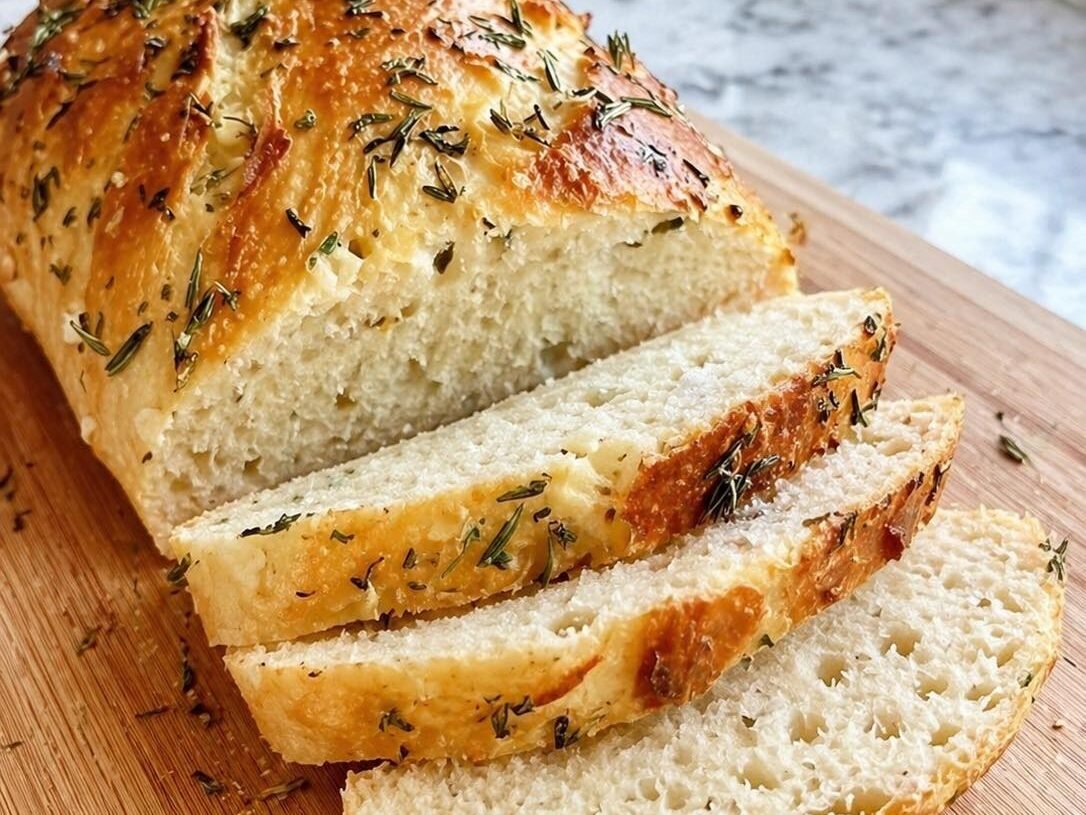
Golden Herb Bread (Light, Fluffy & WW-Friendly)
There’s something deeply comforting about a warm loaf of homemade herb bread fresh out of the oven. The crisp golden crust, the soft and airy interior, and the aroma of herbs filling your kitchen create an experience that store-bought bread simply can’t match. This lighter version is designed to keep things simple, wholesome, and Weight Watchers–friendly—without sacrificing flavor or texture.
This recipe stands out because it uses no eggs and no butter, yet still produces a beautifully structured loaf with a tender crumb. Instead of relying on heavy fats, it uses a minimal amount of oil and carefully balanced hydration to achieve that bakery-style softness. The result is a bread that feels indulgent but fits easily into a mindful eating plan.
Herbs play a key role in elevating this bread. A simple combination of dried or fresh herbs transforms a basic dough into something aromatic and flavorful. Classic additions like rosemary, thyme, or Italian seasoning bring depth without adding calories, making this loaf ideal for both everyday meals and special occasions.
Another advantage of this recipe is its versatility. You can slice it thick for sandwiches, serve it alongside soups, or toast it lightly and enjoy it with spreads. It pairs beautifully with savory dishes and can even be adapted with garlic or onion flavors for variation.
From a nutritional perspective, this bread is lower in fat compared to traditional recipes. By controlling ingredients and portion sizes, each slice remains low in SmartPoints, making it a practical choice for those tracking their intake.
The process of making this bread is straightforward and beginner-friendly. Even if you’re new to baking, following the steps carefully will yield excellent results. The key lies in proper kneading and allowing enough time for the dough to rise.
Ingredients (Makes 1 Loaf | ~12 Slices)
- 3 cups (360 g) all-purpose flour
- 1 packet (2 1/4 teaspoons) active dry yeast
- 1 teaspoon sugar
- 1 teaspoon salt
- 1 tablespoon olive oil
- 1 cup (240 ml) warm water (about 110°F / 43°C)
- 1 tablespoon dried mixed herbs (such as rosemary, thyme, oregano)
- Optional: 1 teaspoon garlic powder for extra flavor
Instructions
- In a small bowl, combine warm water, sugar, and yeast. Let it sit for 5–10 minutes until foamy. This step activates the yeast and ensures a good rise.
- In a large mixing bowl, whisk together flour, salt, and dried herbs. This evenly distributes the seasoning throughout the dough.
- Add the yeast mixture and olive oil to the dry ingredients. Mix until a rough dough forms.
- Transfer the dough to a lightly floured surface and knead for about 8–10 minutes until smooth and elastic. Proper kneading develops gluten, which gives the bread structure.
- Place the dough in a lightly oiled bowl, cover with a clean towel, and let it rise in a warm place for 1 hour or until doubled in size.
- Once risen, punch down the dough gently to release air bubbles.
- Shape the dough into a loaf and place it on a lined baking tray or into a loaf pan.
- Cover again and let it rise for another 30 minutes.
- Preheat your oven to 375°F (190°C).
- Optionally, brush the top lightly with water and sprinkle extra herbs for a rustic finish.
- Bake for 25–30 minutes, or until the top is golden brown and the loaf sounds hollow when tapped.
- Remove from the oven and let it cool on a wire rack before slicing.
Nutrition Information (Per Slice)
- Calories: ~90–100
- Carbohydrates: 18–20 g
- Protein: 3 g
- Fat: 1–2 g
- Fiber: ~1 g
Weight Watchers SmartPoints (Estimated)
- 1–2 SmartPoints per slice
- Points may vary slightly depending on flour type and oil used
Helpful Tips for Best Results
For the best texture, ensure your water is warm but not too hot, as excessive heat can kill the yeast. A temperature around 110°F (43°C) is ideal.
Kneading is essential for developing the bread’s structure. If the dough feels too sticky, add a small amount of flour gradually—but avoid adding too much, as this can make the bread dense.
Allowing enough time for both rises is crucial. Rushing this step can result in a dense loaf rather than a light and airy one.
If you prefer a crispier crust, place a small oven-safe dish of water in the oven while baking. The steam helps create a bakery-style crust.
For added flavor, you can mix in minced garlic, onion flakes, or even a sprinkle of grated cheese (note: this will increase points).
Serving Suggestions
This herb bread is incredibly versatile. Serve it warm with soups, stews, or salads for a comforting meal. It also works well as a base for sandwiches or toasted with a light spread.
For a simple snack, toast a slice and rub it lightly with garlic, then drizzle with a tiny amount of olive oil. This creates a quick, flavorful bruschetta-style bite.
Storage & Make-Ahead
Store the bread in an airtight container at room temperature for up to 3 days. For longer storage, slice and freeze it. Simply toast or reheat slices as needed.