
Soft & Gooey Homemade Cinnamon Rolls with Cream Cheese Frosting
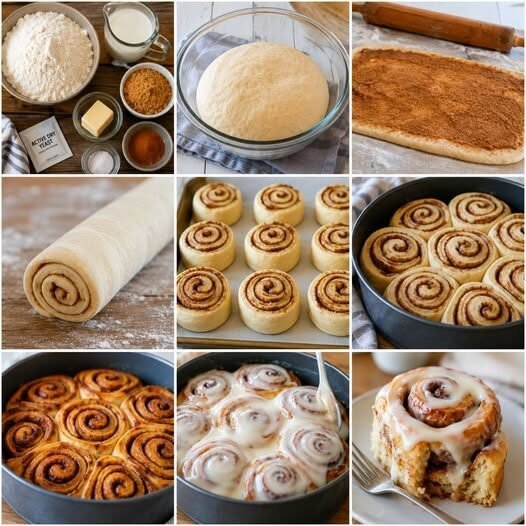
These homemade cinnamon rolls are soft, fluffy, buttery, and filled with a generous layer of cinnamon and brown sugar, then finished with a smooth cream cheese frosting. The image shows the classic process—from mixing the dough and rolling it out to slicing, baking, frosting, and serving the finished rolls.
This version is designed to give you 12 large bakery-style cinnamon rolls with tender centers and beautifully defined cinnamon swirls. The basic technique—enriched yeast dough, cinnamon-brown-sugar filling, a second rise, and cream cheese frosting—is also used in many established cinnamon-roll recipes. (Rabiya Younas – A Pro Digital Writer)
🍥 Recipe Details
- Prep Time: 30 minutes
- First Rise: 60–90 minutes
- Second Rise: 30–45 minutes
- Bake Time: 22–26 minutes
- Total Time: About 3 hours
- Yield: 12 large cinnamon rolls
- Pan: 9 × 13-inch baking pan
- Oven: 350°F (175°C)
Ingredients
For the Dough
- 4 cups (500 g) all-purpose flour, plus a little extra if needed
- 1 cup (240 ml) whole milk, warmed
- 2¼ teaspoons (7 g) active dry yeast
- ⅓ cup (65 g) granulated sugar
- 2 large eggs, room temperature
- ⅓ cup (75 g) unsalted butter, melted and slightly cooled
- 1 teaspoon vanilla extract
- 1 teaspoon salt
For the Cinnamon Filling
- ½ cup (113 g) unsalted butter, softened
- ¾ cup (150 g) packed brown sugar
- 2½ tablespoons ground cinnamon
- ¼ teaspoon salt
- 1 teaspoon vanilla extract, optional
For the Cream Cheese Frosting
- 4 oz (113 g) cream cheese, softened
- 3 tablespoons (42 g) unsalted butter, softened
- 1 cup (120 g) powdered sugar
- ½ teaspoon vanilla extract
- 1–2 tablespoons milk, as needed
The ingredient ratios above are in the range commonly used for soft, enriched cinnamon rolls with cream cheese frosting. (Rabiya Younas – A Pro Digital Writer)
How to Make Homemade Cinnamon Rolls
1. Warm the Milk
Pour the milk into a small saucepan or microwave-safe container.
Warm it until it is warm but not hot, ideally around 105–110°F (40–43°C).
Milk that is excessively hot can interfere with the yeast.
2. Activate the Yeast
Place the warm milk in a large mixing bowl.
Add the granulated sugar and yeast. Stir gently and allow the mixture to stand for about 5–10 minutes.
The surface should become slightly foamy.
If you’re using instant yeast, it can generally be mixed directly with the dry ingredients instead. (The Cooking Foodie)
3. Add the Wet Ingredients
Add the eggs, melted butter, and vanilla extract.
Whisk until the mixture is reasonably well combined.
The butter should be cooled slightly before adding it so it doesn’t unnecessarily heat the mixture.
4. Add the Flour
Add approximately 3½ cups of flour along with the salt.
Mix with a wooden spoon or dough hook until a shaggy dough forms.
Gradually add the remaining flour only as needed.
The finished dough should be soft and slightly tacky, rather than stiff or dry.
5. Knead the Dough
Transfer the dough to a lightly floured surface if kneading by hand.
Knead for approximately 8–10 minutes.
If using a stand mixer, knead with a dough hook for approximately 6–8 minutes.
The dough should become smoother and more elastic as you knead.
6. Check the Dough
Press a fingertip gently into the dough.
It should feel soft and elastic and gradually spring back.
Avoid adding excessive flour just because the dough feels slightly sticky. Too much flour can produce dense cinnamon rolls.
7. First Rise
Lightly grease a clean bowl.
Place the dough inside and turn it once so the surface is lightly coated.
Cover the bowl with plastic wrap or a clean kitchen towel.
Place it somewhere warm and allow it to rise for approximately 60–90 minutes, or until roughly doubled in size. (Rabiya Younas – A Pro Digital Writer)
Prepare the Cinnamon Filling
8. Soften the Butter
Place the butter in a bowl and allow it to soften at room temperature.
It should be spreadable but shouldn’t be completely melted.
Softened butter is easier to distribute evenly over the dough.
9. Mix the Cinnamon Sugar
Combine the brown sugar, cinnamon, and salt.
Add the vanilla if using it.
Mix until evenly distributed.
10. Prepare the Baking Pan
Grease a 9 × 13-inch baking dish with butter or nonstick spray.
You can also line the bottom with parchment paper for easier cleanup.
Roll and Shape the Cinnamon Rolls
11. Roll Out the Dough
Once the dough has doubled, gently press it down to release some of the excess air.
Transfer it to a lightly floured work surface.
Roll it into a rectangle approximately 12 × 18 inches.
Try to maintain an even thickness from edge to edge.
12. Spread the Butter
Spread the softened butter evenly over the entire surface of the dough.
Leave a small border—about ½ inch—around the edges.
13. Add the Cinnamon Mixture
Sprinkle the brown sugar and cinnamon mixture evenly over the butter.
Use your hands or the back of a spoon to distribute it.
Make sure the corners receive some filling too.
14. Roll the Dough
Starting from one of the long sides, begin rolling the dough into a log.
Roll it firmly but don’t squeeze it excessively.
A consistent roll helps produce the beautiful spiral pattern shown in the image.
15. Seal the Log
When you reach the opposite edge, pinch the seam gently against the dough.
Place the log seam-side down.
16. Cut the Rolls
Use a sharp knife to cut the log into 12 approximately equal pieces.
Another useful method is unflavored dental floss, which can cut through the dough without compressing the spiral. This technique is also recommended in several cinnamon-roll recipes. (YouTube)
17. Arrange in the Pan
Place the rolls cut-side up in the prepared baking dish.
Leave a little space between them.
They will expand considerably during the second rise and baking.
Second Rise
18. Cover the Rolls
Cover the pan loosely with plastic wrap or a clean towel.
Allow the rolls to rise for approximately 30–45 minutes.
They should look visibly puffier.
19. Preheat the Oven
Toward the end of the second rise, preheat your oven to:
350°F (175°C).
A moderate oven temperature helps the rolls bake through while retaining a soft interior.
Bake the Cinnamon Rolls
20. Bake
Place the pan in the center of the oven.
Bake for approximately 22–26 minutes.
The tops should be lightly golden brown and the centers should look set but still soft.
Avoid overbaking because excessive baking can make cinnamon rolls dry.
Many soft cinnamon-roll recipes use approximately 350°F and a 20–26 minute baking window. (Rabiya Younas – A Pro Digital Writer)
21. Cool Slightly
Remove the pan from the oven.
Allow the cinnamon rolls to cool for approximately 10 minutes before frosting.
You want them warm, but not so hot that the frosting completely melts away.
Make the Cream Cheese Frosting
22. Beat the Cream Cheese and Butter
Add the softened cream cheese and butter to a mixing bowl.
Beat for approximately 2–3 minutes, until smooth and creamy.
23. Add Powdered Sugar
Gradually add the powdered sugar.
Mix on low speed initially to prevent a cloud of powdered sugar, then increase the speed and beat until smooth.
24. Add Vanilla
Mix in the vanilla extract.
If the frosting is too thick, add milk 1 teaspoon at a time until you reach your preferred consistency.
25. Frost the Rolls
Spread the cream cheese frosting generously over the warm cinnamon rolls.
Let it flow into the swirls and crevices.
For an especially creamy finish, spread some frosting while the rolls are warm and add another light layer after they have cooled slightly. Similar techniques are used in published cinnamon-roll recipes. (queenslee appetit)
Tips for Soft, Fluffy Cinnamon Rolls
Use Soft Dough
The dough should be soft and elastic rather than stiff. Adding too much flour is one of the easiest ways to end up with heavy rolls.
Don’t Rush the First Rise
The dough needs time to ferment and develop its structure. Rising time can vary depending on room temperature.
Don’t Use Extremely Hot Milk
Milk that is too hot can damage yeast activity. Warm rather than hot is what you want.
Don’t Melt the Filling Butter
Very soft butter spreads beautifully. Completely melted butter can make the filling more difficult to control.
Roll Evenly
Try to maintain an even rectangle so the finished rolls are approximately the same size.
Don’t Overbake
The rolls should be lightly golden rather than deeply browned.
Frost While Warm
Warm cinnamon rolls allow the cream cheese frosting to soften slightly and settle into the spirals.
Overnight Cinnamon Rolls
These can also be prepared the night before.
After shaping and placing the rolls in the baking pan, cover them tightly and refrigerate overnight.
The following morning, allow the rolls to sit at room temperature until they become noticeably puffy before baking.
Overnight preparation is a commonly used approach for homemade cinnamon rolls. (Cookie Beacon)
Delicious Variations
Maple Cinnamon Rolls
Add 1–2 tablespoons of maple syrup to the frosting for a warm maple flavor.
Pecan Cinnamon Rolls
Scatter ¾ cup chopped pecans over the cinnamon filling before rolling.
Apple Cinnamon Rolls
Add finely diced, lightly sautéed apples over the cinnamon mixture.
Allow cooked apples to cool before using them.
Raisin Cinnamon Rolls
Sprinkle ½ cup raisins over the filling before rolling.
Orange Cinnamon Rolls
Add 1 teaspoon finely grated orange zest to the filling and another ½ teaspoon to the frosting.
Extra-Cinnamon Rolls
For a stronger cinnamon flavor, increase the filling to 3 tablespoons cinnamon.
How to Store Them
Allow leftover cinnamon rolls to cool before covering.
Because the frosting contains cream cheese, store frosted rolls in the refrigerator.
They are best enjoyed within several days.
For serving, warm an individual roll gently in the microwave or reheat it briefly in a low oven.
If you prefer to prepare the rolls ahead, freezing is also an option. Freeze them well wrapped and thaw before reheating and frosting.
Frequently Asked Questions
Why aren’t my cinnamon rolls fluffy?
The yeast may not have been active, the dough may have been under-proofed, or too much flour may have been added.
Why is my dough sticky?
A slightly sticky dough is normal for enriched cinnamon rolls. Add flour gradually rather than adding a large amount at once.
Why did the filling leak out?
This can happen if the butter is too melted, the dough is rolled too loosely, or too much filling is used.
Can I use instant yeast?
Yes. Instant yeast can generally be incorporated directly into the flour mixture, although following the directions on your particular yeast package is a good idea. (The Cooking Foodie)
Can I use bread flour?
Yes. Bread flour can produce a somewhat chewier roll, while all-purpose flour gives a softer, tender texture. (The Cooking Foodie)
Can I make these without cream cheese frosting?
Absolutely. They are delicious with a simple powdered-sugar glaze made from powdered sugar, vanilla, and milk.
Nutrition Information
Nutrition varies according to the size of the rolls, amount of frosting used, and specific ingredients. For this type of enriched sweet bread, nutrition is best calculated from the exact ingredients and final yield.
These cinnamon rolls are a dessert or special breakfast treat, so they can be enjoyed as part of a varied eating pattern.