
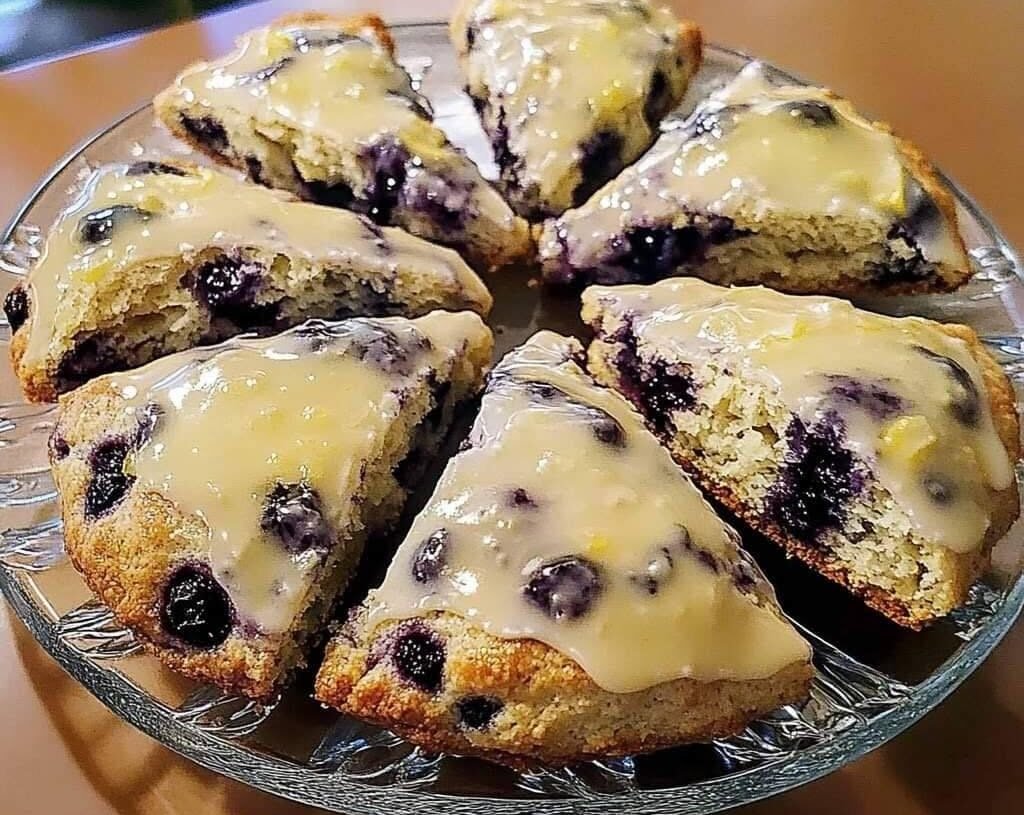
Glazed Lemon Blueberry Scones
These Glazed Lemon Blueberry Scones are tender, buttery, lightly crisp around the edges, and filled with juicy blueberries. Fresh lemon zest adds a bright citrus flavor, while a simple lemon glaze gives the finished scones a smooth, sweet topping.
The image shows triangular scones generously studded with blueberries and finished with a pale lemon glaze. This recipe recreates that bakery-style texture while keeping the preparation straightforward.
Recipe Details
Prep Time: 20 minutes
Chill Time: 15 minutes
Bake Time: 20–24 minutes
Total Time: About 1 hour
Yield: 8 large scones
Course: Breakfast / Brunch / Dessert
Ingredients
For the Scones
- 2 cups (250 g) all-purpose flour
- ¼ cup (50 g) granulated sugar
- 1 tbsp baking powder
- ½ tsp salt
- ½ cup (113 g) cold unsalted butter, cut into small cubes
- 1 large egg
- ½ cup (120 ml) cold heavy cream or whole milk
- 1 tsp vanilla extract
- 1 tbsp finely grated lemon zest
- 1 tbsp fresh lemon juice
- 1 cup (150–170 g) fresh blueberries
- 1 tbsp flour, for tossing the blueberries
For the Lemon Glaze
- 1 cup (120 g) powdered sugar
- 1½–2 tbsp fresh lemon juice
- 1 tsp finely grated lemon zest
- 1–2 tsp milk or cream, only if needed
The combination of blueberries and lemon is a classic scone variation; lemon zest can be incorporated directly into the dry ingredients for a stronger citrus aroma. (King Arthur Baking)
Instructions
1. Prepare the Oven
Preheat the oven to 400°F (200°C).
Line a large baking sheet with parchment paper.
2. Combine the Dry Ingredients
In a large mixing bowl, whisk together the flour, sugar, baking powder, and salt.
Make sure the baking powder is evenly distributed because it provides the lift that helps the scones become tall and tender.
3. Add the Lemon Zest
Add the lemon zest to the flour mixture.
Rub the zest gently into the sugar and flour with your fingertips for about 30 seconds. This releases the fragrant lemon oils and distributes the citrus flavor throughout the dough.
4. Cut in the Cold Butter
Add the cold butter cubes.
Use a pastry cutter, two knives, or your fingertips to work the butter into the flour until the mixture resembles coarse crumbs.
A few pea-sized pieces of butter are desirable. They melt during baking and help create a tender, flaky texture.
5. Prepare the Wet Ingredients
In a separate bowl, whisk together the egg, cold cream, vanilla extract, and fresh lemon juice.
Don’t overmix the liquid ingredients.
6. Combine Wet and Dry Ingredients
Pour the wet mixture into the bowl containing the flour and butter.
Gently stir with a wooden spoon or spatula until the dough begins to come together.
The dough should look somewhat shaggy rather than completely smooth.
7. Prepare the Blueberries
Place the blueberries in a small bowl and toss them gently with 1 tablespoon of flour.
This light coating helps reduce excess moisture on the berries and makes them easier to incorporate without aggressively mixing the dough.
8. Add the Blueberries
Carefully fold the blueberries into the dough.
Use only a few gentle turns. Overmixing can make scones dense and can cause fresh blueberries to burst throughout the dough.
9. Form the Dough
Lightly flour your work surface.
Transfer the dough onto the surface and gently bring it together with your hands.
Don’t knead it like bread. Scone dough should be handled just enough to hold together.
10. Shape the Dough
Pat the dough into a round approximately 7–8 inches (18–20 cm) wide and about 1 inch (2.5 cm) thick.
If the dough feels sticky, lightly flour your hands rather than adding large amounts of flour.
11. Cut the Scones
Use a sharp knife or bench scraper to cut the round into 8 triangular wedges.
Press straight down rather than dragging the knife through the dough.
12. Arrange on the Baking Sheet
Transfer the wedges to the prepared baking sheet.
Leave a little space between them so the sides can brown properly.
13. Chill the Dough
Place the tray in the refrigerator for about 15 minutes before baking.
Chilling helps the butter remain firm, which can contribute to a better-rising, more tender scone. King Arthur Baking also recommends chilling or briefly freezing shaped scones as a way to encourage higher rising. (King Arthur Baking Shop)
14. Bake
Place the chilled scones in the preheated oven.
Bake for approximately 20–24 minutes, or until the tops are lightly golden and the edges are firm.
15. Cool
Remove the baking sheet from the oven and allow the scones to cool for about 10–15 minutes.
They should still be slightly warm but not piping hot before the glaze is added.
Make the Lemon Glaze
16. Combine the Powdered Sugar and Lemon
Place the powdered sugar in a small bowl.
Add 1½ tablespoons lemon juice and the lemon zest.
Whisk until smooth.
17. Adjust the Consistency
If the glaze is too thick, add milk or cream ½ teaspoon at a time.
If it becomes too thin, add a little more powdered sugar.
You want a thick but pourable glaze that slowly drips from a spoon.
18. Glaze the Scones
Drizzle the lemon glaze generously over the cooled scones.
For the appearance shown in the image, allow the glaze to flow naturally across the tops rather than completely coating the sides.
19. Let the Glaze Set
Allow the glazed scones to sit for approximately 10 minutes.
The glaze will become slightly firmer while remaining soft enough to bite through easily.
20. Serve
Serve the scones with tea, coffee, milk, fresh fruit, or as part of a brunch spread.
They are especially delicious when served the same day they are baked.
Tips for Perfect Blueberry Scones
Keep the butter cold. Soft butter can blend too completely into the flour and produce a heavier texture.
Don’t overwork the dough. A few gentle folds are enough.
Use a light touch with blueberries. Fresh berries can break easily, so fold them in carefully.
Don’t add too much flour. A slightly soft dough produces more tender scones than a very dry dough.
Chill before baking. This helps the butter stay firm and can improve the shape and rise of the finished scones.
Don’t glaze hot scones. Very hot scones can cause the glaze to melt excessively and slide off.
Fresh vs. Frozen Blueberries
Fresh blueberries work beautifully in this recipe. Frozen blueberries can also be used.
If using frozen berries, keep them frozen until you’re ready to fold them into the dough. This helps prevent excessive bleeding of the blueberry color.
How to Make Them More Lemon-Forward
For a stronger lemon flavor, increase the lemon zest to 1½ tablespoons.
You can also add an extra teaspoon of lemon juice to the glaze. Lemon zest is particularly useful because it delivers concentrated citrus aroma without adding much additional liquid to the dough.
Optional Finishing Touch
Before the scones go into the oven, you can brush the tops lightly with cream and sprinkle them with a little coarse sugar.
This produces a subtly crisp, sparkling top that pairs beautifully with the soft blueberry center.
Make-Ahead Option
You can prepare the shaped, unbaked scones ahead of time and keep them chilled until you’re ready to bake.
For longer storage, freeze the shaped scones on a tray and then transfer them to a freezer-safe container.
Bake from chilled or frozen, allowing additional baking time as necessary and watching for the characteristic golden edges.
Serving Ideas
These lemon blueberry scones are delicious with:
- Fresh blueberries
- Strawberries
- Greek yogurt
- Whipped cream
- Lemon curd
- Fruit preserves
- Honey
- Tea or coffee
For brunch, arrange them on a serving platter with fresh fruit and small bowls of preserves.