
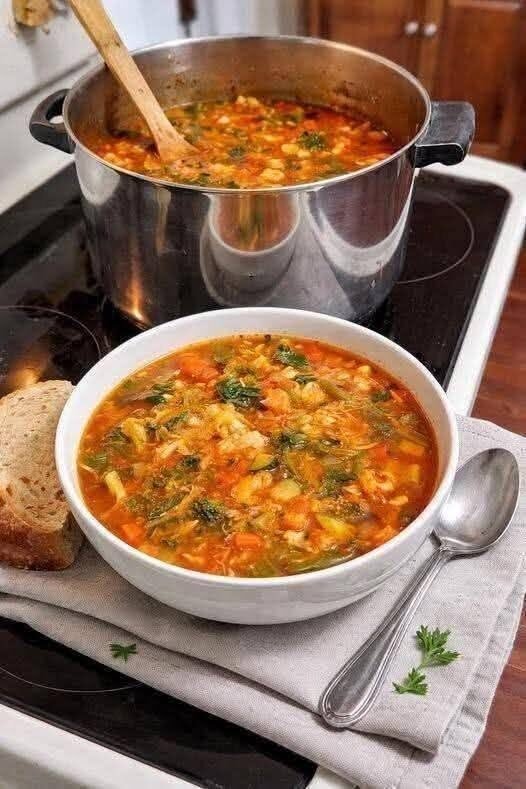
Hearty Chicken, Vegetable & Rice Soup
A cozy, homemade soup packed with tender chicken, colorful vegetables, tomatoes, herbs, and a small amount of rice. This one-pot recipe is comforting, flavorful, and filling without relying on heavy cream or large amounts of added fat.
Recipe Overview
Prep Time: 20 minutes
Cook Time: 35–45 minutes
Total Time: About 1 hour
Servings: 6
Serving Size: About 1½ cups
Cuisine: Comfort Food / American-Inspired
Method: Stovetop, One Pot
Difficulty: Easy
Ingredients
- 1 tablespoon olive oil
- 1 medium yellow onion, finely diced
- 2 medium carrots, peeled and diced
- 2 celery stalks, diced
- 3 cloves garlic, minced
- 1 medium zucchini, diced
- 1 red bell pepper, diced
- 1 cup chopped tomatoes or 1 can (14.5 ounces) diced tomatoes
- 6 cups low-sodium chicken broth
- 1 pound (450 g) boneless, skinless chicken breast
- ½ cup uncooked long-grain brown rice or white rice
- 1 teaspoon dried Italian seasoning
- ½ teaspoon dried oregano
- ½ teaspoon paprika
- ¼ teaspoon black pepper
- ¼ teaspoon red pepper flakes, optional
- 2 cups chopped spinach or other leafy greens
- 2 tablespoons fresh parsley, chopped
- 1 tablespoon fresh lemon juice
- Salt, to taste
- 2–3 tablespoons additional water if needed
Optional Toppings
- Fresh parsley
- A squeeze of lemon
- A small sprinkle of grated Parmesan
- Freshly cracked black pepper
- A few red-pepper flakes
Instructions
1. Prepare the vegetables.
Wash and prepare all of the vegetables before beginning. Dice the onion, carrots, celery, zucchini, and bell pepper into relatively small pieces so they cook evenly and are easy to eat with a spoon.
2. Prepare the chicken.
Pat the chicken breast dry with paper towels and cut it into bite-sized pieces. Keeping the pieces fairly uniform helps them cook at approximately the same rate.
3. Start the soup base.
Place a large heavy-bottomed soup pot or Dutch oven over medium heat. Add the olive oil and allow it to warm for about 30 seconds.
4. Sauté the onion, carrots, and celery.
Add the diced onion, carrots, and celery. Cook for approximately 5–6 minutes, stirring occasionally, until the onion becomes translucent and the vegetables begin to soften.
5. Add the garlic.
Stir in the minced garlic and cook for approximately 30–60 seconds. Avoid browning the garlic too much because burnt garlic can make the entire soup taste bitter.
6. Add the remaining vegetables.
Add the zucchini and red bell pepper. Stir everything together and cook for another 2–3 minutes. The vegetables do not need to be completely cooked at this stage because they will continue cooking in the broth.
7. Add the chicken.
Add the bite-sized chicken pieces to the pot. Stir them into the vegetables and cook for approximately 3–4 minutes, just until the outside of the chicken begins to turn opaque.
8. Season the soup.
Sprinkle in the Italian seasoning, oregano, paprika, black pepper, and optional red pepper flakes. Stir thoroughly so the seasonings coat the chicken and vegetables.
9. Add the tomatoes.
Pour in the diced tomatoes along with their juices. Tomatoes provide acidity and a naturally rich base without requiring a creamy sauce.
10. Pour in the broth.
Add the 6 cups of low-sodium chicken broth. Stir the bottom of the pot with a wooden spoon to loosen any flavorful pieces that may have stuck to the surface.
11. Add the rice.
Stir in the uncooked rice. Brown rice gives the soup a slightly heartier texture, while white rice cooks more quickly and produces a softer consistency.
12. Bring everything to a simmer.
Increase the heat until the liquid reaches a gentle boil. Once bubbling begins, reduce the heat to medium-low.
13. Cook the soup gently.
Cover the pot partially with a lid and allow the soup to simmer for approximately 25–30 minutes. Stir occasionally to prevent the rice from sticking to the bottom.
14. Check the chicken and rice.
The chicken should be fully cooked, and the rice should be tender. Chicken should reach 165°F (74°C) internally for food safety. (Diabetes Food Hub)
15. Add the spinach.
Once the chicken and rice are cooked, stir in the chopped spinach. It will look like a large amount initially, but leafy greens wilt quickly.
16. Finish the soup.
Cook for another 2–3 minutes, just until the spinach is wilted and bright green. If the soup becomes thicker than you prefer because of the rice, add a little water or additional broth.
17. Add fresh parsley.
Turn off the heat and stir in the chopped fresh parsley. Fresh herbs added toward the end of cooking provide a much brighter flavor than herbs cooked for the entire time.
18. Add lemon juice.
Stir in the fresh lemon juice. This small addition helps brighten the tomato-based broth and balances the savory flavors.
19. Taste and adjust.
Taste the soup carefully and adjust the seasoning as needed. If using regular chicken broth rather than low-sodium broth, you may need little or no additional salt.
20. Let it rest.
Allow the soup to sit for approximately 5 minutes before serving. This gives the flavors time to settle and allows the rice to finish absorbing some of the broth.
21. Serve warm.
Ladle the soup into bowls and finish with fresh parsley, black pepper, and an optional squeeze of lemon. A small amount of Parmesan can also be added if desired.
22. Enjoy as a complete meal.
Because this soup contains chicken, rice, vegetables, and broth, it can work beautifully as a satisfying lunch or dinner. You can serve it alongside whole-grain bread or another favorite side if you want a more substantial meal.
Why This Soup Works So Well
This recipe takes inspiration from the hearty vegetable soup shown in your image and builds it into a balanced homemade meal. The combination of chicken and vegetables gives the soup plenty of flavor and texture, while rice makes the broth more substantial.
One of the best features of homemade soup is how easily it can accommodate different vegetables. Carrots, celery, zucchini, spinach, tomatoes, and peppers create a colorful mixture, but you can substitute vegetables based on what you already have available.
The chicken provides protein, while the vegetables contribute fiber and a variety of vitamins and minerals. Adding rice provides carbohydrate and makes the soup more satisfying. Similar chicken-and-vegetable soups are commonly built around lean chicken, vegetables, and broth for a nourishing one-pot meal. (nhs.uk)
For a particularly vegetable-forward version, increase the zucchini, spinach, celery, carrots, or tomatoes rather than simply increasing the rice. This gives the soup additional texture while keeping the original character of the recipe.
How to Make the Soup More Flavorful
The key to excellent vegetable soup is developing flavor in stages. Sautéing the onion, carrot, and celery before adding the broth creates a deeper base than simply placing every ingredient into cold broth.
Garlic and dried herbs add another layer of flavor without requiring a heavy sauce. Italian seasoning works particularly well here, but you could also use thyme, basil, oregano, or a small amount of rosemary.
Fresh lemon juice is another useful finishing ingredient. It doesn’t make the soup taste strongly lemony when used in a small quantity; instead, it helps brighten the tomato and vegetable flavors.
Rice Options
White rice cooks relatively quickly and produces a soft, comforting texture. Brown rice takes longer and remains somewhat firmer, giving the soup a heartier bite.
If you’re using brown rice, allow additional cooking time and check the liquid level during simmering. Rice absorbs broth as it cooks, so additional broth or water may occasionally be needed.
For a lower-rice version, use ¼ cup rice instead of ½ cup and increase the vegetables. You can also leave the rice out completely and serve the soup with bread, potatoes, or another carbohydrate on the side.
Make-Ahead Instructions
This soup is excellent for make-ahead meals. Once completely cooked, allow it to cool appropriately before transferring it to airtight containers.
Keep refrigerated and reheat thoroughly before serving. The rice will continue absorbing broth as the soup sits, so leftovers may become thicker than the freshly cooked soup.
When reheating, add a splash of water or broth and stir gently. Warm the soup until steaming hot throughout.
Freezer Instructions
If you plan to freeze the soup, consider slightly undercooking the rice because it can become very soft after freezing and reheating. Another option is to prepare the soup without rice and add freshly cooked rice when serving.
Divide cooled soup into suitable freezer-safe containers, leaving appropriate space for expansion. Thaw safely in the refrigerator and reheat thoroughly.
Easy Variations
For a lemon-herb chicken soup, increase the lemon juice slightly and add fresh parsley and oregano.
For a spicy version, add red pepper flakes or a small amount of chopped chili pepper.
For a Mediterranean-inspired version, add zucchini, spinach, tomatoes, oregano, parsley, and a modest sprinkle of Parmesan or another flavorful cheese when serving.
For a bean-and-chicken version, add rinsed cannellini or chickpeas toward the end of cooking. Beans can make the soup even more substantial.
For a vegetarian version, omit the chicken and replace the chicken broth with vegetable broth. Add beans or lentils for a plant-based protein source.
Storage
Store leftover soup in a sealed container in the refrigerator and use it within a few days. When reheating, stir well because the rice and vegetables naturally settle throughout the broth.
If the soup thickens considerably overnight, simply add a little broth or water while reheating until you reach your preferred consistency.
Nutrition Highlights
This soup provides a useful combination of protein from chicken, carbohydrates from rice, vegetables, fluids, and fiber-rich plant foods. The exact nutrition will vary depending on the specific chicken broth, rice, vegetable quantities, and serving size used.
For a balanced meal, consider the soup as the centerpiece and add another food you enjoy if you’re still hungry. Healthy eating doesn’t require eliminating carbohydrates, fats, or favorite foods; variety and adequate nourishment are important.
Approximate Nutrition
Because the exact ingredients and brands weren’t provided in the original image, these are estimates rather than laboratory-tested values:
| Nutrient | Approx. per serving |
|---|---|
| Protein | 25–30 g |
| Carbohydrates | 30–35 g |
| Fat | 7–9 g |
| Fiber | 4–6 g |
| Sodium | Varies by broth |
| Sugar | Primarily naturally occurring |
Important: These numbers should not be treated as medical or dietary targets.
Recipe Tips for the Best Results
Use fresh vegetables when possible, but frozen spinach and other frozen vegetables can work perfectly well. Frozen vegetables are especially convenient when making soup on busy days.
Choose a low-sodium broth if you want greater control over the saltiness. The American Diabetes Association also features chicken-and-vegetable soup as an example of a vegetable-rich meal, and its recipe emphasizes low-sodium broth and lean chicken. (Diabetes Food Hub)
Don’t overcook the vegetables. You want them tender enough to eat easily while still retaining some texture.
Finally, don’t rush the simmering stage. Gentle cooking allows the chicken, vegetables, tomatoes, herbs, and broth to develop a cohesive flavor.
Recipe Card
Hearty Chicken, Vegetable & Rice Soup
A wholesome one-pot soup made with tender chicken, tomatoes, carrots, celery, zucchini, spinach, herbs, and rice.
Servings: 6
Prep: 20 minutes
Cook: 35–45 minutes
Total: About 1 hour
Best for: Lunch, dinner, meal prep, cold-weather meals, and family-style serving.
Main ingredients: Chicken breast, carrots, celery, onion, zucchini, bell pepper, tomatoes, spinach, rice, chicken broth, garlic, herbs, and lemon.
Storage: Refrigerate leftovers in airtight containers and reheat thoroughly.