
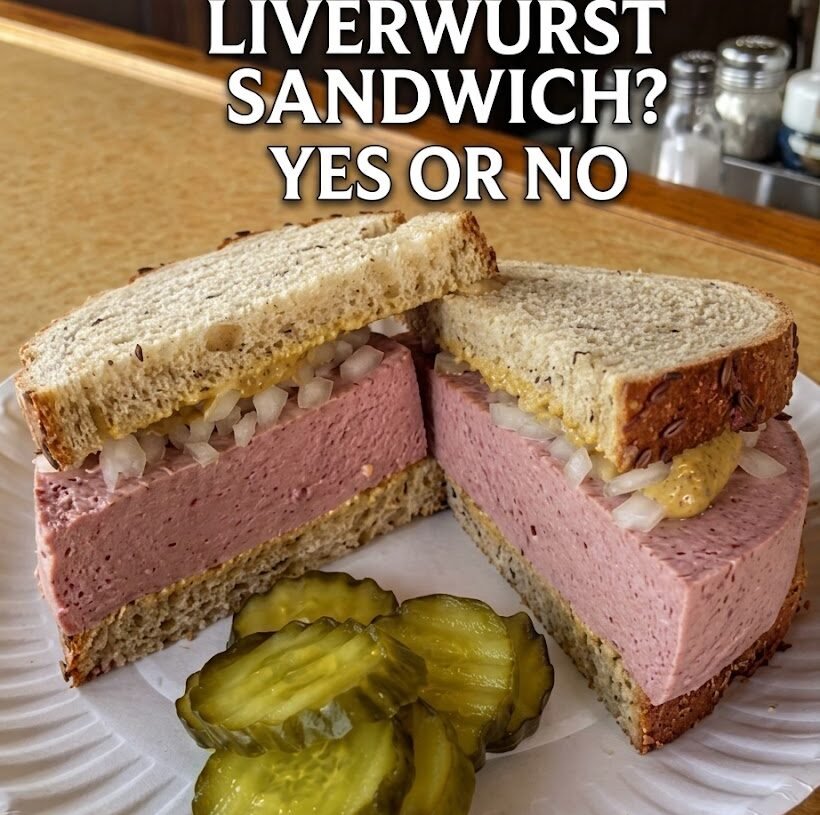
ChatGPT said:
Liverwurst Sandwich with Mustard, Onion & Dill Pickles
Ingredients
For the Liverwurst
- 12–16 ounces liverwurst
- Choose firm, sliceable liverwurst for a sandwich like the one pictured
- Keep the liverwurst refrigerated until ready to use
For the Bread
- 8 slices soft white sandwich bread
- Country white bread can also be used
- Rye or marble rye is excellent for a more traditional deli-style variation
For the Mustard Spread
- ¼–½ cup yellow mustard
- Dijon mustard can be substituted
- Spicy brown or German-style mustard can also be used
- Mayonnaise is optional if you prefer a creamier sandwich
For the Onion
- ½ small white or yellow onion
- Use less if you prefer a milder onion flavor
- Sweet onion can be substituted for a less-sharp flavor
For Serving
- Dill pickle chips or slices
- Kosher dill spears, optional
- Potato chips, optional
- Lettuce, optional
- Tomato, optional
- Sauerkraut, optional
- Freshly ground black pepper, optional
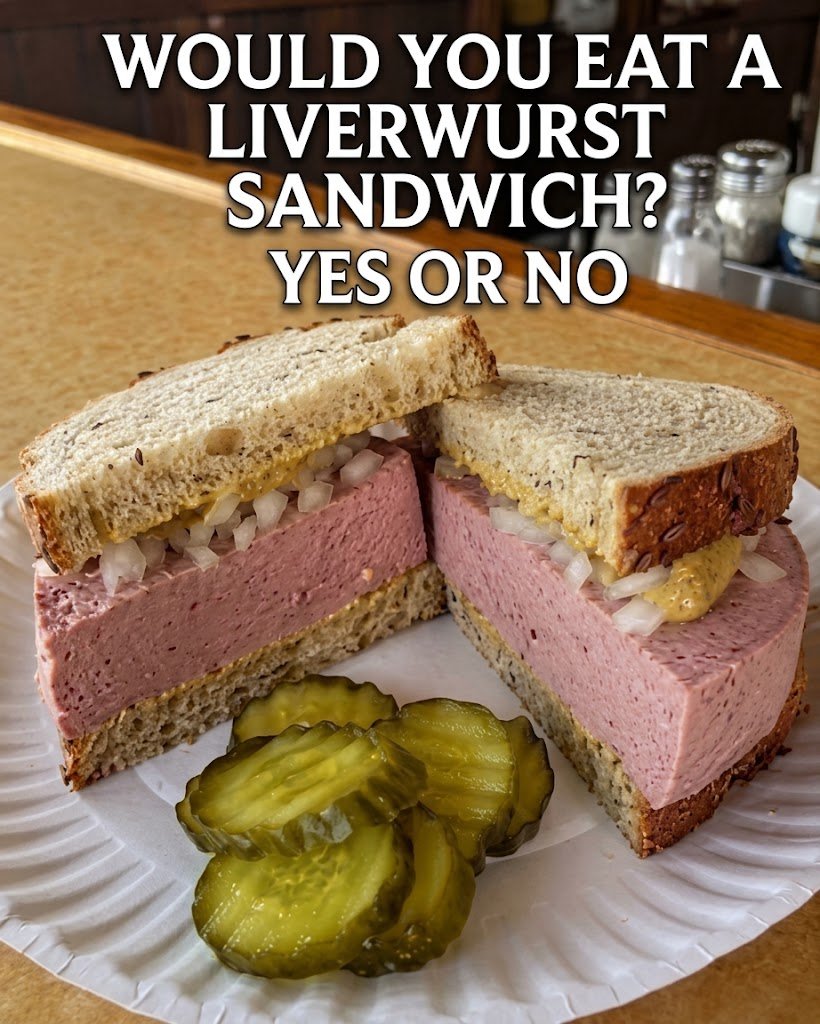
Preparing the Liverwurst
Keep the Liverwurst Refrigerated
Keep the liverwurst cold until you’re ready to prepare the sandwiches.
Chilled liverwurst is considerably easier to slice than liverwurst that has been sitting at room temperature. Keeping it cold also helps the slices retain their shape when you assemble the sandwich.
Remove the Casing if Necessary
Some liverwurst comes in a casing or outer wrapper.
If the product you’re using has a removable casing, carefully peel it away before slicing.
If your liverwurst is already packaged as a loaf or sliceable block without a casing, simply unwrap it and proceed.
Choose the Thickness
For a sandwich resembling the one pictured, cut the liverwurst into very thick slices, approximately ½–¾ inch thick.
This creates a substantial sandwich with liverwurst as the main feature.
For a more typical everyday sandwich, slices around ¼–½ inch thick are easier to eat.
Slice the Liverwurst
Use a sharp kitchen knife to cut clean slices.
Use gentle, even pressure rather than pressing aggressively downward.
Because liverwurst is soft, a dull knife can crush the edges instead of producing clean slices.
If the liverwurst is particularly soft, place it in the freezer for approximately 10–15 minutes before slicing. It should become firmer without actually freezing solid.
Preparing the Onion
Peel the Onion
Remove the outer skin from the onion.
Cut away the root and stem ends.
Dice the Onion Finely
Cut the onion into very small pieces.
Fine dice are preferable for this sandwich because they distribute evenly over the liverwurst and provide a pleasant crunch without producing large, overpowering pieces.
Decide How Much Onion to Use
Use approximately ¼ cup for a moderately oniony sandwich.
Use up to ½ cup if you enjoy a strong raw-onion flavor.
The amount can easily be adjusted according to taste.
Make the Onion Milder
If raw onion tastes too sharp, place the diced onion in a bowl of cold water.
Let it soak for approximately 5 minutes.
Drain thoroughly and pat dry with a paper towel.
This removes some of the onion’s sharp bite while preserving its crisp texture.
Preparing the Pickles
Select Crisp Dill Pickles
Choose firm, crunchy dill pickles.
Kosher dill, garlic dill, or traditional dill pickles all work well.
The acidity and crunch of the pickles are particularly useful because liverwurst is rich and creamy.
Slice the Pickles
If using whole pickles, cut them into thin rounds or long spears.
For a presentation similar to the pictured sandwich, thin pickle slices arranged beside the sandwich work particularly well.
Drain the Pickles
Allow the pickle slices to drain thoroughly.
Excess pickle brine can soak into the bread and make the sandwich soggy.
If necessary, place the pickles on a paper towel and gently pat away excess moisture.
Preparing the Bread
Choose the Right Bread
Soft white sandwich bread is ideal for the classic version.
The bread should be sturdy enough to support the thick liverwurst without falling apart.
Good alternatives include:
- Country white bread
- Wheat bread
- Rye bread
- Marble rye
- Sourdough
- Farmhouse bread
Check the Bread Thickness
Avoid extremely thin bread if you’re making the large sandwich shown in the picture.
A medium-thickness slice provides enough structure to hold the filling.
If using very thick rustic bread, you may want to use slightly thinner liverwurst slices so the sandwich remains manageable.
Toast the Bread if Desired
The traditional sandwich can be made with soft, untoasted bread.
For additional texture, lightly toast the bread until just golden.
Don’t toast it too dark because overly crisp bread can overpower the soft texture of the liverwurst.
Preparing the Mustard
Use Yellow Mustard for a Classic Flavor
Yellow mustard provides a mild tang and familiar deli-style flavor.
Spread approximately 1 tablespoon per sandwich, adjusting according to taste.
Use Dijon for More Sharpness
Dijon mustard gives the sandwich a more pronounced mustard flavor.
It works particularly well with rye bread.
Try Spicy Brown Mustard
Spicy brown mustard provides more heat and a deeper, more complex flavor.
It’s an excellent choice if you want the sandwich to taste more like a traditional deli sandwich.
Make a Creamy Mustard Spread
For a creamy variation, combine:
- 2 tablespoons mayonnaise
- 1 tablespoon yellow or Dijon mustard
Mix until smooth.
Spread a thin layer over the bread.
This version is especially good if you’re using leaner liverwurst.
Assembling the Sandwich
Lay Out the Bread
Place four slices of bread on a clean work surface.
If you’re making two sandwiches, you’ll use two slices for each sandwich.
Arrange the bread with the side you intend to spread facing upward.
Add the Mustard
Spread a generous but even layer of mustard across the bread.
Cover most of the surface, extending reasonably close to the edges.
Avoid using so much mustard that it overwhelms the liverwurst.
Add Mayonnaise if Desired
If you’re using mayonnaise, spread a thin layer over the opposite slice of bread.
You can also mix the mayonnaise and mustard together and apply them as one spread.
Add the Liverwurst
Place the liverwurst slices evenly over the prepared bread.
For a very hearty sandwich, use approximately 6–8 ounces of liverwurst per sandwich.
For a lighter sandwich, use around 3–4 ounces.
The pictured sandwich is intentionally very thick, so don’t be afraid to use a substantial layer if you’re trying to recreate its appearance.
Arrange Multiple Slices
If your liverwurst slices are smaller than the bread, slightly overlap several slices.
Try to cover the bread evenly from edge to edge.
This prevents bites from containing only bread and ensures that the liverwurst remains the dominant ingredient throughout the sandwich.
Adding the Onion
Scatter the Onion Evenly
Sprinkle the finely diced onion over the liverwurst.
Use enough to provide noticeable crunch without completely covering the liverwurst.
Approximately 2–4 tablespoons per sandwich is a good starting point.
Press the Onion Gently
Use your fingertips or the back of a spoon to gently press the onion into the surface of the liverwurst.
Don’t mash it.
The goal is simply to help the onion stay in place when you add the top slice of bread.
Adding More Mustard
Add a Second Mustard Layer
For a stronger mustard flavor, add another thin layer of mustard over the onions.
This isn’t necessary, but it creates a particularly good balance between the creamy liverwurst, sharp onion, and acidic mustard.
Avoid Over-Saucing
Because liverwurst is already soft and rich, too much mustard or mayonnaise can make the sandwich messy.
A thin, even layer is generally better than a thick puddle of sauce.
Closing the Sandwich
Add the Top Slice
Place the remaining bread slice over the filling.
If you have mustard on both sides, position the mustard-covered side against the filling.
Press Gently
Press down very gently with the palm of your hand.
Don’t flatten the sandwich aggressively.
The liverwurst should remain thick and substantial rather than being squeezed out from the sides.
Cutting the Sandwich
Let the Sandwich Settle
Allow the assembled sandwich to sit for about a minute before cutting.
This gives the bread, liverwurst, onion, and mustard a chance to settle together.
Use a Serrated Knife
A serrated bread knife is ideal for cutting the sandwich.
Use a gentle sawing motion rather than pressing straight down.
This helps prevent the soft bread and liverwurst from becoming compressed.
Cut Diagonally
Cut the sandwich from corner to corner.
A diagonal cut gives the sandwich a classic deli presentation and exposes the thick layer of liverwurst.
Cut Straight Across if Preferred
If you’re serving the sandwich as a hearty lunch, cutting it straight down the middle also works well.
For the sandwich shown in the image, either style will showcase the thick liverwurst filling.
Serving the Sandwich
Add Dill Pickles
Arrange several dill pickle slices beside the sandwich.
Use approximately 4–6 slices per serving, depending on their size.
The sharp acidity of the pickles balances the rich liverwurst.
Add Potato Chips
Serve with a handful of crispy potato chips for additional crunch.
Plain salted chips work particularly well because they don’t compete with the liverwurst.
Add Potato Salad
For a more substantial meal, serve the sandwich with classic potato salad.
Creamy potato salad works well, although a vinegar-based version provides a lighter contrast.
Add Coleslaw
Fresh coleslaw adds crunch and acidity.
A vinegar-based slaw is particularly refreshing alongside the rich sandwich.
Optional Additions
Add Crisp Lettuce
Add a layer of iceberg or romaine lettuce for extra crunch and freshness.
Place it directly between the bread and liverwurst.
Add Tomato
Thinly slice a ripe tomato and add one or two slices.
Pat the tomato dry before using it so its juices don’t make the bread soggy.
Add Sauerkraut
For a German-inspired variation, add a small amount of well-drained sauerkraut.
The tangy cabbage pairs beautifully with liverwurst and mustard.
Make sure the sauerkraut isn’t excessively wet before adding it.
Add Horseradish
Mix a small amount of prepared horseradish into the mustard for a sharper, spicier sandwich.
Start with about ½ teaspoon horseradish per tablespoon of mustard and increase according to taste.
Add Pickle Relish
For a slightly sweeter variation, add a small spoonful of dill pickle relish.
Drain the relish first so it doesn’t make the bread wet.
Add Caramelized Onion
For a completely different flavor profile, replace raw onion with caramelized onion.
Cook thinly sliced onions slowly in butter until deeply golden and soft.
Allow them to cool slightly before adding them to the sandwich.
The sweetness of caramelized onion pairs beautifully with the savory liverwurst.
German-Style Variation
Use Rye Bread
Replace white bread with rye bread or marble rye.
The earthy flavor of rye works particularly well with liverwurst.
Use German Mustard
Choose a smooth or grainy German-style mustard.
The stronger mustard flavor provides an excellent counterpoint to the richness of the liverwurst.
Add Sauerkraut
Add a small layer of well-drained sauerkraut.
Don’t use too much because it can dominate the sandwich.
Finish With Pickles
Serve with crisp dill pickles or German-style pickled vegetables.
This creates a more traditional deli-inspired combination.
Creamy Liverwurst Spread Variation
Mash the Liverwurst
Instead of slicing the liverwurst, place it in a bowl and mash it with a fork.
Break it into small, soft pieces.
Add Mayonnaise
Add approximately 2 tablespoons mayonnaise per 8 ounces liverwurst.
Mix until creamy.
Add Mustard
Add 1–2 tablespoons mustard.
Adjust according to taste.
Add Diced Onion
Fold in finely diced onion.
You can also add finely chopped dill pickles for extra acidity.
Mix Until Spreadable
Stir everything together until the mixture is evenly combined.
Spread it generously onto soft bread.
This variation is easier to eat than the extremely thick sliced version and works especially well for lunch sandwiches.
Tips for the Best Sandwich
Keep the Liverwurst Cold
Cold liverwurst slices are easier to cut and assemble.
It also helps prevent the filling from becoming overly soft while you’re preparing the sandwich.
Use Fresh Bread
Fresh bread gives you the best combination of softness and structure.
Bread that’s several days old may be drier and more likely to crumble around the edges.
Balance Rich and Acidic Ingredients
Liverwurst is rich, creamy, and savory.
Mustard, dill pickles, raw onion, sauerkraut, and other acidic ingredients help balance that richness.
Don’t Make the Bread Soggy
Drain pickles, tomatoes, and sauerkraut carefully.
If using several moist ingredients, consider lightly buttering the bread first to create a barrier.
Don’t Overcompress the Sandwich
A thick liverwurst sandwich should remain substantial.
Pressing too hard will squeeze the liverwurst out of the bread and make the sandwich difficult to eat.
Making the Sandwich Ahead
Prepare the Ingredients Ahead
You can slice the liverwurst and onion ahead of time.
Store each ingredient separately in airtight containers in the refrigerator.
Keep Wet Ingredients Separate
Keep mustard, pickles, tomatoes, and sauerkraut separate until you’re ready to assemble the sandwich.
This preserves the texture of the bread.
Assemble Just Before Serving
For the best sandwich, assemble it shortly before eating.
This keeps the bread soft but prevents it from becoming soggy.
Storage
Refrigerate Leftover Liverwurst
Keep unused liverwurst refrigerated according to the package instructions.
Once opened, follow the product’s storage recommendations and use it within the recommended period.
Store Leftover Onion
Place diced onion in an airtight container and refrigerate.
Use within a few days for the best flavor and texture.
Store Pickles in Their Brine
Keep leftover pickles submerged in their original brine and refrigerated.
This helps maintain their crispness and flavor.
Simple Serving Combination
For the easiest version, use soft white bread, thickly sliced liverwurst, yellow mustard, finely diced raw onion, and crisp dill pickles.
Spread mustard over the bread, add the thick liverwurst slices, scatter the onion evenly over the top, add another small layer of mustard if desired, and finish with the second slice of bread.
Cut the sandwich diagonally and serve immediately with plenty of dill pickle slices.
Classic Flavor Combination
The strongest part of this sandwich is the balance between the ingredients:
Creamy liverwurst provides the rich, savory foundation.
Yellow mustard adds tang and acidity.
Fresh onion provides sharpness and crunch.
Soft bread provides a neutral, tender base.
Dill pickles add a crisp, salty, acidic finish.