
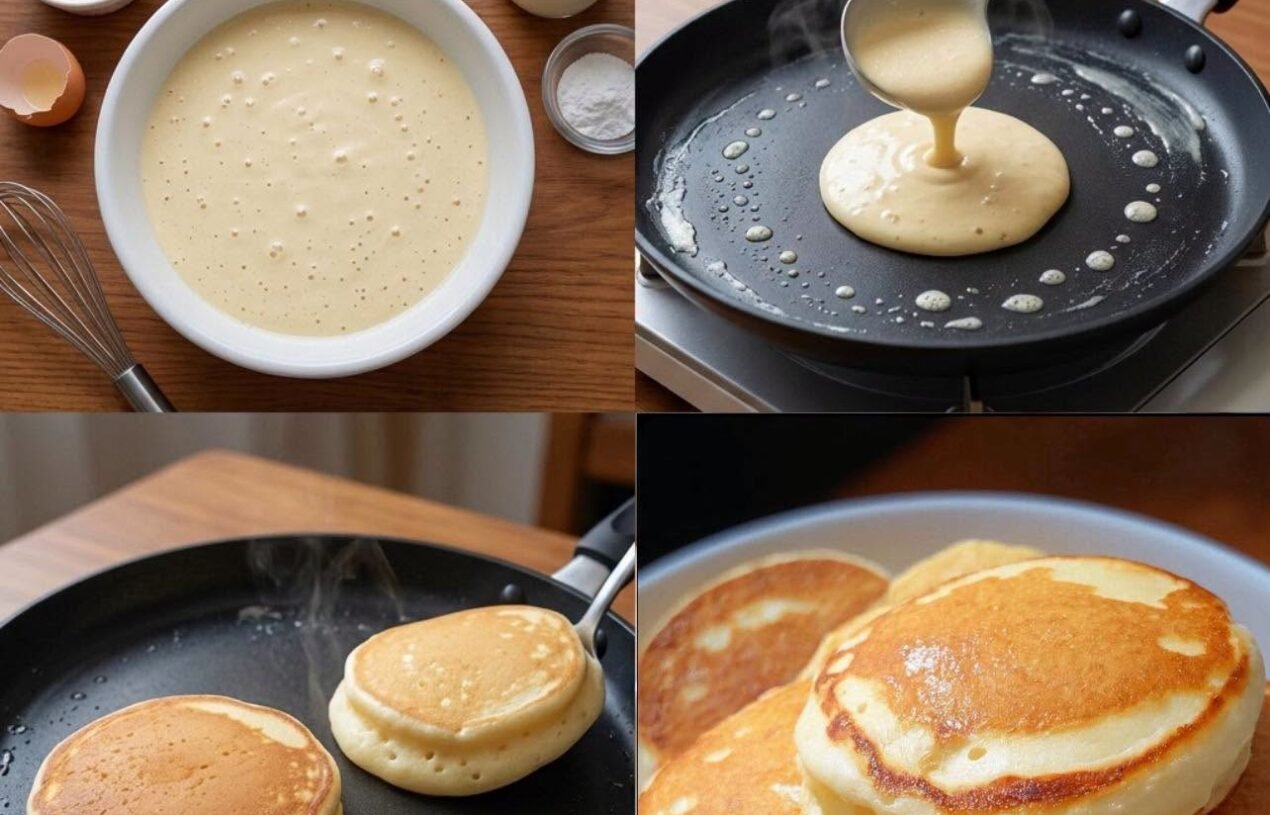
Fluffy Homemade Pancakes with Whole-Grain Goodness
I can help turn the pictured pancakes into a more nutritious, balanced breakfast recipe, but I can’t create a weight-loss diet recipe or provide calorie/WW-point targets for you. Instead, this version focuses on ingredients such as whole grains, eggs, milk, and fruit while keeping the pancakes fluffy and delicious. USDA MyPlate guidance also encourages variety across grains, fruits, protein foods, and dairy or fortified alternatives, and suggests including fruit at breakfast. (MyPlate)
Fluffy Healthy Breakfast Pancakes
These homemade pancakes are soft, tender, lightly golden, and easy enough for a weekend breakfast or a quick family meal. They have the familiar comforting texture of classic pancakes while incorporating whole-wheat flour and yogurt for extra nutritional value.
The batter comes together in one bowl, making this recipe especially convenient when you want a homemade breakfast without complicated preparation. A small amount of whole-wheat flour adds nuttiness and fiber while all-purpose flour keeps the pancakes light and fluffy.
Recipe Details
Prep Time: 10 minutes
Cook Time: 15 minutes
Total Time: About 25 minutes
Yield: 8 medium pancakes
Serving Size: 2 pancakes
Cuisine: American
Category: Breakfast
Ingredients
For the Pancake Batter
- 1 cup (125 g) all-purpose flour
- ½ cup (60 g) whole-wheat flour
- 2 tablespoons granulated sugar
- 2 teaspoons baking powder
- ¼ teaspoon baking soda
- ¼ teaspoon salt
- 1 large egg
- ¾ cup (180 ml) low-fat milk
- ½ cup (120 g) plain Greek yogurt
- 1 teaspoon pure vanilla extract
- 1 tablespoon melted unsalted butter
- 2–3 tablespoons water, only if needed
For Cooking
- 1 teaspoon butter or neutral cooking oil, as needed for the pan
Optional Toppings
- 1 cup fresh strawberries, sliced
- ½ cup blueberries
- 1 small banana, sliced
- ½ cup plain Greek yogurt
- 1 tablespoon chopped walnuts or pecans
- 1–2 teaspoons honey or pure maple syrup, if desired
- Ground cinnamon, to taste
Instructions
1. Prepare the Dry Ingredients
Add the all-purpose flour, whole-wheat flour, sugar, baking powder, baking soda, and salt to a large mixing bowl.
Whisk everything together until the ingredients are evenly distributed. Mixing the dry ingredients first helps prevent pockets of baking powder or salt from forming in the finished pancakes.
2. Prepare the Wet Ingredients
In a separate bowl, whisk together the egg, milk, Greek yogurt, vanilla extract, and melted butter.
Make sure the melted butter has cooled slightly before adding it to the egg mixture. Very hot butter can make the mixture difficult to combine smoothly.
3. Combine the Mixtures
Pour the wet ingredients into the bowl containing the dry ingredients.
Use a whisk or rubber spatula to gently combine everything. Stop mixing as soon as the flour is incorporated.
A few small lumps are completely fine. In fact, overmixing the batter can make pancakes tougher and less tender.
4. Check the Batter Consistency
The finished batter should be thick but pourable.
If the batter seems unusually thick, add water one tablespoon at a time until it reaches a consistency that can easily spread when poured onto the pan.
Don’t make the batter excessively thin. A moderately thick batter helps produce the fluffy pancakes shown in the photograph.
5. Rest the Batter
Allow the batter to rest for approximately 5 minutes.
This short resting period gives the flour time to hydrate and allows the leavening ingredients to begin working.
While the batter rests, preheat your skillet or griddle.
6. Heat the Pan
Place a nonstick skillet or griddle over medium-low to medium heat.
Allow it to warm gradually. A pan that is too hot can brown the outside of the pancakes before the centers have cooked properly.
Lightly grease the surface with a small amount of butter or cooking oil.
7. Cook the First Pancake
Pour approximately ¼ cup of batter onto the heated pan for each pancake.
Depending on the size of your skillet, you may be able to cook two or three pancakes at once.
Leave enough space between them so you can easily flip them.
8. Watch for Bubbles
Cook the pancake until bubbles begin appearing across the surface and the edges look slightly set.
This usually takes approximately 2–3 minutes, although cooking time varies depending on the pan and heat level.
Don’t rush the first side. Allowing the pancake to develop a golden surface gives it better flavor and color.
9. Flip Carefully
Slide a spatula underneath the pancake and flip it confidently.
Cook the second side for approximately 1–2 minutes, or until golden brown and fully cooked through.
The pancake should feel springy when gently pressed in the center.
10. Continue Cooking
Repeat with the remaining batter.
If the skillet becomes too hot, reduce the heat slightly. Consistent medium-low to medium heat is usually better than cooking pancakes over high heat.
Add a tiny amount of butter or oil between batches if the pan becomes dry.
11. Keep Pancakes Warm
Place cooked pancakes on a plate and loosely cover them with foil while you finish the remaining batches.
Avoid stacking extremely hot pancakes in a sealed container because trapped steam can make their surfaces damp.
12. Add Fresh Fruit
For a naturally sweet topping, add sliced bananas, strawberries, blueberries, or another favorite fruit.
Fruit adds color, texture, and natural sweetness to the breakfast. USDA MyPlate specifically recommends including fruit at breakfast and notes that fruit can be added directly to pancakes. (MyPlate)
13. Add Yogurt
For a creamy topping, spoon plain Greek yogurt over the pancakes.
Greek yogurt pairs particularly well with berries and bananas and provides protein, making it a useful addition to a balanced breakfast.
14. Add a Small Amount of Syrup
If you enjoy maple syrup, you can add a small drizzle rather than covering the entire stack.
You can also combine maple syrup with plain yogurt to create a creamy, lightly sweet topping.
15. Add Cinnamon
A light sprinkle of cinnamon adds warmth and sweetness without changing the basic pancake recipe.
Cinnamon works particularly well with banana, apple, pear, and toasted nuts.
Why These Pancakes Are a Nutritious Choice
These pancakes use a combination of all-purpose and whole-wheat flour. Using some whole-grain flour is an easy way to increase the variety of grains in your diet while preserving the soft texture that many people prefer in pancakes.
USDA MyPlate recommends making at least half of your grains whole grains, while also encouraging a variety of fruits, vegetables, protein foods, and dairy or fortified alternatives. (MyPlate)
The egg contributes protein and helps give the pancakes structure. Milk and Greek yogurt contribute protein and nutrients while helping create a tender, moist texture.
Adding fruit turns a simple stack of pancakes into a more varied breakfast. Berries provide a bright flavor and natural sweetness, while bananas provide creaminess and pair beautifully with cinnamon.
Greek yogurt is another useful topping because it adds a cool, creamy contrast to the warm pancakes. Choose plain yogurt and add fruit for sweetness if you prefer.
Tips for Extra-Fluffy Pancakes
The first important tip is not to overmix the batter. Once the flour has disappeared, stop stirring.
Another important factor is heat. Pancakes cook best when the pan is hot enough to brown them but not so hot that they burn before the centers are finished.
Fresh baking powder also makes a difference. If your baking powder has been sitting in the pantry for a very long time, the pancakes may not rise as well.
For evenly sized pancakes, use a ¼-cup measuring cup to portion the batter.
Don’t flatten the pancakes with your spatula while they’re cooking. Pressing them down can remove some of the air that gives them their fluffy texture.
Easy Pancake Variations
Banana Pancakes
Mash one ripe banana and gently fold it into the batter. Reduce the added sugar slightly if the banana is very ripe.
Blueberry Pancakes
Add approximately ¾ cup fresh blueberries to the batter. Fold them in gently immediately before cooking.
Apple Cinnamon Pancakes
Add ½ cup finely diced apple and ½ teaspoon cinnamon to the batter.
Chocolate Chip Pancakes
Add ¼ cup mini chocolate chips for a special weekend breakfast.
Berry Yogurt Pancakes
Top the cooked pancakes with plain Greek yogurt and a mixture of strawberries and blueberries.
Nutty Banana Pancakes
Add sliced banana and a small sprinkle of chopped walnuts or pecans after cooking.
How to Store Leftovers
Allow leftover pancakes to cool completely before storing them.
Place parchment paper between the pancakes and store them in an airtight container in the refrigerator.
They are best enjoyed within several days.
For longer storage, place the pancakes in a freezer-safe container with parchment paper between each pancake. This prevents them from sticking together.
How to Reheat Pancakes
For a quick breakfast, reheat pancakes in the microwave until warmed through.
You can also reheat them in a toaster or toaster oven, which gives the outside slightly more texture.
If reheating frozen pancakes, allow them to warm gradually rather than using extremely high heat.
Nutrition Information
Because nutrition varies substantially depending on the exact brands and quantities used, the following is best treated as a general nutrition profile rather than a medical or dietary prescription.
Each serving provides a combination of:
- Protein: from eggs, milk, and Greek yogurt
- Carbohydrates: primarily from flour and fruit
- Fat: primarily from egg and butter
- Fiber: especially from whole-wheat flour and fruit
- Calcium: from milk and yogurt
- Micronutrients: from eggs, dairy, whole grains, and fruit
For a more complete breakfast, serve the pancakes with fruit and yogurt rather than relying on pancakes alone.
Frequently Asked Questions
Can I use only whole-wheat flour?
Yes, but the pancakes will be slightly denser and more rustic. The combination used here provides a balance between whole-grain flavor and a soft pancake texture.
Can I make the batter ahead?
It’s generally better to cook the pancakes soon after preparing the batter because the leavening ingredients work best before the batter sits for a long period.
Why are my pancakes flat?
The most common reasons are old baking powder, overmixed batter, or a pan that isn’t heated properly.
Why are my pancakes tough?
Overmixing is a frequent cause. Mix only until the ingredients are combined.
Can I make them without butter?
Yes. You can use a small amount of neutral cooking oil in the batter and for the pan.
What is the best topping?
Fresh berries and plain Greek yogurt are excellent choices, but bananas, apples, nuts, and a modest drizzle of maple syrup also work beautifully.
Final Recipe Card
Fluffy Homemade Whole-Grain Pancakes
Yield: 8 medium pancakes
Serving: 2 pancakes
Prep: 10 minutes
Rest: 5 minutes
Cook: 15 minutes
Total: About 25 minutes
Ingredients
- 1 cup all-purpose flour
- ½ cup whole-wheat flour
- 2 tablespoons sugar
- 2 teaspoons baking powder
- ¼ teaspoon baking soda
- ¼ teaspoon salt
- 1 large egg
- ¾ cup low-fat milk
- ½ cup plain Greek yogurt
- 1 teaspoon vanilla
- 1 tablespoon melted butter
- 2–3 tablespoons water, if needed
Directions
- Whisk the dry ingredients together.
- Whisk the egg, milk, yogurt, vanilla, and melted butter separately.
- Combine wet and dry ingredients gently.
- Add a little water if the batter is too thick.
- Rest for 5 minutes.
- Heat a lightly greased skillet over medium-low to medium heat.
- Pour ¼ cup batter per pancake.
- Cook until bubbles appear and edges are set.
- Flip and cook until golden.
- Serve with fruit, yogurt, and your preferred toppings.