
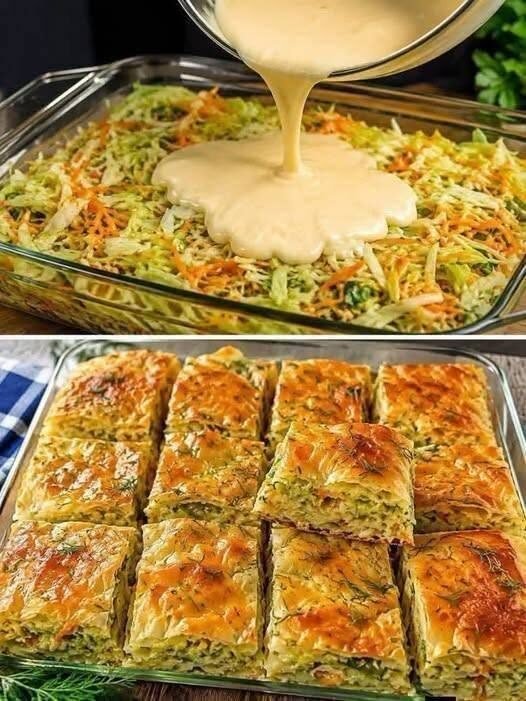
Golden Vegetable Filo Bake
A Crispy, Creamy Vegetable Casserole That Everyone Will Love
This Golden Vegetable Filo Bake is the kind of recipe that disappears quickly at a dinner table. It combines thin, flaky pastry with a colorful mixture of shredded vegetables, aromatic herbs, and a creamy savory topping. Once baked, the top becomes beautifully golden and crisp while the vegetables underneath remain tender and flavorful.
It is an excellent choice when you want to serve something that feels special enough for a dinner party but is still straightforward enough to prepare for an ordinary family meal. The vegetables add freshness and texture, while the pastry provides the satisfying crispness that makes this bake so comforting.
The recipe is inspired by the dish shown in your image, with shredded vegetables arranged in layers and finished with a creamy mixture before baking. The result is similar in spirit to a vegetable börek or filo casserole, but the preparation is designed to be simple and practical for a home kitchen.
Why You’ll Love This Recipe
There are several reasons this vegetable bake is so popular. First, it is visually impressive. Once sliced into neat rectangular portions, the golden pastry creates a beautiful presentation that looks much more complicated than it actually is.
Second, the recipe is packed with vegetables. Cabbage, zucchini, and carrots create a colorful filling with different textures and naturally savory flavors.
Third, it is versatile. You can serve it as a vegetarian main course, a side dish, a brunch centerpiece, or a party appetizer.
And finally, much of the preparation involves simply shredding and combining ingredients. Once everything is assembled, the oven does most of the work.
Recipe Details
Recipe Name: Golden Vegetable Filo Bake
Cuisine: Mediterranean-inspired
Category: Vegetarian Main Course / Side Dish
Preparation Time: 15–20 minutes
Cooking Time: 40–45 minutes
Total Time: About 1 hour
Servings: 8
Dish: 9 × 13-inch baking dish
Difficulty: Easy to Moderate
Ingredients
Vegetable Filling
- 4 cups finely shredded green cabbage
- 2 medium zucchini, grated
- 2 medium carrots, grated
- 1 small yellow onion, finely chopped
- 3 cloves garlic, minced
- 2 tablespoons fresh parsley, chopped
- 1 tablespoon fresh dill, chopped
- 1 teaspoon dried oregano
- ½ teaspoon black pepper
- ¾ teaspoon salt, or to taste
- 1 tablespoon olive oil
Creamy Egg Mixture
- 3 large eggs
- 1 cup plain Greek yogurt
- ½ cup milk
- 2 tablespoons olive oil
- 1 teaspoon baking powder
- ½ teaspoon salt
- ½ teaspoon garlic powder
- ½ teaspoon dried dill
- ½ teaspoon paprika
Pastry
- 10–12 sheets filo pastry
- 2 tablespoons olive oil or melted butter for brushing
Optional Topping
- ½ cup shredded mozzarella
- 1 tablespoon sesame seeds
- 1 tablespoon chopped fresh parsley
- 1 teaspoon dried oregano
Important Ingredient Preparation
The zucchini deserves special attention because it naturally contains a considerable amount of water. After grating the zucchini, place it in a clean kitchen towel and gently squeeze out excess moisture.
You don’t need to completely dry the zucchini. The goal is simply to remove enough liquid so that the finished pastry does not become excessively soggy.
The cabbage should also be finely shredded. Smaller pieces distribute more evenly throughout the filling and make the finished bake easier to slice.
For the carrots, use the large holes of a box grater. This produces strands that soften during baking without completely disappearing into the filling.
Step-by-Step Instructions
1. Preheat the Oven
Preheat your oven to 375°F (190°C).
Allow the oven to reach temperature before putting the casserole inside. A properly preheated oven helps the filo pastry become crisp and golden instead of remaining pale and soft.
Lightly grease a 9 × 13-inch baking dish with a small amount of olive oil.
2. Prepare the Vegetables
Wash the cabbage, zucchini, and carrots thoroughly.
Finely shred the cabbage.
Grate the zucchini and carrots.
Squeeze the grated zucchini gently to remove excess moisture.
Place the vegetables into a large mixing bowl.
3. Add the Aromatics
Add the chopped onion and minced garlic to the vegetable mixture.
Add the fresh parsley and dill.
Sprinkle in the oregano, black pepper, and salt.
Toss everything together thoroughly.
The combination of garlic, onion, dill, parsley, and oregano gives the vegetables a wonderfully savory aroma without requiring a complicated sauce.
4. Lightly Sauté the Vegetables
Heat 1 tablespoon of olive oil in a large skillet over medium heat.
Add the onion and garlic and cook for approximately 2 minutes.
Add the cabbage, carrots, and zucchini.
Cook for approximately 5–7 minutes, stirring occasionally.
The vegetables do not need to be completely cooked at this stage. You simply want them to soften slightly and release some excess moisture.
Remove the pan from the heat.
5. Prepare the Creamy Mixture
In a separate bowl, whisk together:
- 3 eggs
- 1 cup Greek yogurt
- ½ cup milk
- 2 tablespoons olive oil
- 1 teaspoon baking powder
- ½ teaspoon salt
- garlic powder
- dried dill
- paprika
Whisk until the mixture is smooth and evenly combined.
This mixture helps create the creamy, tender interior while also helping the pastry layers hold together.
6. Prepare the Filo Pastry
Carefully unfold the filo pastry.
Filo dries quickly when exposed to air, so keep unused sheets covered with a clean, slightly damp kitchen towel while assembling the casserole.
Handle the pastry gently because the thin sheets can tear easily.
A small tear isn’t a problem. Once layered together, the pastry will still bake beautifully.
7. Create the First Layer
Place several filo sheets into the bottom of the prepared baking dish.
Lightly brush each sheet with olive oil or melted butter.
You don’t need to completely soak the pastry. A thin coating is enough to encourage browning and crispness.
Allow some of the filo to extend slightly up the sides of the dish.
8. Add the Vegetable Filling
Spread approximately half of the cooked vegetable mixture over the pastry.
Distribute it evenly from corner to corner.
Avoid creating a very thick pile in the center because an even layer will cook more consistently.
Press the vegetables gently into place with a spatula.
9. Add the Creamy Mixture
Pour approximately half of the prepared egg-and-yogurt mixture over the vegetables.
Allow it to seep naturally into the filling.
Do not stir everything together at this stage.
The goal is to create distinct layers of pastry, vegetables, and creamy mixture.
10. Continue Layering
Add another few sheets of filo pastry.
Brush them lightly with olive oil or melted butter.
Add the remaining vegetables.
Pour the remaining creamy mixture evenly over the top.
Finish with the remaining filo sheets.
11. Prepare the Top
Tuck the edges of the filo gently into the baking dish.
Brush the top lightly with olive oil or melted butter.
If desired, sprinkle the surface with sesame seeds, dried oregano, or a small amount of shredded mozzarella.
The sesame seeds provide a pleasant nutty flavor and attractive appearance once toasted.
12. Bake the Casserole
Place the baking dish in the preheated oven.
Bake for approximately 40–45 minutes.
The exact baking time can vary depending on your oven and the moisture content of the vegetables.
The finished bake should have a deeply golden surface and crisp edges.
13. Check for Doneness
The pastry should be crisp and golden brown.
The center should feel set rather than liquid when gently pressed.
If the top begins browning too quickly while the center still needs more time, loosely cover the dish with foil and continue baking.
14. Rest Before Cutting
Remove the finished bake from the oven.
Allow it to rest for 10–15 minutes before slicing.
This step is important because the creamy filling continues to set as the casserole cools slightly.
Cutting immediately can cause the layers to shift or release excess moisture.
How to Get Extra-Crispy Filo
One of the most important techniques in this recipe is managing moisture.
Vegetables naturally contain water, and too much moisture can make filo pastry soft.
Squeezing the zucchini and lightly cooking the vegetables before assembly helps significantly.
Another important tip is to avoid pouring an excessive amount of liquid directly onto the uppermost pastry layer.
Keep the final filo layer relatively dry except for a light brushing of oil or butter.
How to Make It More Flavorful
Fresh herbs make a noticeable difference in this recipe.
Fresh dill works especially well with zucchini and yogurt, while parsley contributes freshness.
For a warmer flavor, add a small amount of cumin or smoked paprika.
For a Mediterranean-style variation, add chopped spinach, a little feta cheese, or finely chopped roasted red pepper.
For a more savory version, sauté sliced mushrooms with the onions before adding the remaining vegetables.
Can I Prepare This Ahead of Time?
Yes.
The vegetable filling can be prepared several hours ahead and refrigerated.
For the best pastry texture, assemble the filo layers relatively close to baking time.
If the entire casserole is assembled too far in advance, the moisture from the vegetables and creamy mixture can gradually soften the pastry.
For a dinner party, prepare the vegetable filling earlier in the day and refrigerate it. Assemble the pastry shortly before baking.
Serving Suggestions
This vegetable filo bake is wonderfully versatile.
Serve it alongside a simple green salad for a light and balanced meal.
It also works beautifully with cucumber and tomato salad.
A spoonful of plain Greek yogurt with fresh dill can be served alongside it.
For a larger family meal, pair it with grilled chicken, roasted vegetables, or a bean salad.
For brunch, serve smaller squares with fresh fruit and a simple salad.
Portioning and Serving
Allow the casserole to rest before cutting.
For 8 servings, divide the baking dish into eight approximately equal portions.
For a party, cut the bake into smaller squares or rectangles and serve it as a finger-food-style appetizer.
The rectangular shape shown in your photo works particularly well because each piece displays the golden pastry and colorful vegetable layers.
Storage Instructions
Place cooled leftovers in an airtight container and refrigerate.
For the best quality, consume refrigerated leftovers within a few days.
Reheat individual portions in an oven or air fryer when possible. This helps restore some of the pastry’s crispness.
Microwaving is convenient but will generally produce a softer pastry texture.
Freezing Instructions
This recipe can be frozen, although filo pastry may lose some of its original crispness after thawing.
If freezing, allow the baked casserole to cool completely.
Wrap portions securely and place them in a freezer-safe container.
Thaw refrigerated and reheat thoroughly in the oven.
For the best texture, freshly baked is preferable.
Healthy-Balanced Recipe Notes
This recipe provides a mixture of vegetables, eggs, yogurt, and pastry in one dish.
The vegetables contribute fiber and a variety of micronutrients, while eggs and Greek yogurt provide protein and other nutrients.
The pastry contributes carbohydrates and energy, making this a substantial dish rather than simply a vegetable side.
Using a measured amount of oil and cheese allows the vegetables and herbs to remain prominent while keeping the recipe balanced.
For readers following a particular medical or dietary plan, ingredients and portions may need to be adjusted according to individual advice from their healthcare professional.
Estimated Nutrition
Estimated per serving, based on 8 servings:
| Nutrient | Approximate Amount |
|---|---|
| Calories | 300–350 kcal |
| Protein | 13–16 g |
| Carbohydrates | 30–35 g |
| Fat | 14–17 g |
| Fiber | 4–5 g |
| Sugars | 6–8 g |
| Sodium | 450–600 mg |
| Calcium | 120–170 mg |
Important: These numbers are estimates. Actual nutrition will vary according to the filo pastry brand, yogurt, milk, cheese, oil, vegetable sizes, and exact serving size.
For a website, it is best to calculate the final nutrition panel using the exact products and quantities used in your final recipe.
Ingredient Substitutions
Greek Yogurt
Plain regular yogurt can be used, although Greek yogurt generally provides a thicker consistency.
Milk
Dairy milk can be replaced with an unsweetened alternative if appropriate for your dietary needs.
Mozzarella
You can use mozzarella, Monterey Jack, cheddar, or feta depending on the flavor you want.
Cabbage
Green cabbage can be replaced with finely shredded Napa cabbage.
Zucchini
Yellow squash is an excellent substitute.
Herbs
Fresh dill and parsley can be replaced with dried herbs when necessary. Use smaller quantities of dried herbs because they are more concentrated.
Frequently Asked Questions
Can I make this without cheese?
Yes. The cheese is optional. The egg and yogurt mixture still provides creaminess and helps bind the filling.
Why is my filo soggy?
Excess moisture is usually the main reason. Make sure the zucchini is squeezed well and the vegetables aren’t excessively wet before assembly.
Can I use store-bought shredded vegetables?
Absolutely. Pre-shredded vegetables can save preparation time and make this recipe even easier.
Can I add chicken?
Yes. Cooked shredded chicken can be added to the vegetable filling if you want a more substantial non-vegetarian version.
Can I make this gluten-free?
Traditional filo pastry contains wheat, so you would need a specifically gluten-free pastry alternative.
Is this good for a dinner party?
Definitely. It can be assembled into a large baking dish, baked until golden, and cut into attractive portions for serving.
Can I serve it cold?
It can be served warm or at room temperature. For the crispiest pastry and most pleasant texture, warm is generally best.
Recipe Card
Golden Vegetable Filo Bake
Prep Time: 20 minutes
Cook Time: 40–45 minutes
Resting Time: 10–15 minutes
Total Time: Approximately 1 hour 15 minutes
Servings: 8
Ingredients
Vegetables
- 4 cups shredded cabbage
- 2 grated zucchini
- 2 grated carrots
- 1 small chopped onion
- 3 minced garlic cloves
- 2 tbsp fresh parsley
- 1 tbsp fresh dill
- 1 tsp oregano
- ½ tsp black pepper
- ¾ tsp salt
- 1 tbsp olive oil
Creamy Mixture
- 3 eggs
- 1 cup plain Greek yogurt
- ½ cup milk
- 2 tbsp olive oil
- 1 tsp baking powder
- ½ tsp salt
- ½ tsp garlic powder
- ½ tsp dried dill
- ½ tsp paprika
Pastry
- 10–12 filo sheets
- 2 tbsp olive oil or melted butter
Optional
- ½ cup mozzarella
- 1 tbsp sesame seeds
- Fresh parsley
Instructions
- Preheat oven to 375°F (190°C).
- Grease a 9 × 13-inch baking dish.
- Shred the cabbage, carrots, and zucchini.
- Squeeze excess moisture from the zucchini.
- Sauté onion and garlic in olive oil.
- Add cabbage, zucchini, and carrots.
- Cook for 5–7 minutes.
- Stir in herbs, salt, and pepper.
- Whisk eggs, Greek yogurt, milk, olive oil, baking powder, and seasonings.
- Layer filo pastry in the baking dish.
- Lightly brush each layer with oil or butter.
- Add half the vegetable mixture.
- Add half the creamy mixture.
- Add another layer of filo.
- Add the remaining vegetables.
- Pour over the remaining creamy mixture.
- Finish with filo pastry.
- Brush the top lightly.
- Bake for 40–45 minutes.
- Rest for 10–15 minutes.
- Slice and garnish with fresh herbs.
- Serve warm.