
Description
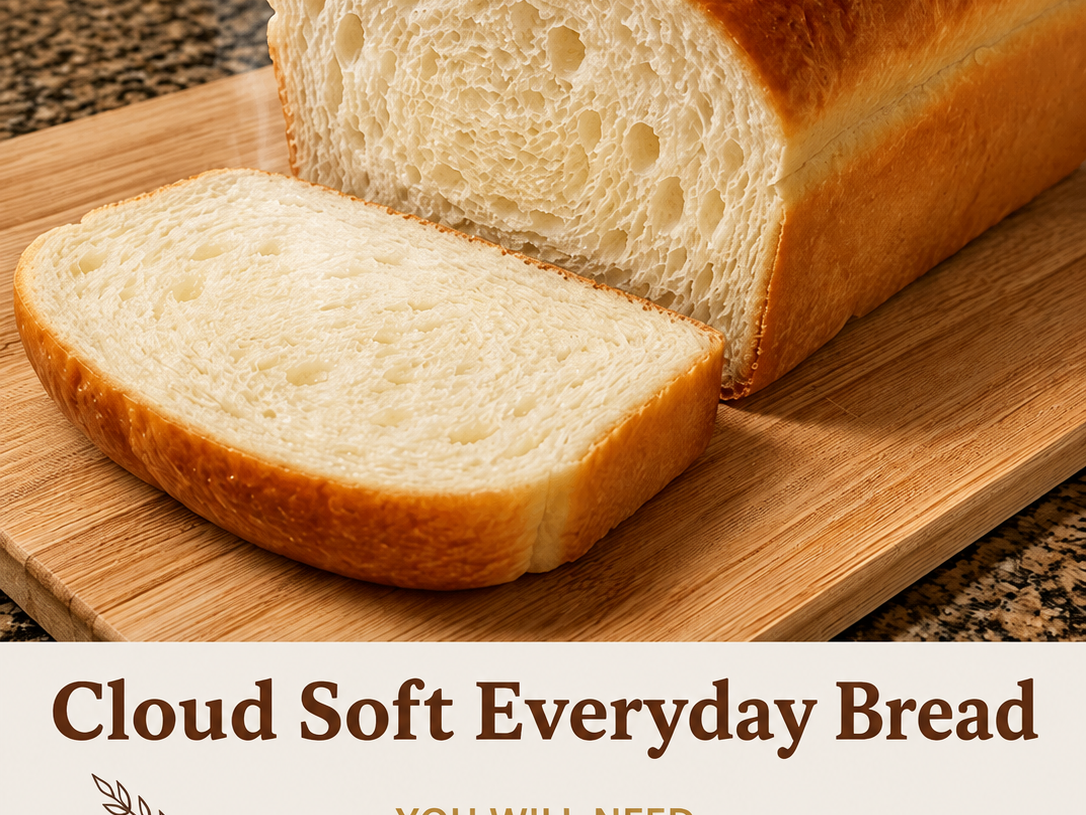
This Mediterranean Cloud Soft Everyday Bread is everything a homemade loaf should be: golden on the outside, incredibly soft in the center, lightly chewy, and fragrant with extra-virgin olive oil and Mediterranean herbs. The addition of Greek yogurt and egg whites gives this bread a more protein-friendly profile while helping create a tender, cloud-like crumb.
It is delicious fresh from the oven, toasted for breakfast, or sliced for sandwiches and wraps. With simple pantry ingredients and a beautiful olive-oil aroma, this high-protein bread is an easy homemade alternative to many packaged loaves.
Note: This version is designed to be higher in protein, but because it uses wheat flour, it is not a keto or truly low-carb bread. If you need a genuinely low-carb version, almond/coconut-flour or another low-carb flour blend would be required.
Can This Mediterranean Cloud Soft Everyday Bread Support Weight Loss Goals?
It can fit into a balanced eating pattern when portion sizes and total daily intake are considered. The Greek yogurt and egg whites increase the protein content compared with a basic flour-and-water bread, while olive oil provides satisfying unsaturated fats.
Protein can be useful in meals because it contributes to fullness and helps make a simple slice of bread more substantial. For a weight-management-friendly meal, pair one slice with lean protein such as eggs, grilled chicken, tuna, cottage cheese, or Greek yogurt and plenty of vegetables.
Does Mediterranean Cloud Soft Everyday Bread Fit a High-Protein Lifestyle?
Yes, this recipe is more protein-friendly than traditional homemade bread because it combines wheat flour with Greek yogurt, egg whites, and a modest amount of olive oil. The resulting loaf is soft and versatile while providing a useful amount of protein per slice. However, it is still made with wheat flour, so the net carbs remain moderate-to-high rather than low. For a lower-carb meal, use a smaller serving and pair it with protein-rich foods and non-starchy vegetables.
Why This Recipe Is Special
High-Protein Upgrade: Greek yogurt and egg whites add protein without making the loaf heavy.
Cloud-Soft Texture: The enriched dough creates a tender, airy crumb that stays soft after cooling.
Mediterranean Flavor: Extra-virgin olive oil, oregano, rosemary, and garlic give the loaf a fresh savory character.
Everyday Friendly: It works for breakfast, sandwiches, toast, snacks, and dinner.
Homemade & Comforting: Simple ingredients create a bakery-style loaf without complicated techniques.
My Personal Experience
The crumb is the highlight:
I love how soft and airy the center becomes while the crust develops a beautiful golden finish.
It feels more substantial than ordinary sandwich bread without becoming dense.
The olive oil makes a difference:
Extra-virgin olive oil gives the loaf a gentle Mediterranean aroma and richer flavor.
It also keeps the crumb pleasantly tender after the bread cools.
Greek yogurt helps with softness:
Adding Greek yogurt gives the dough a wonderfully tender texture.
It also makes the bread more suitable for a protein-focused breakfast or snack.
It is incredibly versatile:
A fresh slice works beautifully with eggs, cottage cheese, grilled chicken, or Mediterranean vegetables.
It can just as easily become toast, a sandwich, or a side for soup.
Perfect For
This bread is perfect for breakfasts, weekday lunches, meal prep, sandwiches, toast, snacks, and family dinners. It is especially useful when you want homemade bread available throughout the week without making a complicated recipe every morning.
For a high-protein meal, serve it with eggs and Greek yogurt at breakfast, turkey or grilled chicken at lunch, or lean meat and vegetables at dinner. It also makes an excellent base for Mediterranean-style toast topped with tomatoes, cucumber, feta, and herbs.
Why You’ll Love This Recipe
Soft and fluffy: The Greek yogurt creates a tender crumb that is perfect for slicing.
Protein-friendly: Egg whites and Greek yogurt increase the protein compared with a basic loaf.
Beautiful Mediterranean flavor: Olive oil, oregano, rosemary, and garlic create a fragrant savory profile.
Great for meal prep: Bake once and enjoy slices throughout the week.
Excellent toasted: The soft interior becomes wonderfully crisp around the edges when toasted.
No complicated shaping: The dough can be baked in a standard loaf pan for consistent results.
Common Mistakes to Avoid
Using water that is too hot: Extremely hot water can damage the yeast and prevent proper rising; use comfortably warm water instead.
Adding too much flour: A stiff dough can produce dense bread, so add flour gradually and stop once the dough becomes soft and slightly tacky.
Skipping the first rise: The dough needs enough time to develop volume and structure; rushing this step can create a heavy loaf.
Slicing while piping hot: Cutting immediately after baking can compress the soft crumb, so allow the loaf to cool before slicing.
Required Equipment
9 × 5-inch loaf pan — provides an even shape and consistent baking.
Large mixing bowl — gives the dough enough room to rise.
Wooden spoon or dough spatula — makes mixing the soft dough easy.
Kitchen towel or plastic wrap — keeps the dough surface from drying during rising.
Pastry brush — spreads olive oil evenly over the loaf.
Cooling rack — allows air to circulate so the bottom stays crisp rather than soggy.
Sharp bread knife — produces clean slices without crushing the fluffy crumb.
Storage Instructions
Refrigerator
Allow the bread to cool completely before storing. Place it in an airtight container, bread bag, or tightly wrapped food-safe bag and refrigerate for up to 5 days.
Freezer
For longer storage, slice the completely cooled loaf and separate slices with parchment paper. Place them in a freezer-safe bag or airtight container and freeze for up to 2–3 months.
Reheating
Toast refrigerated slices for 2–4 minutes or warm them in a 300°F (150°C) oven for several minutes. Frozen slices can usually go directly into the toaster.
For the best high-protein meal, serve the bread alongside eggs, Greek yogurt, cottage cheese, chicken, turkey, tuna, or another protein-rich food.
Recipe Details
Preparation Time: 20 minutes
First Rise: 60–75 minutes
Second Rise: 30–45 minutes
Cooking Time: 30–35 minutes
Total Time: About 2 hours 30 minutes
Servings: 12 slices
Best Season: All-season
Total Calories: Approximately 165 calories per slice
Short 3-Line Description
Soft, fluffy homemade bread enriched with Greek yogurt and egg whites for a more protein-friendly loaf.
Extra-virgin olive oil, oregano, rosemary, and garlic add a delicious Mediterranean aroma.
Perfect for toast, sandwiches, breakfast, snacks, and everyday family meals.
📝 Ingredients
For the Bread
3 cups all-purpose or bread flour — approximately 360 g
2¼ teaspoons active dry yeast — 1 standard packet
1 cup warm water — about 105–110°F (40–43°C)
¾ cup plain nonfat Greek yogurt — approximately 170 g
3 large egg whites
2 tablespoons extra-virgin olive oil, plus extra for brushing
1 tablespoon honey — helps activate the yeast and lightly sweetens the loaf
1 teaspoon fine sea salt
1 teaspoon dried oregano
½ teaspoon dried rosemary, crushed
½ teaspoon garlic powder
¼ teaspoon freshly ground black pepper
Optional Mediterranean Topping
1 teaspoon sesame seeds
1 teaspoon dried oregano
1 teaspoon finely chopped fresh rosemary
Ingredient note: For the highest protein content, choose plain nonfat Greek yogurt with a high protein-to-calorie ratio. Bread flour can be used for a slightly chewier texture, while all-purpose flour produces a softer everyday loaf.
Directions
- Activate the Yeast
Add the warm water, honey, and active dry yeast to a large bowl.
Stir gently and let stand for 5–10 minutes over medium-room-temperature conditions.
The mixture should become slightly foamy on top, which indicates that the yeast is active.
High-protein tip: Do not add the Greek yogurt until the yeast has been activated.
- Add the Protein-Rich Ingredients
Whisk in the Greek yogurt, egg whites, and 2 tablespoons olive oil until the mixture is smooth.
Add the oregano, rosemary, garlic powder, black pepper, and salt.
The mixture should look creamy and evenly combined.
- Add the Flour
Gradually add the flour while mixing with a wooden spoon or dough spatula.
Continue until a soft dough forms.
The dough should feel soft and slightly tacky, not wet and runny or stiff and dry.
If the dough feels extremely sticky, add flour 1 tablespoon at a time rather than adding a large amount at once.
- Knead the Dough
Transfer the dough to a lightly floured surface.
Knead gently for approximately 7–9 minutes by hand, or use a stand mixer with a dough hook for about 5–6 minutes on low-medium speed.
The finished dough should become smoother and elastic.
Visual cue: When gently pressed with a fingertip, the dough should slowly spring back.
- First Rise
Place the dough into a lightly oiled bowl.
Turn it once so the surface is lightly coated with olive oil.
Cover with a clean towel or plastic wrap and place somewhere warm.
Let rise for approximately 60–75 minutes, or until the dough has roughly doubled in size.
A warm but not hot environment works best.
- Shape the Loaf
Lightly grease a 9 × 5-inch loaf pan.
Gently press the air out of the risen dough.
Shape it into a smooth loaf and place it seam-side down in the pan.
Avoid aggressively squeezing or kneading the dough at this stage because you want to preserve some of the air developed during fermentation.
- Second Rise
Cover the pan and let the dough rise for another 30–45 minutes.
The dough should become visibly puffy and rise close to or slightly above the rim of the pan.
Do not let it overproof until it collapses.
- Prepare the Topping
Preheat the oven to 375°F (190°C).
Lightly brush the top of the risen dough with olive oil.
Sprinkle with the optional sesame seeds, oregano, and rosemary.
This creates a beautiful Mediterranean-style crust and adds extra aroma.
- Bake
Place the loaf on the center rack.
Bake at 375°F (190°C) for 30–35 minutes.
The top should become deep golden brown, and the loaf should sound slightly hollow when tapped.
If the top browns too quickly, loosely cover it with foil during the final 10 minutes.
- Cool Completely
Remove the loaf from the pan and transfer it to a cooling rack.
Allow it to cool for at least 45–60 minutes before slicing.
This step is important because the interior continues setting as it cools.
For the softest slices, use a sharp serrated bread knife and cut gently rather than pressing down on the loaf.
Nutrition Facts
Per Serving — 1 Slice, Approximate
Nutrition is an estimate and can vary according to flour, yogurt, egg size, and exact ingredients used.
Calories: ~165 kcal
Fat: ~4.5 g
Cholesterol: ~0–2 mg
Sodium: ~220 mg
Potassium: ~75 mg
Total Carbohydrates: ~25 g
Fiber: ~1 g
Net Carbs: ~24 g
Sugars: ~2 g
Protein: ~7 g
Calcium: ~35 mg
Protein Note
The loaf provides approximately 7 g of protein per slice, making it more protein-friendly than a basic flour-and-water bread, especially when paired with another protein source.
Notes
Storage: Cool completely before sealing to prevent condensation and sogginess.
Reheating: Toast individual slices for the best texture, or warm the loaf briefly in a 300°F (150°C) oven.
Freezing: Slice before freezing so you can remove individual portions as needed.
Allergy note: This recipe contains wheat/gluten, eggs, and dairy from Greek yogurt.
Mediterranean flavor boost: Add a small amount of finely chopped fresh rosemary, thyme, parsley, or basil to the dough.
Savory variation: Add 1–2 tablespoons finely chopped sun-dried tomatoes or olives, making sure excess moisture is removed.
Protein boost: Serve each slice with cottage cheese, Greek yogurt, eggs, grilled chicken, turkey, tuna, or another lean protein source.
Lower-carb option: Because traditional wheat flour contributes most of the carbohydrates, this loaf should not be labeled keto. For a genuinely low-carb version, the flour formula would need to be completely reformulated with suitable low-carb flours.
Frequently Asked Questions
- Can I use bread flour instead of all-purpose flour?
Yes, bread flour works well and gives the loaf a slightly chewier, more structured texture.
- Can I make this bread without Greek yogurt?
Yes, but replacing the yogurt will reduce the protein content and can make the finished loaf slightly less tender.
- How do I make the bread even more protein-rich?
Serve it with high-protein toppings such as cottage cheese, eggs, Greek yogurt, turkey, tuna, or grilled chicken rather than simply increasing protein powder in the dough.
- Why is my bread dense?
Dense bread is commonly caused by inactive yeast, insufficient rising time, excessive flour, or allowing the dough to rise in an environment that is too cold.
- Can I freeze this Mediterranean bread?
Yes, slice the completely cooled loaf and freeze the slices in an airtight freezer-safe bag for approximately 2–3 months.
- Is this bread keto-friendly?
No; despite being protein-friendly, the wheat flour makes the recipe too high in carbohydrates for a traditional ketogenic diet.