
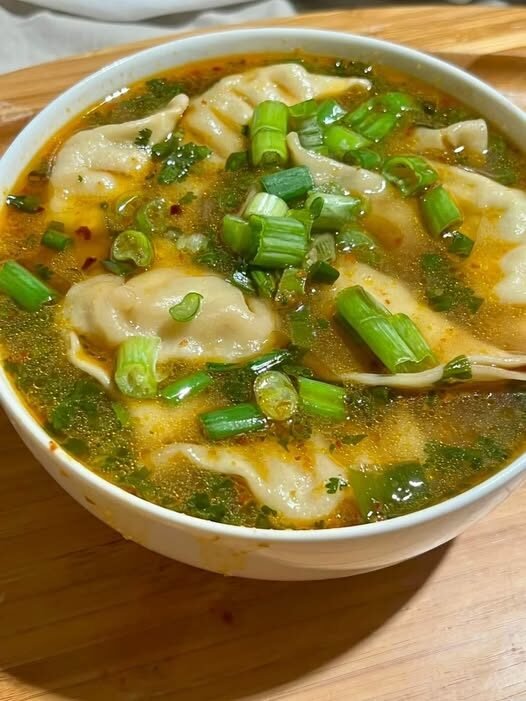
Ingredients
For the Homemade Wonton Filling
- Ground pork (or chicken/shrimp as an alternative)
- Fresh garlic, finely minced
- Fresh ginger, grated
- Soy sauce
- Sesame oil
- Green onions, finely chopped
- White pepper (optional but recommended)
- Cornstarch or egg white (for binding)
- Salt, to taste
For the Wontons
- Wonton wrappers (fresh or frozen, thin variety)
- Water (for sealing the wrappers)
For the Soup Broth
- High-quality chicken stock (preferably low sodium)
- Fresh ginger slices
- Soy sauce (light)
- Sesame oil
- White pepper, to taste
For Garnish
- Fresh green onions, chopped
- Chili oil or chili flakes (optional)
1. Preparing the Wonton Filling
Begin by placing the ground meat into a mixing bowl. Add minced garlic, grated ginger, soy sauce, sesame oil, chopped green onions, white pepper, and salt. Mix gently using a spoon or chopsticks, stirring in one direction until the mixture becomes cohesive. This technique helps create a tender and juicy filling.
Avoid overmixing, as this can result in a dense texture. Once combined, let the filling rest for 10–15 minutes. This resting time allows the flavors to fully develop and improves the final taste of the wontons.
2. Setting Up Your Wonton Station
Lay out your wonton wrappers on a clean surface. Keep a small bowl of water nearby for sealing the edges. Cover unused wrappers with a damp cloth to prevent them from drying out while you work.
Consistency is key. Use the same amount of filling for each wonton to ensure even cooking.
3. Filling and Folding the Wontons
Place a small spoonful of filling in the center of each wrapper. Lightly moisten the edges with water, then fold diagonally into a triangle. Press gently to remove any air pockets, as trapped air can cause the wontons to break while cooking.
Bring the two corners together and seal firmly. Repeat until all wontons are formed. At this stage, they can be cooked immediately or frozen for later use.
4. Preparing the Soup Broth
In a large pot, add chicken stock and ginger slices. Bring the broth to a gentle simmer over medium heat. Add soy sauce, sesame oil, and a pinch of white pepper. Keep the broth at a low simmer—never a rolling boil—as boiling will cloud the broth and dull its delicate flavor.
Taste and adjust seasoning gradually. The broth should be savory and aromatic but not overpowering.
5. Cooking the Wontons
You may cook the wontons directly in the broth or in a separate pot of boiling water. Cooking them separately keeps the soup extra clear.
Drop the wontons gently into simmering water. They will sink at first, then float when fully cooked, usually within 3–5 minutes. The wrappers should appear slightly translucent.
Remove carefully with a slotted spoon.
6. Assembling the Soup
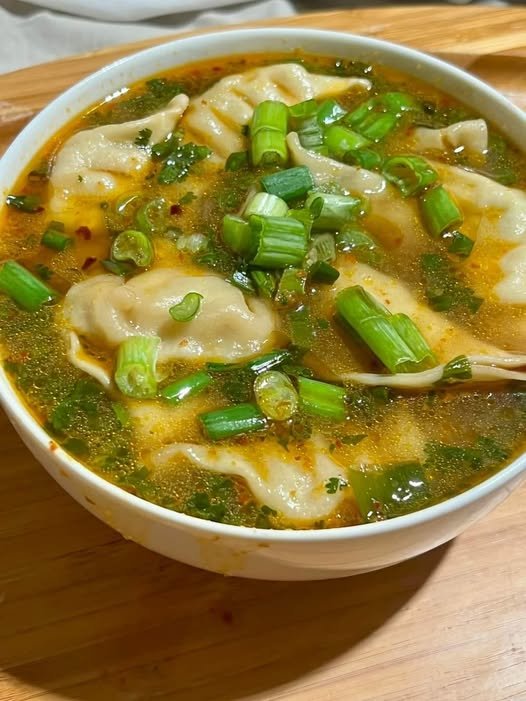
Place cooked wontons into serving bowls. Ladle the hot broth over them, ensuring each bowl has an even balance of dumplings and soup.
Finish with freshly chopped green onions and a light drizzle of chili oil if desired.
7. Texture and Flavor Experience
The finished soup should be light yet deeply satisfying. The wonton wrappers are silky and tender, while the filling remains juicy and flavorful. The broth ties everything together with warmth, umami, and subtle aromatics.
Each spoonful delivers comfort without heaviness.
8. Useful Cooking Tips
- Do not overfill wontons; less filling ensures better sealing and texture
- Always simmer, never boil, the broth
- Freeze uncooked wontons on a tray before storing to prevent sticking
- Keep broth and wontons separate when storing leftovers
9. Storage and Make-Ahead Information
Uncooked wontons freeze beautifully for up to two months. Cook them straight from frozen without thawing.
Broth can be refrigerated for up to three days and reheated gently. Always assemble the soup fresh for best results.
10. Variations and Customization
This recipe is highly adaptable. Add shrimp to the filling for sweetness, mushrooms for earthiness, or bok choy to the broth for extra nutrition.
Vegetarian versions can be made using finely chopped mushrooms, tofu, and vegetable stock.