

Ingredients
For the Fish:
- 2 fresh fish fillets (cod, halibut, or similar firm white fish)
- Salt, to taste
- Freshly ground black pepper, to taste
- 1 tablespoon olive oil
- 1 tablespoon butter
For the Roasted Brussels Sprouts:
- 1 cup Brussels sprouts, trimmed and halved
- 1 tablespoon olive oil
- Salt and pepper, to taste
For the Creamy Dijon Sauce:
- 1 garlic clove, finely minced
- ½ cup heavy cream
- 1 teaspoon Dijon mustard
- 1 teaspoon fresh lemon juice
- Optional: pinch of red pepper flakes or fresh parsley for garnish
Preparation and Cooking Instructions
1. Preparing the Oven and Vegetables
Begin by preheating your oven to 400°F (200°C). Proper preheating ensures that the Brussels sprouts roast evenly and develop caramelization rather than steaming. Line a baking sheet with parchment paper or lightly grease it with oil.
Trim the Brussels sprouts by removing any tough outer leaves and slicing off the woody stem ends. Halve them lengthwise to maximize surface area for browning.
2. Seasoning and Roasting the Brussels Sprouts
In a mixing bowl, toss the halved Brussels sprouts with olive oil, salt, and freshly ground black pepper. Spread them in a single layer on the prepared baking sheet, cut-side down for optimal caramelization.
Roast for 20 to 25 minutes, turning once halfway through. The sprouts should be tender inside and golden brown with crisp edges when done. Proper roasting enhances their natural sweetness and adds depth of flavor.
3. Preparing the Fish
While the Brussels sprouts roast, prepare the fish fillets. Pat them dry thoroughly with paper towels. Removing excess moisture is essential for achieving a beautiful golden crust during searing.
Season both sides of the fish generously with salt and freshly ground black pepper. Allow the fish to rest at room temperature for about 10 minutes before cooking. This promotes even cooking.
4. Pan-Searing the Fish
Heat a large skillet over medium-high heat. Add olive oil and butter, allowing the butter to melt completely and begin to foam slightly.
Place the fish fillets in the hot skillet, presentation side down. Avoid overcrowding the pan, as this can lower the temperature and prevent proper browning.
Cook the fish for 3 to 4 minutes on the first side without moving it. This allows a golden crust to form. Carefully flip the fillets using a spatula and cook for an additional 3 to 4 minutes, depending on thickness.
The fish is done when it flakes easily with a fork and reaches an internal temperature of 145°F (63°C). Remove from the pan and set aside on a warm plate.
5. Preparing the Creamy Dijon Sauce
Reduce the heat to medium. In the same skillet, add the minced garlic to the remaining butter and oil. Sauté for about one minute until fragrant, being careful not to burn it.
Pour in the heavy cream, stirring gently to deglaze the pan and incorporate any flavorful browned bits left from the fish. These bits add depth and complexity to the sauce.
Whisk in the Dijon mustard and lemon juice. Allow the sauce to simmer gently for 2 to 3 minutes, or until it thickens slightly. Taste and adjust seasoning with salt, pepper, or additional lemon juice if desired.
6. Plating and Serving
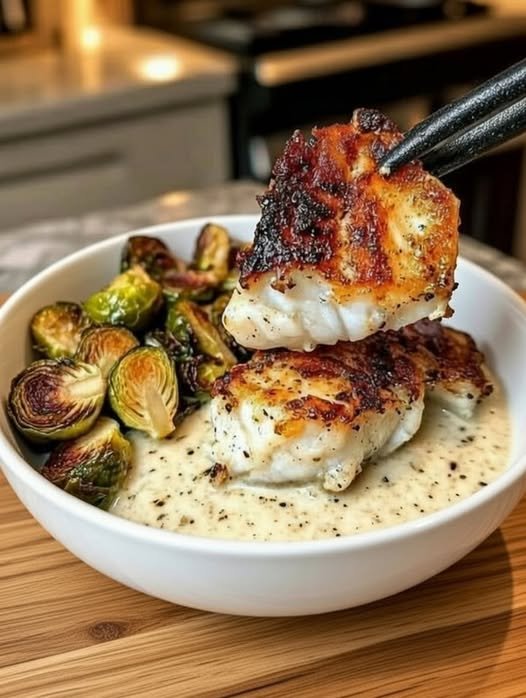
To serve, spoon a portion of the creamy Dijon sauce onto each plate. Place the pan-seared fish fillet on top of the sauce, allowing it to absorb some of the flavors. Arrange the roasted Brussels sprouts alongside the fish.
For an elegant presentation, garnish with freshly chopped parsley or a light sprinkle of lemon zest. Serve immediately while hot.
Professional Cooking Tips
Choosing high-quality, fresh fish is critical. Look for fillets that are firm, moist, and free from strong odors. Fresh fish should have a clean, ocean-like scent.
Avoid overcooking the fish, as it can quickly become dry. Monitor cooking time carefully, especially if your fillets are thinner.
For added flavor complexity, consider deglazing the pan with a splash of white wine before adding the cream. Allow it to reduce slightly before proceeding with the sauce.
If you prefer a lighter sauce, substitute half-and-half for heavy cream. For a thicker consistency, simmer the sauce a bit longer until it reaches your desired texture.
Storage and Reheating
Leftover fish can be stored in an airtight container in the refrigerator for up to two days. Reheat gently in a skillet over low heat to prevent drying out. The Brussels sprouts can also be reheated in the oven to restore their crispness.
Freezing is not recommended for this dish, as cream-based sauces can separate upon thawing.
Serving Suggestions and Pairings
This dish pairs beautifully with steamed rice, mashed potatoes, or a light quinoa salad. For a low-carb option, serve alongside cauliflower mash or additional roasted vegetables.
A crisp white wine such as Sauvignon Blanc or Chardonnay complements the creamy mustard sauce and delicate fish flavor.