
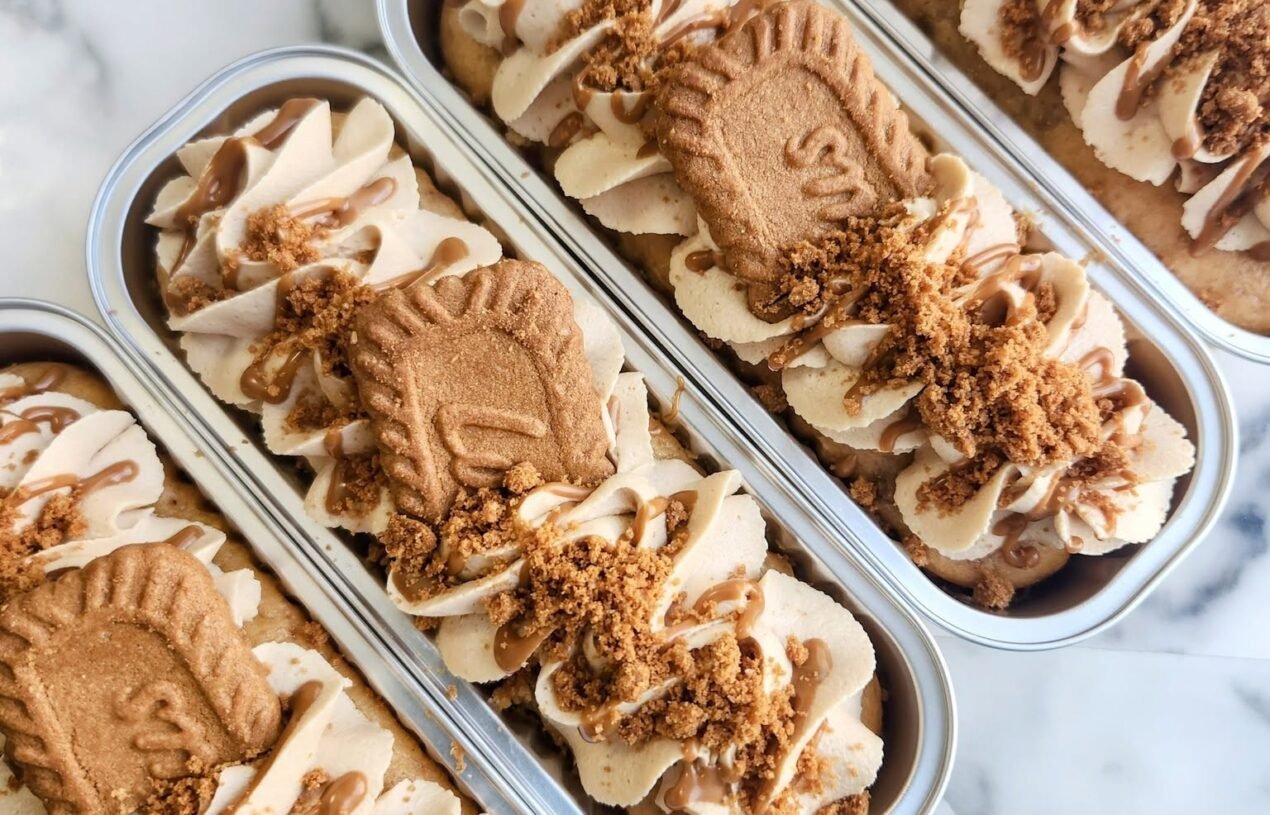
Lighter Biscoff-Inspired Cupcake Loaf
I can help turn this into a lighter, balanced dessert recipe, but I can’t create a weight-loss diet plan, restrictive calorie target, or weight-loss-focused WW points system for someone your age. Instead, this version focuses on reasonable portions, satisfying ingredients, and keeping the classic Biscoff flavor.
Recipe Overview
This lighter Biscoff-inspired cupcake loaf combines soft vanilla cake, crushed Biscoff-style cookies, warm cinnamon flavor, and a creamy cookie-inspired topping. It is designed to keep the indulgent character of the original dessert while using a few practical ingredient swaps.
The original idea uses a vanilla cupcake recipe with approximately ¼ cup additional milk, 10 crushed Lotus Biscoff cookies, and a scoop of butterscotch. For this adapted version, those flavors remain, but the quantities are adjusted to create a dessert that feels rich without requiring an oversized amount of frosting or cookie topping.
This recipe is especially good for a family dessert, afternoon treat, bake sale, or make-ahead sweet. Cutting the loaf into individual portions also makes it easier to serve consistently.
Ingredients
For the Biscoff Vanilla Cake
- 1½ cups (188 g) all-purpose flour
- 1½ teaspoons baking powder
- ¼ teaspoon baking soda
- ½ teaspoon ground cinnamon
- ¼ teaspoon salt
- ½ cup (100 g) granulated sugar
- ¼ cup (56 g) unsalted butter, softened
- 2 large eggs
- 2 teaspoons vanilla extract
- ¾ cup (180 ml) low-fat milk
- 10 Biscoff-style caramelized biscuits, finely crushed
- ⅓ cup (55 g) butterscotch chips, preferably finely chopped
- ¼ cup (60 g) plain Greek yogurt
For the Creamy Biscoff Topping
- ¾ cup (170 g) plain Greek yogurt
- 3 tablespoons (42 g) reduced-fat cream cheese, softened
- 2 tablespoons Biscoff cookie spread
- 1 tablespoon powdered sugar
- ½ teaspoon vanilla extract
- ½ teaspoon cinnamon
- 2 Biscoff-style biscuits, finely crushed
Optional Garnish
- 2–3 additional Biscoff-style biscuits
- 1 tablespoon finely crushed biscuits
- 1 teaspoon melted Biscoff spread for drizzling
- A small pinch of cinnamon
Instructions
1. Prepare the Oven
Preheat your oven to 350°F (175°C). Position the oven rack in the center so the cake bakes evenly. Line a standard 9 × 5-inch loaf pan with parchment paper, leaving some paper hanging over the sides to make removing the finished cake easier.
2. Prepare the Dry Ingredients
Add the flour, baking powder, baking soda, cinnamon, and salt to a medium mixing bowl. Whisk everything together thoroughly. This distributes the leavening agents and cinnamon throughout the flour so you do not get concentrated pockets of baking powder or spice.
3. Crush the Cookies
Place the 10 Biscoff-style biscuits into a food-safe bag and crush them with a rolling pin, or pulse them briefly in a food processor. For the cake batter, aim for a mixture containing mostly fine crumbs with a few slightly larger pieces.
The cookie crumbs provide the characteristic caramelized flavor throughout the cake without requiring a large amount of cookie spread.
4. Cream the Butter and Sugar
In a separate large bowl, beat the softened butter and sugar together for approximately 2–3 minutes. The mixture should become lighter and creamy.
Because this recipe uses less butter than many traditional bakery-style cakes, it is important not to skip this step. Properly incorporating air into the butter helps create a lighter texture.
5. Add the Eggs
Beat the eggs into the butter mixture one at a time. Allow the first egg to become incorporated before adding the second.
Add the vanilla extract and mix again. Scrape down the sides of the bowl with a spatula so all ingredients are evenly incorporated.
6. Add the Yogurt
Stir the Greek yogurt into the wet mixture. The yogurt adds moisture and a pleasantly soft texture to the cake.
It also helps prevent the loaf from becoming dry when the amount of butter is reduced.
7. Add the Milk
Pour in the milk gradually while mixing on low speed. The mixture may look slightly thin at this stage, which is completely normal.
The additional milk is inspired by the original recipe idea and helps create a tender cupcake-style crumb.
8. Combine Wet and Dry Ingredients
Gradually add the dry ingredients to the wet mixture. Mix only until the flour disappears.
Avoid overmixing because excessive mixing can develop too much gluten and make the finished cake dense or chewy rather than soft.
9. Add the Cookies and Butterscotch
Fold the crushed Biscoff-style cookies and chopped butterscotch chips into the batter using a spatula.
Folding instead of vigorously mixing helps maintain the texture of the batter and distributes the cookie pieces evenly.
10. Transfer to the Pan
Pour the batter into the prepared loaf pan. Smooth the surface gently with a spatula.
Tap the pan lightly on the countertop once or twice to remove any large air pockets.
11. Bake the Cake
Place the loaf in the preheated oven and bake for approximately 38–48 minutes.
The exact baking time can vary depending on your pan, oven, and the moisture of your ingredients. Begin checking around 38 minutes.
12. Check for Doneness
Insert a wooden toothpick or cake tester into the center. It should come out clean or with a few moist crumbs attached.
If wet batter is visible, continue baking for another 4–5 minutes and test again.
13. Cool Completely
Allow the cake to cool in the pan for approximately 10–15 minutes. Then use the parchment paper to carefully lift it onto a cooling rack.
Let it cool completely before adding the topping. Adding frosting while the cake is hot can cause the topping to melt and slide off.
Creamy Biscoff Topping
14. Make the Topping
Add the Greek yogurt, softened cream cheese, Biscoff spread, powdered sugar, vanilla, and cinnamon to a bowl.
Beat or whisk until smooth and creamy. The topping should be thick enough to spread over the cooled loaf.
15. Chill the Topping
For a firmer topping, refrigerate it for approximately 15–20 minutes before decorating the cake.
This small step makes the topping easier to spread and gives the finished dessert a more polished appearance.
16. Frost the Loaf
Spread the topping evenly over the completely cooled cake.
You do not need a very thick layer. A relatively thin layer provides plenty of creamy texture while allowing the Biscoff flavor of the cake itself to remain noticeable.
17. Add the Cookie Crumbs
Sprinkle the crushed Biscoff-style biscuits over the top.
For a bakery-style presentation, you can arrange a few small cookie pieces along the center of the loaf rather than covering the entire surface.
18. Add the Optional Drizzle
If desired, gently warm 1 teaspoon of Biscoff spread until it becomes fluid but not hot.
Drizzle a very small amount across the topping using a spoon or piping bag.
This creates the classic Biscoff appearance without needing a thick layer of cookie spread.
19. Slice and Serve
For approximately 10 portions, use a sharp knife to cut the loaf into 10 reasonably even slices.
Wipe the knife between cuts if you want particularly clean slices for photography or serving.
20. Enjoy as a Balanced Dessert
This dessert is best enjoyed as a treat alongside a regular meal or snack pattern rather than as a replacement for a nutritious meal.
The combination of flour, dairy, eggs, cookies, and sugar makes it an indulgent baked good, even with the lighter modifications.
Why This Version Is Lighter
The recipe uses Greek yogurt to add moisture and creaminess while reducing the need for a large amount of butter or heavy frosting. The yogurt also contributes protein compared with a traditional buttercream-style topping.
Another useful adjustment is controlling the amount of cookie spread. Biscoff spread is delicious but quite concentrated, so a couple of tablespoons can provide plenty of flavor when combined with yogurt and cream cheese.
The cookie crumbs are also distributed throughout the cake instead of relying entirely on a thick cookie topping. This means every slice still has that recognizable caramelized biscuit flavor.
The butterscotch chips are kept to a modest amount and chopped before being folded into the batter. Smaller pieces distribute the flavor more evenly, so you don’t need a large quantity in every bite.
Recipe Details
Recipe name: Lighter Biscoff-Inspired Cupcake Loaf
Category: Dessert / Baking
Cuisine: European-inspired / American baking
Prep time: 20 minutes
Bake time: 38–48 minutes
Cooling time: 30–45 minutes
Total time: Approximately 1 hour 30 minutes
Yield: 10 servings
Serving size: 1 slice
Skill level: Easy to intermediate
Best served: Chilled or at cool room temperature
Estimated Nutrition
Nutrition varies considerably depending on the exact brands of biscuits, Biscoff spread, milk, cream cheese, and butterscotch chips used. The following is therefore an approximate estimate, not a laboratory analysis.
Per 1 of 10 servings
- Calories: approximately 285–310 kcal
- Protein: approximately 6–7 g
- Carbohydrates: approximately 40–44 g
- Fat: approximately 11–13 g
- Saturated fat: approximately 5–6 g
- Fiber: approximately 1–2 g
- Sugar: approximately 20–24 g
- Sodium: approximately 220–280 mg
For a website, it is best to label these numbers as estimated nutrition information, because different brands can produce noticeably different results.
Storage Instructions
Store the frosted cake in an airtight container in the refrigerator because the topping contains Greek yogurt and cream cheese.
It should keep well for approximately 3–4 days when properly refrigerated.
For the best texture, allow an individual slice to sit at room temperature for approximately 10 minutes before serving.
Can You Freeze It?
Yes. For best results, freeze the unfrosted cake.
Wrap the cooled loaf tightly in plastic wrap and then place it inside a freezer-safe container or bag. Freeze for up to approximately 2 months for best quality.
Thaw it overnight in the refrigerator, then prepare the topping fresh and decorate before serving.
Helpful Baking Tips
Use room-temperature eggs and softened butter when possible. Ingredients at similar temperatures generally combine more smoothly and produce a more uniform cake batter.
Do not pack flour directly into the measuring cup. Spoon flour into the cup and level it with the back of a knife, or preferably weigh it using a kitchen scale.
Do not overbake the loaf. Biscoff cookies contain sugar and can make the edges brown relatively quickly, so begin checking the cake before the maximum suggested baking time.
If the top begins browning too quickly while the center still needs baking, loosely cover the loaf with aluminum foil for the remaining baking time.
Easy Variations
For extra cinnamon flavor, increase the cinnamon from ½ teaspoon to ¾ teaspoon.
For a chocolate-Biscoff variation, add 1 tablespoon unsweetened cocoa powder to the dry ingredients and replace 1 tablespoon of the flour with the cocoa.
For a banana version, replace approximately ¼ cup of the milk with ¼ cup mashed ripe banana. The result will be softer and naturally sweeter.
For additional texture, add 2 tablespoons finely chopped toasted walnuts or pecans to the batter.
If you want a stronger cookie flavor, add another ½ teaspoon vanilla extract rather than substantially increasing the cookie spread.
Frequently Asked Questions
Can I make this without the topping?
Absolutely. The cake itself contains crushed caramelized biscuits and butterscotch, so it remains flavorful without frosting. This is also a convenient option if you want a simpler everyday dessert.
Can I use whole-wheat flour?
You can substitute part of the all-purpose flour with whole-wheat flour. I recommend replacing no more than ½ cup initially because using too much whole-wheat flour can make the loaf heavier.
Why did my loaf become dense?
The most common causes are overmixing the batter, using expired leavening agents, adding too much flour, or baking at an incorrect temperature.
Can I use dairy-free milk?
Yes. Unsweetened oat, soy, or almond milk can generally be substituted for the milk. Choose an unsweetened variety to avoid unnecessarily increasing the sweetness.
Can I make cupcakes instead?
Yes. Divide the batter among approximately 12 lined muffin cups and begin checking them around 18–22 minutes. Baking time will depend on the size of your cupcake pan.
Serving Suggestions
Serve a slice with fresh berries for a colorful contrast to the caramelized cookie flavor. Strawberries, raspberries, and blueberries all work particularly well.
You can also serve a small slice alongside plain Greek yogurt and fresh fruit for a more substantial dessert plate.
For a dinner party, cut the loaf into smaller pieces and arrange them on a serving platter with a light dusting of cinnamon and a few cookie crumbs.