
Description
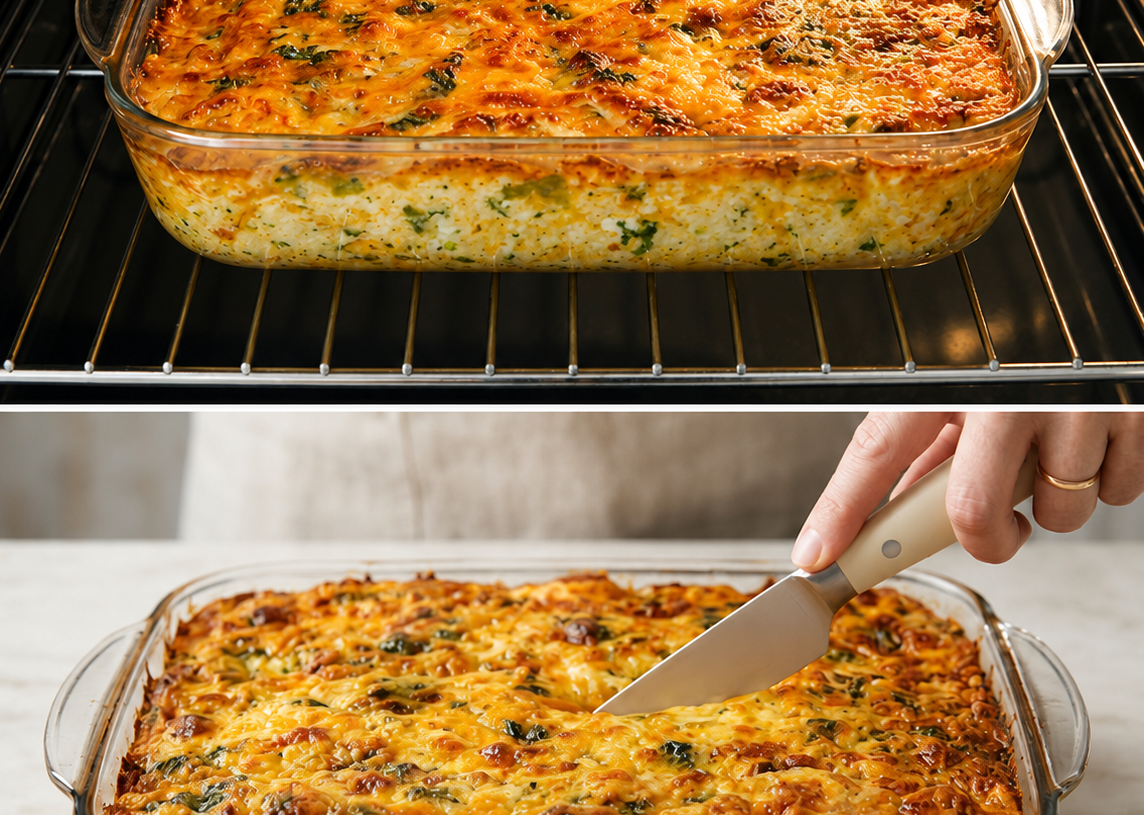
This Broccoli and Cheese Casserole is a creamy, comforting side dish that turns simple broccoli into something incredibly satisfying. Tender broccoli is coated in a rich mixture of cottage cheese, Greek yogurt, eggs, cheddar, and Parmesan, then baked until bubbling and beautifully golden.
The result is a high-protein, lower-carb casserole with a creamy interior and a deliciously browned, cheesy topping. It is hearty enough to serve alongside dinner while also working beautifully as a meal-prep option.
Using cottage cheese and Greek yogurt instead of relying entirely on heavy cream gives this casserole an extra protein boost while keeping the texture rich and satisfying.
Can This Broccoli and Cheese Casserole Support Weight Loss Goals?
This casserole can fit into a weight-conscious eating pattern because it combines protein-rich dairy with a generous amount of broccoli. Protein can help make meals more satisfying, while broccoli provides fiber and volume without adding a large amount of carbohydrate. Keeping portions appropriate and pairing the casserole with other nutrient-dense foods can make it a useful option within an overall balanced eating plan.
Does Broccoli and Cheese Casserole Fit a High-Protein Lifestyle?
Yes, this version is specifically designed to be high in protein and relatively low in net carbs. Cottage cheese, Greek yogurt, eggs, cheddar, and Parmesan provide most of the protein, while broccoli contributes fiber and essential nutrients. Each serving contains approximately 26g of protein and 8g net carbs. It can work especially well as a protein-rich side dish or as part of a lower-carb meal.
Why This Recipe Is Special
- High-protein: Cottage cheese, Greek yogurt, eggs, and cheese significantly increase the protein content.
- Lower-carb: Broccoli provides fiber and volume while keeping the carbohydrate load relatively modest.
- Creamy without heavy sauce: Greek yogurt and cottage cheese create a rich baked texture.
- Comfort-food flavor: Golden cheddar and Parmesan create a savory, browned topping.
- Meal-prep friendly: Individual portions store and reheat well for convenient lunches and dinners.
My Personal Experience
- The cheesy topping is the best part.
The cheddar and Parmesan become golden and slightly crisp as they bake.
Underneath, the casserole stays creamy and tender. - The broccoli holds its texture beautifully.
Briefly steaming it before baking prevents it from becoming watery.
The finished casserole has tender broccoli rather than mushy vegetables. - The cottage cheese works surprisingly well.
Blending it with Greek yogurt creates a smooth, protein-rich base.
It adds creaminess without requiring a large amount of heavy cream. - It feels like classic comfort food.
The combination of broccoli, cheddar, garlic, and Parmesan is rich and savory.
Yet the recipe remains focused on protein and vegetables. - It makes excellent leftovers.
Individual portions can be refrigerated and reheated throughout the week.
The casserole remains filling and flavorful after reheating.
Perfect For
This casserole is perfect for weeknight dinners, holiday side dishes, Sunday meal prep, low-carb meal plans, high-protein lunches, family dinners, and make-ahead meals. It can also be served alongside grilled chicken, turkey, fish, or lean beef for a complete high-protein dinner.
Why You’ll Love This Recipe
- Creamy and cheesy:
The blended cottage cheese and Greek yogurt create a luscious interior.
Melted cheddar and Parmesan give the top a rich, golden finish. - Protein-packed:
Several protein-rich ingredients work together in one easy casserole.
It delivers approximately 26g of protein per serving. - Naturally vegetable-forward:
Broccoli provides the foundation of the dish instead of pasta or rice.
This keeps the casserole filling while maintaining a lower-carb profile. - Easy to prepare:
The broccoli only needs a quick steam before everything is combined.
After that, the oven does most of the work. - Great for leftovers:
Portion the casserole after cooling and store it in individual containers.
It makes an easy grab-and-reheat lunch during the week.
Common Mistakes to Avoid
- Overcooking the broccoli before baking: Steam it only until bright green and just tender so it does not become mushy.
- Not draining the broccoli: Excess water can make the casserole watery and prevent the creamy mixture from setting properly.
- Using very wet cottage cheese: If your cottage cheese contains lots of liquid, drain it briefly before blending.
- Overbaking the casserole: Remove it once the center is set and the cheese is bubbling and golden to prevent a dry texture.
Required Equipment
- 9 × 13-inch baking dish — provides enough surface area for even baking and browning.
- Large mixing bowl — gives you plenty of room to combine the broccoli and creamy mixture.
- Blender or food processor — creates a smoother cottage cheese and Greek yogurt base.
- Steamer basket — cooks the broccoli quickly while minimizing excess water.
- Measuring cups and spoons — keep ingredients and portions consistent.
- Spatula — makes it easy to spread the mixture evenly in the baking dish.
Storage Instructions
Allow the casserole to cool for approximately 20–30 minutes, then divide it into airtight glass or BPA-free food-storage containers.
- Refrigerator: Keep refrigerated for 3–4 days.
- Freezer: Freeze individual portions for up to 2 months for best texture.
- Best freezer method: Wrap individual portions tightly and place them inside freezer-safe containers or bags.
- Refrigerated reheating: Microwave a serving for approximately 1–2 minutes, stirring or rotating halfway through, until hot.
- Oven reheating: Cover with foil and heat at 350°F (175°C) for approximately 15–20 minutes.
- Frozen portions should preferably thaw overnight in the refrigerator before reheating.
Recipe Details
Preparation Time: 15 minutes
Cooking Time: 30 minutes
Total Time: 45 minutes
Servings: 6
Best Season: All-season
Total Calories: Approximately 350 calories per serving
Nutrition information is an approximate estimate and can vary depending on the specific brands and ingredients used.
Short 3-Line Description
Creamy broccoli baked with cottage cheese, Greek yogurt, cheddar, eggs, and Parmesan creates a satisfying high-protein casserole.
Tender broccoli and a golden, bubbling cheese topping make every bite comforting and flavorful.
With approximately 26g protein and 8g net carbs per serving, it is a practical lower-carb meal or side dish.
📝 Ingredients
Broccoli and Casserole Base
- 6 cups (about 550–600 g) fresh broccoli florets
- 1½ cups (about 340 g) 2% cottage cheese
- 1 cup (about 225 g) plain nonfat Greek yogurt
- 2 large eggs
- 1½ cups (6 oz / 170 g) shredded sharp cheddar cheese, divided
- ½ cup (about 50 g) finely grated Parmesan cheese, divided
- 1 tbsp olive oil
- 2 cloves garlic, minced
- 1 tsp Dijon mustard
- ½ tsp onion powder
- ½ tsp garlic powder
- ½ tsp smoked paprika
- ¼ tsp black pepper
- ¼ tsp salt, or to taste
Optional Garnish
- 1 tbsp chopped fresh parsley
- ¼ tsp red pepper flakes, for heat
Ingredient notes:
Use plain, unsweetened Greek yogurt rather than flavored yogurt. For a lower-sodium version, choose reduced-sodium cottage cheese and cheese when available. Fresh broccoli gives the best texture, but frozen broccoli can also work if thoroughly thawed and drained.
Directions
1. Preheat the oven
Preheat your oven to 375°F (190°C).
Lightly grease a 9 × 13-inch baking dish with a small amount of olive oil or cooking spray.
2. Steam the broccoli
Bring a pot of water to a gentle simmer and place the broccoli in a steamer basket.
Steam over medium heat for 3–4 minutes, just until the broccoli becomes bright green and slightly tender.
Texture cue: The florets should still have some firmness because they will continue cooking in the oven.
3. Drain thoroughly
Transfer the broccoli to a colander and allow it to drain for several minutes.
Pat excess moisture away with paper towels if necessary.
High-protein cooking tip: Removing excess water is important because it keeps the protein-rich cheese mixture thick rather than watery.
4. Prepare the creamy protein mixture
Add cottage cheese, Greek yogurt, eggs, Dijon mustard, garlic, onion powder, garlic powder, smoked paprika, black pepper, and salt to a blender or food processor.
Blend for approximately 30–45 seconds, until mostly smooth and creamy.
5. Add the cheese
Transfer the mixture to a large bowl.
Stir in 1 cup of shredded cheddar and ¼ cup Parmesan, reserving the remaining cheese for the topping.
6. Combine with broccoli
Add the drained broccoli to the bowl.
Gently fold everything together until the broccoli is evenly coated with the creamy mixture.
Avoid aggressively stirring because you want the broccoli florets to remain intact.
7. Transfer to the baking dish
Spread the mixture evenly into the prepared baking dish.
Use a spatula to level the top so the casserole cooks evenly.
8. Add the cheesy topping
Sprinkle the remaining ½ cup cheddar and ¼ cup Parmesan evenly over the surface.
This layer will melt and develop the golden crust that gives the casserole its signature appearance.
9. Bake
Place the casserole in the preheated 375°F (190°C) oven.
Bake uncovered for approximately 25–30 minutes.
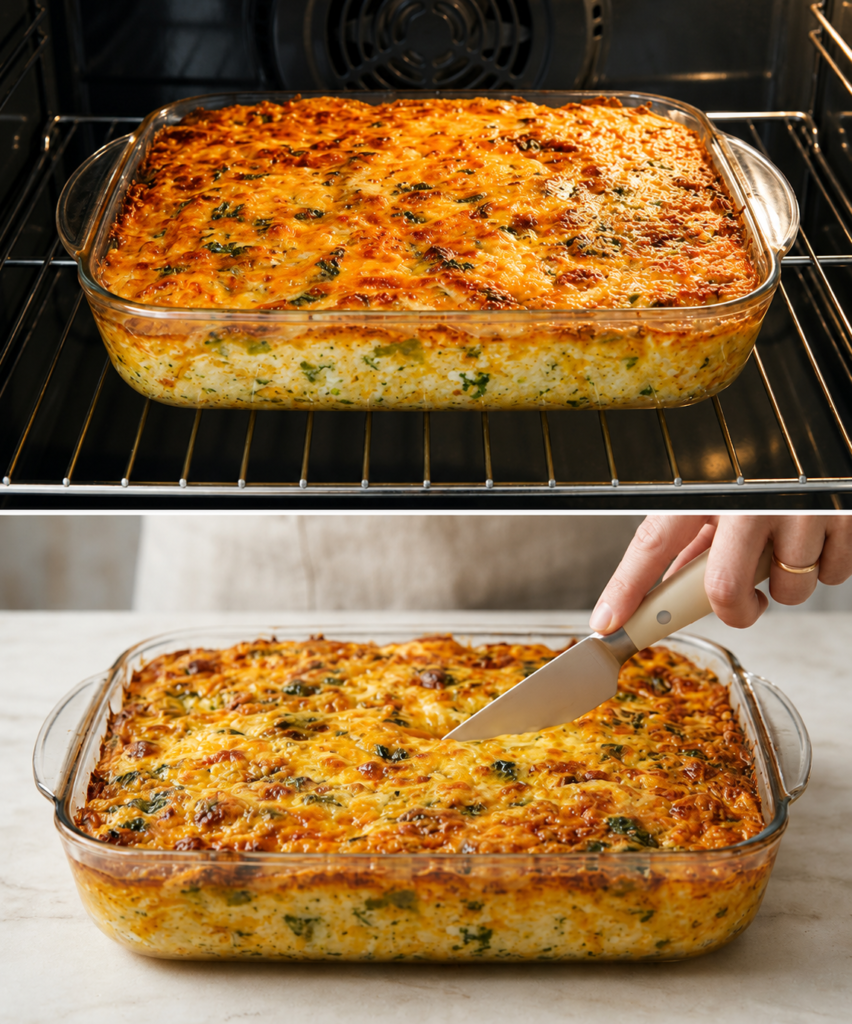
Visual cue: The edges should be bubbling, the center should look set rather than liquid, and the cheese should be melted and golden brown.
10. Broil for extra browning — optional
For a deeper golden crust, switch the oven to broil for approximately 1–2 minutes.
Watch carefully because the cheese can brown quickly.
11. Rest before serving
Remove the casserole from the oven and allow it to rest for 5–10 minutes.
This gives the creamy filling time to firm slightly, making it easier to portion.
12. Garnish and serve
Sprinkle with fresh parsley and optional red pepper flakes.
Serve warm as a side dish or pair it with lean chicken, turkey, fish, or beef for a complete high-protein meal.
Nutrition Facts — Per Serving, Approximate
- Calories: 350 kcal
- Fat: 21 g
- Cholesterol: 105 mg
- Sodium: 590 mg
- Potassium: 500 mg
- Total Carbohydrates: 12 g
- Fiber: 4 g
- Net Carbs: 8 g
- Sugars: 5 g
- Protein: 26 g
- Calcium: 400 mg
Values are approximate and calculated using six servings. Actual nutrition can vary according to the brands and exact quantities used.
Notes
- For better texture: Drain steamed broccoli very well before combining it with the cheese mixture.
- For extra protein: Serve alongside grilled chicken breast, turkey, shrimp, or another lean protein.
- For a smoother casserole: Blend the cottage cheese completely until creamy.
- For more texture: Leave some cottage cheese slightly unblended before combining.
- For extra flavor: Add smoked paprika, red pepper flakes, fresh parsley, or a small amount of grated Parmesan.
- For a stronger cheese flavor: Substitute part of the cheddar with sharp cheddar or a small amount of Gruyère.
- Allergy note: This recipe contains milk/dairy and eggs. Use appropriate alternatives if needed, although changing the ingredients will alter the nutrition profile.
- Storage: Refrigerate leftovers for 3–4 days or freeze individual portions for up to 2 months.
- Reheating: Reheat gently until completely hot to help preserve the creamy texture.
Frequently Asked Questions
1. Is broccoli and cheese casserole low-carb?
Yes, this version contains approximately 8g net carbs per serving, making it suitable for many lower-carb meal plans.
2. How can I make this casserole higher in protein?
Serve it with grilled chicken, turkey, shrimp, or another lean protein, or increase the amount of cottage cheese slightly.
3. Can I use frozen broccoli?
Yes, but thaw it completely and squeeze or drain away excess moisture before using it.
4. Can I prepare this casserole ahead of time?
Yes, assemble it up to one day ahead, refrigerate it covered, and bake when ready.
5. Why is my casserole watery?
The most common causes are excess moisture in the broccoli or cottage cheese, so drain both well before combining.
6. Can I make this casserole without eggs?
Yes, but the eggs help the casserole set, so an egg-free version will have a softer consistency and may require a suitable binder.