
Fresh Crunchy Cucumber Vegetable Salad Recipe
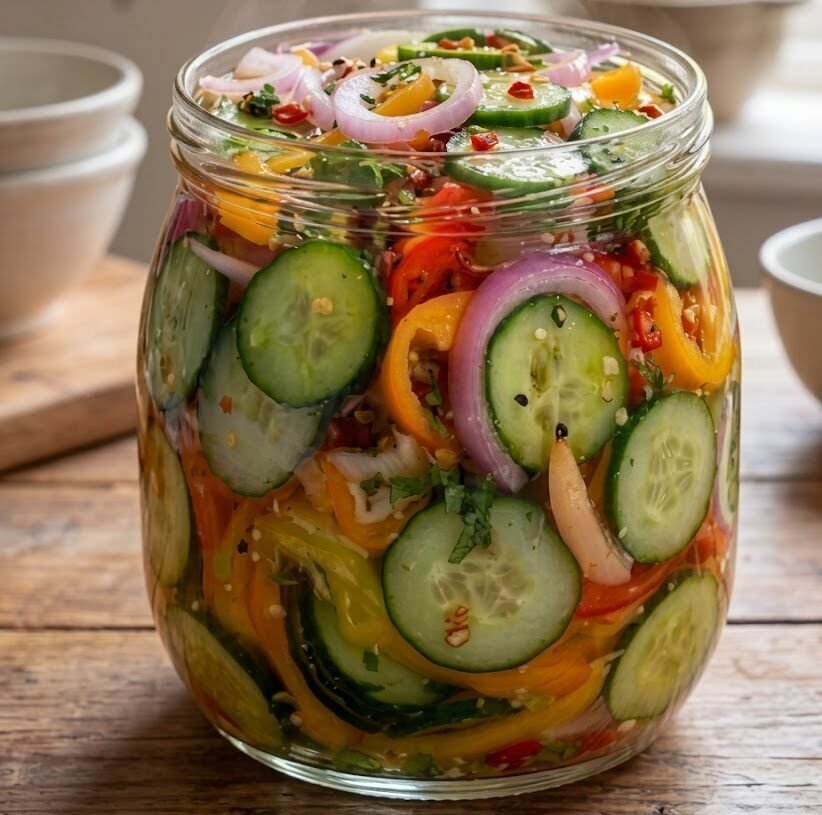
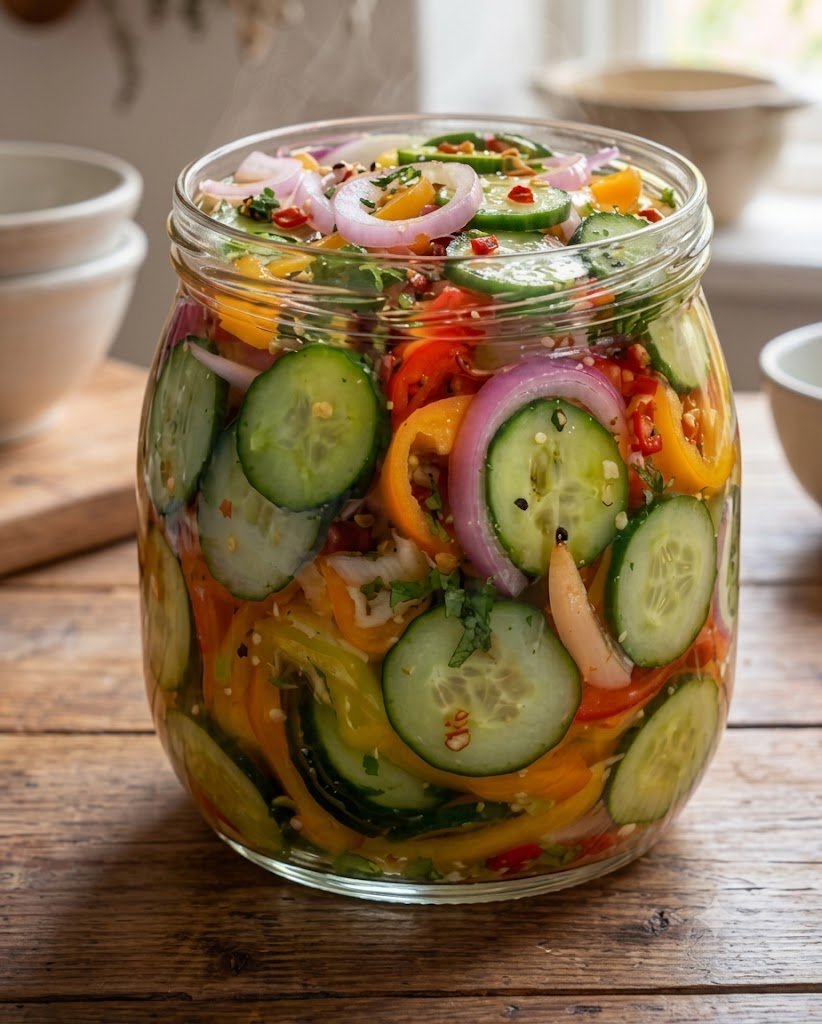
This colorful cucumber vegetable salad is packed with crisp cucumbers, crunchy bell peppers, red onion, juicy tomatoes, fresh herbs, and a flavorful homemade dressing. It is refreshing, tangy, slightly sweet, and easy to prepare. The vegetables can be arranged in a glass jar for a beautiful presentation, just like the salad in the photograph.
Ingredients
For the Fresh Vegetable Salad
- 4 medium cucumbers, fresh and firm
- 1 large red onion, thinly sliced
- 1 red bell pepper, thinly sliced
- 1 yellow bell pepper, thinly sliced
- 1 orange bell pepper, thinly sliced
- 1 cup cherry tomatoes, halved
- 1 medium carrot, thinly sliced or cut into matchsticks
- 2 cloves fresh garlic, finely minced
- ¼ cup fresh parsley, finely chopped
- 2 tablespoons fresh dill, finely chopped
- 2 tablespoons fresh cilantro, chopped, optional
- 1 small jalapeño, thinly sliced, optional
- 1 tablespoon sesame seeds, optional
- 1 tablespoon sunflower seeds, optional
For the Homemade Dressing
- ½ cup apple cider vinegar
- ¼ cup extra-virgin olive oil
- 2 tablespoons fresh lemon juice
- 1–2 tablespoons honey or granulated sugar
- 1 teaspoon Dijon mustard
- 1 teaspoon fine salt
- ½ teaspoon freshly ground black pepper
- ½ teaspoon dried oregano
- ½ teaspoon red pepper flakes
- ¼ teaspoon garlic powder, optional
- ¼ teaspoon onion powder, optional
Optional Additions
You can also add any of the following ingredients according to your preference:
- Radishes, thinly sliced
- Celery, finely sliced
- Green onions
- Shredded cabbage
- Avocado
- Feta cheese
- Olives
- Chickpeas
- Cooked corn
- Fresh mint
- Additional fresh dill
- Sliced green chili
- A small amount of grated ginger
Directions
1. Wash and Prepare All the Vegetables
Begin by washing all of the vegetables thoroughly under cool running water. Fresh vegetables are the foundation of this recipe, so choose cucumbers, peppers, tomatoes, and onions that are firm, fresh, and free from soft or damaged areas.
After washing, dry the vegetables thoroughly with a clean kitchen towel or paper towels. Removing excess water helps prevent the finished salad from becoming unnecessarily watery.
2. Prepare the Cucumbers
Trim both ends from the cucumbers and discard them. Slice the cucumbers into thin, even rounds. You can also cut them into half-moons if you prefer smaller pieces.
For a more attractive presentation, try to keep the cucumber slices approximately the same thickness. Slightly thicker slices will retain more crunch, while very thin slices will absorb the dressing more quickly.
If you are using large garden cucumbers with large seeds, cut them lengthwise and use a spoon to remove some of the watery center before slicing.
3. Salt the Cucumbers for Extra Crunch
This step is optional but highly recommended if your cucumbers contain a lot of water.
Place the sliced cucumbers in a large bowl and sprinkle them lightly with approximately ½ teaspoon of salt. Toss gently and allow them to sit for about 15–20 minutes.
The salt will draw out some of the excess moisture. Drain the liquid and gently pat the cucumbers dry using paper towels.
Do not add too much salt at this stage because the dressing will also contain salt.
4. Prepare the Red Onion
Peel the red onion and cut it in half. Slice it very thinly into half-moon pieces.
Red onion provides a beautiful purple color and a slightly sharp flavor that works particularly well with the sweet-and-tangy dressing.
If you prefer a milder onion flavor, place the sliced onion into a bowl of cold water and let it soak for approximately 10 minutes. Drain completely and pat dry before adding it to the salad.
5. Prepare the Bell Peppers
Remove the stems, seeds, and white membranes from the red, yellow, and orange bell peppers.
Slice the peppers into thin strips or small bite-sized pieces. Using several colors of peppers makes the finished salad especially attractive and adds a natural sweetness and satisfying crunch.
You can use green bell pepper as well, although its flavor is slightly more savory and less sweet than red, yellow, or orange peppers.
6. Prepare the Tomatoes
Wash the cherry tomatoes and dry them thoroughly. Cut each tomato in half.
If the tomatoes are particularly juicy, you can gently remove some of the excess seeds before adding them to the salad. This is not necessary, but it can help maintain a firmer texture.
Cherry and grape tomatoes are excellent choices because they hold their shape better than large tomatoes.
7. Prepare the Carrot
Peel the carrot and wash it thoroughly. Slice it into thin rounds, julienne strips, or small matchsticks.
Carrot adds sweetness, crunch, and a beautiful orange color to the salad. If you prefer, you can use a vegetable peeler to create thin carrot ribbons.
8. Prepare the Fresh Herbs and Garlic
Finely mince the garlic cloves and chop the fresh parsley and dill.
Fresh herbs make a major difference in this salad because they add brightness and aroma to the otherwise crisp vegetables.
If you enjoy a stronger herb flavor, you can increase the amount of dill or parsley. Fresh mint can also be added for an especially refreshing flavor.
9. Add Optional Heat
If you enjoy spicy food, thinly slice one small jalapeño and add it to the vegetables.
For a milder salad, remove the seeds and inner membrane from the jalapeño before slicing. For a hotter salad, leave some of the seeds intact.
You can also use red chili flakes instead of fresh chili.
10. Combine the Vegetables
Place the prepared cucumbers, red onion, red bell peppers, yellow bell peppers, orange bell peppers, tomatoes, carrot, garlic, parsley, dill, and optional jalapeño into a large mixing bowl.
Use a large spoon or salad tongs to gently combine everything.
Take care not to crush the tomatoes or break the cucumber slices. Gentle mixing helps maintain the fresh appearance and crisp texture of the vegetables.
11. Prepare the Homemade Dressing
In a separate small bowl, add the apple cider vinegar, olive oil, lemon juice, honey or sugar, Dijon mustard, salt, black pepper, oregano, and red pepper flakes.
Add the optional garlic powder and onion powder if you want a slightly stronger savory flavor.
Whisk the ingredients together continuously until the oil and vinegar are well combined.
12. Shake the Dressing for a Better Texture
For an even easier method, place all the dressing ingredients into a clean glass jar.
Secure the lid tightly and shake vigorously for approximately 20–30 seconds.
The mustard helps emulsify the dressing, allowing the oil and vinegar to combine more evenly. Shake the dressing again immediately before pouring it over the salad.
13. Taste the Dressing
Before adding the dressing to the vegetables, taste a small amount.
If the dressing is too sour, add another teaspoon of honey or sugar. If it is too sweet, add a little more vinegar or lemon juice.
If it needs more flavor, add a little salt, black pepper, mustard, garlic, or herbs.
This small step is important because the final flavor of the salad depends heavily on the balance between acidity, sweetness, salt, and oil.
14. Add the Dressing to the Vegetables
Slowly pour the dressing over the prepared vegetables.
Try to distribute the dressing evenly rather than pouring it all into one spot.
Use salad tongs or two large spoons to gently toss the vegetables until everything is lightly coated.
Do not overmix because excessive mixing can cause the tomatoes to release too much juice.
15. Add Sesame or Sunflower Seeds
If desired, sprinkle sesame seeds or sunflower seeds over the salad.
These optional ingredients provide additional texture and a subtle nutty flavor.
You can lightly toast the seeds in a dry skillet for a few minutes before adding them. Allow them to cool completely first.
16. Let the Salad Rest
Cover the bowl and place it in the refrigerator for at least 30 minutes.
For a stronger flavor, allow the salad to rest for approximately 1–2 hours.
During this time, the vinegar dressing will penetrate the vegetables and the herbs and spices will become more noticeable.
17. Toss the Salad Again
After refrigeration, gently toss the salad once again.
Some of the dressing may have settled at the bottom of the bowl, so mixing it gently helps redistribute the flavors.
Taste the salad and make any final seasoning adjustments before serving.
18. Transfer the Salad to a Glass Jar
For a presentation similar to the photograph, use a clean, food-safe glass jar.
Carefully transfer the vegetables into the jar, alternating colors as you fill it. This creates attractive layers of green cucumbers, purple onion, red peppers, yellow peppers, orange carrots, and fresh herbs.
Do not compress the vegetables too tightly. Leave a little space at the top so the salad can be mixed or shaken gently before serving.
19. Chill Before Serving
Once the salad has been transferred to the jar, close the lid securely and refrigerate it.
Serve the salad cold or well chilled.
Before serving, gently turn the jar upside down once or twice, if appropriate for the container, to redistribute the dressing. Do not shake excessively because delicate vegetables and tomatoes can become damaged.
20. Garnish and Serve
Transfer the salad to a serving bowl or serve it directly from individual jars.
Garnish with fresh parsley, dill, sesame seeds, a few red pepper flakes, or thin slices of fresh cucumber.
A small squeeze of fresh lemon juice immediately before serving can also brighten the flavor.
21. Serve as a Side Dish
This cucumber vegetable salad makes an excellent side dish for grilled chicken, roasted chicken, fish, steak, burgers, sandwiches, wraps, rice dishes, pasta, and grilled vegetables.
The crisp vegetables and acidic dressing are particularly good alongside rich foods because they provide a refreshing contrast.
22. Make It a Complete Meal
If you want to turn this side salad into a more filling meal, add a source of protein.
Good choices include cooked chickpeas, white beans, grilled chicken, boiled eggs, feta cheese, tofu, or another protein of your choice.
You can also add cooked quinoa or another grain to create a more substantial grain-and-vegetable salad.
23. Make It Extra Tangy
For a stronger pickled-style flavor, increase the vinegar slightly and allow the salad to rest in the refrigerator for several hours.
Apple cider vinegar provides a slightly fruity flavor, while white vinegar produces a sharper and cleaner acidic taste.
Rice vinegar can be used if you prefer a softer, milder dressing.
24. Make It Sweeter
If you prefer a sweeter cucumber salad, add up to 2 tablespoons of honey or sugar to the dressing.
Add the sweetener gradually rather than all at once. The ideal amount depends on the acidity of your vinegar and your personal preference.
A small amount of sweetness helps balance the acidity without making the salad taste like a dessert.
25. Make It More Spicy
For a spicy version, add extra red pepper flakes, fresh jalapeño, serrano pepper, or a small amount of your favorite hot sauce.
Add spicy ingredients gradually and taste as you go.
Remember that the flavor of chili can become more noticeable as the salad rests, so it is better to start with a small amount and add more later.
26. Make It Creamy
For a creamy variation, replace part of the oil-and-vinegar dressing with plain Greek yogurt.
You can make a creamy dressing using Greek yogurt, lemon juice, garlic, dill, salt, black pepper, and a small amount of olive oil.
This creates a completely different style of cucumber salad while retaining the same fresh vegetables.
27. Best Way to Store the Salad
Transfer leftovers to a clean, airtight food-safe container and refrigerate promptly.
For the best crunch and appearance, consume the salad within approximately 2–3 days.
The vegetables will gradually release moisture and soften as they sit in the acidic dressing, so the texture will not remain exactly the same as when freshly prepared.
28. Important Storage Reminder
This recipe is a refrigerator salad and is not a shelf-stable canned recipe.
Placing the vegetables in a sealed glass jar does not make them safe to store at room temperature. Keep the finished salad refrigerated and do not treat it as commercially canned or preserved food.
If the salad develops an unusual smell, appearance, or texture, discard it rather than tasting it.
29. Professional Tips for the Best Salad
Use the freshest cucumbers possible and avoid cucumbers that are soft or excessively watery.
Keep the vegetable pieces relatively uniform so that the salad has a consistent texture and attractive appearance.
Do not add an excessive amount of dressing at once. You can always add more, but removing excess dressing is difficult.
Fresh herbs should be used whenever possible because they provide a much brighter flavor than dried herbs.
For the most attractive presentation, combine vegetables with different colors and textures rather than using only green vegetables.
30. Final Serving Suggestion
For the best result, prepare the vegetables, make the dressing, combine everything gently, and refrigerate the salad for about 1 hour before serving.